Latest Highlight

Rohingya asylum seekers in detention in Thailand (Reuters)
 
By Joseph Allchin
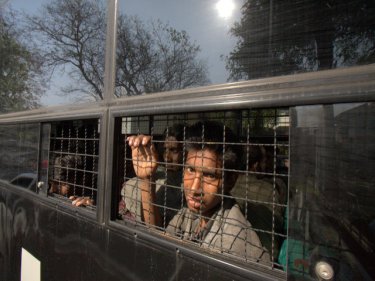
Rohingya asylum seekers in detention in the Indian Andaman islands have alleged shocking abuse at the hands of Thai authorities earlier this year, in a repeat of treatment that Rohingya asylum seekers were subjected to in 2009, and that Thai authorities claimed to have stopped.
Around 91 Rohingya were reportedly rescued by the Indian Navy adrift in the Bay of Bengal, who alleged that they had been pushed out to sea by the Thai Navy in a vessel with no engine and only 100 litres of water. 25 had to be admitted to hospital after their rescue.
Speaking to the South China Morning Post, one Shaik Montaz said; “After torturing us for five days in Thailand, the Thai army handed us over to the Thai navy. The navy soldiers loaded us on to our boat on January 18 and we found that the engine was missing. For more than two days our boat was towed by the navy boat until we were hundreds of miles away from the Thai coast.”
The men were not picked up by the Indian navy till February 5, but the treatment they allege will also cast doubt over Thailand’s human rights record;
“The soldiers beat us badly with wooden batons. They forced us to go nude and stay in seawater for more than five hours every day,” Sohail Ali told the South China Morning Post.
“Using cigarette lighters, the Thai soldiers burned the beards of some of us.”
Former Thai prime minister Abhisit Vejjajiva vowed after similar incidents with Rohingya asylum seekers surfaced in January 2009 that there would be “no repeats”, adding that his government had demonstrated its “sincerity”.
The UN High Commission for Refugees (UNHCR) told DVB that they were never given access to the 91 in either Thailand or India and therefore were unable to verify whether they were indeed the same asylum seekers. Kitty McKinsey from UNHCR did however state that Thailand had been “generous” in accommodating refugees and that they were working well with both the Thai and Indian governments.
Whilst a statement from the Thai authorities claimed that; “It must be emphasised that this action was in line with their wish”….”Thai authorities have no knowledge as to how this group of people may have travelled onwards after they departed from Thai territory.”
This comes as local press in Thailand’s Phuket reported that 33 Rohingya were deported back to Burma on the 19 of August after being detained since January, but reports could not verify what had happened to these detainees.
Alan Morrison and Chutima Sidasathian from the local Phuket Wan news web site did however claim to DVB that the local head of immigration had started pushing all Burmese, regardless of ethnicity, back instead of detaining and attempting to fine illegal Burmese migrants. This could not be verified and it was not sure for how long and how official any such actions or policy were.
As ever with the Rohingya, repatriation is problematic as the Burmese government deny their claims to citizenship and as a result they are left without official documentation, but despite this it was alleged by local media outlets such as the Kaladan Press’ Tin Soe that they were coerced into voting for the Union Solidarity and Development Party (USDP) in last year’s elections, a clear breach of election laws.
The Rohingya ethnic group are considered by groups such as Refugees International to be amongst; “the most persecuted in the world”, with alleged religious and ethnic persecution widespread in their native northern Arakan state. As a result some 200,000 are believed to have fled to neighbouring Bangladesh whilst others have sought asylum further afield in Malaysia.


United Nations human rights envoy Tomas Ojea Quintana arrived in Burma on Sunday for a five-day visit to assess the human rights situation in the country.
Quintana is scheduled to meet with democracy leader Aung San Suu Kyi in Rangoon on Wednesday. He last visited Burma 18 months ago, but was not allowed to see the Nobel peace laureate, who was then under house arrest. Subsequent requests to enter the country had been denied until now.
The Argentine lawyer will also meet with government officials in the administrative city of Naypyidaw and attend a session of the new parliament on Monday.
Quintana will present preliminary observations at a press conference in Rangoon on Thursday. His full report on the visit will be presented to the UN General Assembly later this year.
credit : VOA Blog

Asylum-seekers are locked in a detention centre on the outskirts of Kuala Lumpur, Malaysia, a nation that is not a signatory to the UN Refugee Convention. Source: AP

THE High Court will today formally consider the Gillard government's plan to send asylum-seekers to Malaysia. At the same time, many of the poor and the desperate across Asia have already considered the plan. 

And many, it seems, have dismissed it. Since Australia signed the deal with Malaysia on July 25, five boats have arrived in Australian waters, carrying at least 338 asylum-seekers.
Under the scheme, which has already seen one Labor MP sidestepping party loyalty to express her concerns, Australia will resettle 4000 recognised refugees from Malaysia over four years, and in return send 800 arrivals back to Malaysia. If news spreads that an expensive and dangerous sea voyage will end not in Australia but in the crowded refugee ghettos of Malaysia, the Australian government believes potential asylum-seekers will think twice about setting sail.
And should the Malaysia plan come to grief, there is now a back-up: Papua New Guinea has agreed that a detention centre on Manus Island, closed for seven years, can be reopened.
But this plan, too, has been questioned. Greens immigration spokeswoman Sarah Hanson-Young yesterday called for an investigation to determine who would be sent to Manus Island, how much it would cost, and whether children would be detained in the centre.
"Last time Manus was open, under John Howard, for one month the bill for one lone person was $216,000," she told the ABC. "I don't think the minister can give the answers: [the government] is struggling to give the answers on Malaysia."
Labor MP Anna Burke has also gone on the record to criticise the Manus Island plan. And lining up with Amnesty International, Human Rights Watch, and prominent human rights advocates such as Frank Brennan, Burke says she fears the Malaysia deal abrogates Australia's international responsibilities to asylum-seekers.
"I am concerned that we can't really guarantee the safety of the 800 people," Burke says. "That is my personal concern and I have expressed that in caucus."
Even so, if the asylum-seekers case in the High Court fails, it's likely the government will break records to get the first group on a plane bound for Malaysia. There are plans to film their departure and arrival and post the footage on the internet in the hope it will deter anyone considering getting on a boat destined for Australia.
Certainly, Afghans living in Kuala Lumpur have kept a close eye on the unfolding saga of the Australia-Malaysia refugee swap agreement.
Most know friends, relatives and compatriots who have attempted the journey to Australia in search of a better life, and they are aware the Australian government is trying hard to come up with a game-changer.
"They are actually well informed about it," says Afghan Zabiullah Ahmadi, who lives in Kuala Lumpur. "It's newspapers; it's the people around who watch what's going on. It's such a small community that word can spread very quickly."
Tahera Ahmadi and her husband Ali Haidari don't want to risk their lives, or the life of their two-year-old daughter, Angela, on a rickety boat, but they desperately want to live in Australia. From the Hazara ethnic minority, they have lived in Kuala Lumpur for nearly four years, waiting for the magic letter inviting them to become Australians.
"Actually, I think Australia likes Hazara people," says Ahmadi in the small flat she shares with eight members of her extended family, all recognised by the UNHCR as bona fide refugees.
"We have heard they give rights to Hazara people; they understand our problems. In Afghanistan, we don't have any rights. If a person doesn't have rights, this person is like a servant. I'm sure if I get to Australia I will have a nice future."
According to Abdul Ghani bin Abdul Rahman, a leader in the Rohingya community in Malaysia, asylum-seekers have paid as much as 10,000 Malaysian ringgit (about $3200) per person for passage to Australia, a stake that has frequently entailed selling everything and borrowing from friends and family.
And this is relatively inexpensive compared with fares cited elsewhere. From Burma, the Muslim Rohingya minority is considered among the worst-treated in the world, denied citizenship by their own country.
Abdul Ghani says some people-smuggler agents in Malaysia are working with Indonesian agents, preying on the desperate.
"Many lives are lost at sea. I think this [the Australia-Malaysia scheme] is a good policy," Ghani says. "In 2006 a friend of mine passed away because he went to Christmas Island. There are empty promises by the agents; unscrupulous agents. Many times I beg Rohingya not to do this."
For asylum-seekers, risk, hardship and expense are the prices to be paid for a new life. A survey of Hazara men conducted in four Afghan provinces late last year showed a degree of ignorance about Australian policy.
Commissioned by Australian Customs and Border Protection Service, the Afghanistan Counter People Smuggling Scoping Study found that in all provinces, the Hazara were aware of the various risks associated with using people smugglers to travel to Australia, but "only a few Hazara realise that migrants also face a risk of repatriation and detention by the Australian authorities".
Some of the Hazara quoted in the survey had no access to the internet, some had no electricity in their homes, and many relied mostly on news from friends and family, although the BBC, Voice of America and certain Afghan broadcasters were also trusted sources of information.
Many, living all their lives in landlocked Afghanistan, feared drowning on the way to Australia, or otherwise dying, or being imprisoned, or losing their language or culture, or being humiliated. One interview subject voiced his fears of a sea journey to Australia.
"Some people call it the dolphin's way because many people are eaten by these dolphins in the sea."
The survey found "information on the dangers of illegal immigration is primarily spread by word of mouth", with news coming from returning migrants, victims of people-smuggling fraud, friends and relatives in Australia and repatriated Afghans.
Regardless of the risks of the voyage, exodus beckons. There is little to keep potential asylum-seekers in Afghanistan, with economic stagnation, a critical shortage of government services and frequent discrimination pushing the Hazara people to look for a way out.
Many asylum-seekers in Malaysia took note of the announcement of the Australia-Malaysia plan in early May, but then, as the weeks passed, doubts began to surface regarding the final shape of the agreement. Hundreds of asylum-seekers in Asia apparently believed the failure to come up with a concrete plan presented a window of opportunity, and they arrived in Australian waters by the boatload.
Then, in late July, the plan was finalised, and officially signed. And still the boats kept coming -- five since the deal was signed, carrying nearly half the number of asylum-seekers Malaysia has agreed to take.
Many have been unaccompanied minors and, although Immigration Minister Chris Bowen declares there will be no blanket exemptions for unaccompanied under-18s, it's unlikely Australia will risk international opprobrium by sending these more vulnerable people to an uncertain future in Malaysia.
Many critics of the plan note that Malaysia is not a signatory to the UN Refugee Convention, that in general, refugees and asylum-seekers are not permitted to work in Malaysia, nor to send their children to government schools, they are subject to arbitrary arrest and detention, and at the extreme, brutally caned. The Australia-Malaysia plan has specific provisos to permit the 800 transferred to Malaysia to work, and to ensure they will not be caned.
But still the critics are not convinced. The opposition has slammed both the Malaysia deal and the recent PNG agreement, noting the dearth of detail.
Hanson-Young says the government should go back to the drawing board. "This is a mess. I don't think the government is winning any favours from anyone on this, and the solutions put forth by the opposition aren't cutting through either."
And she is particularly concerned about the children involved. "Why are we treating children like pawns in this awful human chess game?"
So far this year, 37 boats have arrived in Australian waters, carrying 2186 asylum-seekers. Afghans, like last year, loomed large: discounting the most recent boat, the totals comprise 892 Iranians, 604 Afghans, 129 Iraqis, as well as "other". It's not a huge number of people, in the global scheme of things, when millions of displaced Afghans languish in Iran and Pakistan, but asylum-seekers punch well above their weight in the Australian political arena.
Despite the clamour, numbers of arrivals have actually fallen this year, perhaps because of the mooted Malaysia plan.
Last year 134 boats arrived in Australian waters, carrying 6535 asylum-seekers, more than three times this year's total so far. But over the past few years there has been a steady increase.
Bowen has pinned his hopes on the swap plan, which he insists will "break" the people-smugglers' business model and prevent asylum-seekers risking their lives on often unseaworthy boats.
The Christmas Island boat tragedy last year has failed to dissuade asylum-seekers, although it seems they know that drowning is one of the risks.
When, or perhaps if, the first asylum-seekers eventually get to Malaysia, they will be taken to Port Dickson, on the coast south of Kuala Lumpur, where two basic hotels have been leased and renovated to provide temporary housing. It is expected they will remain in this accommodation for a short period, perhaps 45 days, before they are sent out into the community to lead their own lives.
Afghan advocate Zabiullah Ahmadi says the plan will create a two-tier system, with some asylum-seekers in Malaysia holding what he calls a "golden card" giving them some security.
But, he says, there is remarkably little envy from the refugees who have been living in Malaysia for so long. "At some point they are happy," he says.

Link:  http://www.theaustralian.com.au/national-affairs/hope-springs-from-inside-the-wire/story-fn59niix-1226119180451
 
ၾကပ္ေျပး (ေနျပည္ေတာ္) တြင္သမၼတ ဦးသိန္းစိန္ႏွင့္ ေဒၚေအာင္ဆန္းစုၾကည္တို႔ ေတြ႔ဆံု ေဆြးေႏြးခဲ့တဲ့အေပၚ ျပည္တြင္းရွိ အၿငိမ္းစား တပ္မေတာ္အရာရွိႀကီး တစ္ဦးအား စည္းလံုးျခင္းရဲ႕ အင္အားဝက္ဆိုက္ဒ္က ဆက္သြယ္ေမးျမန္းခဲ့ရာမွာ  ယခုတေလာ ေဘးၾကပ္နံၾကပ္ျဖစ္ေနတဲ့ အစိုးရသစ္ရဲ႕ ထြက္ေပါက္ဟာ မီးရွဴးတန္ေဆာင္ ေဒၚေအာင္ဆန္းစုၾကည္ ျဖစ္ေၾကာင္း ေအာက္ပါအတိုင္း ေျပာဆိုသြားခဲ့ပါတယ္။

[B]ေမး - မၾကာမီကၿပီးဆံုးသြားတဲ့ သမၼတ ဦးသိန္းစိန္ႏွင့္ ေဒၚေအာင္ဆန္းစုၾကည္တို႔ ေတြ႔ဆံု ေဆြးေႏြးခဲ့တဲ့ ျဖစ္စဥ္ ၾကားသိရသေလာက္ ရွင္းျပေပးပါ။[/B]

[B]ေျဖ -[/B] က်ေနာ္တို႔ လက္လွမ္းမွီသေရြ႕ တပည့္မ်ားကို ဆက္သြယ္ေမးျမန္းၾကည့္ရာမွာ သမၼတ ဦးသိန္းစိန္ ရံုးခန္းတြင္ ထူးျခားခ်က္အေနနဲ႔ ဗိုလ္ခ်ဳပ္ေအာင္ဆန္း ဓါတ္ပံုအား ႏိုင္ငံေတာ္ ေခါင္းေဆာင္ တစ္ဦးအျဖစ္ ဂုဏ္ျပဳတဲ့အေနနဲ႔ နံရံတြင္ အျခားသမၼတမ်ားရဲ႕ ဓါတ္ပံုမ်ားႏွင့္အတူ ယွဥ္တြဲ ထိုးတင္ထားတာကို ေတြ႔ရပါတယ္။ ၁၉၉၂ ခုႏွစ္က ဦးသန္းေရႊ အာဏာသိမ္းၿပီးေနာက္ ဗိုလ္ခ်ဳပ္ေအာင္ဆန္းႏွင့္ ဗိုလ္ခ်ဳပ္ေနဝင္း ဓါတ္ပံုမ်ားကို ဇြတ္အတင္း ျဖဳတ္ခိုင္းခဲ့ဘူးပါတယ္။ ဆိုလိုတာက ေဒၚေအာင္ဆန္းစုၾကည္အား စည္းရံုးလိုလို႔ ဗိုလ္ခ်ဳပ္ေအာင္ဆန္း ဓါတ္ပံု ျပန္တင္တာျဖစ္တယ္။ ဦးသိန္းစိန္ကေတာ့ တိုင္းျပည္စီးပြားေရး ခၽြတ္ခ်ဳံက်တဲ့အခ်ိန္မွာ ေဒၚေအာင္ဆန္းစုၾကည္ကို ပူးေပါင္းေဆာင္ရြက္ဖို႔ႏွင့္ ႏိုင္ငံတကာက ပိတ္ဆို႔ထားတဲ့ စီးပြားေရး Section ကုိ ရုတ္သိမ္းေပးေရး ႏိုင္ငံတကာအား တိုက္တြန္းေပးဖို႔ရယ္၊ ကမာၻ႔ဘဏ္ႏွင့္ ႏိုင္ငံတကာေငြေၾကးရံပံုေငြ အဖြဲ႔က ျမန္မာႏိုင္ငံအား ေထာက္ပံ့ကူညီဖို႔ရယ္၊ ေဒၚလာေငြေၾကး လဲလွယ္ႏႈန္း သတ္မွတ္ျပင္ဆင္ေရး အပါအဝင္ ေငြမာ အျဖစ္ထားရွိေရး အေနာက္ႏိုင္ငံမ်ားက ကူညီပံ့ပိုးေပးဖို႔ စည္းရံုးေပးေရး စတာေတြေျပာဆိုႏိုင္ပါတယ္။

[B]ေမး - ယခုတေလာ အစိုးရသစ္ အၾကပ္အတည္း ျဖစ္ေနတာ ၾကားတယ္။ ဗိုလ္မွဴးႀကီးရဲ႕ ထင္ျမင္ယူဆခ်က္ကို ရွင္းျပပါ။[/B]

[B]ေျဖ -[/B] အစိုးရသစ္အေနနဲ႔ သဘာဝေဘးအႏၱရယ္ ေရႀကီးတဲ့ဒဏ္ ဆန္ေရစပါးေပါမ်ားတဲ့ ျပည္နယ္ႏွင့္ တိုင္းအမ်ားစု ေရလႊမ္းမိုးခံရတဲ့အျပင္ ေဒၚလာေစ်း မႀကံဳဘူးေအာင္ စံခ်ိန္တင္ ထိုးက်သြားတာေၾကာင့္ စီးပြားေရး အၾကပ္အတည္း ျဖစ္ေနတာရယ္၊ ျပည္တြင္းစစ္ျဖစ္လုနီးနီး မႀကံဳစဖူး ေျမာက္ပိုင္းမွသည္ ေတာင္ပိုင္းအထိ တပ္မေတာ္က စစ္မ်က္ႏွာမ်ား ျဖန္႔က်က္ကာ ရင္ဆိုင္ႀကံဳေတြ႔ ေနရတာရယ္၊ အပစ္ရပ္ တိုင္းရင္းသား အဖြဲ႔အား စစ္ဆက္တုိက္ရမလို၊ ၿငိမ္းခ်မ္းေရးေလသံ မပြင့္တစ္ပြင့္ ေျပာရမလို ေရြးခ်ယ္ရ ခက္ေနတာရယ္၊ အာဆီယံဥကၠဌ ျဖစ္ဖို႔ေလ့လာသူ အင္ဒိုနီးရွား ႏိုင္ငံျခားေရးဝန္ႀကီးအား ဖိတ္ၾကားခဲ့ၿပီးမွ ဆိုင္းငံ့ထားတာရယ္၊ အစိုးရသစ္ရဲ႕ ေၾကြးေၾကာ္သံ တစ္ခုျဖစ္တဲ့ အဂတိလိုက္စားမႈ ကင္းရွင္းေရး သန္႔ရွင္းေသာ အစိုးရျဖစ္ေရးအတြက္ စံျပလုပ္ေဆာင္မႈအျဖစ္ တပ္မေတာ္အတြင္း တိုင္းမွဴးႏွင့္အထက္ ဗိုလ္ခ်ဳပ္မ်ားကို စံုစမ္းစစ္ေဆးေနၿပီး အခ်ဳိ႕ကို ဖယ္ရွားတဲ့အေပၚ တပ္တြင္း မေက်နပ္မႈမ်ားစတဲ့ စတဲ့အၾကပ္အတည္းေတြရွိတယ္ဗ်ာ။

[B]ေမး - အပစ္ရပ္ တုိင္းရင္းသားအဖြဲ႔အေပၚ အစိုးရသစ္ရဲ႕ ဆက္ဆံေျပာဆိုေနမႈမ်ားအေပၚ ဗိုလ္မွဴးႀကီး ဘယ္လိုျမင္သလဲ..?  [/B]

[B]ေျဖ -[/B] အစိုးရသစ္အေနနဲ႔ အပစ္ရပ္တိုင္းရင္းသားေတြအေပၚ ျပတ္သားတဲ့ မူဝါဒမ်ဳိး မရွိသလို သံတမန္ေရးရာ စကားလံုးမ်ား သံုးႏႈန္းမႈအားနည္း ေနတာေတြ႔ရတယ္။ သမၼတ တစ္ဦးအေနနဲ႔ လက္လႊတ္စပယ္ K.I.A အေပၚ မေျပာသင့္ဘူးဗ်၊ ယခင္အစိုးရလက္ထက္ကေတာင္ ႏိုင္ငံေတာ္ရဲ႕ အဆင့္ (၂) ရွိတဲ့ ဗိုလ္ခ်ဳပ္ခင္ညြန္႔လို လူမ်ဳိးက လံုၿခံဳေရး အေစာင့္အေရွာက္ ေဘးဖယ္ထားၿပီး တိုင္းရင္းသား နယ္ေျမထဲသုိ႔ ယံုၾကည္မႈကို တည္ေဆာက္တဲ့အေနနဲ႔ ရဲတင္းစြာ ေတြ႔ဆံုေဆြးေႏြးခဲ့တာမ်ဳိး လုပ္ခဲ့ေသးတာဘဲ။ ခက္တာက သမၼတ ဦးသိန္းစိန္ အေနနဲ႔ စစ္ဦးစီး လုပ္သက္ဘဲ စစ္ရံုးမွာ ေတာက္ေလွ်ာက္ ေနခဲ့တာမ်ားတာမို႔ ဆံုးျဖတ္ခ်က္ ခ်ရာမွာ တံု႔ဆိုင္း ေႏွးေကြးေနတာ ေတြ႔ရတယ္။ အစိုးရသစ္ အဖြဲ႔အတြင္း တင္းမာတဲ့ အုပ္စုမ်ားရဲ႕ ေလသံမ်ားက ဦးသိန္းစိန္အေပၚ လႊမ္းမိုးေနတယ္။ သူတို႔ရဲ႕ တသမတ္တည္း စဲြကိုင္ထားတဲ့ အယူအဆက တိုင္းရင္းသား အဖြဲ႔ေတြကို ဘယ္ေတာ့မွ တစုတစည္းထဲ  အစိုးရသစ္ အေနနဲ႔ ေတြ႔မွာ မဟုတ္ဘူး။ ဘာလို႔လည္းဆိုေတာ့ တိုင္းရင္းသားအားလံုး ေပါင္းေတြ႔ရင္ အင္အားစု ႀကီးမားလာမွာျဖစ္လို႔ အစိုးရသစ္ လက္ေရွာင္တာျဖစ္တယ္။

[B]ေမး - ဒီေတာ့ ဗိုလ္မွဴးႀကီးအေနနဲ႔ လက္ရွိႏိုင္ငံေရး အခင္းအက်င္း အေပၚ အစုိးရသစ္ရဲ႕ ႏိုင္ငံေရး မဟာဗ်ဴဟာ ဘယ္လို သံုးသပ္ သလဲ ?[/B]

[B]ေျဖ - [/B]ယခုတေလာ ေခတ္စားေနတဲ့ သံုးပြင့္ဆိုင္ ေဆြးေႏြးေရးကို အပစ္ရပ္တိုင္းရင္းသားေတြႏွင့္ တစုတစည္းတည္း ေတြ႔ဖို႔ေတာင္ မလိုလားတဲ့ စစ္အာဏာရွင္ အသြင္ေျပာင္း အစိုးရသစ္က စိတ္ကူးထဲေတာင္ ထည့္မွာမဟုတ္ဘူး၊ ႏွစ္ပြင့္ဆိုင္ေဆြးေႏြးေရးကို အစိုးရသစ္က ဦးစြာ ညွိႏိႈင္းၿပီးမွ က်န္တဲ့တစ္ပြင့္ကို အေပၚစီးမွ ကိုင္တြယ္မွာ ျဖစ္တယ္။ ယခင္နအဖ လက္ထက္က NLD ႏွင့္ ေဒၚေအာင္ဆန္းစုၾကည္ကို ဦးစြာ မေဆြးေႏြးဘဲ အပစ္ရပ္တိုင္းရင္းသားမ်ားကို တဖဲြ႔ျခင္း ခဲြထုတ္စည္းရံုးခဲ့ၿပီးမွ တိုင္းရင္းသား အားကို ရယူကာ NLD အား အေပၚစီးမွ ဆက္ဆံျခင္းျဖစ္တယ္။ ယခုေတာ့ ေျပာင္းျပန္ျဖစ္သြားၿပီး ေဒၚေအာင္ဆန္းစုၾကည္ႏွင့္ NLD ကုိ ဦးစြာ ေဆြးေႏြးကာ တိုင္းရင္းသားေတြကို အေပၚစီးမွ ကိုင္တြယ္မွာျဖစ္တယ္။

[B]ေမး - ဗိုလ္မွဴးႀကီး ဆိုလိုတာက အစိုးရသစ္ရဲ႕ထြက္ေပါက္က ေဒၚေအာင္ဆန္းစုၾကည္ ျဖစ္ေနသလား ?[/B]

[B]ေျဖ -[/B] အစိုးရသစ္အေနနဲ႔ ေရြးခ်ယ္ရန္ နည္းလမ္းအေနျဖင့္ NLD ႏွင့္ ေဒၚေအာင္ဆန္းစုၾကည္ကို စည္းရံုးမွာလား၊ NLD ကို ဖယ္ၿပီး ေဒၚေအာင္ဆန္းစုၾကည္ကို လူပုဂၢိဳလ္တစ္ဦးအေနနဲ႔ စည္းရံုးမွာလား ဆိုၿပီး နည္းလမ္းႏွစ္သြယ္ ရွိပါတယ္။ အစိုးရသစ္အေနနဲ႔ သူတို႔ရဲ႕ အရိုးစြဲ အယူဆအတိုင္း အင္အားနည္းေလ ေကာင္းေလမို႔ ေဒၚေအာင္ဆန္းစုၾကည္ တစ္ဦးတည္းကိုသာ ေရြးထုတ္ၿပီး ျဖစ္ႏိုင္ရင္ NLD ႏွင့္ ကဲြသြားေစခ်င္တယ္။ ႏိုင္ငံတကာရဲ႕ေထာက္ခံမႈရေနေသာ ေဒၚေအာင္ဆန္းစုၾကည္ႏွင့္ ေတြ႔ဆံု ေဆြးေႏြးျခင္းျဖင့္ အစိုးရသစ္က လိုလားေနတဲ့ စီးပြားေရး ပိတ္ဆို႔မႈ Section အထိုက္အေလ်ာက္ ေလ်ာ့ပါးသြားလိုပါတယ္။ အစိုးရသစ္က တိုင္းရင္းသား အေရးကိစၥမ်ား ကိုင္တြယ္ဖို႔ ေဒၚေအာင္ဆန္းစုၾကည္ကို ေျဖရွင္းခိုင္းဖို႔ ေလာေလာဆယ္ အကူအညီေတာင္းမွာ မဟုတ္ေသးဘဲ ႏုိင္ငံေရး က်ားကြက္ ေရႊ႕ျခင္းျဖစ္ပါတယ္။ တိုင္းရင္းသား လက္နက္ကိုင္မ်ားကို အခ်ိန္အတိုင္းအတာ တစ္ခုထိ ပစ္ထားမွာ ျဖစ္ၿပီး ေဒၚေအာင္ဆန္းစုၾကည္ႏွင့္ ေျပလည္မႈ ရရွိေရးအတြက္ ႏွစ္ပြင့္ဆိုင္ ေဆြးေႏြးေရးကို ဆက္လက္ ေဆာင္ရြက္သြားမွာ ျဖစ္ပါတယ္။ အစိုးရသစ္ရဲ႕ေလသံက ၿငိမ္းခ်မ္းေရးတံခါး မပြင့္တစ္ပြင့္ ဖြင့္ထားတယ္။ ႏိုင္ငံဖံြ႔ၿဖိဳး တိုးတက္ေရးအတြက္ စီးပြားေရး ဖြံ႔ၿဖိဳးမႈ ျပဳျပင္ေျပာင္းလဲေရး ဆိုင္ရာ အလုပ္ရံု ေဆြးေႏြးပဲြမ်ား ေဒၚေအာင္ဆန္းစုၾကည္ အပါအဝင္ ျပည္သူလူထု တရပ္လံုး ပါဝင္ေနသေယာင္ လႈပ္ရွားမႈ သ႑န္ ေဖာ္ထားၿပီး တိုင္းရင္းသား လက္နက္ကိုင္မ်ားကိုေတာ့ စစ္မက္လိုလားသူ အၾကမ္းဖက္သမားမ်ားအျဖစ္ ႏုိင္ငံေရး ထိုးစစ္ ဆင္ထားတာ ျဖစ္ပါတယ္။ ဒါေၾကာင့္ေဒၚေအာင္ဆန္းစုၾကည္အား သူတို႔ရဲ႕ ထြက္ေပါက္အျဖစ္ အသံုးခ်ထားတယ္ျဖစ္တယ္ဗ်ာ။

Link:   :http://www.photayokeking.org/hot-news/651-kyat-pye-nay-pyi-daw#.Tk90-iEy7cR.facebook


ေဒၚေအာင္ဆန္းစုၾကည္၁၉ ရက္ေန႔ ေတြ႔ဆံုပြဲ ဓာတ္ပံု


ျမန္မာ့ရုပ္ျမင္သံၾကားက ဒီည ၈း၀၀ နာရီမွာ ထုတ္လႊင့္သြားတ့ဲ ေနျပည္ေတာ္က အ့ံအားသင့္စရာ ေတြ႔ဆုံပဲြကုိ ကူးယူ မွတ္တမ္းတင္ထားတာပါ။ နံရံမွာ ခ်ိတ္ထားတ့ဲပုံက ေခါင္းေပါင္း၊ တုိက္ပုံ ၀တ္ဆင္ထားတ့ဲ ဦးေအာင္ဆန္းရဲ႕ဓာတ္ပုံ ျဖစ္ေနတာကေတာ့ ဒီကေန႔အတြက္ ဒုတိယေျမာက္ အ့ံအားသင့္မႈ ျဖစ္ပါလိမ့္မယ္။
email နဲ႔ ေရာက္လာတ့ဲ စာတေစာင္ကုိ ကူးယူ ေဖာ္ျပေပးလုိက္ပါတယ္။

"ေဒၚေအာင္ဆန္းစုၾကည္နဲ. သမၼတဦးသိန္းစိန္ ေတြ.ျပီး နက္ဖန္ ေနျပည္ ေတာ္ စီးပြားေရးဖိုရမ္တက္မည္

ဒီေန. ေဒၚေအာင္ဆန္းစုၾကည္နဲ. ဦးသိိန္းစိန္ ၁ နာရီနီးပါး ေနျပည္ေတာ္ သမၼတအိမ္ေတာ္မွာ ေတြ.ဆံုခဲ.ပါတယ္။ ဦးသိန္းစိန္နဲ.အတူ သမၼတကေတာ္ရယ္ သမၼတရံုးအဖြဲ.ညႊန္ၾကားေရးမွဴးတို.လည္း ေတြ.ဆံုပြဲမွာရွိတယ္ ေဆြးေႏြးပြဲကေႏြးေႏြးေထြးရွိတယ္လို.သိရပါတယ္။ MRTV က ဒီသတင္းကို ထုတ္လႊင္.ေတာ. “မတူတာေတြဖယ္ျပီး တူတာေတြကို ဘံုအက်ဳိးစီးပြားအတြက္ တြဲျပီး လုပ္ေဆာင္သြားမယ္လို.” ေၾကညာသြားပါတယ္။

ေဒၚစုကေနျပည္ေတာ္မွာ လွည္.ၾကည္.တယ္ ဆိုတဲ. သတင္းကေတာ.မမွန္ပါဘူး၊ ဒီညေနျပည္ေတာ္မွာ အိပ္ျပီး နက္ဖန္ ေနျပည္ေတာ္စီးပြားေရးဖိုရမ္ကို ခနတက္မယ္ လို. သိရပါတယ္"


မေန႔ကေတာ့ ပံုက တီဗီက ယူတာမို႔ ရွင္းရွင္းလင္းလင္း မရွိလွပါဘူး။ ဗိုလ္ခ်ဳပ္ေအာင္ဆန္းပံုနဲ႔ ရွင္းလင္းတဲ့ ဓာတ္ပံုကို ေဖာ္ျပေပးလိုက္ပါတယ္။ ဗိုလ္ခ်ဳပ္ပံုေအာက္မွာ “အမ်ိဳးသားေခါင္းေဆာင္ ဗိုလ္ခ်ဳပ္ေအာင္ဆန္း” လို႔ စာတန္းထိုးတာေတြ႔ပါတယ္။ စာသင္ေက်ာင္းေတြ ႐ံုးေတြမွာ ဗိုလ္ခ်ဳပ္ပံု မျမင္ရတာ ၾကာပါၿပီ။ ခုမွျပန္ေတြ႔ရတာ ဆန္းပါတယ္။ ဘာသေဘာလဲဆိုတာေတာ့ သမၼတႀကီးႏွင့္ အေပါင္းအပါမ်ားသာ သိမွာပါပဲ။


ေဒၚေအာင္ဆန္းစုၾကည္ တက္ေရာက္တဲ့ မေန႔ကပြဲ

အစိုးရရဲ႕ ျမန္မာ့အလင္းသတင္းစာမွာေတာ့ မေန႔က က်င္းပတဲ့ စီးပြားေရး ျပဳျပင္ေျပာင္းလဲေရး အလုပ္႐ံု ေဆြးေႏြးပြဲ ဓာတ္ပံုတခ်ိဳ႕ ေဖာ္ျပထားပါတယ္။ ေအပီသတင္းဌာနက တက္လာတဲ့ ဓာတ္ပံုတခ်ိဳ႕ကိုလည္း ေဖာ္ျပလိုက္ပါတယ္။


သမၼတရဲ႕ စီးပြားေရး အႀကံေပး ေဒါက္တာ ဦးျမင့္၊ ေဒၚေအာင္ဆန္းစုၾကည္

သမၼတ မိန္႔ခြန္း

ေဒါက္တာ ဦးျမင့္နဲ႔ ေဒၚေအာင္ဆန္းစုၾကည္ တို႔က ရင္းႏွီးၾကပါတယ္ 
 
 
 credit :Irrawaddy Blog
Burma’s Nobel laureate, Aung San Suu Kyi, met President Thein Sein on Friday, a source in Naypyitaw (New Capital) said. It was said to be the first meeting between the two. Some optimists think this latest meeting as the first signs that it may make way for conciliation talks between the military-backed new government and the key opposition figure.

The key opposition party leader, Suu Kyi, who spent 15 years in custody under the former military junta for confrontation of democracy, arrived in Naypyitaw today to meet President Thein Sein, an ex-general in the military regime.\

The two met at the presidential palace, an official from the Information Ministry informed, who wishes to remain anonymous. The official did not elaborate on what was discussed. The meeting took place between 4 and 5 pm, according to Khun Thar Myint, one of Suu Kyi’s spokespersons.

Burma’s democracy icon, Aung San Suu Kyi, made an appeal on 28 July for political talk and an urgent ceasefire between major ethnic rebel groups – Kachin Independence Organization, Karen National Union, New Mon State Party, Shan State Army – and the government troops.
In her open letter dispatched to the country’s new President Thein Sein, Suu Kyi offered to act as a mediator between the government and the ethnic rebels, and said that the continuous fighting has been damaging the national reconciliation which is so important for the nation that is composed mainly of ethnic populations.
Some analysts consider Thein Sein, who took office on March 30, as a soft-liner in the new government which was surrounded by hardliners opposed to talk with Suu Kyi. The relation between Suu Kyi and the military has long been freezing, except the new government’s engagement with Labour Minister Aung Kyi.
The National League for Democracy (NLD) led by Aung San Suu Kyi released a statement dated June 20 calling for both the government and the KIO to stop heavy fighting immediately in order to protect people’s lives and properties. It also called for peaceful talks between stakeholders to settle the decade-long political crisis of the country.
Myanmar democracy icon Aung San Suu Kyi, center, talks to reporters during her visit to a pagoda along with her youngest son Kim Aris, standing behind her, in Myanmar's ancient historic city of Bagan, Myanmar, Tuesday, July 5, 2011. Pic: AP.
In December 2010, Burmese junta’s two mouthpiece newspapers criticized dissident politicians who support Aung San Suu Kyi’s national reconciliation plan. Burma’s military rulers dismissed the actions of democracy icon Aung San Suu Kyi, who tried to revive the spirit of the Panglong Agreement by providing self-reliance to ethnic nationalities, as a “cheap political stunt”.
Burma’s 64-year-old Panglong Agreement has been disregarded by successive Burmese regimes, including the current President Thein Sein government. The Panglong Agreement was signed on Feb. 12, 1947, between General Aung San and leaders of the Chin, Kachin and Shan ethnic groups guaranteeing a genuine federal union of Burma.
Next week, Tomas Ojea Quintana, the UN special rapporteur on human rights in Burma, will revisit the country after being banned for more than a year. Quintana last visited Burma in February 2010 but was not allowed to meet the opposition leader Aung San Suu Kyi, who was under house arrest at that time. In this imminent trip, Quintana will meet Burma’s Nobel laureate, who was freed from seven years of house arrest soon after the country’s controversial election in November last year.
On August 12, Kyan Hsan, Information Minister of the Thein Sein government, led the first press conference in Naypyitaw. During the press panel, Kyaw Hsan said that even though the NLD is an unlawful party, the government has been managing that matter patiently.
Kyaw Hsan also said the government has been keenly observed to talk with Suu Kyi in accordance with President Thein Sein’s inaugural speech on March 30. He also urged the NLD to reregister as a party if they wished to take part in the affairs of state.
Currently, the NLD refuses to go under the 2008 constitution which has been disregarded by most ethnic armed groups including Kachin, Shan and Karen.
It is obvious that the problem of the 2008 constitution will be the toughest topic to talk about between President Thein Sein and opposition figure Aung San Suu Kyi, apart from releasing political prisoners and stopping of ethnic wars.
Moreover, some observers are still doubtful that the meeting between Thein Sein and Suu Kyi might be a time buying tactic since the new government has been trying to gain the ASEAN chair ahead of political reforms.
In his August 16 speech to a gathering of handpicked cronies and technocrats in the Burmese capital of Naypyidaw, President Thein Sein, an ex-general, dropped a bombshell: his government would like Burmese dissidents in exile to “come home” in order to help contribute towards the national development of their birthplace.


Curiously, the real thrust of the President’s speech was about the popularly mandated nature of his quasi-parliamentary government—which works under the directives of the non-elected National Defense and Security Council; the terrorist insurgent nature and lack of public support of the Kachin Independence Organization; and the compassionate nature of the economic measures the government is undertaking in order to alleviate the economic pains of the country’s masses, including the working urban poor, the rural farmers and the pensioners.

Be that as it may, let me single out the issue of the exiles’ return.


Unlike emigrants, political exiles typically look back not only to the circle of immediate and extended family that they left behind, voluntarily or not. They look beyond that circle, to their “home” communities and people. And the greatest dream of political exiles is not to have a prosperous permanent home in the country where they have taken “temporary refuge,” but to return home in order to both reunite with their loved ones who are still alive and contribute to the betterment of the people of their country.

Burmese exiles—who number in the thousands, span several generations and include people from diverse professional and educational backgrounds—are no exception.

Judging from on-line chats and Facebook discussions, the potent idea of the “exiles’ return” has triggered widespread conversations among the Burmese diasporas. And as a one-time “returnee” from exile in the US, I do feel I have something worthwhile to share with my compatriots on the subject of “going home”— especially when that return home would take place in a climate of political uncertainty and against the backdrop of a government, run by the very same leaders as the old regime, which is unlawfully keeping 2,000 plus fellow dissidents with various talents behind bars.

In particular, I don’t want other exiles to repeat my mistake of seeing the mirage of a negotiable or expandable political and societal space, when in fact no such space actually exists on the ground.


Whatever talents and skills which a Burmese exile may wish to use in order to benefit the welfare of the people and the general development of the country, without this crucial space it is inconceivable that anyone—returnees or existing residents—will be able to productively contribute to nation-building.


So before we exiles and expatriates leap to any excited conclusions and express even the cautious welcome of Thein Sein’s offer as a sign of regime liberalization, we would do well to hold the president’s manifest desire for the return of the natives up against the government’s extremely poor track record of misuse, abuse, under-use and non-use of Burmese citizens, both soldiers and civilians, with talents and skills to contribute.


If Thein Sein, together with his seniors and juniors, are serious about creating the space necessary for Burmese of all ethnic backgrounds to be able to apply their talents and energies towards nation-building, they should start by setting free the 2,000 plus political prisoners and several hundred ex-military intelligence officers who are serving unlawful and lengthy prison sentences in 30 plus jails throughout Burma. For among these prisoners are acclaimed artists, writers, technocrats, teachers, community organizers, doctors, political negotiators, entrepreneurs and so on—with Zaganar, Khun Tun Oo, Mya Aye, Ko Ko Gyi and Htay Kywe springing to mind.

One of the most fundamental obstacles for any Burmese who wishes to use his or her skills and energies in building Burma’s communities and institutions is the neo-totalitarian nature of the overall political economy over which successive military leaders—in mufti or civilian clothing—have presided.


However, Thein Sein’s government has undertaken a flurry of significant activities recently, including the 180-degree reversal of its strategic stance towards Aung San Suu Kyi, going from printing life-threatening messages in the state media to holding out an olive branch in her direction. In addition, the new administration has been rushing to sign a one-year, temporary ceasefire with the Kachin Independence Organization (which the government officially refers to as a “terrorist insurgent” group), has suddenly issued a visa to UN Special Rapporteur Tomas Quintana (who has been denied entry to Burma for the last year), and has attempted to coddle up to the International Monetary Fund.

These actions may be a public relations effort aimed at the Association of South East Asian Nations and the regime’s soft-critics such as the European Union, or possibly the result of a widely-speculated intra-military dynamic taking place among the country’s top leaders. But regardless of the real driving factors, Naypyidaw’s moves certainly give even the harshest critics reason for cautious welcome, if not yet optimism.

But my own first-hand experience in dealing with the generals, both in my capacity as a professional and as a dissident, and more importantly, the military’s nearly half-century track record, tells me that the regime’s view of relations with civilian professionals is little more than that of autocratic masters and professional subordinates.


Neither the military’s institutionalized attitudinal framework towards civilians with talents, skills and creative ideas, nor the country’s institutional framework for decision making, have changed appreciably. Despite a half century of spectacular and verifiable failures, the generals and ex-generals with their neo-totalitarian orientation are still behaving as if they can do no wrong. Without any significant and fundamental change in these two dimensions of the military’s power, policy-making and politics, no meaningful space for any civilians—whether they be community organizers (which dissidents are), entrepreneurs, intellectuals, technocrats or other professionals—can be expected.

In the fall of 2005, and after the ouster of Gen Khin Nyunt and dissolution of his intelligence network, I voluntarily returned to Burma after 17 years in exile as what my regime minders termed “a guest of the State.” I was a mini-VIP, fetched straight from the airplane before anyone disembarked, offered reimbursement for the full international airfare—an offer I refused—and put up in a military guest house with a driver, two personal attendants and a Grade-3 military officer from the Ministry of Defense as my liaison. I held several one-on-one meetings with the then head of intelligence during which I could—and did—offer my views without feeling a need to mince words. All of this was enough to make any returning exile’s head swell and ego bloat with a sense of self-importance.


But despite the regime playing nice with me, to the best of my knowledge none of the ideas and suggestions I was invited to share in writing with the generals has been implemented. There has been no relaxation of restrictions on the Internet, no independent think tank established in the country and no meaningful reconciliation process—not even with second-tier leaders of the opposition such as the “moderate” 88 Generation Student group leader, Htay Kywe. The word “reconciliation” was not even uttered during the Thein Sein government’s first press conference, which was held in Naypyidaw last week.


Even my language of economic “developmental nationalism,” which I thought would resonate with some of the presumably patriotic generals, didn’t result in any appreciable shift in the regime’s budget priorities—which allocate more than 50 percent for armaments and defense, but only 2-5 percent for socially and economically productive domains such as health and education. This is the same government that talks about fertilizers for the country’s farmers and “poverty reduction” with UN officials, but goes on spending billions on Russian-made bombers for the generals.It is the generals’ and ex-generals’ deeds, not their words, that count. I for one will not be going home any time soon.
Dr Zarni (m.zarni@lse.ac.uk) is Visiting Fellow, Department of International Development, LSE and columnist for the Irrawaddy.
By Kanbawza Win
Burma has been a pariah nation since 1988, shun by the civilized international community. The Burmese army is reviled domestically and around the world. This is galling to the men in uniforms and naturally these Generals want to sit smart in the community of the civilized nations, in spite of their gross human rights violations.

International Scene
The country had missed a chance to chair of ASEAN in 2006, because of strong international objections led by Western countries, when the systematic use of rape by the Burmese soldiers scrutinized and confirmed by International Organizations and Foreign Governments, couple with the attempted assassination of the Noble Peace Laureate at Depaeyin, which marked the most atrocious chapter of contemporary history of Burma, has become the most notorious country in the world.

Hence the new administration of the Junta has embarked on the public relations drive aimed at shedding a reputation synonymous with human rights violations and abuse. Despite assertions from Naypyidaw that Burma is progressing in the right direction, it remains Southeast Asia’s least developed countries, and ranks 132 out of 169 countries on the UN Human Development Index and various assessments brand the country as a top source for rapes, refugees, drugs and human trafficking, hindering international aid for refugees, all of which have become a sensitive blot on the region’s reputation. 

Now, another chance for Burma comes out in 2014. Again this time the rape of the Kachin women, authentically proved by the international organizations and strongly condemn by the US Congress couple with the massive child soldiers and staging a sham election with a dubious constitution, not to mention holding more than 2,000 political prisoners would be an embarrassment for the region to be its chairperson.

In order to appease these crimes and to gain legitimacy internationally, as well as to gain credit among its own people, the regime had invited ASEAN Chairperson. Marty Natalegawa, the Indonesia's Foreign Minister to visit Naypyidaw. But he had made it clear that he will go only if Burma makes a satisfactory progress towards resolving the issues, such as dialogue with pro-democracy leader Daw Aung San Suu Kyi, ceasefire with the ethnic nationalities and the releasing of more than 2,000 political prisoners.

Hence to prove it, at least cosmetically, the Thein Sein Administration has grudgingly, if not cautiously, contacted the Lady.via the information minister. The irony is that, if it is according to the laws of the Junta, NLD is an illegal association, and Daw Aung San Suu Kyi is persona non grata. Why contact now? The raison d’être is crystal clear; it wants to show to ASEAN and the world that there is already a dialogue. Then reluctantly it held a cease fire talks with the Kachin, just to prove to the World Community that they are having a dialogue, when in fact, the regime is not sincere by dispatching only a junior officer which authentically proved that it is reluctant to find a negotiated settlement. The high water mark was by its refusal to dialogue with the Shan, Karenni and the Karen. In a way they are up to their old tricks of divide and rule policy on the ethnic nationalities.

When it comes to a sensitive topic of releasing 2000 plus political prisoners held in inhumane and harsh conditions, it is synchronising with some pro-engagement, anti-sanctions apologists and members of the international community in the form of a partial political prisoner release as pretext for a “positive development” to sell Western governments on the idea of lifting sanctions and dropping the call for a UN Commission of Inquiry (CoI) on human rights abuses in Burma. 

The pro-engagement, anti-sanctions diplomats, business persons and international NGOs especially led by the Nazi ancestors, are now attempting vigorously to persuade the country’s new quasi-civilian government to give them something, to show that they can be used to argue for reduced sanctions and the opportunity to invest in Burma, in order to open up a new market to exploit the country`s natural and human resources, at a time when Europe is experiencing a financial crisis.
It has been proved that behind diplomatic doors, the pro-engagement, anti-sanctions forces are asking for the release of 200-300 political prisoners all at once, and the regime relented by releasing one prisoner a day. In another three months when about 100 or so of its least-threatening prisoners have been released, then it will have create a dilemma for those who genuinely care about democracy and human rights in Burma. Simultaneously because the thaw relations between the Thein Sein administration and NLD there is a possibility that a fraction of the 2000 plus political prisoners will be released, now that regime construe that the ethnic nationalities poses as enemy No 1 instead of Daw Aung San Suu Kyi. 

Perhaps the Generals have figured out her popularity as a pop star, instead of a revolutionary figure that will inspire the masses to serious and sustained revolt and have reworked their approach to containing her just like, what the Thai army is doing to Yinluck Shinawahtra. Obviously, anyone resisting rewarding the release of prisoners with meaningful carrots—such as reduced sanctions or support for the award of the ASEAN chair to Burma in 2014—will be accused of being a “stubborn radical” who is unwilling to compromise. The people of Burma and the international community should see this nasty trick and manoeuvre. The international community must know to allow the prisoner as human capital, bartering away as objects, some holding while others releasing, in order to obtain benefits will allow the regime to perpetuate its oppression of the Burmese people and to benefit the West is something to think of?

Even though any political prisoner release is welcome by anybody, the international community should not allow its own economic motives to cause it to fall into the regime’s trap and give away the leverage of sanctions and a CoI at the cost of the peoples of Burma, before all of Burma’s 2,000 plus political prisoners have all been released and genuine democracy has been restored. So far the only truly significant development has been the release of Daw Aung San Suu Kyi, that was counterbalanced by barring her from participating in the election and the continue crackdown on ethnic nationalities. Can all these be counted as small and positive changes to release the punitive actions as the apologist claims?

National Scene
As far as the domestic scene is concern, the writings on the wall is clear, the regime’s propensity for violence will neither bring national reconciliation nor will it lead Burma to democracy; it will only lead to Myanmarnization over the non Myanmar and deepen the enduring political grievances of systemic alienation and suppression felt by ethnic nationalities. The ethnic nationalities have no choice left to counter it democratically but resort to taking up arms as it had done for decades to rightfully defend their national birthright of ethnic equality and self-determination within their own territory. More than ever before, the changing political trends and drama unfolding inside Burma have demanded that leaders of ethnic-based armed opposition groups stand together in their resistance of armed struggle against successive military regimes. The political stakes are too high for non-cooperation. Knowing the potential power of their collective force, they need to fight their common enemy under the banners of ‘we suffer together; we will fight together; we die together; we shared together’.
Previously due to the corrosion of the internal cohesion among its members and lack of commitment in adhering to their common strategy, the military regime had succeeded in effectively undermining the front by persuading some members of the front to enter into the ceasefire agreements individually. Once, one main member party signs a peace deal with the military regime, it enables the Burmese army to break the internal cohesion and unity of the ethnic nationalities, thus subsequently weakening the collective movement.
Now over the years, understanding has reached that the collective forces of the armed group pose a serious threat to its grip on power, successive military regimes have been employing the strategy of ‘divide and rule’ in dismantling one by one of the collective forces of opposition armed groups. While many of Burma’s watchers wonder about the future of armed struggle in Burma, the recent re-unification of ethnic-based armed organizations under the umbrella of the United Nationalities Federal Council (UNFC) reinvigorates the hope of many in the ongoing ethno- democratic movements. The creation of the UNFC once again signifies the realization that ‘the ethnic resistance forces are more powerful and stronger when they fight collectively, rather than fighting separately without cooperation, what in Burmese we say Nwa Kwe Kyar Kaik . Remembering that countless innocent lives have been sacrificed with the goals of reclaiming their inalienable rights to self-determination, equality, and universal human rights within the ethnic ancestral land, the current and future leadership of ethnic nationalities must attempt to minimize making a collateral strategic blunder in negotiating with the cunning, crafty regime one by one.
Indeed, the notion that we need each other and will stand together has long being embraced in 1976 under the banner of National Democratic Front (NDF). In this case it is worth mentioning that Salai Za Ceu Lian, a Chin scholar had drawn two explicit lessons from the NDF’s experience. First is not to allow the economic and social incentives to outweigh their political rights. Second, is not to enter into a ceasefire agreement with the military regime individually and separately, that would pave the way for the military regime to dismantle one by one again by the regime divide and rule policy. In this aspect the Kachin, which has the most educated leaders, had done a commendable job in demanding that there should be a nation-wide ceasefire and others should follow its example. It is for the Karenni, Shan, Mon, Chin and the Karen or any breakaway party to follow suit. These are the pillars of success for the Non Myanmar whose combine population is far more than the Myanmar.
As seen the regime had refused to have a dialogue with leaders of the UNFC as a common body and have pressured the Thai Intelligence to close the UNFC Office in Chiang Mai and more of this can follow suit, as only then the Thais can exploit Burma’s natural and human resources now that Thaksin’s influence is gaining ground. This clearly indicates that the Burmese regime is not sincere and does not want a negotiated peace. Vice-President Tin Aung Myint Oo claimed Naypyidaw would welcome peace talks with the ethnic nationalities fighting the government is just a bluff. The authenticated proof of it is that fighting in the countryside goes on unabated especially in Karen, Kachin and Shan states. La Nan, joint-secretary of the KIO, said that is just a propaganda statement which has arisen due to international pressure on Burma.For far too long, the Junta had dictated the terms and conditions of ceasefire agreements in a way that serves its own interest of retaining power. 

Pro-democracy Scene
If all the ethnic nationalities could unite, should we leave out the Myanmar ethnic groups? Are all the Myanmar practicing Myanmarnization policy? In other words are all the Myanmar bad? These are the basic questions which every ethnic leader, nationalist and patriot should ask himself, now that there is a possibility of thaw relations between the pro democratic forces and the quasi civilian government. No doubt there are genuine Pyidoungsu Myanmar and the Mahar Myanmar that are that wittingly or unwittingly encouraging the Myanmarnization philosophy and programme and even among the Burmese Diaspora who now are holding influential and high positions especially in the media.
One must be able to differentiate between the two. No doubt the Pyidoungsu Myanmar are the followers of Bogyoke Aung San particularly her daughter, U Win Tin, Ko Ko Gyi and the likes but not all the NLDs are Pyidaungsu Myanmar as a great majority of them, especially the retired generals, are Mahar Myanmar, who construe that ethnic nationalities are all rebels bent on balkanization. One can easily distinguished by their actions and their philosophy especially in the interpretation of the Burmese History. For instance, the military leaders and the great majority of the Mahar Myanmar share a belief that the present day Burma developed in a linear fashion straight from the founding of the first Burmese kingdom in 1044 AD under king Anawrahta. Only the British colonization of the Myanmar Kingdom disrupted this historical development. They believe in the accounts of their mighty, expansionistic imperialist empires (one of the proof is the three mammoth statues in Naypyidaw) with subordinate alliances made up of multi-ethnic and multi-language communities, including the Shan, the Arakanese, the Mons, and so on, encompassing the present day Burma and its political boundaries and, at times, stretching into neighbouring India and Thailand, others are their subordinates and hence should not be treated as equal but above the ethnic nationalities.
On the other hand the ethnic nationalities and the Pyidoungsu Myanmar believes that -
"The Union of Burma is a nation-state of diverse ethnic nations (ethnic nationalities or nationalities), founded in 1947 at the Panglong Conference by pre-colonial independent ethnic nationalities such as the Chin, the Kachin, Karen, Karenni, Mon and Rakhine (Arakan), Myanmar (Burman) and Shan based on the principle of equality. As it was founded by formerly independent peoples in 1947 through an agreement, the boundaries of the Union of Burma today are not historical." 
 
This is a divergent - and obviously irreconcilable interpretation and will clearly different between the Mahar Myanmar and the Pyidoungsu Myanmar. The latter and the ethnic nationalities who are the genuine followers ofBogyoke Aung San can vividly recalls that in the submission of the Union constitution to the AFPFL at Jubilee Hall on May 1947, our beloved leader himself has said. 

“When we build our new Burma, shall we build it as a Union or a Unitary State? In my opinion it will not be feasible to set up a Unitary State. We must set up a Union with a properly regulated provision to set up the rights of the ethnic nationalities.”
But the Myanmar historians never pick up this phrase. Even the arch supporter of the Burmese Junta Dr Maung Maung points out that,
“The Union States should have their own separate constitutions, their own organ of states, viz parliament, government and Judiciary.”
On the eve on the historic Panglong Conference to be exact on 11th Frb.1947, Bogyoke Aung San said,
“The dream of a unified and free Burma has always haunted me. We who are gathered here tonight are engaged in the pursuit of the same dream.. We have in Burma many indigenous peoples, the Karen, the Kachin, the Shan, the Chin, the Burman and others. In other countries too there are many indigenous peoples, many races. Thus races do not have rigid boundaries...If we want the nation to prosper, we must pool our resources, manpower, wealth, skills and work together. If we are divided, the Karen, the Shan, the Kachin, the Chin, the Burman (Myanmar), the Mon and the Arakanese, each pulling in a different direction, the Union will be torn, and we will come to grief. Let us come and work together.”
This is the essence of coming together but as everybody knows it Bogyoke Aung San and his key leaders were assassinated on 9th July 1948 and it was U Chan Htun the only proficient person whom the leaders had put their trust on him, shows his Mahar Bamar mentality by betraying Bogyoke Aung San and the ethnic nationalities of Burma by completely changing his vision made it a unitary state under the directions of U Nu.

Hence an average Myanmar view the ethnic nationality as somewhat the necessary evil of the country where he is destined to live forever and that it is his unbounded duty to lead him to civilization He/she must be showed the real civilization of the Myanmar people and finally lead him to Theravada Buddhism on to Nirvana. Whereas the ethnic nationalities view that the Myanmar people spearheaded by the Burmese army is still uncivilized as shown by their actions all these half a century especially in pillaging and raping of women, not to mention tens of thousands of child soldiers and killing of children and Buddhist monks. They were horrified that even now they are behaving in such a way should be brought back to civilization; slowly educate them to bring them back to the civilized international community.
History cannot be undone, but the point which I am emphasizing is that it will be a full mistake and a major blunder, if the ethnic nationalities did not put in the genuine Pyidoungsu Myanmar in their band wagon of the country’s epic struggle for the ultimate battle. Without the Pyidoungsu Myanmar, the ethnic nationalities will be building the Union of Ethnic Nationalities with Burmese as a lingua franca at its best and as its worst will be instead of the Union of Burma will be Balkanization. None of which is acceptable to the peoples of Burma or to the international community. Daw Aung San Suu Kyi call for the Second Panglong Conference, .not only to complete the unfinished work of her martyred father but is also potentially laying the groundwork for genuine security and economic prosperity in the border areas, where most ethnic nationalities live, is a clear clarion call which every ethno-democratic forces should lend a ear to stay united with her through thick and thin. 


No doubt the flames of ethno-nationalisms of Burma will continue to burn, given the fact that many ethnic communities have been deprived of equality, politically, culturally and economically under the Myanmar -dominated rule for so long. But it must be remembered that the distrust and fear of the Myanmar race groups throughout the country began long before the country gain independence. Even though the Pyidoungsu Myanmar may feel some ideological affinity with their military rulers, more than our cosmopolitan, "enlighten ethnic nationalities” who speak a language littered with words like "federalism" or "self-determination" their reasoning is sound under the guidance of Daw Aung San Suu Kyi when juxtaposed with the ideological discourse of human rights and democracy with the world thinking in this globalized and digital world. Even now the Thein Sein administration is using his major trick by neither calling back the students and the Burmese intelligentsia in Diaspora to come back without general amnesty nor releasing the existing prisoners. But we should know that without the genuine Pyidoungsu Myanmar and vice versa without the ethnic nationalities our goal is unattainable. It is a MUST that the two will have to stick together.
Last but not the least is not to forget the Buddhist Clergy whose moral force and stand for justice and truth have shaken the Junta. The Shan, Arakanese, Mon and the majority of the Karen are still adherence of this faith and they have well organized groups both inside and outside the country. We should also recollect of what Bogyoke Aung San that one religion, one race and one language had gone obsolete. 


“Religion is a matter of individual conscience, while politics is social science. We must see to it that the individual enjoys his rights, including the rights to freedom of religious beliefs and worship. We must draw clear lines between politics and religion because the two are not the same thing. If we mix religion and politics then we offend the spirit of religion itself.”
Hence let us not commit another crime by leaving the well meaning Pyidougsu Myanmar and the religious orders into our United Force for 100% success as the ultimate battles closes in.

ASEAN and Asian Scene
Part of the Truman doctrine of the Cold War period was creating a string of Defence Treaty Organizations (NATO in Europe, CENTO, Bagdad Pact in the Middle East, FETO in the Far East) and SEATO or the Manila Pact was born in 1954 including Thailand and Philippines to contain the socialist countries of Russia and China. Once it became obsolete it was replaced by ASEAN in 1967 by newly independent nations like Indonesia, Malaysia, Singapore joined by Philippines and Thailand but it was not a defence pact but rather an economic entity. Since then, membership has expanded to include all the ten Southeast Asian countries and aims at the the acceleration of economic growth, social progress, cultural development, the protection of the peace and stability of the region, and to provide opportunities for member countries to discuss differences peacefully.

Due to the economic nature of ASEAN, the Constructive Engagement Policy on Burma was adopted when she was in trouble, just to exploit the country’s natural and human resources to their benefit .ASEAN for years held the position that the crisis in Burma is a domestic issue; and closes their eyes to the fact that people are fleeing their homes and spilling into neighbouring territory. It does nothing about the situation and according to the guidelines of the Constructive Engagement Policy continued investing in the many mega-projects inside the country and has no qualms about giving the chair to Burma.

But the association’s most influential Western partners and the civilized international community have said the case must be decided based on Burma's political and economic reforms and the region’s reputation and credibility would be greatly harmed by supporting a member country as its leader that promotes dictatorship and the violation of basic human rights. Lessons from ASEM (Asia Europe Meeting where EU cancelled because of Burma) must be heeded and could not afford a break with the West
Besides as an emerging economic region with a long history of political instability, ASEAN governments have increasingly spoken of their desire for a leadership that can tackle the manifold social, political and economic problems they collectively face – a call that gains pertinence as borders become more porous, trade grows and an ASEAN ‘community’ blossoms. They also realise that in an apparent attempt to project a reformist image, the quasi civilian government has sought the help of the International Monetary Fund in modernizing its currency exchange system and have withdrew foreign exchange certificates (FECs) and is craftily using Daw Aung San Suu Kyi, to seek normalization of their deepening and constitutionalized military -business class to be acceptable in terms of international relations, 

On the other hand the Arab Spring has blossom and Southeast itself is changing, Philippines and Indonesia has become full blown democracy and one party dictatorship under the smokescreen of democracy as in Malaysia, Thailand and Singapore are waning, Vietnam and Cambodia have adopted market economy and the leaders of ASEAN are now plodding with the idea of whether it is time for ASEAN to assist Burma in securing justice and if possible to stop human rights violations. Of course it can easily do this by bringing the legal process to bear on the perpetrators and providing relief and comfort to victim’s families and those who suffer in natural catastrophes. This would be a huge step in the resolution of one of the world’s most shameful conflicts between a government and its people. 

The people of Burma and the international community has learnt that the Burmese gridlock is not a horizontal one with one ethnic nationalities or party fighting one another but all the pro democratic forces and the ethnic nationalities are fighting against the military Junta and its accomplice. The generals still perceive themselves as good, family men trying their level best to defend Myanmar's sovereignty and territorial integrity. They view themselves as the saviour of the nation from potential Balkanization and keepers of law and order. Virtually all of them are insular, are stuck in the old father-knows-best mentality and demand complete and utter loyalty. While the rank and file live rather poor lives, not dissimilar to the bulk of the population, a handful of top generals live extremely lavishly by local standards.
The Burmese army view that ordinary people and civil servants of the country live more easy-going lives. They are undisciplined and have many leisure hours. They do business just to enrich themselves. When the army cracks down on peaceful demonstrators, they viewed them as lazy opportunists who are asking for rights without working hard and sacrificing like them The army as a whole works hard whereas others don`t do.. The soldiers work industriously and are disciplined and for this they are simply reaping the advantages from performance. The end result is that soldiers believe they have the sole right to hold state power due to their hard work and sacrifices and could not comprehend of why these foreign countries are always asking the army to give up power. No doubt foreigners work hard and think smarter than lazy people of Burma, and these are the reasons developed countries are ahead of Burma seems to be the Burmese army`s logic and rationale. 

In other words the Burmese army in a way blame the people for failing to develop the country. When ordinary people go abroad to seek job opportunity, they see them as betraying the country and opting for a foreign one. Not a single general or soldier had the slightest idea that the country could not move forward because of the army’s heavy handed control. The Burmese army propaganda encourages a blind racist nationalism, full of references to protecting the Myanmar ethnic race leaving out the other ethnic nationalities. This implies that if the Myanmar do not oppress other nationalities then they find themselves be oppressed. For them national reconciliation means assimilation and preventing disintegration of the Union of Burma, all the ethnic races must be assimilated into the Myanmar race including their language, culture and values. With such kind of mind set it is still to be seen how will ASEAN respond to be eligible for the chairperson?
Will ASEAN’s support for the call of the international community and the United Nations to establish a Commission of Inquiry into the crimes against humanity which is the only way to achieve the ultimate goal or will they prove it that ASEAN chairperson to be the highest stage of this Constructive Engagement is still to be seen?

Given the staunch political support and unprincipled business dealings from Beijing's bogus neo-communists with their unquenchable thirst for Burma's energy resources, as well as the support of the veto-wielding Russia, the international community has so far not been powerful enough to either strong-arm or persuade the regime to find a peaceful resolution to their self-perpetuated war against their own citizens.

Daw Aung San Suu Kyi’s focus on a more durable and equitable resolution of Burma's festering interethnic relations should pique interest from Kunming to Zhongnanhai and make the men on the dragon throne sit up. By proposing to reopen negotiations on a new Second Panglong Agreement, modeled on the 1947 pact would be in China's interests, since it would resolve the dilemma arising from its present conflicted role. Beijing poses as both the protector of ethnic Chinese minority peoples on the Burmese side of the border, and also the political protector and economic enabler of their tormentors.

It can be seen that the Chinese government's hopes that the recent elections would help move the country in that direction have proven to be illusory, as armed conflict has resumed in the wake of widespread disenfranchisement and continued state violence in ethnic areas. This unstable situation has major implications for China's quest to exploit Burma's natural resources, as both petroleum pipelines and major hydroelectric projects traverse or are located in ethnic homelands. These projects have already been the site of anti-Chinese violence. If Daw Aung San Suu Kyi can succeed where the Junta's coercive approach has failed, China would be one of the biggest beneficiaries.

Another factor is the Junta's poor response to HIV/AIDS (usually name as SLORC’s disease for when the country first open its door HIV/AID is the first to come in) epidemic and the nature of cross-border trade between China and Burma, public health experts and epidemiologists have tracked a vector of HIV/AIDS and other infectious diseases begins in Burma have sweeps into China's Yunnan province—home of China's highest HIV/AIDS infection rates—before spreading out into the rest of the country. On the other hand Daw Aung San Suu Kyi's visit to an HIV/AIDS clinic in Rangoon and her exhortation to do more for those suffering from Burma's epidemic will definitely also a benefit to China.

Now that China is has a potential to be the next super power, at least economically, (America’s biggest foreign creditor, holding $1tn of debt) where even the Vice President Joe Baden has to kow tow to the next generation of the men on the Dragon throne, that have a lot of brains will have to think twice for the continue support of the Junta’s accomplice. If the ethno democratic forces remain united they would really be an alternative to the Junta and definitely will get the support from the emerging economic powers of China, India and Japan. Hence it is high time for the ethnic nationalities (UNFC), Daw Aung San Suu Kyi’s party and the clergies to be united in one voice.

References:
Lian,Salai Za Ceu In Chinland Guardian “United we Stand, Divided We Fall.” 2nd Aug 2011
Ibid
See Bogyoke Aung San’s speech pp 306-307
U Maung Maung Burmese National Minorities 1940-1989- p170
See the speeches of Aung San also reprinted in The New Panglong Initiative, Rebuilding the Union of Burma p 13 by Chao Tzang and LH Sakong
See Contemporary of the speech of Aung San delivered on 20th Jan. 1946
Ibid.
Zarni,Maung Dr.; Monks Vs. Generals Opinion Asia Sept 2007
Wall Street Journal 25th Nov.2010
Ibid
Phuket Boatpeople Trucked Out as Others Are Loaded into Longtails and 'Given 4000 Baht to Go'
Rohingya boatpeople: questions over whether this is a new policy
 
PHUKET: A group of Rohingha boatpeople imprisoned on Phuket since January were trucked to the border port of Ranong today - a day after other would-be-refugees appeared to have been repatriated to Burma in highly unusual circumstances.

The 33 men and boys from Phuket had been kept in cramped conditions in cells at Phuket Immigration headquarters in Phuket City since coming ashore in Phuket in February. Two were said to have difficulty standing up straight when they were loaded onto a police truck today.

All were reported to be pale after more than six months imprisoned with little or no sunlight and exercise.

Their trip north marks what could be a new approach by the incoming Pheu Thai government to a long-standing international issue. Whether it has been done with the knowledge of other members of Asean is not clear.

The Rohingya, a Muslim minority, come from Arakan in north Burma but are not recognised as having citizenship rights in that country. Thailand's policy over the past two-and-a-half years has varied from pushing back the unwanted arrivals in unseaworthy vessels to keeping them in detention indefinitely, without hope of being set free.

But yesterday, Phuketwan has learned, a group of 70 Rohingya were placed in three longtails in Ranong, north of Phuket, each given 4000 baht by a person who said she represented a non-government aid organisation, and allowed to leave Thailand.

Where they go may depend on the people steering the boats. The departure of the three vessels, followed by the four-hour road trip north today by the group who had been captive in Phuket, comes as the new Pheu Thai Government takes over from the Democrat-led government.

What's not plain is whether the Burmese Government is now accepting back Rohingya boatpeople, or whether the three vessels that set off from the Customs pier at Ranong in Thailand yesterday were doing so without the knowledge of the Burmese government.

Adding to the mystery was a report that a woman who handed 4000 baht to each of the 70 boatpeople as they boarded the longtails said that she was a representative from the Jesuit Refugee Service, a highly-regarded Catholic aid group.

A spokesperson for another aid group associated with the Rohingya said it would be uncharacteristic for the Jesuit Refugee Service to be involved in a set of circumstances that appears to leave the Rohingya open to people-trafficking.

However, changes in many long-standing policies are reported to be taking place in Burma as the junta in control and a newly-elected Parliament appease international critics.

And Thailand just this week did gain a new and inexperienced Foreign Minister, Dr Surapong Tovijakchaiyakul, who has already been criticised for his rapid approval of fugitive former PM Thaksin Shinawatra's application to make a trip to Japan.

What Phuketwan can say with certainty is that the Immigration department's detention of Rohingya in numbers has strained the budgets of local holding centres. Allocations do not account for having large groups of people held prisoner for long periods.

Whether the sudden shift of captive Rohingya to Ranong and into longtail boats is a change in policy or a convenient but short-term solution to Thailand's Rohingya problem will only become clear as the United Nations and other organisations ask the new government for an explanation of what is going on.

 Source : phuketwan.com

ေနျပည္ေတာ္တြင္ ေရာက္ရွိေနသည့္ ဒီမုိကေရစီ ေခါင္းေဆာင္ ေဒၚေအာင္ဆန္းစုၾကည္ႏွင့္ သမၼတ ဦးသိန္းစိန္တို႔ ယေန႔ ေတြ႔ဆုံခဲ့ေၾကာင္း သတင္းရ ရွိသည္။

Thein_Sein_and_Daw_Suu
ယေန႔ ေန႔လယ္က ေနျပည္ေတာ္သို႔ ဆုိက္ေရာက္လာေသာ ေဒၚေအာင္ဆန္းစုၾကည္ကို သမၼတဦးသိန္းစိန္က စီးပြားေရး ျပဳျပင္ေျပာင္းလဲမႈဆုိင္ရာ အမ်ိဳးသားအဆင့္ အလုပ္ရံုေဆြးေႏြးပြဲ မတက္ေရာက္ခင္ ေခတၱ ေတြ႔ဆုံၿပီးေနာက္တြင္ သမၼတ ဦးသိန္းစိန္က ေဒၚေအာင္ဆန္းစုၾကည္အား ေနျပည္ေတာ္အတြင္း လွည့္လည္ ၾကည္ရႈရန္ တုိက္တြန္းေၾကာင္း သိရသည္။

ေဒၚေအာင္ဆန္းစုၾကည္သည္ အလုပ္ရံုေဆြးေႏြးပြဲသို႔ မတက္ေရာက္ဘဲ ေနျပည္ေတာ္တြင္ အစိုးရ၏ လံုၿခံဳေရး ေစာင့္ေရွာက္မႈျဖင့္ လွည့္လည္ၾကည့္ရႈခဲ့သည္။

ညေန ၄ နာရီတြင္ သမၼတဦးသိန္းစိန္က ေဒၚေအာင္ဆန္းစုၾကည္ကို သမၼတအိမ္ေတာ္တြင္ ထပ္မံ လက္ခံေတြ႕ဆံုခဲ့သည္။ ထိုေတြ႕ဆံုေဆြးေႏြးပြဲမွာ ညေန ၅ နာရီတြင္ ၿပီးဆံုးခဲ့ၿပီး မည္သည့္အေၾကာင္းအရာမ်ား ေဆြးေႏြးၾကသည္ကိုမူ မသိရွိရေသးေပ။ အဆိုပါ ေဆြးေႏြးပြဲၿပီးေနာက္ သမၼတကေတာ္ႏွင့္ အစိုးရတာဝန္ရွိသူမ်ားက ေဒၚေအာင္ဆန္းစုၾကည္ႏွင့္ ရံုးအဖြဲ႕ကို ၁၅ မိနစ္ခန္႔ ေတြ႕ဆံုခဲ့သည္။

သမၼတဦးသိန္းစိန္က ယေန႔ည တည္ခင္းဧည့္ခံမည့္ ညစာစားပြဲသုိ႔ ေဒၚေအာင္ဆန္းစုၾကည္ကို ဖိတ္ၾကားထားေၾကာင္းလည္း သိရသည္။

ေဒၚေအာင္ဆန္းစုၾကည္သည္ ယေန႔နံနက္ ၈ နာရီ မိနစ္ ၃၀ ခန္႔ကမွ ေနျပည္ေတာ္သုိ႔ ရုတ္တရက္ သြားေရာက္ျခင္းျဖစ္သည္။ မနက္ျဖန္တြင္ ရန္ကုန္ၿမိဳ႕သို႔ ျပန္လည္ထြက္ခြာမည္ ျဖစ္သည္။

အမ်ိဳးသားဒီမုိကေရစီအဖြဲ႕ခ်ဳပ္ (NLD) ေခါင္းေဆာင္ တဦးျဖစ္သည့္ ဦး၀င္းတင္ကလည္း ေဒၚေအာင္ဆန္းစုၾကည္ အေနျဖင့္ ေနျပည္ေတာ္ သြားေရာက္ရျခင္းမွာ သမၼတ ဦးသိန္းစိန္ အပါအ၀င္ ေတြ႔သင့္ေတြ႕ထုိက္ သူမ်ားႏွင့္ ေတြ႔ဆုံရန္ျဖစ္သည္ဟု ေျပာသည္။

“ညီလာခံေတာ့ တက္ျဖစ္လိမ့္မယ္ မထင္ဘူး” ဟု ၎က ဆိုသည္။

အဆုိပါ ေဆြးေႏြးပြဲသုိ႔ တက္ေရာက္ေနသည့္  Myanmar Egress ၏ အမႈေဆာင္ တဦးျဖစ္သူ ငါးလုပ္ငန္းအဖြဲ႕ခ်ဳပ္မွ စီးပြားေရး လုပ္ငန္းရွင္ ဦးလွေမာင္ေရႊကမူ ျမန္မာႏုိင္ငံေရးတြင္ အဓိက အခန္းက႑၌ ပါ၀င္ေနသည့္ လူမ်ားအေနျဖင့္ မတူသည္ကို ေဘးဖယ္၊ တူသည္ကို ဝုိင္းဝန္းလုပ္ေဆာင္ျခင္းမွာ ေကာင္းမြန္ေၾကာင္း ေျပာသည္။

သမၼတဦးသိန္းစိန္ အေနျဖင့္ ႏုိင္ငံစီးပြားေရး တုိးတက္မႈကုိ လုိလားေၾကာင္း၊ တုိင္းျပည္စီးပြားေရး က႑တြင္ပါဝင္ေနသည့္ လုပ္ငန္းရွင္ႀကီးမ်ားႏွင့္ အျပန္အလွန္ ေဆြးေႏြးမႈမ်ားလည္း ၿပီးခဲ့သည့္ အဂၤါေန႔ညက ေျပာဆုိခဲ့ေသးေၾကာင္း ဦးလွေမာင္ေရႊက ဆိုသည္။

ၿပီးခဲ့သည္ ဗုဒၶဟူးေန႔က ေနျပည္ေတာ္တြင္ ျပဳလုပ္သည့္ စီးပြားေရး၊ လူမႈေရး နယ္ပယ္မွ အသင္းအဖြဲ႕အသီးသီးႏွင့္ ေတြ႔ဆုံရာတြင္ သမၼတဦးသိန္းစိန္က သေဘာထား အျမင္မတူသည့္ လူပုဂၢိဳလ္အဖြဲ႕အစည္းမ်ား၏ မတူကြဲျပားမႈမ်ားကုိ ေဘးဖယ္ကာ တုိင္းျပည္ အတြက္ အက်ိဳးရွိေစမည့္ ဘုံအက်ိဳးစီးပြားမ်ားကုိ ပူးေပါင္းေဆာင္ရြက္ရန္ ဖိတ္ေခၚေၾကာင္း ေျပာၾကားခဲ့သည္။

ျပည္သူ႔ လႊတ္ေတာ္ ကုိယ္စားျပဳ ေကာ္မတီ (CRPP) ၏ အတြင္းေရးမႉး ဦးေအးသာေအာင္ကလည္း  ေဒၚေအာင္ဆန္းစုၾကည္မွာ အမ်ိဳးသား ေခါင္းေဆာင္၊ ပါတီတရပ္၏ ေခါင္းေဆာင္ ျဖစ္သည့္အတြက္ သမၼတ ဦးသိန္းစိန္ အေနျဖင့္ စီးပြားေရး ေဆြးေႏြးပြဲ ဖိတ္ၾကားျခင္းထက္ ႏုိင္ငံေရး စားပြဲ၀ုိင္းသုိ႔သာ ပုိမိုဖိတ္ၾကားသင့္ေၾကာင္း ေထာက္ျပေ၀ဖန္သည္။

“အခုေဆြးေႏြးပြဲက စီးပြားေရး ေဆြးေႏြးပြဲေလ။ တတ္သိနားလည္တဲ့ စီးပြားေရး ပညာရွင္ေတြ၊ စီးပြားေရး သမားေတြနဲ႔ ပုိသင့္ ေတာ္ပါတယ္” ဟု ၎ကဆုိသည္။

ျမန္မာႏုိင္ငံတြင္ ျဖစ္ပြားေနသည့္ စီးပြားေရး၊ လူမႈေရး ျပႆနာအရပ္ရပ္ကုိ ေျဖရွင္းႏုိင္ရန္ ႏုိင္ငံေရးအရ ေဆြးေႏြးပြဲမ်ား ျပဳလုပ္ၿပီး ေျဖရွင္းေစခ်င္ေၾကာင္း ဦးေအးသာေအာင္က ေျပာသည္။

Credit : ရန္ပိုင္ (Irrawaddy News)
Rohingya Exodus