
Maungdaw, Arakan State: Members of Burma’s border security force (Nasaka) forcibly entered a house from in the Litra (Kurkhali) village area of Maungdaw North on November 16, at midnight, said a schoolteacher who preferred not to be named.
The house belonged to a Monsur Alam who was away at his business during the incident, though his wife was home.
The Nasaka members, of whom there were three, did a thorough search of the house, claiming to be searching for an illegal mobile phone. They were accompanied by 4 local collaborators. While in the house, they broke into an iron box and took 125,000 kyats belonging to Alam and his wife.
Alam’s wife Fatema Khatun and his mother Roshida Begum were severely beaten for offering resistance. Fatema Khatun was nine months pregnant, said a relative of Monsur Alam.
The next day, Khatun went with her husband to the Kawar Bill Nasaka HQ. They reported the incident to the duty officer but that officer declined to take immediate action. The couple returned home unsatisfied, said a local trader quoting Alam.
Subsequently, Alam was summoned by Area Commander Major Kyaw Aung to the Nasaka Office 4 for questioning but did not go for fear of arrest or harassment.
A local businessman complained, “Why did the Nasaka take away his money after they failed to find any illegal mobile sets?”
A local elder thought it suspicious that the seven had forced their way into the house while only women were present and without a village administrative officer present.
A local youth gave the names of the collaborators as Faizal , Dulaya, Alam Gir, and Ayub.
Credit here
Christian Solidarity Worldwide (CSW) has today written to US Secretary of State Hillary Clinton, welcoming her forthcoming visit to Burma and requesting her to use the opportunity to “urge the regime to stop attacking ethnic people, declare a nationwide ceasefire, release all political prisoners, and engage in a meaningful process of dialogue with the ethnic nationalities and the democracy movement led by Aung San Suu Kyi”.
In a joint-letter by CSW-UK and CSW-USA, the organisation highlights specific incidents of rape, forced labour, torture, killings and attacks on churches in Kachin State. “We are deeply concerned about the continuing grave violations of human rights perpetrated by the Burma Army in the ethnic areas, and in particular Kachin State. There is no sign of the situation in the ethnic states improving, and in some areas the human rights and humanitarian crisis is deteriorating.”
The letter is signed by Bishop John Perry, Chairman of the Board of CSW-UK; Mervyn Thomas, Chief Executive of CSW-UK; Benedict Rogers, East Asia Team Leader at CSW-UK; Lisa Scaling, Chairman of the Board of CSW-USA; Dr. Thomas Farr, Deputy Chairman of CSW-USA and former Director of the US State Department Office of International Religious Freedom; and Steve McFarland, a CSW-USA Board member and former Executive Director of the US Commission on International Religious Freedom. In the letter, they specifically cite cases of violations against religious adherents, including attacks on Christian pastors, priests and churches in Kachin State; discrimination of the Muslim Rohingya people; and the continued detention of Buddhist monks, including U Gambira, one of the leaders of the 2007 pro-democracy protests led by monks.
CSW’s Chief Executive Mervyn Thomas said, “We welcome the forthcoming visit of US Secretary of State Hillary Clinton, the first such visit to Burma in many decades, and we regard it as a unique opportunity to encourage significant and substantial change in the country. We hope the US Secretary of State will seize the moment, seek answers to the specific cases we have provided, and impress upon the regime the message that if it does want to convince people that it is serious about change, it must stop raping and killing people, stop attacking churches, declare a nationwide ceasefire, release prisoners of conscience, and engage in talks that will lead to a lasting and peaceful political solution for the ethnic nationalities, the democracy movement and all the people of Burma.”
In a joint-letter by CSW-UK and CSW-USA, the organisation highlights specific incidents of rape, forced labour, torture, killings and attacks on churches in Kachin State. “We are deeply concerned about the continuing grave violations of human rights perpetrated by the Burma Army in the ethnic areas, and in particular Kachin State. There is no sign of the situation in the ethnic states improving, and in some areas the human rights and humanitarian crisis is deteriorating.”
The letter is signed by Bishop John Perry, Chairman of the Board of CSW-UK; Mervyn Thomas, Chief Executive of CSW-UK; Benedict Rogers, East Asia Team Leader at CSW-UK; Lisa Scaling, Chairman of the Board of CSW-USA; Dr. Thomas Farr, Deputy Chairman of CSW-USA and former Director of the US State Department Office of International Religious Freedom; and Steve McFarland, a CSW-USA Board member and former Executive Director of the US Commission on International Religious Freedom. In the letter, they specifically cite cases of violations against religious adherents, including attacks on Christian pastors, priests and churches in Kachin State; discrimination of the Muslim Rohingya people; and the continued detention of Buddhist monks, including U Gambira, one of the leaders of the 2007 pro-democracy protests led by monks.
CSW’s Chief Executive Mervyn Thomas said, “We welcome the forthcoming visit of US Secretary of State Hillary Clinton, the first such visit to Burma in many decades, and we regard it as a unique opportunity to encourage significant and substantial change in the country. We hope the US Secretary of State will seize the moment, seek answers to the specific cases we have provided, and impress upon the regime the message that if it does want to convince people that it is serious about change, it must stop raping and killing people, stop attacking churches, declare a nationwide ceasefire, release prisoners of conscience, and engage in talks that will lead to a lasting and peaceful political solution for the ethnic nationalities, the democracy movement and all the people of Burma.”
For further information or to arrange interviews please contact Kiri Kankhwende, Press Officer at Christian Solidarity Worldwide on +44 (0)20 8329 0045 / +44 (0) 78 2332 9663, email kiri@csw.org.uk or visit www.csw.org.uk.
Christian Solidarity Worldwide (CSW) is a Christian organisation working for religious freedom through advocacy and human rights, in the pursuit of justice.
Credit : CSW

Carlow, Ireland: Rohingya community of Ireland celebrated Rohingya Refugee Memorial Day (18th November-2011) and prayed magfreth for the soil of murders at new oak community centre with the present of some local and NGO bodies in Carlow, Ireland today.
Some Rohingya community members delivered theirs speeches. Mr Eliys, Mr Rabi, Mrs Hamida, Mr Rahied, Mr Osman and Mr Rafique aid on theirs important speech “As our experience of 17 years. Bangladesh has been playing an offensive unlimited time football game with the ball (Rohingya) against Burmese govt. for decades.
For being well founded fear of Burmese persecution approximately 265,000 Rohingya victims fled from their beloved homeland Burma on 1991-92 and the UN Refugee Agency has come to assist and protect them.

After a year passed Bangladesh govt started its commercial game with Rohingya refugees by forceful repatriation named voluntary repatriation. Its voluntary repatriation was a well planned forceful repatriation as a single, two; three members were repatriated by the police operation in the camp they took away even a single baby of a family to repatriate to Burma.
So refugees demonstrated against forceful named voluntary repatriation at all (19) camps in the same time. Bangladesh govt crackdown numeral polices to fire cats and dogs upon refugee protestors where over a thousand were killed and wounded in numeral.
Like that Bangladesh used its great plot to repatriate Rohingya forcefully in many term where no life security is denied.
Refugees also demonstrated 4 time against forceful repatriation.
No1.Referred on 1993.
No 2. On 1997 more than two hundreds innocent refugees were sent to jail.
No 3. On 6th February 1998 polices arrested an old man named Dil Mohammed, who was killed by beating at police custody at Kutupalong refugee camp to assent for repatriation complaining human traffic (which was completely fabricated ), from their operation.
So refugees hold demands to get rid of such killing and inhuman tortures with the hunger strike to draw attention of world governing bodies but it’s gone vain on 13th february 1998 when Bangladesh government recruited thousands of polices, Ansars, armies, arms forces and so on.
On that day our young leader Md Younus (23?) was killed by inhuman tortures, as putting sands in mouth when saying Allah, many were wounded and more than 100 innocent’s refugees were impressioned.
No 4. The final and important was occurred in 2004. Polices and govt office staffs hunt refugees to repatriate at nights such before. On June 6, 2004 at mid-night CIC (Camp In Charge), Abu Hurraira, with his staffs and polices, entered the camp and plot to arrest some innocent refugees but refugees in competed it with awaken all refugees.

Anyhow CIC compelled to flee to his office by shooting blank fire. Following day refugees started hunger strike again to draw kind attention of such sorts of government inhuman activisms raising demands to UNO, UN refugee agency and Bangladesh govt.
It was a great sorrow that on November 18, 2004 Bangladesh govt in competed the peaceful demonstration. They fired upon refugees and killed Ahsan Ullah(15), Saleh Ahammed(60) and Md Saber(28). see here
Rohingya refugees have signed the day as Rohingya refugee Memorial Day. After the following year we have been celebrating the day.
Alhamdulillah we could able to celebrate it in Ireland this year. I am requesting to the world governing bodies to notice the situation occurring upon Rohingya in the world.
We do not want to death in the sea like boat people any more"
Mrs Hamida said " Rohingya refugees have been facing rape, extortion, arbitrary arrest, human trafficking, fabricated cases and so on in Bangladesh refugees camps."
She also raised questions to the UNO members what is faded to luck of Rohingya in her speech.
All the speech deliverers feel the importance of the Rohingyas' national life to remember the sorrowful moments. And we also feel the assistance of United Nations and European Union as well as ASEAN for durable solution of Rohingya Nation.
Credit here
မႏၱေလး၊ ကံတက္ကုန္းမစိုးရိမ္ ဘုန္းႀကီးပညာသင္ေက်ာင္းမွ ၿငိမ္းခ်မ္းေရးေတာင္းဆိုပြဲ
ယေန႔ ေန႔လည္ ၁ နာရီမွ ၃ နာရီထိ မႏၱေလးၿမိဳ႕၊ မဟာေအာင္ေျမၿမိဳ႕နယ္၊ ၅၅ လမ္း၊ ၄၀ ႏွင့္ ၄၁ လမ္းၾကား၊ ရဲမြန္ေတာင္ရပ္ရွိ ကံတက္ကုန္းမစိုးရိမ္ ဘုန္းႀကီးပညာသင္ေက်ာင္းမွာ ၿငိမ္းခ်မ္းေရးေဟာေျပာပြဲႏွင့္ တိုင္းရင္းသားေပါင္းစံု ကေလးငယ္မ်ား၏ ၿငိမ္းခ်မ္းေရးေတာင္းဆိုပြဲအခမ္းအနား က်င္းပခဲ့ပါတယ္။
စာေရးဆရာမ်ားျဖစ္ၾကေသာ
၁။ ညီပုေလး
၂။ ဆူးငွက္
၃။ ညီေစမင္း
တို႔က တိုင္းရင္းသားေသြးစည္းညီညြတ္ေရး၊ ျပည္တြင္းၿငိမ္းခ်မ္းေရးႏွင့္ စစ္ရပ္စဲေရးအေၾကာင္းမ်ား ေဟာေျပာခဲ့ပါတယ္။
အခမ္းအနားအၿပီးမွာ ကံတက္ကုန္းမစိုးရိမ္ဘုန္းႀကီးပညာသင္ေက်ာင္းမွ တိုင္းရင္းသားေပါင္းစံု ကေလးငယ္မ်ားက
၁။ ေသြးခ်င္းညီအကိုမ်ားအတြက္ ျပည္တြင္းၿငိမ္းခ်မ္းေရးကို ေပးပါ
၂။ ျပည္တြင္းစစ္ကို ရပ္ေပးပါ
၃။ ဗမာ = ကခ်င္
ဟူေသာ စာတမ္းမ်ားကိုင္ေဆာင္ကာ
"စစ္ဟူသည္ ႏိုင္သူလည္း ဒုကၡေရာက္၏။
႐ံႈးသူလည္း ဒုကၡေရာက္၏။
အျမန္ဆံုး ရပ္ေပးပါ။"
ဟူေသာ ၿငိမ္းခ်မ္းေရးေတာင္းဆိုေၾကြးေၾကာ္သံမ်ားရြတ္ဆိုခဲ့ပါတယ္။

မႏၲေလးၿမိဳ႕ ကံတက္ကုန္း မစုိးရိမ္ဘုန္းေတာ္ႀကီးေက်ာင္းမွ တုိင္းရင္းသူ တုိင္ရင္းသား ေက်ာင္းသားေက်ာင္းသူေလးမ်ားရဲ႕ ၿငိမ္းခ်မ္းေရး ဆုေတာင္းပြဲပါ။


ဒီဆုေတာင္းပြဲမွာ မႏၲေလးသား စာေရးဆရာမ်ားျဖစ္တဲ့ ဆရာညီပုေလး၊ ဆရာဆူးငွက္၊ ဆရာညီေစမင္း တုိ႔ကလည္း ျပည္တြင္း ၿငိမ္းခ်မ္းေရးနဲ႔ ပတ္သက္ၿပီး ေဟာေျပာပြဲေတြ ျပဳလုပ္ခဲ့ပါေသးတယ္။

ကခ်င္ျပည္နယ္မွာေတာ့ တဖက္နဲ႔ တဖက္ ၿငိမ္းခ်မ္းေရးစကားေတြကုိ ေျပာေနေပမယ့္ စစ္အင္အားေတြ႔ခ်ဲ႕ၿပီး စစ္ဆင္ေရး လုပ္မယ့္ အရိပ္အေငြ႕ေတြကုိ ျမင္ေတြ႔ေနရပါတယ္။
Credit here
By William Wan,

(J. Scott Applewhite/AP) - Sen. Richard G. Lugar (R-Ind.) said the Senate Foreign Relations Committee received information roughly five years ago that the Burmese government intended to develop nuclear weapons with the help of North Korea.
The Senate Foreign Relations Committee received information roughly five years ago that the Burmese government intended to develop nuclear weapons with the help of North Korea, according to Sen. Richard G. Lugar (R-Ind.).
The committee at the time relayed the details to U.S. officials but did not release the information publicly, according to Keith Luse, a committee staff member.
Lugar’s statement, to be released Friday, comes ahead of a trip to Burma by Secretary of State Hillary Rodham Clinton, who will be the first of her rank to travel to the isolated and authoritarian country in half a century.
“With the upcoming visit, Senator Lugar wanted to throw a spotlight on this issue and make sure it’s on the table in our talks with the Burmese government,” Luse said. Lugar is the ranking Republican on the Foreign Relations Committee.
Burmese officials have denied nuclear ambitions and told Sen. John McCain (R-Ariz.) during a visit in June that their country was too poor to pursue a nuclear arms program.
But for years, U.S. officials have kept close watch over the relationship between North Korea and Burma — two of the world’s most heavily sanctioned governments and both accused of human rights abuses.
In recent years, the U.S. Navy has turned away North Korean ships suspected of carrying weapons to Burma, also known as Myanmar. Defectors have emerged from Burma with allegations that the country is pursuing nuclear technology. And diplomatic cables released by WikiLeaks last year described suspicions among U.S. officials of clandestine cooperation between the two isolated countries and indications that hundreds of North Koreans were at one point working at a covert military site in the Burmese jungle.
“The sincerity with which a wide range of reforms has been promised by the Burmese government must be judged by whether the words are followed by actions,” Lugar said in his statement. “An early goal of the tentative U.S. re-engagement with Burma should be full disclosure of the extent and intent of the developing Burmese nuclear program.”
Clinton leaves for Asia on Monday and will first stop in South Korea to take part in talks on international aid before flying to Burma.
Credit : Washington Post
ျမန္မာ စစ္အစိုးရ ေခါင္းေဆာင္ ေဟာင္းေတြနဲ႔ ဖြဲ႔ထားတဲ့ အစိုးရသစ္နဲ႔ ပူးေပါင္း ေဆာင္ရြက္မႈ ေတြဟာ အေလာင္းအစား တစ္ခု မဟုတ္ဘူးလို႔ လူထု ေခါင္းေဆာင္ ေဒၚေအာင္ဆန္းစုၾကည္က ေျပာၾကားလိုက္ ပါတယ္။
အမ်ဳိးသားဒီမုိကေရစီ အဖြဲ႔ခ်ဳပ္ရုံးတြင္ ၂၀၁၁ ခုႏွစ္ စက္တင္ဘာလ ၁၅ ရက္ေန႔က က်င္းပေသာ အျပည္ျပည္ဆုိင္ရာဒီမုိကေရစီေန႔အခမ္းအနားတြင္အေထြေထြအတြင္းေရးမွဴး ေဒၚေအာင္ဆန္းစုၾကည္ကုိ ေတြ႔ရစဥ္။ ဓါတ္ပုံ- NLD မဲ မသမာမႈေတြအမ်ားႀကီးရွိခဲ့တယ္လို႔ စြပ္စြဲမႈေတြ အမ်ားအျပားရွိခဲ့တဲ့ ၂၀၁၀ ေရြးေကာက္ပြဲကေန တက္လာတဲ့ အရပ္သားတစ္ျဖစ္လဲ အၿငိမ္းစား စစ္ေခါင္းေဆာင္ေတြနဲ႔ ဖြဲ႔စည္းထားတဲ့ အစုိးရနဲ႔ ပူးေပါင္းေဆာင္ရြက္မႈေတြဟာ အေလာင္းအစား တစ္ခုလို ျဖစ္ေနပါသလားလို႔ RFA ေသာတရွင္တဦး ေမးျမန္းထားတာကို ေဒၚေအာင္ဆန္းစုၾကည္ကအဲဒီလို ေျဖၾကားလိုက္တာပါ။ ေဒၚေအာင္ဆန္းစုၾကည္ဟာ ပါတီမွတ္ပံုတင္ၿပီး ေရြးေကာက္ပြဲ ၀င္တာဟာ ႏိုင္ငံေရး သိကၡာက်တယ္လို႔ ေျပာဆိုေဝဖန္ တာေတြကိုလည္း ႏုိင္ငံနဲ႔ျပည္သူ႔ အက်ိဳးအတြက္ မွန္ကန္တဲ့ လမး္စဥ္တစ္ခုကို လုပ္ကိုင္ရာမွာ သိကၡာက်မလားလို႔ စဥ္းစားတာဟာ တိုင္းျပည္အက်ိဳးထက္ ကိုယ့္အတၱကို ဦးစားေပး ေရွ႕တန္းတင္တဲ့ ကိစၥမ်ိဳး ျဖစ္တဲ့အတြက္ မရွိသင့္ဘူးလို႔ ၿပီးခဲ့တဲ့ရက္ပိုင္းက ေျပာၾကားခဲ့ပါတယ္။
တစ္ဆက္ထဲမွာလည္း RFA အပတ္စဥ္ အစီအစဥ္မွာ အေမရိကန္သမၼတနဲ႔ တယ္လီဖုန္းေျပာခဲ့စဥ္က စီးပြားေရးပိတ္ဆို႔အေရးယူမႈနဲ႔ပတ္သက္လို႔ ေဆြးေႏြးတာရွိမရွိ ေသာတရွင္တဦး ေမးျမန္းတာကို ေဒၚေအာင္ဆန္းစုၾကည္က အခုလို ေျဖၾကားထားပါတယ္။“သမၼတအုိဘားမားက ေျပာပုံဆုိပုံခင္မင္စရာ ေကာင္းတယ္လုိ႔ေတာ့ ေျပာခ်င္ပါတယ္။
အေမရိကန္ႏုိင္ငံရဲ႕ စီးပြားေရး ပိတ္ဆုိ႔မႈေတြကုိ ခ်မွတ္စဥ္ကတည္းက သတ္မွတ္ခဲ့တဲ့ လုိအပ္ခ်က္ေတြ ျပည့္စုံတဲ့အခါမွာ ဖယ္ရွားေပးမွာပါလုိ႔ အေမရိကန္အစုိးရက မၾကာခဏ ေျပာတဲ့အတုိင္း လုပ္မယ္လုိ႔ ယုံၾကည္ပါတယ္” လုိ႔ ေဒၚေအာင္ဆန္းစုၾကည္က ေျဖခဲ့ပါတယ္။ အျပည့္အစုံကုိ ဒီကေန႔ထုတ္လႊင့္တဲ့ လူထုနဲ႔ ေဒၚေအာင္ဆန္းစုၾကည္မွာ အစီစဥ္မွာ နားဆင္ႏုိင္ပါတယ္။
Listen here
Credit : RFA Burmese
ရခုိင္ျပည္နယ္မွ အသက္ ၂၀ အရြယ္ မြတ္(စ္)လင္ ေက်ာင္းသား သံုးဦးအား ေျမာက္ဦးျမိဳ႕တြင္ ေဒသ အာဏာပိုင္မ်ားက မတရား ဖမ္းဆီး ေထာင္ခ်လုိက္ေၾကာင္း (MLOB) ျမန္မာႏုိင္ငံ မြတ္(စ္)လင္ လြတ္ေျမာက္ေရး အဖြဲ႕က ေျပာသည္။
အဆိုပါ လူငယ္မ်ားမွာ ေျမာက္ဦးျမိဳ႕နယ္ႏွင့္ မင္းျပားျမိဳ႕နယ္မွ ျဖစ္ၾကျပီး အဆုိပါအဖြဲ႕၏ ဥကၠဌျဖစ္သူ ဦးေက်ာ္လွမွ ေက်ာင္းသားသံုးဦး ဖမ္းဆီးခံရပံုႏွင့္ ပတ္သက္ျပီး ယခုကဲ့သို႕ ေျပာသည္။
"အဲဒီ ေက်ာင္းသားေလး ၃ဦးဟာ ၂၀၁၀ခုႏွစ္က ေက်ာက္ေတာ္ျမိဳ႕ကို သြားျပီးေတာ့ ဘာသာေရး ပညာရပ္ သြားသင္ပါတယ္။ ေနာက္ ဒီႏွစ္ ဇြန္လမွာ သူတုိ႕ ေက်ာင္းပိတ္တဲ့အတြက္ ကိုယ့္ေနရပ္ကို ကိုယ္ျပန္လာ ၾကပါတယ္။ ျပန္လာတဲ့အခါ ျမိဳ႕ေဟာင္း(ေျမာက္ဦး) သေဘၤာဆိပ္မွာ သူတုိ႕ကို အာဏာပိုင္ေတြက ဖမ္းဆီးခဲ့ပါတယ္။ ျပစ္မႈတစံုတရာမရွိပဲနဲ႕ ဒီလ (ႏို၀ဘၤာလ) ၄ရက္ေန႕က သူတုိ႕ကို ေျမာက္ဦးတရားရံုးက ေထာင္ဒဏ္ ၂ႏွစ္ခြဲစီ ခ်မွတ္လိုက္ပါတယ္။ ဒါကေတာ့ အုပ္ခ်ဳပ္သူ လူတန္းစားေတြက ဘာသာေရး လူမ်ဳိးေရး ႏွိပ္ကြက္တာျဖစ္တယ္လုိ႕ က်ေနာ္တုိ႕ ျမင္ပါတယ္။"
၎ျပင္ ဦးေက်ာ္လွမွ သူတို႕အား စစ္ေဆးေမးျမန္းခဲ့ပုံမ်ားကိုလည္း ယခုလိုေျပာသည္။
"ဖမ္းဆီးတဲ့ အခ်ိန္မွာလည္း အာဏာပိုင္ေတြက "မင္းတုိ႕ ဘယ္ကလဲ" လုိ႕ေမးပါတယ္။ သူတုိ႕ ကလည္း ေျမာက္ဦးနဲ႕ မင္းျပားက ျဖစ္တဲ့အေၾကာင္း ေျပာတဲ့အခါ “မင္းတုိ႕ ေက်ာက္ေတာ္ကို ဘာသြားလုပ္တာလဲ။ တျမိဳ႕နယ္ကေန တျမိဳ႕နယ္ကို မသြားရဘူးဆုိတာကို မသိဘူးလား" ဆုိျပီးေတာ့ ေျပာပါတယ္။ ဒီေတာ့ မင္းတုိ႕က ေျမာက္ဦးနဲ႕ မင္းျပားကျဖစ္တယ္။ ေက်ာက္ေတာ္ဆုိတာက သီးျခား ျမိဳ႕နယ္တခု။ အဲဒါေၾကာင့္ မင္းတုိ႕မွာ အျပစ္ရွိတယ္ဆိုျပီးေတာ့ ဖမ္းပါတယ္။ တျမိဳ႕နယ္က တျမိဳ႕နယ္ကို မသြားရဘူးဆုိတာကေတာ့ ေက်ညာထားတာလည္း မရွိပါဘူး။ ဥပေဒမွာလည္း မရွိပါဘူး။" ဟု သူကဆက္ေျပာသည္။
ေက်ာက္ေတာ္၊ ေျမာက္ဦး၊ မင္းျပား ျမိဳ႕နယ္မ်ားတြင္ ရွိေသာ မြတ္(စ္)လင္မ်ား အေၾကာင္း ႏွင့္ပတ္သက္ျပီး သူက ယခုကဲ့သို႕ ဆက္ေျပာသည္။
"က်ေနာ္တုိ႕ ဒီ ျမိဳ႕ေဟာင္း(ေျမာက္ဦး)၊ မင္းျပား၊ ေက်ာက္ေတာ္ဘက္တုိ႕မွာ ရွိတဲ့ မြတ္(စ္)လင္ ဘာသာဝင္ ေတြဟာ ဟိုးအရင္ ရခုိင္ျပည္ကို ဗမာဘုရင္ မသိမ္းခင္ကတည္းက ရခုိင္ ဘုရင္ေတြ လက္ထက္ကတည္းက ရွိခဲ့တဲ့ မြတ္(စ္)လင္ေတြပါ။ ရခုိင္သမုိင္းမွာ ၾကည့္လုိ႕ရွိရင္ ေလးျမိဳ႕ေခ်ာင္း အေနာက္ဖက္မွာ ရွိတဲ့ မြတ္(စ္)လင္ ေတြဟာ အရင္တုန္းက ရခုိင္ ဘုရင္လက္ေအာက္ခံ တပ္ေတြမွာ စစ္သည္ေတာ္၊ ေလးသည္ေတာ္ေတြ ျဖစ္ၾကပါတယ္။ အဲဒီတုန္းက ရခုိင္ျပည္ကို ရန္သူေတြ လာလုိ႕ရွိရင္ ခုခံတုိက္ထုတ္ဖုိ႕အတြက္ ခ်ေပးထားတဲ့ ရြာေတြျဖစ္ပါတယ္။ ရြာေတြလည္း မ်ားမ်ားစားစား မဟုတ္သလို လူဦးေရလည္း အနည္းစုသာ ရွိပါတယ္။ ဗမာဘုရင္ ရခိုင္ျပည္ကို မသိမ္းခင္ ဒီလူမ်ဳိးစုေတြကို "ပသီ" ဆုိျပီးေတာ့ ေခၚခဲ့တာေတြ ရွိခဲ့ပါတယ္။ အဲဒီေတာ့ ဒီလူေတြဟာ ရခုိင္ျပည္မွာေနထိုင္တဲ့ မြတ္(စ္)လင္ေတြ ျဖစ္ပါတယ္။" ဟု ဦးေက်ာ္လွက ေျပာသည္။
ျမန္မာအစိုးရအေနျဖင့္လည္း တရားဥပေဒကို ေလးစားလုိက္နာမည္ဆုိလွ်င္ ယခုကဲ့သို႕ေသာ ျဖစ္ရပ္မ်ား ျဖစ္လာမည္ မဟုတ္ေၾကာင္း ဦးေက်ာ္လွ မွေျပာသည္။
အဆုိပါ ေက်ာင္းသား ၃ဦးမွာ အဆုိပါ ဖမ္းဆီးေထာင္ခ်ခံရသူ လူငယ္မ်ားမွာ မူဟာမတ္ဟာလိဒ္ အသက္၂၂ႏွစ္ (အဘ) ဦးအီးဗရာဟိန္း ေျမာက္ဦးျမိဳ႕နယ္၊ အာေလာင္ဂီရ္ အသက္ ၁၈ႏွစ္ (အဘ) မူဟာမတ္နာဆီရ္ ေျမာက္ဦးျမိဳ႕နယ္ ၊ ႏူရ္ေဆာဖီ အသက္ ၁၈ႏွစ္ (အဘ) အဒူဆားလင္းမ္ မင္းျပားျမိဳ႕နယ္ တုိ႕ျဖစ္ၾကသည္။ ေျမာက္ဦးျမိဳ႕နယ္မွ ၂ဦးႏွင့္ မင္းျပားျမိဳ႕နယ္မွ ၁ဦးတုိ႕ျဖစ္ၾကျပီး ယခုအခါသူတုိ႕ထဲမွ တဦးမွာ စစ္ေတြအက်ဥ္းေထာင္တြင္ ေထာင္ဒဏ္ ၂ႏွစ္ခြဲ က်ခံေနရျပီး က်န္ႏွစ္ဦးမွာ ရန္ကုန္ အက်ဥ္းေထာင္တြင္ ေထာင္ဒဏ္ ၂ႏွစ္ခြဲ က်ခံေနရေၾကာင္း သူက ေျပာသည္။
အဆိုပါ လူငယ္မ်ားမွာ ေျမာက္ဦးျမိဳ႕နယ္ႏွင့္ မင္းျပားျမိဳ႕နယ္မွ ျဖစ္ၾကျပီး အဆုိပါအဖြဲ႕၏ ဥကၠဌျဖစ္သူ ဦးေက်ာ္လွမွ ေက်ာင္းသားသံုးဦး ဖမ္းဆီးခံရပံုႏွင့္ ပတ္သက္ျပီး ယခုကဲ့သို႕ ေျပာသည္။
"အဲဒီ ေက်ာင္းသားေလး ၃ဦးဟာ ၂၀၁၀ခုႏွစ္က ေက်ာက္ေတာ္ျမိဳ႕ကို သြားျပီးေတာ့ ဘာသာေရး ပညာရပ္ သြားသင္ပါတယ္။ ေနာက္ ဒီႏွစ္ ဇြန္လမွာ သူတုိ႕ ေက်ာင္းပိတ္တဲ့အတြက္ ကိုယ့္ေနရပ္ကို ကိုယ္ျပန္လာ ၾကပါတယ္။ ျပန္လာတဲ့အခါ ျမိဳ႕ေဟာင္း(ေျမာက္ဦး) သေဘၤာဆိပ္မွာ သူတုိ႕ကို အာဏာပိုင္ေတြက ဖမ္းဆီးခဲ့ပါတယ္။ ျပစ္မႈတစံုတရာမရွိပဲနဲ႕ ဒီလ (ႏို၀ဘၤာလ) ၄ရက္ေန႕က သူတုိ႕ကို ေျမာက္ဦးတရားရံုးက ေထာင္ဒဏ္ ၂ႏွစ္ခြဲစီ ခ်မွတ္လိုက္ပါတယ္။ ဒါကေတာ့ အုပ္ခ်ဳပ္သူ လူတန္းစားေတြက ဘာသာေရး လူမ်ဳိးေရး ႏွိပ္ကြက္တာျဖစ္တယ္လုိ႕ က်ေနာ္တုိ႕ ျမင္ပါတယ္။"
၎ျပင္ ဦးေက်ာ္လွမွ သူတို႕အား စစ္ေဆးေမးျမန္းခဲ့ပုံမ်ားကိုလည္း ယခုလိုေျပာသည္။
"ဖမ္းဆီးတဲ့ အခ်ိန္မွာလည္း အာဏာပိုင္ေတြက "မင္းတုိ႕ ဘယ္ကလဲ" လုိ႕ေမးပါတယ္။ သူတုိ႕ ကလည္း ေျမာက္ဦးနဲ႕ မင္းျပားက ျဖစ္တဲ့အေၾကာင္း ေျပာတဲ့အခါ “မင္းတုိ႕ ေက်ာက္ေတာ္ကို ဘာသြားလုပ္တာလဲ။ တျမိဳ႕နယ္ကေန တျမိဳ႕နယ္ကို မသြားရဘူးဆုိတာကို မသိဘူးလား" ဆုိျပီးေတာ့ ေျပာပါတယ္။ ဒီေတာ့ မင္းတုိ႕က ေျမာက္ဦးနဲ႕ မင္းျပားကျဖစ္တယ္။ ေက်ာက္ေတာ္ဆုိတာက သီးျခား ျမိဳ႕နယ္တခု။ အဲဒါေၾကာင့္ မင္းတုိ႕မွာ အျပစ္ရွိတယ္ဆိုျပီးေတာ့ ဖမ္းပါတယ္။ တျမိဳ႕နယ္က တျမိဳ႕နယ္ကို မသြားရဘူးဆုိတာကေတာ့ ေက်ညာထားတာလည္း မရွိပါဘူး။ ဥပေဒမွာလည္း မရွိပါဘူး။" ဟု သူကဆက္ေျပာသည္။
ေက်ာက္ေတာ္၊ ေျမာက္ဦး၊ မင္းျပား ျမိဳ႕နယ္မ်ားတြင္ ရွိေသာ မြတ္(စ္)လင္မ်ား အေၾကာင္း ႏွင့္ပတ္သက္ျပီး သူက ယခုကဲ့သို႕ ဆက္ေျပာသည္။
"က်ေနာ္တုိ႕ ဒီ ျမိဳ႕ေဟာင္း(ေျမာက္ဦး)၊ မင္းျပား၊ ေက်ာက္ေတာ္ဘက္တုိ႕မွာ ရွိတဲ့ မြတ္(စ္)လင္ ဘာသာဝင္ ေတြဟာ ဟိုးအရင္ ရခုိင္ျပည္ကို ဗမာဘုရင္ မသိမ္းခင္ကတည္းက ရခုိင္ ဘုရင္ေတြ လက္ထက္ကတည္းက ရွိခဲ့တဲ့ မြတ္(စ္)လင္ေတြပါ။ ရခုိင္သမုိင္းမွာ ၾကည့္လုိ႕ရွိရင္ ေလးျမိဳ႕ေခ်ာင္း အေနာက္ဖက္မွာ ရွိတဲ့ မြတ္(စ္)လင္ ေတြဟာ အရင္တုန္းက ရခုိင္ ဘုရင္လက္ေအာက္ခံ တပ္ေတြမွာ စစ္သည္ေတာ္၊ ေလးသည္ေတာ္ေတြ ျဖစ္ၾကပါတယ္။ အဲဒီတုန္းက ရခုိင္ျပည္ကို ရန္သူေတြ လာလုိ႕ရွိရင္ ခုခံတုိက္ထုတ္ဖုိ႕အတြက္ ခ်ေပးထားတဲ့ ရြာေတြျဖစ္ပါတယ္။ ရြာေတြလည္း မ်ားမ်ားစားစား မဟုတ္သလို လူဦးေရလည္း အနည္းစုသာ ရွိပါတယ္။ ဗမာဘုရင္ ရခိုင္ျပည္ကို မသိမ္းခင္ ဒီလူမ်ဳိးစုေတြကို "ပသီ" ဆုိျပီးေတာ့ ေခၚခဲ့တာေတြ ရွိခဲ့ပါတယ္။ အဲဒီေတာ့ ဒီလူေတြဟာ ရခုိင္ျပည္မွာေနထိုင္တဲ့ မြတ္(စ္)လင္ေတြ ျဖစ္ပါတယ္။" ဟု ဦးေက်ာ္လွက ေျပာသည္။
ျမန္မာအစိုးရအေနျဖင့္လည္း တရားဥပေဒကို ေလးစားလုိက္နာမည္ဆုိလွ်င္ ယခုကဲ့သို႕ေသာ ျဖစ္ရပ္မ်ား ျဖစ္လာမည္ မဟုတ္ေၾကာင္း ဦးေက်ာ္လွ မွေျပာသည္။
အဆုိပါ ေက်ာင္းသား ၃ဦးမွာ အဆုိပါ ဖမ္းဆီးေထာင္ခ်ခံရသူ လူငယ္မ်ားမွာ မူဟာမတ္ဟာလိဒ္ အသက္၂၂ႏွစ္ (အဘ) ဦးအီးဗရာဟိန္း ေျမာက္ဦးျမိဳ႕နယ္၊ အာေလာင္ဂီရ္ အသက္ ၁၈ႏွစ္ (အဘ) မူဟာမတ္နာဆီရ္ ေျမာက္ဦးျမိဳ႕နယ္ ၊ ႏူရ္ေဆာဖီ အသက္ ၁၈ႏွစ္ (အဘ) အဒူဆားလင္းမ္ မင္းျပားျမိဳ႕နယ္ တုိ႕ျဖစ္ၾကသည္။ ေျမာက္ဦးျမိဳ႕နယ္မွ ၂ဦးႏွင့္ မင္းျပားျမိဳ႕နယ္မွ ၁ဦးတုိ႕ျဖစ္ၾကျပီး ယခုအခါသူတုိ႕ထဲမွ တဦးမွာ စစ္ေတြအက်ဥ္းေထာင္တြင္ ေထာင္ဒဏ္ ၂ႏွစ္ခြဲ က်ခံေနရျပီး က်န္ႏွစ္ဦးမွာ ရန္ကုန္ အက်ဥ္းေထာင္တြင္ ေထာင္ဒဏ္ ၂ႏွစ္ခြဲ က်ခံေနရေၾကာင္း သူက ေျပာသည္။
Credit Here :http://www.narinjara.com/detailsbur.asp?id=3616
Burma’s Thein Sein government looks to be on the verge of a historic move as democracy icon and key opposition leader Aung San Suu Kyi recently decided to take part in the country’s official political arena and President Obama declared plans to send the US Secretary of State to Burma for the first time in half a century.
In an interview with Fox News, the US Secretary of State Hillary Clinton said there were specific steps she expected from Burma. According to Ms. Clinton, the US desires to see more political prisoners released and to see a real political process and genuine elections. In addition, the US wants to see an end to the conflicts, particularly the terrible conflicts with ethnic minorities, the US Secretary of State said.
Since the US has clearly called for an end to the war against the ethnic people, the Thein Sein government appears to open a first phase of cessation of hostilities plan.
For instance, U Aung Min, union minister of railway transport and special representative of President Thein Sein, met delegations from Shan, Karen, Karenni, Chin and Kachin armed ethnic groups at a secret location on the Thai-Burma border on November 19, according to the Shan Herald Agency for News (S.H.A.N.).
Restoration Council of Shan State (RCSS), Karen National Union (KNU) and Chin National Front (CNF) had reportedly agreed to sign ceasefire accords with respective state governments after preparatory meeting with U A ung Min.
However, at the same time, the war against the Kachin rebels has been ongoing, with heavy casualties. On November 21, 37 soldiers belonging to a Burmese Army’s company died in action in N’Tap Bum war zone in Kachin State, northern Burma. The news was confirmed by a porter who escaped. He ran away from the Burmese military column and escaped to the KIA controlled area.
According to the porter, the soldiers were killed in the combat with Kachin Independence Army (KIA) soldiers in different places in the N’Tap Bum mountain range, about 8 miles southeast of KIA headquarters Laiza, near the Sino-Burma border, Kachin News Group reported.
More than 1,000 Burmese troops have been secretly deployed in the strategic mountain range since mid-October aiming to capture Laiza, KIA officials in Laiza said. On November 17, the Kachin armed forces successfully pushed back Burmese troops deployed in the mountain range and lots of arms and ammunition were seized by Kachin soldiers, said KIA officials.
However, skirmishes continue between KIA soldiers and the remaining Burmese troops in the mountain range, said KIA officers on the frontline.
Meanwhile, a peculiar yellow rain fell in Mai Ja Yang town Kachin State on Sunday, residents said. The yellow rain fell there in three different places in the town. The dark yellow rain fell from black clouds just like rain, according to residents there. The same yellow rain also fell in Mai Ya Yang on November 21, as said by residents.
As a result, children in Mai Ja Yang and those of people in refugee camps are suffering from coughs, said a health volunteer in the town. The reason of the cough was not known so far. Almost all children suffering from coughing had oral drought and continuing cough.
Until now, the KIO authorities and residents have no idea what the yellow rain is. The rain fell like paste unlike common rain-water, said eyewitnesses. They are extremely worried, wondering whether it is acid rain or chemical rain, a resident told Kachin News Group on Monday.
Most residents believe it could be the end result of the poison gas used by Burmese Army fighting against KIO troops near Mai Ja Yang. Burmese soldiers had attacked KIO with chemical weapons earlier this month, a victim said.
This act violates the Geneva Protocol which banned use of chemical and biological weapons in both civil and foreign conflicts. President Thein Sein’s government has to take responsibility for the use of such chemical weapons.
In brief, while other ethnic groups are on the way to negotiation, the Kachin group has been under attack. The government should not differentiate KIO from other groups.
If President Thein Sein really wants democratic reform in Burma, all the wars with respective ethnic rebels including KIA must be stopped immediately.
Credit : Zin Linn
WASHINGTON - The announcement that United States Secretary of State Hillary Clinton will visit Myanmar in December 2011 is a bold and welcome move by the administration of President Barack Obama . The fruit of growing realizations by both states of the need for improved relations for their national interests, it is the product of internal and external stimuli in both countries.
The Obama administration, when first it took office, inherited the Bill Clinton-George W Bush policy of advocating "regime change" in Myanmar. It dropped that objective and explored the possibility of improving relations and encouraging reforms through dialogue with the previously isolated country.
Signals were sent by both sides. Mid-level American diplomats had access to Myanmar cabinet-level officials for the first time, and the US signed the Association of Southeast Asian Nations
(ASEAN) Treaty of Amity and Cooperation, which Washington had not signed because of Myanmar's entry into the grouping in 1997.
Neither, however, was sufficient. The US wanted the release of opposition leader Aung San Suu Kyi from house arrest and the release from prison of political prisoners, while the Myanmar government wanted the elimination of the severe sanctions regimen that the US had serially imposed.
With the inauguration of the new, civilianized government in the spring of 2011 after flawed but significant elections, the President of Myanmar, former prime minister and general Thein Sein, began a series of moves that were unprecedented in a half-century, when the last civilian government existed in 1962. Critics charge that there were other modest attempts at change in the past that were still-born, but the scope and magnitude of the present changes are unprecedented.
Ranging from presidential admissions of neglect in the social sectors, the high incidence of poverty, corruption, and release of some political prisoners, the proposed changes involve the formation of a human-rights commission, new more liberal labor laws, less press censorship, and a reaching out to former dissidents. Political party registration laws have been amended to allow the opposition National League for Democracy (NLD) to register, and Suu Kyi to run for a parliamentary seat.
Critics ask why these changes now? A case can be made that they were instituted at least in part to ensure that Myanmar will chair the ASEAN summit meeting in 2014, which has just been formally approved by the group. Or perhaps they were engendered to improve relations with the US in an attempt to balance over-reliance on China.
The unprecedented stoppage of Chinese construction of the highly controversial Myitsone Dam in the Kachin State, after Thein Sein declared that he was responding to the people's will, together with the opening to the US may signify an attempt to balance Myanmar foreign relations - a hallmark of its foreign policy since independence in 1948.
The Myanmar military, in spite of their negative portrayal in the external media, are highly patriotic and do not want to be the pawn or client state of any external power. The regime seeks also additional legitimacy beyond the borders of ASEAN and East and Southeast Asia.
This new move by the Obama administration is politically astute on two levels. It shows Myanmar that the US is serious and positively applauds their reforms, while still calling for additional liberalization. It therefore reinforces the position of the reformers, who have many internal high-level opponents, by demonstrating that the reforms have already had a positive impact on the world.
It thus makes the reforms so far more difficult to be rescinded. The Obama policy called for "pragmatic engagement" after a thorough review: dialogue has been enhanced while sanctions have continued. This was pragmatic in terms of the US political scene, where sanctions and Suu Kyi had strong bipartisan support, and she has continued her approval of sanctions.
With this new move, the Obama administration can rightly claim that the policy of dialogue has been extended to an even higher level, the issue of sanctions has been for the moment set aside although they continue, while Suu Kyi has personally approved of Secretary of State Clinton's visit.
It has taken half a century for Myanmar to embark on this important new path, for at that time the country was thought to become the wealthiest and most developed in Southeast Asia. Instead, after nearly five decades of consecutive military rule, it has become the poorest.
It has also taken the US two decades to realize that isolation and calls for "regime change" would not work. The interests of both countries have now become intertwined to a degree hitherto unrecognized but had always been there. We can only hope that this innovative initiative will improve relations, leading to the enhanced living standards of the impoverished Myanmar peoples.
David I Steinberg is Distinguished Professor of Asian Studies, School of Foreign Service, Georgetown University. His latest volume is Burma/Myanmar: What Everyone Needs to Know Oxford University Press).
Credit : Here

Please check the message from university here
ထုိ႔အျပင္ ၄င္း၏ ေက်ာင္းနာမည္ကုိ အလဲြသုံးစားျပဳလုပ္ၿပီး ေဒၚလာ ၈၀၀၀ ျဖင့္ဦးခင္ေရႊ အား PhD အတု ေရာင္းခ်ခဲ့ေသာ အြန္လုိင္းေပၚမွ ေက်ာင္းအတု အား တရားစဲြဆုိခဲ့ျခင္း၊ မေကာင္းမႈဟူသည္ စိတ္ကြယ္ရာမရွိေႀကာင္း လူငယ္မ်ား နားလည္ေစရန္ျဖန္႔ေ၀ႏုိင္သည္။
မေကာင္းမႈဟူသည္ စိတ္ကြယ္ရာမရွိေႀကာင္း လူငယ္မ်ား နားလည္ေစရန္
ျဖန္႔ေ၀ႏုိင္သည္။ Check here
ေဇကမာၻ ဦးခင္ေရႊ နွင့္ပတ္သတ္သည့္သတင္းမ်ားကိုေအာက္ပါလင့့္မ်ားတြင္ဖတ္ရူနိုင္ပါသည္.
Link1- here
Link2 - here
Credit : Dawnmanhon
By Chutima Sidasathian and Alan Morison
PHUKET: Reports have reached Phuketwan that as many as eight boats laden with would-be refugees have set sail from Bangladesh and northern Burma in the past few days.
A more certain report says that a boatload of boys and men who sailed earlier this month was intercepted and ''helped on'' off the Thai island of Prayam in the border province of Ranong just yesterday.
If those reports are correct and if the departures continue at this rate, tourists on day-trips and fishermen off Phuket and the Andaman coast can expect to encounter Rohingya boatpeople at sea sometime soon this ''sailing season.''
The reason why so many departures are being reported after a couple of quieter sailing seasons lies with the new elected Parliament in Burma, and the people traffickers.
After the tragic loss of hundreds of lives at sea because of the inhumane ''pushbacks'' from Thailand in 2008-2009, the Rohingya, treated as outcasts in their native Burma and in neighboring Bangladesh, bided their time.
Their hope was that the new and seemingly more democratic government in Burma, elected last year, would provide them with citizenship and a chance at change.
It didn't happen. Once the ''new'' Burma made plain in Parliament that the Rohingya would stay outcasts, the oppressed Muslim minority was left with no choice but to accept their status and cast themselves into the hands of people smugglers again.
Observers fully expect the number of sailings this safe and tranquil season, when tourists pack the beaches of Phuket and the neighboring Andaman province of Phang Nga, to rival 2007-2008, when almost 5000 boatpeople landed in Thailand.
The Royal Thai Navy's ''help on'' policy, which replaced the reprehensible push-backs, may see a larger number of vessels sail past Thailand to what's believed to be their destination of preference, Muslim Malaysia.
However, mystery so far surrounds the landing place of several Rohingya boats that have been confirmed interceptions at sea off Phuket and Phang Nga in the past few weeks.
Silence is golden. The countries of the Association of Southeast Asian Nations have agreed that Burma, so recently a pariah dictatorship, now deserves to chair the organisation in 2014 because of evidence of reform.
Those reforms, however, do not include the Rohingya, who remain without citizenship and who are subjected to movement control and restrictions on marriage.
So Asean, with the pea of real change somewhere under one of those thimbles, by default countenances Burma's appalling treatment of the Rohingya.
The lack of concern is likely to rebound around the region if sunblackened and hungry boys and men begin to turn up once more in vast numbers on the shores of Thailand and Malaysia.
Certain sailings occurred on October 16 (65 on board) October 24 (70) and October 25 (79). While one source says the two later sailings have landed in Malaysia, nothing more has been heard of the first boat.
The boat that was intercepted and ''helped on'' off Prayam island yesterday is believed to be one of three boats reported to have sailed on November 5 and November 6.
If eight more boats have set to sea since, and the average number of people on each boat is around 70, then the people smugglers must be rubbing their hands with glee at Asean's lack of interest, and at the prospect of thousands more Rohingya being pushed to sea by desperation between now and April.
Credit : here
Credit : here
Secretary Clinton will go to Burma on Thursday, December 1, 2011. We need to ensure that she pressures the Burmese military regime to end the systematic and widespread human rights and mass atrocities they continue to commit against civilians. Sign this petition to Secretary Clinton to urge her to turn her words into action and secure an end to the egregious crimes against humanity the Burmese Army continues to commit against ethnic minority civilians.
Dear Secretary Clinton,
We are glad that you are showing strong concern for the situation in Burma. We urge you, on your upcoming trip, to secure an end to the egregious crimes against humanity the Burmese Army continues to commit against ethnic minority civilians and the release of all Burma's political prisoners. In the past seven months there has been a serious uptick in human rights violations committed by the Burmese army, including the largest forced displacement in a decade of over 100,000 new internally displaced persons, renewed armed conflict with 3 separate decades old ethnic ceasefire groups, an increase in the use of rape as a weapon of war, forced labor, torture, extrajudicial killings and the use of human shields. Justice is a crucial part of national reconciliation in any country. Burma cannot move forward until these attacks stop and the rule of law are realized.
It is also very crucial to encourage Burma’s authorities to realize the international community’s longstanding call for a tri-partite dialogue between the regime, Aung San Suu Kyi, and ethnic nationality leaders. Without a concerted high-level engagement that includes Burma’s ethnic minorities, any hopes for true democratic reform will not materialize.
Sincerely,
Please sign here
Credit : USCB
By ေဒၚခင္မ်ိဳးသက္ (VOA-Burmese)
ႏိုင္ငံေပါင္း ၄၈ ႏိုင္ငံက ဦးေဆာင္တင္သြင္းခဲ့တဲ့ ျမန္မာႏိုင္ငံ လူ႔အခြင့္အေရး အေျခအေနဆိုင္ရာ အဆိုျပဳခ်က္ မူၾကမ္းကို (၆၆) ႀကိမ္ေျမာက္ ကုလသမဂၢ အေထြေထြညီလာခံမွာ တနလၤာေန႔က ေဆြးေႏြးခဲ့ၾကၿပီးေတာ့ မဲခြဲဆံုးျဖတ္ရာမွာ ေထာက္ခံမဲ ၉၈ မဲနဲ႔ အတည္ျပဳခဲ့ပါတယ္။ ျမန္မာႏိုင္ငံမွာ လူ႔အခြင့္အေရး ဆက္ၿပီးေတာ့ ခ်ိဳးေဖာက္မႈေတြ လုပ္ေနတာကို အထူး စိတ္ပူသလို ႏိုင္ငံေရးအက်ဥ္းသား အားလံုးကို ခၽြင္းခ်က္မရွိ လုပ္ေပးဖို႔၊ တိုင္းရင္းသားေဒသေတြမွာ တိုက္ပြဲေတြ ခ်က္ခ်င္းရပ္ဖုိ႔နဲ႔ ေဒၚေအာင္ဆန္းစုၾကည္ကို ႏိုင္ငံေရးလြတ္လပ္စြာ လုပ္ပိုင္ခြင့္ေတြ ေပးဖို႔ ေတာင္းဆိုလိုက္ပါတယ္။ ဒီအေၾကာင္း အျပည့္စံုကို ေဒၚခင္မ်ိဳးသက္က အစီရင္ခံထားပါတယ္။
ကုလသမဂၢ အေထြေထြညီလာခံရဲ႕ လူ႔အခြင့္အေရးနဲ႔ပတ္သက္ၿပီး ကိုင္တြယ္ေဆာင္ရြက္တဲ့ တတိယေကာ္မတီမွာ ႏုိင္ငံေပါင္း ၄၈ ႏိုင္ငံကေန ဦးေဆာင္တင္သြင္းခဲ့တဲ့ ျမန္မာႏိုင္ငံ လူ႔အခြင့္အေရး အေျခအေနဆိုင္ရာ အဆုိျပဳခ်က္မူၾကမ္းကို တနလၤာေန႔မွာ ေဆြးေႏြးခဲ့ၾကတာပါ။ ေဆြးေႏြးပြဲအၿပီး မဲခြဲ ဆံုးျဖတ္ရာမွာ ႏိုင္ငံေပါင္း ၉၈ ႏိုင္ငံက ေထာက္ခံမဲေပးခဲ့ၿပီး ၂၅ ႏိုင္ငံက ကန္႔ကြက္မဲ၊ ၆၃ ႏိုင္ငံက မဲမေပးဘဲေနခဲ့ၾကၿပီး ျမန္မာႏိုင္ငံဆိုင္ရာ အဆိုျပဳခ်က္ကို ေထာက္ခံမဲအမ်ားစုနဲ႔ အတည္ျပဳခဲ့ပါတယ္။
အခုတႀကိမ္ ကုလသမဂၢရဲ႕ ဆံုးျဖတ္ခ်က္ဟာ ျမန္မာႏိုင္ငံမွာ တိုင္းရင္းသားေဒသေတြက တုိက္ပြဲေတြ အပါအ၀င္ လူ႔အခြင့္အေရးခ်ိဳးေဖာက္မႈေတြ အတြက္ ျပင္းျပင္းထန္ထန္ သတိေပးထားၿပီး လက္ေတြ႔နဲ႔ ထင္ဟပ္မႈရွိတာဟာ ထူးျခားတယ္လို႔ ေဆြးေႏြးပြဲကို ကိုယ္တိုင္တက္ေရာက္ခဲ့တဲ့ Burma Fund အဖြဲ႔ရဲ႕ ကုလသမဂၢဆိုင္ရာ ကုိယ္စားလွယ္ ေဒါက္တာ ေသာင္းထြန္းက ေျပာပါတယ္။
“ဆံုးျဖတ္ခ်က္က ဒီႏွစ္ထူးျခားတာကေတာ့ ကေန႔ ျမန္မာႏိုင္ငံမွာ ျဖစ္ေပၚေနတဲ့ အျပဳသေဘာေဆာင္တဲ့ ျပဳျပင္ေျပာင္းလဲမႈေတြနဲ႔ ပတ္သက္လုိ႔ ႀကိဳဆုိတာေတြ၊ မွတ္ခ်က္ျပဳတာေတြ ရွိသလို ဆက္ၿပီးေတာ့ ေျဖရွင္းရမယ့္ လူ႔အခြင့္အေရး ခ်ိဳးေဖာက္မႈေတြ ဆက္ျဖစ္ေနေသးတာနဲ႔ပတ္သက္လို႔ လူ႔အခြင့္အေရး ခ်ိဳးေဖာက္မႈေတြ ရပ္စဲဖုိ႔၊ အထူးသျဖင့္ တုိင္းရင္းသားေဒသေတြမွာ အပစ္အခတ္ရပ္စဲၿပီးေတာ့ ျပည္တြင္း ၿငိမ္းခ်မ္းေရးကို တႏိုင္ငံလံုး အတိုင္းအတာအသြင္ လုပ္ေဆာင္ဖို႔၊ တိုင္းရင္းသား အင္အားစုေတြကိုလည္း ႏုိင္ငံေရးလုပ္ငန္းစဥ္ထဲမွာ ပါ၀င္ဖို႔ ေဆြးေႏြးတာေတြ ေတြ႔ရပါတယ္။ အာဆီယံႏုိင္ငံေတြထဲက ထုိင္းတို႔၊ အင္ဒိုနီးရွားတို႔၊ စင္ကာပူတို႔ကေတာ့ လက္ရွိ ျပဳျပင္ေျပာင္းလဲမႈေတြနဲ႔ ပတ္သက္လုိ႔ ေတာ္ေတာ္ေလး အျပဳသေဘာေဆာင္ၿပီးေတာ့ ေဆြးေႏြးသြားတယ္။
“ထူးျခားတာကေတာ့ အရင္တုန္းက ေဆြးေႏြးေနက် အေနာက္ႏိုင္ငံေတြအျပင္ကို အာဖရိက က ေဘာ့စ္၀ါးနား ဆိုလို႔ရွိရင္ လူ႔အခြင့္အေရးခ်ိဳးေဖာက္မႈေတြ ျဖစ္ေနတဲ့ျပႆနာေတြ ရပ္တန္႔ေအာင္ ကိုင္တြယ္ေဆာင္ရြက္ဖို႔နဲ႔ တကယ့္ အင္အားစုအားလံုး ပါ၀င္တဲ့ ဒီမိုကေရစီေရးအသြင္ကူးေျပာင္းမႈကို ေျပာသြားတာ ေတြ႔ရပါတယ္။ ဘရာဇီးလ္က အလားတူပဲ တဘက္မွာ ျပဳျပင္ေျပာင္းလဲမႈေတြအတြက္ ေမွ်ာ္လင့္သလို တုိင္းရင္းသားေဒသ ေတြမွာ လူ႔အခြင့္အေရး ခ်ိဳးေဖာက္မႈေတြနဲ႔ ပတ္သက္လုိ႔ ရပ္စဲဖို႔ ေတာင္းဆိုသြားတာ ေတြ႔ရတယ္။”
အေမရိကန္၊ ၿဗိတိန္၊ ကေနဒါ တို႔လို ျမန္မာ့အေရးကို အရင္ကတည္းက တစိုက္မတ္မတ္ အားေပးလာခဲ့တဲ့ ႏိုင္ငံေတြကေတာ့ ျမန္မာႏိုင္ငံက လူ႔အခြင့္အေရး ခ်ိဳးေဖာက္မႈေတြအတြက္ အစိုးရသစ္က ကတိေပးထားတဲ့ အတိုင္း မလုပ္ဘဲ ဆက္လက္ ခ်ိဳးေဖာက္ေနတာေတြအတြက္ အထူး စိုးရိမ္ေၾကာင္း ေျပာၾကားခဲ့တယ္လို႔ ဆိုပါတယ္။ ဆံုးျဖတ္ခ်က္ထဲမွာ ျမန္မာ့ဒီမုိကေရစီေခါင္းေဆာင္ ေဒၚေအာင္ဆန္းစုၾကည္ရဲ႕ ႏိုင္ငံေရး လုပ္ေဆာင္မႈအတြက္ ကန္႔သတ္မႈေတြ မလုပ္ဖို႔ ေတာင္းဆိုတာ ပါ၀င္တယ္လို႔ ေျပာပါတယ္။
“ႏိုင္ငံတကာရဲ႕ အျမင္မွာ ေဒၚေအာင္ဆန္းစုၾကည္ဟာ တိုင္းျပည္ ဒီမိုကေရစီအသြင္ ကူးေျပာင္းေရးမွာ အေရးပါတဲ့ အခန္းက႑ကေန ပါ၀င္သင့္တယ္ဆိုတဲ့ အျမင္ရွိပါတယ္။ ဒါေၾကာင့္ ေဒၚေအာင္ဆန္းစုၾကည္ ႏုိင္ငံေရး ေဆာင္ရြက္မႈေတြကို လြတ္လြတ္လပ္လပ္ ေဆာင္ရြက္ခြင့္ေပးဖုိ႔ ဆုိၿပီးေတာ့ ထပ္မံတုိက္တြန္းတဲ့ သေဘာမ်ိဳး ျဖစ္ပါတယ္။”
ဒါ့အျပင္ ေဒၚေအာင္ဆန္းစုၾကည္ အသက္အႏၱရာယ္နဲ႔ လံုၿခံဳေရးအတြက္ တာ၀န္ယူဖုိ႔ သက္ဆုိင္ရာအဖြဲ႔အစည္း အသီးသီးနဲ႔ ႏုိင္ငံေရးလုပ္ေဆာင္မႈ လုပ္ငန္းစဥ္ေတြမွာ လြတ္လြတ္လပ္လပ္ လုပ္ပိုင္ခြင့္ေပးဖို႔ကိုလည္း ေတာင္းဆိုထားပါတယ္။ ဒီအထဲမွာ အက်ဥ္းက်ေနတဲ့ ႏိုင္ငံေရးအက်ဥ္းသားေတြပါ အနာဂတ္ ျမန္မာ့ႏိုင္ငံေရးမွာ ပါ၀င္ေစဖို႔ လုိအပ္သလို က်န္ႏိုင္ငံေရးအက်ဥ္းသားအားလံုးကိုလည္း ခၽြင္းခ်က္မရွိ အျမန္ဆံုး ျပန္လႊတ္ေပးဖုိ႔ ျပင္းျပင္းထန္ထန္ ေတာင္းဆိုခဲ့တယ္လို႔ ဆိုပါတယ္။
“ႏိုင္ငံေရးအက်ဥ္းသား ၂၂၀ ေလာက္ လႊတ္ေပမဲ့လို႔ ႏုိင္ငံေရးအက်ဥ္းသား အားလံုး ခၽြင္းခ်က္မရွိ လြတ္ေျမာက္ဖုိ႔၊ ေထာင္ထဲမွာရွိတဲ့ ဆိုးရြားတဲ့အေျခအေနေတြကိုလည္း ေထာက္ျပထားတာ ရွိပါတယ္။ အဲဒီမွာ အေရးႀကီးတဲ့ တိုင္းသိျပည္သိ ရွစ္ေလးလံုး ေက်ာင္းသားေခါင္းေဆာင္ေတြ၊ ခြန္ထြန္းဦးတို႔လို တိုင္းရင္းသား ေခါင္းေဆာင္ေတြ၊ လူ႔အခြင့္အေရးလႈပ္ရွားတဲ့ ကိုျမင့္ေအးတို႔လို ပုဂၢိဳလ္ေတြ၊ ေရႊ၀ါေရာင္ေတာ္လွန္ေရးမွာ အဓိက အခန္းက႑က ပါ၀င္ခဲ့တဲ့ ဦးဂမၻီရတို႔လို ပုဂၢိဳလ္မ်ိဳးေတြကို ပိုၿပီးေတာ့ ခပ္ျမန္ျမန္ လႊတ္ဖို႔ဆိုတဲ့ သေဘာမ်ိဳး တိုက္တြန္းတာ ေတြ႔ရတယ္။”
ဒါ့အျပင္ အခုထိ ႏိုင္ငံေရးနဲ႔ဆက္ႏြယ္ေနသူေတြကို ဖမ္းဆီးအက်ဥ္းခ်မႈေတြ ရွိေနတာနဲ႔ ျမန္မာ့အက်ဥ္းေထာင္ ေတြရဲ႕ အေျခအေနဆိုးရြားမႈေတြကို ျပဳျပင္ဖုိ႔အျပင္ ႏိုင္ငံတကာၾကက္ေျခနီအဖြဲ႔ (ICRC) ဆက္လက္ သြားေရာက္ခြင့္ေတြ ေပးဖုိ႔လည္း တိုက္တြန္းထားပါတယ္။
ျမန္မာႏိုင္ငံ ဒီမုိကေရစီေရး ေဖာ္ေဆာင္ရာမွာ ကုသလမဂၢ အတြင္းေရးမႉးခ်ဳပ္က ဆက္လက္ၿပီး ကူညီပံ့ပုိး ေပးသြားဖို႔ ရွိတယ္လို႔ အတြင္းေရးမႉးခ်ဳပ္ရဲ႕ တြဲဘက္ေျပာခြင့္ရပုဂၢိဳလ္ မစၥတာ ဖာရင္ဟိုက္က အခုလို ေျပာပါတယ္။
“အတြင္းေရးမႉးခ်ဳပ္ဟာ မၾကာေသးခင္က ျမန္မာေခါင္းေဆာင္ ဦးသိန္းစိန္နဲ႔ ေတြ႔ဆံုခဲ့ၿပီး ျမန္မာႏုိင္ငံအေနနဲ႔ ျပဳျပင္ေျပာင္းလဲေရးကို ဆက္လက္လုပ္ေဆာင္တဲ့ေနရာမွာ ကုလသမဂၢရဲ႕ ကူညီပံ့ပိုးမႈကို ရရွိမယ္ ဆိုတာကိုလည္း ရွင္းရွင္းလင္းလင္း အသိေပးခဲ့ၿပီးပါၿပီ။ ဒါေၾကာင့္ ျမန္မာႏိုင္ငံမွာ ဒီမိုကေရစီေရး ျပဳျပင္ေျပာင္းလဲမႈကို ကုလသမဂၢက ဆက္လက္ေထာက္ခံ အားေပးသြားမွာျဖစ္သလို အတြင္းေရးမႉးခ်ဳပ္ အေနနဲ႔လည္း အဆင္ေျပရင္ ျမန္မာႏုိင္ငံကို သြားေရာက္မွာျဖစ္ပါတယ္။”
တနလၤာေန႔ ကုလသမဂၢ အေထြေထြညီလာခံရဲ႕ ျမန္မာႏုိင္ငံဆုိင္ရာ ေဆြးေႏြး ဆံုးျဖတ္မႈေတြဟာ တန္ဖိုးရွိတဲ့ လုပ္ေဆာင္မႈေတြျဖစ္ေၾကာင္း ၿဗိတိသွ် ႏိုင္ငံျခားေရး၀န္ႀကီး ၀ီလ်ံဟိတ္ ကလည္း ေျပာၾကားလိုက္ပါတယ္။ ဒီဆံုးျဖတ္ခ်က္ကေန ျမန္မာႏုိင္ငံရဲ႕ တုိးတက္မႈလကၡဏာေတြအတြက္ အားေပးခဲ့သလို အထူးသျဖင့္ တိုင္းရင္းသားေဒသေတြက လူ႔အခြင့္အေရး ခ်ိဳးေဖာက္မႈေတြ အဆက္မျပတ္ ျဖစ္ေနတာေတြဟာ စိုးရိမ္စရာဆိုတာကို ေထာက္ျပၿပီး ျမန္မာသမၼတ ကတိေပးထားတဲ့ တကယ့္ေျပာင္းလဲမႈေတြလုပ္ဖို႔ တုိက္တြန္းထားတာဟာ ျမန္မာျပည္သူေတြကို ႏုိင္ငံတကာ အသိုင္းအ၀ိုင္းကေန ေမ့မထားဘူးဆိုတာ ျပသေနတယ္လို႔လည္း ေျပာၾကားခဲ့ပါတယ္။
Credit : VOA Burmese

Christian Solidarity Worldwide (CSW) today expressed concern that the plight of Burma’s ethnic nationalities is being neglected in the process of engagement with Burma’s regime. CSW particularly highlights continuing severe violations of human rights, including the use of rape, forced labour, religious persecution, torture and killings in Kachin State, where the Burma Army has been waging an offensive against ethnic civilians since breaking a 17-year ceasefire with the Kachin Independence Organisation/Army (KIO/A) in June.
Recent political developments in Burma suggest some potential welcome indicators of change, including the decision by the National League for Democracy (NLD) to re-register as a political party, and Nobel Peace Prize Laureate Aung San Suu Kyi’s announcement that she will run for a parliamentary seat in forthcoming by-elections.
However, reports from the ethnic states, particularly Kachin State, indicate that grave human rights violations continue to be perpetrated by the Burma Army. According to information received by CSW yesterday, nine villagers from Nawng Zang Kung village for internally displaced people, in Nam Jang, northern Shan State, were taken by Burma Army soldiers to a military camp at Nat Tsin Kung, at midnight on 17 November. Four villagers were released the next day, but five were detained and have reportedly been subjected to severe torture. Dawshi Roi Ji, aged 60, the mother of two of the detainees, Zahkung Yaw Zung and Yaw Sau, was taken to the camp and badly tortured, released the next day, but taken back to the camp that evening by the local ward official, Mr Sai Aik Nyen. Her situation and that of the remaining detainees remains critical. Other civilians from the local area have fled to China in order to escape forced labour, harassment and torture.
The pastor of Banggaw Kachin Baptist Church, Rev Gam Aung, was arrested by Burma Army soldiers in Manwin village at 3pm on 17 November, while speaking on the telephone in a shop. Local sources say no reasons were given for his arrest and his whereabouts are unknown.
CSW is also deeply concerned about the well-being of Mr. Sumlat Roi Ja, aged 28, mother of a 14-month old baby, from Hkai Bang village, who was captured by the Burma Army on 28 October and forced to work as a porter. It is believed she has been held in the Burma Army camp and repeatedly gang-raped. The local Burma Army commander promised her family that she would be released by 2 November, but when the family waited for her at a designated location, she did not appear.
According to CSW’s sources, Rev Shayu Lum Hkawng, assistant to the pastor of an Assemblies of God church in Muk Chyuk village, Waimaw Township, died on 7 November after severe torture. He had been detained along with the pastor, Rev Lajaw Lum Hkawng, and tied up, after Burma Army soldiers attacked and looted the church the previous day. The whereabouts of Hpalawng Lum Hkawng, deacon and youth music team leader, who was injured in the attack, has disappeared.
CSW’s East Asia Team Leader Benedict Rogers said, “Undoubtedly, as President Barack Obama said last week, there are ‘flickers of progress’ in Burma and these should be welcomed and encouraged. However, it is vital that in our enthusiasm to welcome some political changes, we do not overlook the very grave human rights violations that continue to be perpetrated, particularly in the ethnic states. We therefore urge all international actors, particularly US Secretary of State Hillary Clinton when she visits next month, to urge the regime to end its attacks on civilians in Kachin State and all parts of the country, to cease its campaign of rape, forced labour, torture, religious persecution and killing, to declare a nationwide ceasefire, release all political prisoners, and to enter into a meaningful dialogue process with representatives of the ethnic nationalities and the democracy movement led by Aung San Suu Kyi. The key test for the regime is to match its rhetoric with action, stop attacking its people, and begin a process that will secure peace and protect human rights for all the people of Burma.”
For further information or to arrange interviews please contact Kiri Kankhwende, Press Officer at Christian Solidarity Worldwide on +44 (0)20 8329 0045 / +44 (0) 78 2332 9663, email kiri@csw.org.uk or visitwww.csw.org.uk.
Christian Solidarity Worldwide (CSW) is a Christian organisation working for religious freedom through advocacy and human rights, in the pursuit of justice.
Credit : CSW
Credit : CSW
အမ်ိဳးသားေအာင္ပြဲေန႕၈၈မ်ိဳးဆက္၊ဗမာႏိုင္ငံလံုးဆိုင္ရာေက်ာင္းသားမ်ားသမဂၢ၊မ်ိဳးဆက္သစ္လူငယ္မ်ား၏ပူးတြဲေၾကျငာခ်က္


ျမန္မာႏိုင္ငံတိုးတက္ေစရန္အတြက္ ပညာေရးကို ျမင့္တင္ရမည္ျဖစ္ေၾကာင္း ေဒၚေအာင္ဆန္းစုၾကည္က ၂၀၁၁ခုႏွစ္ ႏို၀င္ဘာလ ၂၀ ရက္ေန႔တြင္ အမ်ိဳးသားဒီမိုကေရစီအဖြဲ႕ခ်ဳပ္ရုံး၌က်င္းပေသာ ၉၁ ႏွစ္ေျမာက္ အမ်ိဳးသားေအာင္ပြဲေန႔ အခမ္းအနားတြင္ ေျပာၾကားသြားသည္။
`လူတိုင္းမွာ ကိုယ္ပိုၿပီးေတာ့ စိတ္၀င္စားတဲ့က႑ေတြကို မီးေမာင္းထိုးတာေတြရွိက်ပါတယ္။ အဲေတာ့ က်မက ပညာေရးနဲ႔ ႏိုင္ငံေရးဆက္စပ္မႈကိုပဲ မီးေမာင္းထိုးၿပီးေတာ့ ေျပာခ်င္ပါတယ္။ အခု ၂၀၁၁ ခုႏွစ္မွာလဲ က်မတို႔ႏိုင္ငံတိုးတက္ဖို႔ဆိုလို႔ရွိရင္ က်မတို႔ႏိုင္ငံရဲ႕ ပညာေရးကိုျမင့္တင္ရမယ္။ ပညာေရးကို ျမွင့္တင္ရမယ္ဆိုတာ ဘြဲ႕ရေတြအမ်ားႀကီးေမြးထုတ္ေပးရံုနဲ႔ မၿပီးပါဘူး။ ရတဲ့ဘြဲ႕ေတြဟာ အႏွစ္သာရရွိရပါမယ္။ ဘြဲ႕ရလာတဲ့ လူငယ္ေလးေတြဟာလည္း တကယ့္ပညာတတ္လူငယ္ေလးေတြ ျဖစ္ရပါမယ္ ´ဟု ေဒၚေအာင္ဆန္းစုၾကည္က အဆိုပါအခမ္းအနားတြင္ ေျပာၾကားခဲ့သည္။
တိုင္းျပည္ဖြံ႕ၿဖိဳးတုိးတက္ေစရန္ ပညာအဆင့္အတန္းျမင့္ေအာင္ ျပဳလုပ္ရမည္ျဖစ္ေၾကာင္း ႏွင့္ ႏိုင္ငံတစ္ႏိုင္ငံ၏အေရးကိုၾကည့္မည္ဆိုပါက ၎ႏိုင္ငံ၏ ပညာေရးကို အဓိကထား၍ ၾကည့္ရမည္ျဖစ္ေၾကာင္း ကို ေဒၚေအာင္ဆန္းစုၾကည္ကေျပာၾကားသြားခဲ့သည္။
(၉၁)ႏွစ္ေျမာက္ အမ်ိဳးသားေအာင္ပြဲေန႔ အခမ္းအနားကို ေရႊဂံုတိုင္ရွိ အမ်ိဳးသားဒီမိုကေရစီအဖြဲ႕ခ်ဳပ္ရံုး၌ နံနက္(၁၀)နာရီမွ စတင္၍ အခမ္းအနား အစီအစဥ္(၈)ရပ္ျဖင့္ က်င္းပခဲ့ျခင္းျဖစ္သည္။
၁၉၂၀ခုႏွစ္ ရန္ကုန္တကၠသိုလ္အက္ဥပေဒ ျပဌာန္းခ်က္မ်ားကို လက္မခံႏိုင္ျခင္းေၾကာင့္ တကၠသိုလ္ေက်ာင္းသားထုႀကီး ေပၚေပါက္လာျခင္း အမ်ိဳးသားေက်ာင္းမ်ားေပၚထြန္းလာခဲ့ျခင္း ကိုလိုနီအစိုးရက ျမန္မာတိုင္းသူျပည္သားမ်ားအား အသျပာပညာရပ္မ်ား သင္ယူခြင့္မရရွိေရးႏွင့္ အၾကားျမင္ဗဟုသုတ နည္းပါးေစျခင္းတို႔ျဖင့္ ကိုလိုနီစနစ္ သက္တမ္းရွည္ၾကာေအာင္ဖန္တီးခဲ့ျခင္းတို႔ေၾကာင့္ အမ်ိဳးသားေအာင္ပြဲေန႔ ေပၚေပါက္လာခဲ့ရျခင္းျဖစ္ေၾကာင္းကို အမ်ိဳးသားဒီမိုကေရစီအဖြဲ႕ခ်ဳပ္မွ ဒုတိယ ဥကၠဌဦးတင္ဦးမွ ရွင္းျပခဲ့သည္။

Credit : Dawnmanhon
ျမန္မာႏိုင္ငံတိုးတက္ေစရန္အတြက္ ပညာေရးကို ျမင့္တင္ရမည္ျဖစ္ေၾကာင္း ေဒၚေအာင္ဆန္းစုၾကည္က ၂၀၁၁ခုႏွစ္ ႏို၀င္ဘာလ ၂၀ ရက္ေန႔တြင္ အမ်ိဳးသားဒီမိုကေရစီအဖြဲ႕ခ်ဳပ္ရုံး၌က်င္းပေသာ ၉၁ ႏွစ္ေျမာက္ အမ်ိဳးသားေအာင္ပြဲေန႔ အခမ္းအနားတြင္ ေျပာၾကားသြားသည္။
`လူတိုင္းမွာ ကိုယ္ပိုၿပီးေတာ့ စိတ္၀င္စားတဲ့က႑ေတြကို မီးေမာင္းထိုးတာေတြရွိက်ပါတယ္။ အဲေတာ့ က်မက ပညာေရးနဲ႔ ႏိုင္ငံေရးဆက္စပ္မႈကိုပဲ မီးေမာင္းထိုးၿပီးေတာ့ ေျပာခ်င္ပါတယ္။ အခု ၂၀၁၁ ခုႏွစ္မွာလဲ က်မတို႔ႏိုင္ငံတိုးတက္ဖို႔ဆိုလို႔ရွိရင္ က်မတို႔ႏိုင္ငံရဲ႕ ပညာေရးကိုျမင့္တင္ရမယ္။ ပညာေရးကို ျမွင့္တင္ရမယ္ဆိုတာ ဘြဲ႕ရေတြအမ်ားႀကီးေမြးထုတ္ေပးရံုနဲ႔ မၿပီးပါဘူး။ ရတဲ့ဘြဲ႕ေတြဟာ အႏွစ္သာရရွိရပါမယ္။ ဘြဲ႕ရလာတဲ့ လူငယ္ေလးေတြဟာလည္း တကယ့္ပညာတတ္လူငယ္ေလးေတြ ျဖစ္ရပါမယ္ ´ဟု ေဒၚေအာင္ဆန္းစုၾကည္က အဆိုပါအခမ္းအနားတြင္ ေျပာၾကားခဲ့သည္။
တိုင္းျပည္ဖြံ႕ၿဖိဳးတုိးတက္ေစရန္ ပညာအဆင့္အတန္းျမင့္ေအာင္ ျပဳလုပ္ရမည္ျဖစ္ေၾကာင္း ႏွင့္ ႏိုင္ငံတစ္ႏိုင္ငံ၏အေရးကိုၾကည့္မည္ဆိုပါက ၎ႏိုင္ငံ၏ ပညာေရးကို အဓိကထား၍ ၾကည့္ရမည္ျဖစ္ေၾကာင္း ကို ေဒၚေအာင္ဆန္းစုၾကည္ကေျပာၾကားသြားခဲ့သည္။
(၉၁)ႏွစ္ေျမာက္ အမ်ိဳးသားေအာင္ပြဲေန႔ အခမ္းအနားကို ေရႊဂံုတိုင္ရွိ အမ်ိဳးသားဒီမိုကေရစီအဖြဲ႕ခ်ဳပ္ရံုး၌ နံနက္(၁၀)နာရီမွ စတင္၍ အခမ္းအနား အစီအစဥ္(၈)ရပ္ျဖင့္ က်င္းပခဲ့ျခင္းျဖစ္သည္။
`အမ်ိဳးသားေအာင္ပြဲေန႔ဟာ ဘာျဖစ္လို႔ျဖစ္လာလဲဆိုတဲ့ ဇစ္ျမစ္ကိုၾကည့္လိုက္တဲ့အခါမွာ အမ်ိဳးသားစိတ္ဓာတ္ေၾကာင့္ျဖစ္လာတယ္လို႔ ဒီလိုပဲ က်မတို႔ေျပာရမွာပဲ ´ဟု ေဒၚေအာင္ဆန္းစုၾကည္က ေျပာသည္။
၁၉၂၀ခုႏွစ္ ရန္ကုန္တကၠသိုလ္အက္ဥပေဒ ျပဌာန္းခ်က္မ်ားကို လက္မခံႏိုင္ျခင္းေၾကာင့္ တကၠသိုလ္ေက်ာင္းသားထုႀကီး ေပၚေပါက္လာျခင္း အမ်ိဳးသားေက်ာင္းမ်ားေပၚထြန္းလာခဲ့ျခင္း ကိုလိုနီအစိုးရက ျမန္မာတိုင္းသူျပည္သားမ်ားအား အသျပာပညာရပ္မ်ား သင္ယူခြင့္မရရွိေရးႏွင့္ အၾကားျမင္ဗဟုသုတ နည္းပါးေစျခင္းတို႔ျဖင့္ ကိုလိုနီစနစ္ သက္တမ္းရွည္ၾကာေအာင္ဖန္တီးခဲ့ျခင္းတို႔ေၾကာင့္ အမ်ိဳးသားေအာင္ပြဲေန႔ ေပၚေပါက္လာခဲ့ရျခင္းျဖစ္ေၾကာင္းကို အမ်ိဳးသားဒီမိုကေရစီအဖြဲ႕ခ်ဳပ္မွ ဒုတိယ ဥကၠဌဦးတင္ဦးမွ ရွင္းျပခဲ့သည္။
အဆိုပါ (၉၁)ႏွစ္ေျမာက္ အမ်ိဳးသားေန႔ေအာင္ပြဲ အခမ္းအနားသို႔ ႏိုင္ငံေရးပါတီ၀င္မ်ား၊ ႏိုင္ငံေရးကို စိတ္ပါ၀င္စားသူမ်ား၊ ျပည္တြင္း/ျပည္ပ သတင္းေထာက္မ်ား အပါအ၀င္ လာေရာက္ၾကည့္ရႈအားေပးသူ ျပည္သူေပါင္း ငါးရာ(၅၀၀) ေက်ာ္၀န္းက်င္ခန္႔ရွိေၾကာင္း သိရသည္။
Credit : Dawnmanhon
Twenty-five year-old Abdul (not his real name) and other refugees who have been living in small sheds in Bangladesh for over 20 years had high hopes and dreams that the situation in Burma’s northern Arakan State, their homeland, would be changed after the 2010 elections. However, what they see is ongoing human rights abuses and discrimination against Rohingya people, so the situation is actually becoming worse day-by-day in Arakan State, Abdul said in a recent interview.
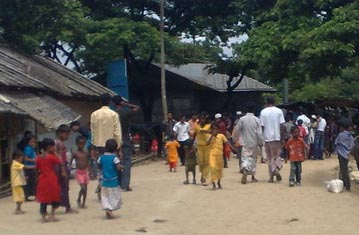
Rohingya refugees in Nayapara Official Refugee Camp
“Other refugees and I came to Bangladesh from Burma in 1991 and 1992 because of religious persecution and other human rights abuses such as forced labor, restrictions on our movement, marriage, and education, as well as land confiscation, arbitrary arrest and extortion, and because of denied rights of citizenship with ethnicity and equal rights in Arakan State.”
Abdul lives with his parents and elder brother in a small shed at Nayapara Official Refugee Camp under the supervision of UNHCR and the Bangladesh authorities.
“I live in a refugee camp in Bangladesh. I learnt up to class five in the camp, but I could not acquire higher education and could not go to high school or college because the Bangladesh authorities do not provide opportunities [for refugees] to get higher education.”
“The authorities only provide informal schools up to class five in the official Kutupalong and Nayapara camps.
“I hoped that it was a good chance for me and other refugees when the resettlement program was started by the United Nations High Commissioner for Refugees (UNHCR) in 2006. I had also a dream and hope to go to abroad to another country through the UNHCR and learn more and more. But I couldn’t.”
According to a report titled Refugee Resettlement Statistics of IOM, the total figure of resettled Rohingya refugees from refugee camps in Bangladesh from 2006-2010 is 926. Most of them have been accepted by Canada, the United Kingdom, Australia, Norway, Ireland, New Zealand, Sweden, and the USA.
A Rohingya man who has arrived in a third country said, “We are enjoying our rights in a third country, and also can study here freely. But we are very sad because very few Rohingya refugees have been resettled in third countries.”
A schoolteacher from Nayapara Camp says, unfortunately, the resettlement program was halted by the Bangladeshi authorities in 2010 for unknown reasons.
The schoolteacher also says that those who continue living in Bangladeshi refugee camps are unable to see any future for the next generations.
However, the newly formed government of Burma has agreed to take back Rohingya refugees currently staying at two refugee camps in Cox's Bazar under the UNHCR, but no decision has been made concerning the large number of unregistered Rohingya living in Bangladesh, Foreign Secretary Mijarul Quayes told a news conference on October 15.
“Although the undocumented Burmese nationals do not have refugee status, we are not forcing them out of the country on humanitarian grounds,” Quayes said, adding that the Burmese authorities have agreed to discuss the undocumented Burmese refugees (mostly Rohingya) in the future.
Quayes also said Prime Minister Sheikh Hasina will visit Burma shortly, but the date for the visit has not been set. He expressed hope that during the visit, many bilateral issues, including border trade and coastal shipping, will be resolved.
Bangladesh’s Foreign Minister Dipo Moni yesterday told Assistant High Commissioner for Refugees Janet Lim that Bangladesh will not pursue a policy of forced Rohingya refugee repatriation.
Dipu Moni also said on November 20, that as a principled position, Bangladesh has never pursued ‘forced repatriation’ of refugees, according to a Foreign Ministry press release.
Bangladesh has been cooperating with the UNHCR to support the voluntary repatriation of the Rohingya refugees through diplomatic negotiations with Burma, Moni said.
All future repatriation of Rohingya to Burma should remain strictly voluntary, UNHCR Assistant High Commissioner Janet Lim stressed.
According to a group of refugees, “We will go back to our motherland if the Burmese authorities gives us citizenship with Rohingya ethnicity and equal rights as other ethnics groups.”
The refugees have the following demands:
(1) To be recognized as citizens of Burma with Rohingya ethnicity by the UN-recognized democratic government of Burma.
(2) To have equal rights like other ethnic groups in Burma
(3) To be provided compensations and returns of confiscated lands and other properties
(4) To see an end to human rights violations and racial discrimination, especially against Rohingya
(5) To have all political prisoners in Burma released, and for the government to give status to exiled Rohingya who live outside of Burma
(6) Not to be forcefully repatriated by Bangladeshi authorities.
A politician on condition of anonymity said that if the Burmese authorities do not grant full citizenship with ethnicity and equal rights to the Rohingya refugees, the refugees will never go back to Burma.
“More than 28,000 Rohingya are still living in two camps — Nayapara and Kutupalong — run by the UNHCR in Cox's Bazar. These are the remnants of some nearly 300,000 refugees who flocked into Bangladesh in 1991–92, alleging persecution by Burma’s military regime. Most of them were repatriated following the UNHCR's mediation.”
The politician also said, “We fled to Bangladesh from Burma because of persecution and human rights abuses by the military regime. We will not jump again into the same persecution and human rights abuses by the military regime. We would rather die in Bangladesh or elsewhere.”
Abdul and other refugees would like to urge the international community, the UNHCR, and Bangladeshi authorities to work to solve the Rohingya problem and to urge the Burmese authorities to recognize their citizenship with Rohingya ethnicity in Burma before any repatriation programs from Bangladesh are started.
Credit :Kaladan Press

အခုတေလာ စာေရးပ်က္တာေတြ မ်ားေနတယ္။ ႏို၀င္ဘာလလယ္ ေရာက္ေနတာေတာင္ ရန္ကုန္မႇာ ေဆာင္းမ၀င္ေသးဘဲ ပူျမဲပူေနေသးတာေၾကာင့္ ေနလို႔ထိုင္လို႔ သိပ္မေကာင္းဘူး။ ၿပီးေတာ့ ဒီရက္ပိုင္းအတြင္း ေခါင္းပူစရာေတြကလည္း မ်ားတယ္။
လြတ္ၿပီဆိုနဲ႔ ၀င္မယ္ဆို
တိုင္းေရးျပည္ေရး လႈပ္လႈပ္ရႇား ရႇားျဖစ္လာတဲ့အခါမ်ဳိးေတြဆိုရင္ ဧည့္မ်ားသလို ဖုန္းေခၚသံေတြလည္း မ်ားတယ္။ မ်က္စိႀကီး နားႀကီး ရပ္ကြက္ထဲက လူတစ္ေယာက္လို႔ အမ်ားက ထင္မႇတ္မႇားေနၾကေလေတာ့ တစ္ခုခု အသံၾကားတုိင္း လႇမ္းေမးတတ္ၾကတယ္။ ဒီရက္ပိုင္းမႇာေတာ့ 'လြတ္ၿပီဆို' နဲ႔ '၀င္မယ္ဆို' ေမးခြန္း ႏႇစ္ခုကို ေမာေလာက္ေအာင္ကို ေျဖေနရတယ္။ မသိပါဘူး၊ မၾကားပါဘူး၊ မသိပါဘူး။ မၾကားပါဘူးေပါ့။ ဟုတ္တယ္ေလ ႏိုင္ငံ့အေရး ေပါက္နဲ႔ေက်းဆိုတာ အင္မတန္ခန္႔မႇန္းရ ခက္တာကလား။ မုိးေလ၀သခန္႔မႇန္းသလို ရာသီဥတုသာသာယာယာရႇိ မယ္ ခန္႔မႇန္းထားေပမယ့္ တ၀ုန္း၀ုန္း တဒိုင္းဒိုင္းထစ္ခ်ဳန္းၿပီး မိုးေတြသည္း ႀကီးမဲႀကီး ရြာခ်င္ရြာခ်တတ္တာ။
ဒီမိုကေရစီၾကာေတာမိုး
မ်က္စိႀကီးနားႀကီး ရပ္ကြက္သားဆိုေပမယ့္ မ်က္စိကမႈန္သီၿပီး နားကလည္း ထိုင္းေနၿပီဆိုေတာ့ တည့္တည့္ေျပာမႇ ရိပ္မိတယ္ဆို႐ံုေလာက္ ရႇိေတာ့တာ။ အဲဒီေတာ့ မသိပါဘူး။ မၾကားပါဘူးဆိုတာထက္ ဘာမႇပုိမေျပာႏိုင္ ေတာ့ဘူး။ ဒီမိုကေရစီဆိုတာကလည္း ၾကာေတာမႇာရြာတဲ့ ေပါကၡရ ၀သမိုးလို စိုခ်င္တဲ့ေနရာမႇာစိုၿပီး ေျခာက္ခ်င္တဲ့ေနရာမႇာ ေျခာက္တဲ့ သေဘာရႇိတယ္ထင္ပါရဲ႕။ အမ်ားအားျဖင့္ေတာ့ ႐ုပ္ျမင္သံၾကားမႇာ ထုတ္ျပန္ေၾကညာ ေတာ့မႇ သိရတာခ်ည္းပါပဲ။ ကိုယ္တိုင္က သတင္းသမားျဖစ္ေတာ့ အခ်က္အလက္ မရႇိရင္ မေျပာတတ္ဘူး။ ေရာ္ရမ္းမႇန္းဆလည္း မလုပ္တတ္ဘူး။ ခုအခ်ိန္မႇာ သတင္းစာထုတ္မလားလို႔ေမးရင္ ေခါင္းခါမိမႇာပဲ။ ဘယ္လိုမႇ လုပ္တတ္မႇာ မဟုတ္တာ ေသခ်ာတယ္။
ငါးၾကင္းဆီနဲ႔ ငါးၾကင္းေၾကာ္
စာေတြအမ်ားႀကီးေရးေနေတာ့ ဓာတ္မသိသူေတြကေတာ့ မ်က္စိႀကီး နားႀကီးလို႔ ထင္ၾကရႇာတာေပါ့။ အဲဒီ အထင္နဲ႔ပဲ တစ္ခုခုလႈပ္လႈပ္ရြရြ ၾကားရျမင္ရတာနဲ႔ ဖုန္းလႇမ္းဆက္ၾကတယ္။ တကၠသိုလ္ရိပ္သာလမ္းက ျခံထဲကို ဘယ္အခ်ိန္က ကားဘယ္ႏႇစင္း ၀င္သြားတယ္ဆိုတာမ်ဳိး၊ အင္းစိန္ေထာင္ ဗူး၀မႇာ သတင္းေထာက္ေတြ အမ်ားႀကီး လာေစာင့္ေနတယ္ဆိုတာမ်ဳိး သတင္းေတြ လႇမ္းေျပာၾကတယ္။ ဒီလိုနဲ႔ပဲ ငါးၾကင္းဆီနဲ႔ငါးၾကင္းေၾကာ္သလို လူထုဆီကရတဲ့သတင္းေတြကို လူထုဆီျပန္ပို႔ေပးရတယ္။ နည္းနည္းေလး၀ါယမစိုက္ထုတ္ၿပီး ေသခ်ာ ေအာင္ ထပ္ဆင့္ေမးျမန္းရတာမ်ဳိးေတာ့ ရႇိတာေပါ့ေလ။ ဒါေလာက္ကေလးမႇ မလုပ္ရင္လည္း သတင္းသမားလို႔ အေခၚမခံထိုက္ေတာ့ပါဘူး။
ေစာင့္ၾကည့္မယ္ဆိုတဲ့ ကိစၥ
သမၼတဦးသိန္းစိန္အစိုးရကို မေထာက္ခံေသးဘူး။ ေထာင္ထဲက လူေတြလႊတ္၊ မလႊတ္ဆိုတဲ့စံနဲ႔ ျပည္တြင္းစစ္ ရပ္စဲေရး လုပ္ မလုပ္ဆိုတဲ့ စံႏႇစ္ခုနဲ႔ ခ်ိန္ထိုးၿပီး ေစာင့္ၾကည့္ဦးမယ္လို႔ ဂ်ာနယ္ေတြအေတာ္ေတာ္မ်ားမ်ားမႇာ ေရးခဲ့တာနဲ႔ပတ္သက္ၿပီး ေမးျမန္းၾကသူ ေတာ္ေတာ္မ်ားတယ္။ တခ်ဳိ႕က ဖုန္းဆက္တယ္။ တခ်ဳိ႕က စာေရးတယ္။ တခ်ဳိ႕က လူကိုယ္တိုင္ လာၿပီးေမးတယ္။ အင္တာနက္ကတစ္ဆင့္ ေမးတာေတြလည္းရႇိတယ္။ တခ်ဳိ႕က ေစာင့္ၾကည့္တာကို သေဘာတူတယ္။ တခ်ဳိ႕ကေတာ့ ဘာေစာင့္ၾကည့္စရာလိုသလဲ ဒီပုတ္ထဲက ဒီပဲ ေတြပဲမဟုတ္ဘူးလားလို႔ ေစာဒက တက္ၾကတယ္။ တက္ပါေစ။ဒီလို ကုိယ္မႀကိဳက္တာကို မႀကိဳက္ဘူး ေျပာခြင့္ရႇိမႇ ဒီမိုကေရစီလို႔ ေခၚႏိုင္မႇာေပါ့။ အထက္ကေျပာသမွ် လက္ညႇိဳးေထာင္ ေခါင္းညိတ္လုပ္တဲ့ အက်င့္ေတြ ဆက္ၿပီးသယ္ေဆာင္လာဖို႔ မေကာင္းပါဘူး။
ျဖည့္စြက္ခ်က္
ေစာင့္ၾကည့္တာကို သေဘာတူသူနဲ႔ မတူသူပဲ ရႇိတာမဟုတ္ဘူး။ ျဖည့္စြက္ေဆြးေႏြးသူလည္း ရႇိပါတယ္။ သူ႔ေဆြးေႏြးခ်က္ကလည္း မႇန္ေနတာေၾကာင့္ ထည့္မစဥ္းစားလို႔မျဖစ္ဘူး ယူဆတယ္။ သူက စံႏႇစ္ခုနဲ႔ ခ်ိန္ထိုးၾကည့္႐ံု နဲ႔တင္ မလံုေလာက္ဘူးလို႔ ေထာက္ျပတယ္။ တိုင္းသူ ျပည္သားအမ်ားစုႀကီးရဲ႕ေက်ာေပၚမႇာပိေနတဲ့ ၀န္ထုပ္၀န္ပိုးေတြကို ေလ်ာ့ခ်မပစ္သေရြ႕ ကာလပတ္လံုး ဒီမိုကေရစီလမ္းေၾကာင္းမႇန္ေပၚကို ေရာက္ၿပီလို႔ မဆိုႏိုင္ဘူးလို႔ ဆိုပါတယ္။ ေဆြးေႏြးသူ မိတ္ေဆြက မႏၲေလးက လုပ္ငန္းရႇင္တစ္ေယာက္ပါ။ တုိင္းသူျပည္သားမ်ားအေနနဲ႔ ေျမခြန္၊ အိမ္ခြန္၊ ေရခြန္၊ မီးခြန္၊ ကုန္သြယ္လုပ္ငန္းခြန္၊ ၀င္ေငြခြန္စတဲ့ တရား၀င္ အခြန္အတုတ္မ်ားကို မႇန္မႇန္ကန္ကန္ ေပးသြင္းထမ္းေဆာင္ဖို႔ တာ၀န္ရႇိတယ္။ ေရႇာင္ရႇားပ်က္ကြယ္ရင္ အေရးယူသင့္တယ္လို႔ သူက လက္ခံပါတယ္။
တခ်ဳိ႕ကေစာင့္ၾကည့္တာကို သေဘာတူတယ္။ တခ်ဳိ႕ကေတာ့ ဘာေစာင့္ၾကည့္စရာလိုသလဲ ဒီပုတ္ထဲက ဒီပဲေတြပဲ မဟုတ္ဘူးလားလို႔ ေစာဒကတက္ၾကတယ္။ တက္ပါေစ။ ဒီလိုကုိယ္မႀကိဳက္တာကို မႀကိဳက္ဘူး ေျပာခြင့္ရႇိမႇ ဒီမိုကေရစီလို႔ ေခၚႏိုင္မႇာေပါ့။ အထက္ကေျပာသမွ် လက္ညႇိဳးေထာင္ေခါင္းညိတ္ လုပ္တဲ့အက်င့္ေတြ ဆက္ၿပီးသယ္ေဆာင္လာဖို႔ မေကာင္းပါဘူး . . .
ခါးစည္းခံခဲ့ရ
တရား၀င္ဥပေဒနဲ႔ ျပ႒ာန္းသတ္မႇတ္ထားတဲ့ အခြန္အတုတ္မ်ားအျပင္ မလိုလားအပ္တဲ့ ဥပေဒနဲ႔လည္း မကိုက္ညီတဲ့ ေခါင္းစဥ္အမ်ဳိးမ်ဳိးတပ္ထားတဲ့ ေကာက္ခံမႈေတြက တရား၀င္ အခြန္အခေတြထက္ အမ်ဳိးပိုစံုၿပီး ေကာက္ခံ မႈပမာဏကလည္း မတန္တဆ ႀကီးမားမ်ားျပားလြန္းတဲ့ဒဏ္ ကို ေတာေရာၿမိဳ႕ပါမက်န္ ႏႇစ္ငါးဆယ္လံုးလံုး ခါးစည္းခံခဲ့ရတာေၾကာင့္ တိုင္းျပည္ရဲ႕စီးပြားေရး နာလန္မထူႏိုင္ေအာင္ျဖစ္ေနတာလို႔ သူကဆိုပါတယ္။ ၿမိဳ႕ေပၚက လုပ္ငန္းရႇင္ေတြဆိုရင္ ဥပေဒအရ ေကာက္ခံတဲ့အခြန္ေတြအျပင္ ေတာ္ေတာ္ၾကာ လမ္းခင္းဖို႔ဆိုၿပီး အနည္းဆံုး ငါးသိန္းက ဆယ္သိန္း၊ ဆယ့္ငါးသိန္းထိ ေကာက္လိုက္၊ ေတာ္ေတာ္ၾကာ ထရန္စေဖာ္မာထိုင္ဖို႔ဆိုၿပီး ငါးသိန္း၊ ဆယ္သိန္းေကာက္လိုက္၊ ေရပိုက္သြယ္ဖို႔၊ ဖုန္းလိုင္းသြယ္ဖို႔ဆို ေကာက္လုိက္နဲ႔ တစ္ႏႇစ္ပတ္လံုးေကာက္လို႔ မၿပီးႏိုင္ေတာ့ဘူး။
ျပာတာေတာင္ ဆရာေခၚရ
ဒီေကာက္ခံမႈေတြလုပ္ၿပီး လုပ္ငန္းေတြၿပီးေအာင္ လုပ္ မလုပ္ဆိုတာ မသိရသလို စာရင္းအင္းရႇင္းတမ္းလည္း ဘယ္ေတာ့မႇမျမင္ရဘူး။ ေတာက ေတာင္သူလယ္သမားေတြဆို ပိုဆိုးတယ္။ ႐ံုးက စာလာပိုတဲ့ျပာတာကိုေတာင္ ေၾကာက္ၿပီး ဆရာေခၚေနၾကရတာဆိုေတာ့ ဘာလာေကာက္ ေကာက္ ေမးရဲ ျမန္းရဲၾကတာမဟုတ္ဘူး။ ထည့္လိုက္ၾကရတာပဲ။ အမေတာ္ေၾကးထုတ္ေခ်းတဲ့အခါမ်ား ဟိုဟာဒီဟာေတြ ျဖတ္ယူထားလည္း မေျပာရဲဘူး။ ၿငိမ္ေနၾကရတယ္။ အဆိုးဆံုးကေတာ့ ေစ်းလာေရာင္းတဲ့သူေတြ ျဖစ္တယ္။ အမေတာ္ေၾကး ထုတ္ေပးတဲ့ေနရာနားမႇာ ကားေတြ ထုိးဆိုက္ၿပီး ဌာနဆိုင္ရာလိုလို ဘာလိုလိုနဲ႔ ေရာင္ေတာ္ျပန္ေရာလႊတ္ၿပီး ေျမဆီေတြနဲ႔ ပိုးသတ္ေဆးေတြ မ၀ယ္မေနရ ဇြတ္ေရာင္းၾကတယ္။ သူတို႔ ေရာင္းတဲ့တံဆိပ္ေတြက မေကာင္းလို႔ မ၀ယ္ခ်င္ေပမယ့္လည္း လယ္သမားေတြက ျပန္ေျပာရဲတာ မဟုတ္ဘူး။
အမေတာ္ေၾကးစနစ္ျပင္ဖို႔လို
အမေတာ္ေၾကးေပးတဲ့စနစ္ကို လည္းျပဳျပင္ဖို႔ စဥ္းစားသင့္တာၾကာၿပီ။ အမေတာ္ေၾကးေပး႐ံုနဲ႔ လယ္သမားေတြရဲ႕ အခက္အခဲ ေျပလည္သြားတာမဟုတ္ဘူး။ ေပးတုန္းက ဟိုႏႈတ္ ဒီႏႈတ္နဲ႔ အျပည့္မရေပမယ့္ ျပန္ဆပ္ခ်ိန္ ေရာက္ေတာ့ အျပည့္ဆပ္ၾကရတာ။ လယ္သမားေတြရဲ႕ဘ၀ အမႇန္ တကယ္တုိးတက္ဖို႔ဆိုရင္ မ်ဳိးေကာင္းမ်ဳိးသန္႔ သီးႏႇံေတြ ျဖန္႔ျဖဴးေပးၿပီး နည္းပညာအကူအညီေတြ လံုလံုေလာက္ေလာက္ ပံ့ပိုးေပးၾကရမႇာျဖစ္တယ္။ အဓိကကေတာ့ လယ္သမားေတြရဲ႕ ေက်ာေပၚက ၀န္ထုပ္၀န္ပိုးေတြျဖစ္တဲ့ တရားမ၀င္ေငြေကာက္ခံမႈမ်ဳိးစံုကို အျမန္ဆံုး ရပ္စဲပစ္ဖို႔ျဖစ္တယ္။ ဒါေတြမလုပ္ဘဲနဲ႔ စီးပြားေရး ျပဳျပင္ေျပာင္းလဲမႈလုပ္မယ္ေျပာဆိုေနျခင္းဟာ အိတ္ေပါက္နဲ႔ဖားေကာက္သလိုသာ ရႇိလိမ့္မယ္လို႔လည္း မိတ္ေဆြက ေထာက္ျပပါတယ္။
ထိပ္တန္းက်ေသာ အစိုးရ
ေနာက္ဆံုးေတာ့ မိတ္ေဆြက လူထုဦးလႇရဲ႕ 'ေထာင္နဲ႔လူသား' စာအုပ္ အဖြင့္စာမ်က္ႏႇာမႇာပါတဲ့ စာပိုဒ္ကေလးကို ဖတ္ျဖစ္ေအာင္ ဖတ္ၾကည့္စမ္းပါလို႔ ညႊန္းလိုက္တဲ့အတြက္ ရႇာၿပီးဖတ္ၾကည့္လုိက္ေတာ့ ဒီလိုေတြ႕ရပါတယ္။
"အစိုးရ"
''ဆင္းရဲသားမ်ားေပ်ာ္ရႊင္၍ ပညာမတတ္သူ၊ ဒုကၡေရာက္သူမ်ား မရႇိဘဲ အက်ဥ္းသားမဲ့ေသာ ေထာင္၊ သူေတာင္းစားကင္းေသာ လမ္း၊ လူအိုမ်ားခ်မ္းသာ၍ အခြန္အတုတ္နည္းပါေပသည္ဟု ေျပာႏုိင္ေသာ အစိုးရမ်ဳိးမႇ ေလာကတြင္ ထိပ္တန္းက်ေသာ အစိုးရဟု ႂကြားႏိုင္သည္"
ေသာမတ္စ္ပိန္း
credit : Weekly Media
လြတ္ၿပီဆိုနဲ႔ ၀င္မယ္ဆို
တိုင္းေရးျပည္ေရး လႈပ္လႈပ္ရႇား ရႇားျဖစ္လာတဲ့အခါမ်ဳိးေတြဆိုရင္ ဧည့္မ်ားသလို ဖုန္းေခၚသံေတြလည္း မ်ားတယ္။ မ်က္စိႀကီး နားႀကီး ရပ္ကြက္ထဲက လူတစ္ေယာက္လို႔ အမ်ားက ထင္မႇတ္မႇားေနၾကေလေတာ့ တစ္ခုခု အသံၾကားတုိင္း လႇမ္းေမးတတ္ၾကတယ္။ ဒီရက္ပိုင္းမႇာေတာ့ 'လြတ္ၿပီဆို' နဲ႔ '၀င္မယ္ဆို' ေမးခြန္း ႏႇစ္ခုကို ေမာေလာက္ေအာင္ကို ေျဖေနရတယ္။ မသိပါဘူး၊ မၾကားပါဘူး၊ မသိပါဘူး။ မၾကားပါဘူးေပါ့။ ဟုတ္တယ္ေလ ႏိုင္ငံ့အေရး ေပါက္နဲ႔ေက်းဆိုတာ အင္မတန္ခန္႔မႇန္းရ ခက္တာကလား။ မုိးေလ၀သခန္႔မႇန္းသလို ရာသီဥတုသာသာယာယာရႇိ မယ္ ခန္႔မႇန္းထားေပမယ့္ တ၀ုန္း၀ုန္း တဒိုင္းဒိုင္းထစ္ခ်ဳန္းၿပီး မိုးေတြသည္း ႀကီးမဲႀကီး ရြာခ်င္ရြာခ်တတ္တာ။
ဒီမိုကေရစီၾကာေတာမိုး
မ်က္စိႀကီးနားႀကီး ရပ္ကြက္သားဆိုေပမယ့္ မ်က္စိကမႈန္သီၿပီး နားကလည္း ထိုင္းေနၿပီဆိုေတာ့ တည့္တည့္ေျပာမႇ ရိပ္မိတယ္ဆို႐ံုေလာက္ ရႇိေတာ့တာ။ အဲဒီေတာ့ မသိပါဘူး။ မၾကားပါဘူးဆိုတာထက္ ဘာမႇပုိမေျပာႏိုင္ ေတာ့ဘူး။ ဒီမိုကေရစီဆိုတာကလည္း ၾကာေတာမႇာရြာတဲ့ ေပါကၡရ ၀သမိုးလို စိုခ်င္တဲ့ေနရာမႇာစိုၿပီး ေျခာက္ခ်င္တဲ့ေနရာမႇာ ေျခာက္တဲ့ သေဘာရႇိတယ္ထင္ပါရဲ႕။ အမ်ားအားျဖင့္ေတာ့ ႐ုပ္ျမင္သံၾကားမႇာ ထုတ္ျပန္ေၾကညာ ေတာ့မႇ သိရတာခ်ည္းပါပဲ။ ကိုယ္တိုင္က သတင္းသမားျဖစ္ေတာ့ အခ်က္အလက္ မရႇိရင္ မေျပာတတ္ဘူး။ ေရာ္ရမ္းမႇန္းဆလည္း မလုပ္တတ္ဘူး။ ခုအခ်ိန္မႇာ သတင္းစာထုတ္မလားလို႔ေမးရင္ ေခါင္းခါမိမႇာပဲ။ ဘယ္လိုမႇ လုပ္တတ္မႇာ မဟုတ္တာ ေသခ်ာတယ္။
ငါးၾကင္းဆီနဲ႔ ငါးၾကင္းေၾကာ္
စာေတြအမ်ားႀကီးေရးေနေတာ့ ဓာတ္မသိသူေတြကေတာ့ မ်က္စိႀကီး နားႀကီးလို႔ ထင္ၾကရႇာတာေပါ့။ အဲဒီ အထင္နဲ႔ပဲ တစ္ခုခုလႈပ္လႈပ္ရြရြ ၾကားရျမင္ရတာနဲ႔ ဖုန္းလႇမ္းဆက္ၾကတယ္။ တကၠသိုလ္ရိပ္သာလမ္းက ျခံထဲကို ဘယ္အခ်ိန္က ကားဘယ္ႏႇစင္း ၀င္သြားတယ္ဆိုတာမ်ဳိး၊ အင္းစိန္ေထာင္ ဗူး၀မႇာ သတင္းေထာက္ေတြ အမ်ားႀကီး လာေစာင့္ေနတယ္ဆိုတာမ်ဳိး သတင္းေတြ လႇမ္းေျပာၾကတယ္။ ဒီလိုနဲ႔ပဲ ငါးၾကင္းဆီနဲ႔ငါးၾကင္းေၾကာ္သလို လူထုဆီကရတဲ့သတင္းေတြကို လူထုဆီျပန္ပို႔ေပးရတယ္။ နည္းနည္းေလး၀ါယမစိုက္ထုတ္ၿပီး ေသခ်ာ ေအာင္ ထပ္ဆင့္ေမးျမန္းရတာမ်ဳိးေတာ့ ရႇိတာေပါ့ေလ။ ဒါေလာက္ကေလးမႇ မလုပ္ရင္လည္း သတင္းသမားလို႔ အေခၚမခံထိုက္ေတာ့ပါဘူး။
ေစာင့္ၾကည့္မယ္ဆိုတဲ့ ကိစၥ
သမၼတဦးသိန္းစိန္အစိုးရကို မေထာက္ခံေသးဘူး။ ေထာင္ထဲက လူေတြလႊတ္၊ မလႊတ္ဆိုတဲ့စံနဲ႔ ျပည္တြင္းစစ္ ရပ္စဲေရး လုပ္ မလုပ္ဆိုတဲ့ စံႏႇစ္ခုနဲ႔ ခ်ိန္ထိုးၿပီး ေစာင့္ၾကည့္ဦးမယ္လို႔ ဂ်ာနယ္ေတြအေတာ္ေတာ္မ်ားမ်ားမႇာ ေရးခဲ့တာနဲ႔ပတ္သက္ၿပီး ေမးျမန္းၾကသူ ေတာ္ေတာ္မ်ားတယ္။ တခ်ဳိ႕က ဖုန္းဆက္တယ္။ တခ်ဳိ႕က စာေရးတယ္။ တခ်ဳိ႕က လူကိုယ္တိုင္ လာၿပီးေမးတယ္။ အင္တာနက္ကတစ္ဆင့္ ေမးတာေတြလည္းရႇိတယ္။ တခ်ဳိ႕က ေစာင့္ၾကည့္တာကို သေဘာတူတယ္။ တခ်ဳိ႕ကေတာ့ ဘာေစာင့္ၾကည့္စရာလိုသလဲ ဒီပုတ္ထဲက ဒီပဲ ေတြပဲမဟုတ္ဘူးလားလို႔ ေစာဒက တက္ၾကတယ္။ တက္ပါေစ။ဒီလို ကုိယ္မႀကိဳက္တာကို မႀကိဳက္ဘူး ေျပာခြင့္ရႇိမႇ ဒီမိုကေရစီလို႔ ေခၚႏိုင္မႇာေပါ့။ အထက္ကေျပာသမွ် လက္ညႇိဳးေထာင္ ေခါင္းညိတ္လုပ္တဲ့ အက်င့္ေတြ ဆက္ၿပီးသယ္ေဆာင္လာဖို႔ မေကာင္းပါဘူး။
ျဖည့္စြက္ခ်က္
ေစာင့္ၾကည့္တာကို သေဘာတူသူနဲ႔ မတူသူပဲ ရႇိတာမဟုတ္ဘူး။ ျဖည့္စြက္ေဆြးေႏြးသူလည္း ရႇိပါတယ္။ သူ႔ေဆြးေႏြးခ်က္ကလည္း မႇန္ေနတာေၾကာင့္ ထည့္မစဥ္းစားလို႔မျဖစ္ဘူး ယူဆတယ္။ သူက စံႏႇစ္ခုနဲ႔ ခ်ိန္ထိုးၾကည့္႐ံု နဲ႔တင္ မလံုေလာက္ဘူးလို႔ ေထာက္ျပတယ္။ တိုင္းသူ ျပည္သားအမ်ားစုႀကီးရဲ႕ေက်ာေပၚမႇာပိေနတဲ့ ၀န္ထုပ္၀န္ပိုးေတြကို ေလ်ာ့ခ်မပစ္သေရြ႕ ကာလပတ္လံုး ဒီမိုကေရစီလမ္းေၾကာင္းမႇန္ေပၚကို ေရာက္ၿပီလို႔ မဆိုႏိုင္ဘူးလို႔ ဆိုပါတယ္။ ေဆြးေႏြးသူ မိတ္ေဆြက မႏၲေလးက လုပ္ငန္းရႇင္တစ္ေယာက္ပါ။ တုိင္းသူျပည္သားမ်ားအေနနဲ႔ ေျမခြန္၊ အိမ္ခြန္၊ ေရခြန္၊ မီးခြန္၊ ကုန္သြယ္လုပ္ငန္းခြန္၊ ၀င္ေငြခြန္စတဲ့ တရား၀င္ အခြန္အတုတ္မ်ားကို မႇန္မႇန္ကန္ကန္ ေပးသြင္းထမ္းေဆာင္ဖို႔ တာ၀န္ရႇိတယ္။ ေရႇာင္ရႇားပ်က္ကြယ္ရင္ အေရးယူသင့္တယ္လို႔ သူက လက္ခံပါတယ္။
တခ်ဳိ႕ကေစာင့္ၾကည့္တာကို သေဘာတူတယ္။ တခ်ဳိ႕ကေတာ့ ဘာေစာင့္ၾကည့္စရာလိုသလဲ ဒီပုတ္ထဲက ဒီပဲေတြပဲ မဟုတ္ဘူးလားလို႔ ေစာဒကတက္ၾကတယ္။ တက္ပါေစ။ ဒီလိုကုိယ္မႀကိဳက္တာကို မႀကိဳက္ဘူး ေျပာခြင့္ရႇိမႇ ဒီမိုကေရစီလို႔ ေခၚႏိုင္မႇာေပါ့။ အထက္ကေျပာသမွ် လက္ညႇိဳးေထာင္ေခါင္းညိတ္ လုပ္တဲ့အက်င့္ေတြ ဆက္ၿပီးသယ္ေဆာင္လာဖို႔ မေကာင္းပါဘူး . . .
ခါးစည္းခံခဲ့ရ
တရား၀င္ဥပေဒနဲ႔ ျပ႒ာန္းသတ္မႇတ္ထားတဲ့ အခြန္အတုတ္မ်ားအျပင္ မလိုလားအပ္တဲ့ ဥပေဒနဲ႔လည္း မကိုက္ညီတဲ့ ေခါင္းစဥ္အမ်ဳိးမ်ဳိးတပ္ထားတဲ့ ေကာက္ခံမႈေတြက တရား၀င္ အခြန္အခေတြထက္ အမ်ဳိးပိုစံုၿပီး ေကာက္ခံ မႈပမာဏကလည္း မတန္တဆ ႀကီးမားမ်ားျပားလြန္းတဲ့ဒဏ္ ကို ေတာေရာၿမိဳ႕ပါမက်န္ ႏႇစ္ငါးဆယ္လံုးလံုး ခါးစည္းခံခဲ့ရတာေၾကာင့္ တိုင္းျပည္ရဲ႕စီးပြားေရး နာလန္မထူႏိုင္ေအာင္ျဖစ္ေနတာလို႔ သူကဆိုပါတယ္။ ၿမိဳ႕ေပၚက လုပ္ငန္းရႇင္ေတြဆိုရင္ ဥပေဒအရ ေကာက္ခံတဲ့အခြန္ေတြအျပင္ ေတာ္ေတာ္ၾကာ လမ္းခင္းဖို႔ဆိုၿပီး အနည္းဆံုး ငါးသိန္းက ဆယ္သိန္း၊ ဆယ့္ငါးသိန္းထိ ေကာက္လိုက္၊ ေတာ္ေတာ္ၾကာ ထရန္စေဖာ္မာထိုင္ဖို႔ဆိုၿပီး ငါးသိန္း၊ ဆယ္သိန္းေကာက္လိုက္၊ ေရပိုက္သြယ္ဖို႔၊ ဖုန္းလိုင္းသြယ္ဖို႔ဆို ေကာက္လုိက္နဲ႔ တစ္ႏႇစ္ပတ္လံုးေကာက္လို႔ မၿပီးႏိုင္ေတာ့ဘူး။
ျပာတာေတာင္ ဆရာေခၚရ
ဒီေကာက္ခံမႈေတြလုပ္ၿပီး လုပ္ငန္းေတြၿပီးေအာင္ လုပ္ မလုပ္ဆိုတာ မသိရသလို စာရင္းအင္းရႇင္းတမ္းလည္း ဘယ္ေတာ့မႇမျမင္ရဘူး။ ေတာက ေတာင္သူလယ္သမားေတြဆို ပိုဆိုးတယ္။ ႐ံုးက စာလာပိုတဲ့ျပာတာကိုေတာင္ ေၾကာက္ၿပီး ဆရာေခၚေနၾကရတာဆိုေတာ့ ဘာလာေကာက္ ေကာက္ ေမးရဲ ျမန္းရဲၾကတာမဟုတ္ဘူး။ ထည့္လိုက္ၾကရတာပဲ။ အမေတာ္ေၾကးထုတ္ေခ်းတဲ့အခါမ်ား ဟိုဟာဒီဟာေတြ ျဖတ္ယူထားလည္း မေျပာရဲဘူး။ ၿငိမ္ေနၾကရတယ္။ အဆိုးဆံုးကေတာ့ ေစ်းလာေရာင္းတဲ့သူေတြ ျဖစ္တယ္။ အမေတာ္ေၾကး ထုတ္ေပးတဲ့ေနရာနားမႇာ ကားေတြ ထုိးဆိုက္ၿပီး ဌာနဆိုင္ရာလိုလို ဘာလိုလိုနဲ႔ ေရာင္ေတာ္ျပန္ေရာလႊတ္ၿပီး ေျမဆီေတြနဲ႔ ပိုးသတ္ေဆးေတြ မ၀ယ္မေနရ ဇြတ္ေရာင္းၾကတယ္။ သူတို႔ ေရာင္းတဲ့တံဆိပ္ေတြက မေကာင္းလို႔ မ၀ယ္ခ်င္ေပမယ့္လည္း လယ္သမားေတြက ျပန္ေျပာရဲတာ မဟုတ္ဘူး။
အမေတာ္ေၾကးစနစ္ျပင္ဖို႔လို
အမေတာ္ေၾကးေပးတဲ့စနစ္ကို လည္းျပဳျပင္ဖို႔ စဥ္းစားသင့္တာၾကာၿပီ။ အမေတာ္ေၾကးေပး႐ံုနဲ႔ လယ္သမားေတြရဲ႕ အခက္အခဲ ေျပလည္သြားတာမဟုတ္ဘူး။ ေပးတုန္းက ဟိုႏႈတ္ ဒီႏႈတ္နဲ႔ အျပည့္မရေပမယ့္ ျပန္ဆပ္ခ်ိန္ ေရာက္ေတာ့ အျပည့္ဆပ္ၾကရတာ။ လယ္သမားေတြရဲ႕ဘ၀ အမႇန္ တကယ္တုိးတက္ဖို႔ဆိုရင္ မ်ဳိးေကာင္းမ်ဳိးသန္႔ သီးႏႇံေတြ ျဖန္႔ျဖဴးေပးၿပီး နည္းပညာအကူအညီေတြ လံုလံုေလာက္ေလာက္ ပံ့ပိုးေပးၾကရမႇာျဖစ္တယ္။ အဓိကကေတာ့ လယ္သမားေတြရဲ႕ ေက်ာေပၚက ၀န္ထုပ္၀န္ပိုးေတြျဖစ္တဲ့ တရားမ၀င္ေငြေကာက္ခံမႈမ်ဳိးစံုကို အျမန္ဆံုး ရပ္စဲပစ္ဖို႔ျဖစ္တယ္။ ဒါေတြမလုပ္ဘဲနဲ႔ စီးပြားေရး ျပဳျပင္ေျပာင္းလဲမႈလုပ္မယ္ေျပာဆိုေနျခင္းဟာ အိတ္ေပါက္နဲ႔ဖားေကာက္သလိုသာ ရႇိလိမ့္မယ္လို႔လည္း မိတ္ေဆြက ေထာက္ျပပါတယ္။
ထိပ္တန္းက်ေသာ အစိုးရ
ေနာက္ဆံုးေတာ့ မိတ္ေဆြက လူထုဦးလႇရဲ႕ 'ေထာင္နဲ႔လူသား' စာအုပ္ အဖြင့္စာမ်က္ႏႇာမႇာပါတဲ့ စာပိုဒ္ကေလးကို ဖတ္ျဖစ္ေအာင္ ဖတ္ၾကည့္စမ္းပါလို႔ ညႊန္းလိုက္တဲ့အတြက္ ရႇာၿပီးဖတ္ၾကည့္လုိက္ေတာ့ ဒီလိုေတြ႕ရပါတယ္။
"အစိုးရ"
''ဆင္းရဲသားမ်ားေပ်ာ္ရႊင္၍ ပညာမတတ္သူ၊ ဒုကၡေရာက္သူမ်ား မရႇိဘဲ အက်ဥ္းသားမဲ့ေသာ ေထာင္၊ သူေတာင္းစားကင္းေသာ လမ္း၊ လူအိုမ်ားခ်မ္းသာ၍ အခြန္အတုတ္နည္းပါေပသည္ဟု ေျပာႏုိင္ေသာ အစိုးရမ်ဳိးမႇ ေလာကတြင္ ထိပ္တန္းက်ေသာ အစိုးရဟု ႂကြားႏိုင္သည္"
ေသာမတ္စ္ပိန္း
credit : Weekly Media
 Thant Myint-U is a US-born historian and the author of two best-selling books on Burmese history. He received his PhD from Cambridge University, where he wrote his dissertation on the reigns of Burma's last two kings, Mindon and Thibaw. He has taught as a Fellow at Trinity College, Cambridge, and worked for the United Nations, of which his grandfather, the late U Thant, was secretary-general from 1961 to 1971.
 He is also an outspoken critic of Western sanctions on Burma, which he says have only served to reinforce the country's “disastrous” isolation. In this interview with The Irrawaddy, he discusses recent developments in Burma, the country's increasingly important place in the region, and the challenges that lie ahead as it appears to open up to the West and allow more space for the democratic opposition.
Question: In your new book, “Where China Meets India,” you make the case that Burma has the potential to become a major crossroads in Asia, bridging the world's two most populous nations, which for centuries were separated by a vast area of inhospitable terrain. Although this area is no longer so inaccessible, it is still beset by political instability, particularly in northern Burma and northeastern India. How much do you think this will affect Burma's prospects of assuming greater geopolitical importance in the future?
Answer: Finding a peaceful end to the armed conflicts and instability in northeastern India and northern and eastern Burma is absolutely essential if ordinary people are to benefit from Burma’s greater geopolitical importance. Burma will become geopolitically more important in any case, with the rise of China and with its emerging role as southwest China’s corridor to the Indian Ocean. As I’ve written in my book, it is already set to become an important new Asian crossroads, not only because of developments over the past couple of decades, but also because of centuries-old demographic, environmental and political processes that have finally brought both China and India to Burma’s doorstep. But if there is no real peace or good government, it’s hard to see how the new connections being made will be to the advantage of the majority of people. On the other hand, a peaceful and democratic Burma will be able to benefit immensely from its changing geography.
Q: Some have criticized your recent op-ed piece in The New York Times for describing Burma's ethnic conflicts as “brutal little wars.” Many would say that resolving these conflicts is the key to restoring stability not only in border areas, but also in the country as a whole. How significant, then, are recent “reforms” in Burma, in light of the fact that the government appears to be no closer to bringing peace to these regions, and in fact seems to stepping up its offensives against ethnic armed groups?
A: The actual sentence in my op-ed reads: “It is hard to imagine a successful and democratic transition while these longstanding and often brutal little wars continue.” I think the recent political changes and economic reforms are incredibly significant and represent the country’s best opportunity since 1962 to move in a positive direction. But, as I’ve said, progress in Naypyitaw or Rangoon cannot be divorced from progress in those largely border areas that have suffered terribly from armed conflict for decades. Democracy is impossible without a demilitarization of Burmese society generally. One of the main points I tried to make in my last book, “The River of Lost Footsteps,” was exactly that—the civil war in Burma and the rise of its military dictatorship are closely related, and that what we need are not simply ceasefires, but real peace and a new and more inclusive national identity.
Q: In your book, you say that Burma could go from being an economic backwater to a key regional player, provided it achieves its goals of restoring peace, prosperity and democracy. How optimistic are you that the country will break out of its half-century-old cycle of war, poverty and oppression in the near future?
A: It’s always good to be optimistic and it’s certainly easier to be optimistic now than a year ago.
(Page 2 of 5)
But at the same time it’s difficult not to feel overwhelmed by the extent of the country’s challenges. And it’s not just the legacy of war and poverty and oppression. In key areas we lack the institutions we need to move ahead. The judicial and banking systems are both key for future progress, but these systems will require enormous amounts of work before they are able to function properly. Or take education. Fifty years ago the Revolutionary Council government began to destroy what had been a first-rate system of higher education. We’re still living with the consequences and any improvement will take many years if not decades. And as in much of the rest of the region, corruption has reached levels that will be extremely difficult to reverse.
Q: During your travels to China to do research for your book, you were able to see for yourself how much that country has transformed itself economically. China's continuing rise is also having a major impact on other developing countries. What do you think about China's growing influence in Burma's economy? Do you think that Burma is in danger of becoming completely dominated by China's economic might?
A: For any poor country, being next to the fastest growing economy in the world should be a huge advantage. Chinese trade and investment can be a major asset to Burma in the future. But it’s a relationship that needs to be very carefully managed. There is an urgent need to make sure that China’s growing economic presence in Burma is something that will create jobs for ordinary people and help develop the economy in a proper way, not something that will simply fuel corruption, displace local communities or destroy the environment. But this is easier said than done. Developing the state institutions we need to do this will take a very long time. I suppose it’s possible that Burma could become completely dominated by China’s economic might, but I don’t think it’s likely; nationalism in Burma has long been very strong and if there is to be an end to Western sanctions in the near future, I think we’ll see a more balanced relationship with China. My fear is actually the opposite: that a very negative view of China has crept up over the past many years, and there could well be a backlash, and that would be a tragedy for both countries.
Q: Some analysts have suggested that the Burmese government's recent moves toward reform are aimed at improving relations with the West as a means of counterbalancing China's influence. Do you think there is a danger that, far from benefiting from its key strategic position in the region, Burma could become a battleground for the competing interests of China, India and the West, as well as other regional players such as Thailand and Japan?
A: There’s good competition and there’s bad competition. If Burma is seen as increasingly important, because of its natural wealth or geographic position, and this leads to healthy competition from the West, China, India and elsewhere for access to Burma, then that’s good, as long as new business and other ties are well managed. A good government could make sure that the country gets the best possible deal. But of course it would not be good if Burma actually became a “battleground” in a literal way, or if a corrupt government was unable or unwilling to manage growing international business interests in a way that benefited the majority of people. In general, though, I think moving away from over-reliance on any one country is extremely important.
Q: You have actively argued against Western economic sanctions imposed on Burma. Do you think that Burma's rulers would have made any concessions if they hadn't been under pressure from the West? Couldn't last year's election and President Thein Sein's meeting with Aung San Suu Kyi earlier this year, for example, be attributed largely to a desire to end the sanctions?
A: No, not at all. Nothing the old junta did over the past twenty years suggests that a desire to end sanctions was high on their agenda. We have to be mindful of what the sanctions actually are. They include, for example, restrictions on the international financial institutions providing technical assistance and the effective ban on the UNDP having a normal development program in the country. Even now, it’s not entirely clear that these things would be welcome. I think the old junta always wanted to normalize relations with the West and wanted a relaxation of sanctions as a sign of better relations, but I don’t think they actually wanted many of the things that would come with an end to sanctions, such as more development aid or an increased international presence.
(Page 3 of 5)
There were sanctions they did want lifted, for example the visa ban, but this was never a priority, and in general I think most were very comfortable in the closed economy that sanctions helped maintain. It’s only now, with a new government that actually wants to reengage with the outside world and reform the economy, that ending sanctions becomes more important.
In my last book I tried to argue that two things underpinned the status quo in Burma. One was the absence of peace, as we’ve discussed, and the other was the country’s isolation, begun by Gen Ne Win in 1962, and that has been, in my view, an unmitigated disaster. My principal argument on sanctions has been that they reinforced the isolation that already existed. In the 1990s, at a time when friendly governments should have been trying to help tear down the wall that Gen Ne Win had built around Burma, they instead started building a new one.
Recent positive changes have taken place in spite of sanctions, not because of them. They have little to do with a desire to end sanctions and everything to do with the realization that a military dictatorship was unsustainable and that at least some reform was necessary. Despite sanctions but because of better communications and information technology, more movement of people back and forth internationally, a greater awareness of the outside world, we’ve reached a tipping point in Burma. No one can defend the status quo and everyone, or nearly everyone, can see that a better future is really possible.
Q: US Secretary of State Hillary Clinton recently wrote that the United States wants to increase its influence in the Indian Ocean through greater engagement with the countries of the region. What is your opinion of President Barack Obama's dual-track approach to Burma, which combines sanctions and engagement?
A: I’ve already said what I think about sanctions and I understand why the Obama administration felt unable to push for a relaxation of sanctions in 2009-10. I think the US government’s engagement is very welcome and I think the new US envoy Derek Mitchell has done an excellent job. A close relationship with the United States is crucial for Burma. We can’t be the only country in the region under sanctions, with essentially no access to US markets and US investment. Burma’s main trading partners—China, India, Thailand and Singapore—have all benefited immensely from their economic and educational ties to the US. If we are deprived of those ties, we’re doomed to second-class status and everything that means for ordinary people.
Q: You recently met with Aung San Suu Kyi, who appears to have taken a fairly positive view of recent developments in Burma. Did you see any change in her approach to dealing with the country's rulers? How far do you think the government and opposition forces can go in working together to establish democracy and improve the lives of the people?
A: I think it’s terrific that she met with President U Thein Sein, I think it’s terrific that there is a much better dialogue now between her and the government through Labor Minister U Aung Kyi, and I think that both sides have made incredibly important concessions and that we are on the verge of an historic compromise. My sense is that both the president and Daw Aung San Suu Kyi are trying to work in the interest of the country as a whole and have had to deal with many tough decisions in recent months, with resistance from a number of quarters. But I think they have both played their hands well and I think the vast majority of people are happy to see compromise and political reconciliation. But the future is unpredictable, and it’s hard to say how different people will be able to work together in future. Generally, there’s a lot of mistrust and there’s not a big history of cooperation in Burmese politics. Future issues may also be very different. Issues like unemployment, inflation, and the government’s trade, fiscal and monetary policies are the bread and butter of government in most countries but we seem to have very little public discussion on these matters, even though they are what affects the ordinary person the most.
Q: You have written three books about Burma and are well-known in the West as an authority on the country. However, some Burmese dissidents have criticized you for not really talking to opposition activists, exiles and others working for change in the country.
(Page 4 of 5)
What is your response to such criticism?
A: Since I left the UN four years ago and began returning to Burma on a regular basis, I’ve met literally hundreds of people, Burmese and non-Burmese, of every possible political persuasion, both inside and outside the country. I’ve also been in regular touch with dozens of mainly younger Burmese, who I’ve never met, but who have contacted me over social media sites, and have been very pleased to discuss and debate with them the sorts of issues we’ve discussed here. I also now travel around the country very frequently, and try to meet people from as broad a range of backgrounds as possible.
Q: Throughout history, real progress has required heroic sacrifice on the part of the people and their leaders. Do you regard figures such as Ko Min Ko Naing and Ko Ko Gyi as heroes in Burma's democratic struggle, or do you feel that their sacrifices have been misguided?
A: First of all, no one should have had to sacrifice years in prison because of their convictions or the peaceful expression of their views. Hopefully this will soon be a thing of the past. And I wouldn’t call anyone’s sacrifice misguided. More generally, though, if we really do see a successful transition to democratic government over the coming years, I’m sure we will be arguing for decades to come over why and how it happened. And if we look at Burmese history there are many things we could easily still argue about. Who was right in 1885, the Kinwun Mingyi who understood the power of the British and sought a protectorate, or the Taingdar Mingyi and Supapyalat who wanted to resist to the very end? My point is that this is the time to release all political prisoners and to respect everyone’s sacrifice, as well as to recognize the tremendous suffering that millions of ordinary Burmese people have faced, as a result of war and poverty, but that it’s impossible to say with any honesty what effect different individual sacrifices may have made.
Q: Your grandfather once served the Burmese people. What will your contribution to Burma be? Do you have any plans to play a political role in the future?
A: I don’t see myself playing a political role at all. And I’ll leave it to others to say that they will “serve the Burmese people.” I would be happy if I could help in a few areas that are of special interest to me and for which I feel I have some competence. One of the legacies of the 1960s and 1970s is the downgrading of expertise and education, and the replacement of many well-educated Burmese by others with no relevant training or experience. I think this needs to change. My background is in writing and teaching history, and in international relations and development, and I’ll look to see how I might be able to help based on this background. I’ve been very happy as well to have served over the past year as a member of the board of the (Myanmar) Livelihood and Food Security Trust Fund, which provided support to 150,000 poor households in 2010 alone and is now working in several different states and regions. I hope that I will be able to contribute to very concrete efforts like this in the future as well.
Q: Last Friday, US President Barack Obama announced that he would send Secretary of State Hillary Clinton to Burma next month. What do you think about the Obama administration's Burma policy, and how do you think Burma will balance its relations with the US and China?
A: I was very pleased to hear President Obama praise President U Thein Sein and the Burmese Parliament for the reform measures taken so far and I think he's doing exactly the right thing in sending Secretary Clinton to Burma at this critical juncture. I'm happy as well that he was able to speak directly to Daw Aung San Suu Kyi and I hope that a full normalization of relations between Burma and the United States will be possible before too long. I don't think China has anything to worry about from a good relationship between Naypyidaw and Washington; on the contrary, a more balanced set of relations will be in Beijing's own interests in the longer term; a skewed relationship where Burma is too dependent on one country will only fuel Burmese resentment and lead to a backlash, as I've mentioned.
But I think that at this point we need also to think very carefully about what should come next. Nationwide ceasefires are of course critical, as is the further release of political prisoners. But so is the economic direction of the country. Political reconciliation will be near impossible unless we are also able to keep inflation down and reduce unemployment. I am absolutely convinced that efforts towards democratic change will come to very little without a basic economic reorientation as well. It's economics that's going to decide a lot of the political landscape and determine the lives of ordinary people.
(Page 5 of 5)
I fear that we might achieve some kind of democracy before long but that it will be the wrong kind of democracy, where where wealth remains highly concentrated, demagoguery dominates discussion, and where a corrupt gangster-style politics triumphs over everything else. This is far from an unlikely scenario. We need to consider exactly how the provision of technical assistance, a drawing down of existing trade and investment embargoes, and the government's own economic reforms can be properly sequenced, to avoid Burma becoming more corrupt or aid-dependent, and to lay the foundations for broad-based growth. I think a discussion on this should be very high on Secretary Clinton's agenda. The institutions of democracy are not enough, we needed policies that can actually respond urgently, and in a practical and effective way to the needs of ordinary people.
Credit : Irrawaddy News
Credit : Irrawaddy News
-
 More than 400,000 Rohingya have fled from Myanmar to neighbouring Bangladesh By BBC News September 17, 2017 Myanmar's de ...
 -
 ဇြန္လ ၁၇ ရက္ ၊ ၂၀၁၂ Source: guardian.co.uk ျမန္မာျပည္သစ္အတြက္ အနာဂတ္မွာ ေအာင္ျမင္မွာလား၊ က်ရွဳံးမွာလားဆိုသည္ကို ညႊန္ျပေသာ စမ္းသပ္မွဳ တစ...
 -
 By Dr. Maung Zarni Since the first wave of Rohingya genocide in Feb 1978 which expelled nearly 200,000 refugees from all across Wester...
 -
 12/07/2012 Joint press release HUMANITY GONE ...
 -
 RB News May 17, 2013 Maung Daw, Arakan - After the warnings on Mahasen cyclone had been issued, the displaced Rohingyas from the ...
 -
 "Although mass killings and exterminations of human races were some sort of things that the world experienced during Nazi German p...
 -
 RB News March 31, 2018 Minbya, Arakan State : On March 30 morning, a Prayer Leader or Imam was brutally beaten and injured by a Rakh...
 -
 MP U Shwe Maung Explained on Amendment 1982 Citizenship Law on 25 July 2012. MP U Shwe Maung explained on amendment of 1982 Citizenship Law...
 -
ရက္စြဲ – ေမ ၂၉ ၊ ၂၀၁၂ သို ့ အယ္ဒီတာ၊ နိရဥၥရာ သတင္းဌာန နိရဥၥရာ သတင္းဌာနမွ ေမလ ၂၉ ရက္ေန ့ ထုတ္ျပန္သည့္ ရမ္းျဗဲတြင္ အသက္ ၁၆ ႏွ...
-
 Read letter here Read history of Rohingya here Download letter PDF here Download History of Rohingya PDF here credi...

Popular Posts
Threatwiki

Amartya Sen: Burma's "slow genocide" of Rohingyas

Watch Professor Amartya Sen speak on what he calls Burma's 'slow genocide' of Rohingya, Harvard, 4 Nov 2014
