

Simmering tensions between Buddhists in Myanmar's Rakhine State and Muslim Rohingya exploded in June 2012. A Buddhist girl was raped and murdered, leading to reprisals and a spiral of violence that left scores dead and thousands homeless. New violence erupted last week. Rohingya neighborhoods in Sittwe and whole villages along the coast were razed. Hundreds were killed, including 130 Rohingya fleeing the conflict when their boat capsized in the Bay of Bengal. At least 300,000 Rohingya have taken refuge in squalid camps on Myanmar's border with Bangladesh.
President Thein Sein has been proactive about the current crisis. The Government declared a curfew and deployed 10,000 troops to help quell the violence. Security forces may have exacerbated the problem. Rohingya claim that troops fired on them during the melee.
Myanmar's 800,000 Rohingya originally hail from West Bengal. Today they are stateless people, denied citizenship in Myanmar and rejected by Bangladesh. The UN calls them, "one of the most persecuted people in the world."
The dispute between Rakhine Buddhists and Rohingya goes back centuries. The Sultan of Bengal surrendered control of the Rakhine Kingdom in 1531. At the time, Rakhine's vast territory extended from the Ganges to the Ayeyarwaddy River, including the Chittagong region in modern-day Bangladesh. The Rakhine Kingdom remained independent until 1826, when it was ceded to Britain after the First Anglo-Burma war. Unskilled Bengali laborers flooded into Lower Burma in the 1870s.
In the Second World War, Rakhine became a battleground between Japan and Britain, with Britain arming the Rohingya and Japan siding with Rakhine. After the war, Britain imported large numbers of unskilled Rohingya laborers. Their influx intensified after India's partition in 1947, and with the birth of Bangladesh in 1971.
All Burmese suffered under the country's military dictatorship. Myanmar's 1982 Citizenship Law is grossly discriminatory. The law accords citizenship and identity cards only to those whose parent or grandparent belongs to an "indigenous race." Those whose ancestry lived in Burma prior to 1823 or whose parents were citizens can themselves be citizens. Marginalization of ethnic and religious groups is the root cause of Myanmar's many conflicts.
When we met last week in Naypitaw, Aung San Suu Kyi emphasized that the rule of law was paramount. A commission of inquiry into recent events in Rakhine should be established. Instigators of the Rakhine riots must be prosecuted. Corrupt local officials and customs agents should be investigated. Placing Myanmar's forces under a professional authority, not the Defense Minister's command, would encourage professionalism and accountability.
Humanitarian access is critical to relieve the suffering of victims. The international community should increase its life-saving support. Donors should be careful, however, that their assistance does not turn temporary camps into permanent settlements.
Satellite imagery is the only record of last week's destruction. Independent monitoring of conditions on-the-ground can serve as a preventive measure. The government is not likely to welcome official observers. But it could accept a civilian monitoring mission of non-governmental organizations from countries in Southeast Asia. A similar arrangement was tried in Aceh during its peace process with Jakarta.
Bangladesh should be pressured to fulfill its obligations under international law and provide a safe haven to those fleeing violence. Despite its endemic poverty and sky-rocketing population, Bangladesh cannot be excused for barring Rohingya.
The international community typically focuses on the underlying causes of conflict. But it would be provocative to force the reintegration of Rohingya and Buddhist Rakhines at this time. Wounds are raw and need time to heal.
Economic development is the foundation of a long-term solution. Rakhine lacks a state-wide development plan. Basic services, especially health services, are deficient. A program to promote livelihoods, particularly for women, is needed.
Festering problems have regional security implications beyond Myanmar's borders. Saudi Arabia offered $50 million in humanitarian assistance. However, Saudi aid comes with strings. The Myanmar Government also rejected a proposal by the Organization of Islamic Countries to establish a liaison office in Rakhine. It fears that Saudi or OIC involvement could exacerbate religious tensions and create a beachhead for Muslim extremism.
The latest round of violence comes at a time when Myanmar is trying to rehabilitate its image in order to gain investment and development assistance. Myanmar has embarked on an ambitious reform course after decades as a closed and repressive society. Violence in Rakhine risks eroding international support. It could also be used by democracy's detractors to roll-back reforms and put the brakes on peace talks with Myanmar's rebel ethnic groups.
David L. Phillips, Director of the Program on Peace-building and Rights at Columbia University's Institute for the Study of Human Rights, recently visited Myanmar.
-Huffington Post-

Authorities say 23 people have been rescued after an overcrowded boat capsized off the Bangladesh coast, but about 50 others are missing.
Today we met the boat people of Burma. There are thousands of them now, perhaps as many as 10,000, living in fishing boats or sleeping under lean-to structures off the coast of Rakhine state. They were driven from their homes in the country’s north-west by mobs with petrol bombs and wooden clubs in the latest wave of violence to sweep the region – and it’s a conflict that an increasing number are now likening to ethnic cleansing campaign.
There have long been tensions between the ethnic Buddhists of Rakhine and the Muslim Rohingya minority here but vicious fighting broke out between the two groups following an allegation of rape in June. More than 65,000 Rohingya were burnt out of their homes in the state capital Sittwe and later placed in a series of barely adequate refugee camps outside the city.
The creation of these camps formed part of government’s strategy to keep the two groups apart but the segregation policy hasn’t stemmed the violence. Two weeks ago, Rohingya communities and those of another Muslim minority, the Kaman, came under attack in six separate townships in Rakhine state. Unlike the Rohingya, the Kaman is a recognised group in Burma whose members are entitled to citizenship – but increasingly, that doesn’t seem to matter.
Recent events suggest this regional conflict is turning into a broader religious one – and in a diverse nation like Burma, this is a deeply worrying development.
We found a group of Kaman people who had taken shelter on a small fleet of 80 fishing boats off the Rakhine coast. They told me that they had been forced from their homes in a coastal town called Kyauk Phyi. You may have seen satellite images of the damage to their community, released by Human Rights Watch last week. The pictures seemed to suggest that an entire district had been razed and the people we spoke to said that this was indeed the case. They provided harrowing testimony of the violence in Kyauk Phyi on the evening of 24 October. They accused the army and the police of participating in the attacks and claim an army colonel gave them 30 minutes to leave the town on the morning of 25 October.
We will have much more on this in our upcoming report.
Ying Thay
I have two other things to share from our trip. Firstly, we have heard extremely disturbing reports from a Rohingya village called Yin Thay, located near a popular tourist spot called Myauk-U. Our contacts tell us that 67 people were killed on 22 October by a Rakhine Buddist mob. Of the village’s 473 houses, only seven remain and I’m told that the survivors are now living in rice fields and under trees. Burmese troops have surrounded the village in order to protect it from the local population but it seems nobody from the international aid community has yet to reach Yin Thay. The conditions there are desperate said one villager who we managed to reach by phone.
Census
Interestingly, we also bumped into a group of Burmese police and immigration officers on an island in Rakhine state called Pauk Taw. We went to see it because several Rohinya villages had been destroyed on the island during the recent violence. While we were there, the officers told us something that we found to be both surprising and significant. They said they had just started taking a census in five remaining Rohingya villages in order to determine whether members of the community would qualify for Burmese citizenship.
They explained that Rohingya will need to prove ancestry dating back to the time when Burma gained independence from Britain in 1948. Few people are going to have the sort of documentation required, particularly if they have been burnt out of their homes, but this seems to represent a major shift by a government which officially at least, claims the Rohingya are foreigners with no right of abode.
-Channel 4 (UK)-

6 November 2012
As organisations that work to promote the rights of all people of Burma, including the Rohingya community, we express our deep concerns about the shortfall in funding for the humanitarian operation to assist people in Rakhine State who have been affected – directly or indirectly – by the June and post-June violence. Out of $32.5 million requested, donors have disbursed or pledged only $14.9 million to the Rakhine Response Plan, and $4.8 million of that came from the UN’s Central Emergency Response Fund. The conditions in the Rohingya displacement camps are unacceptable, which is a direct manifestation of the funding gap. There is severe overcrowding, above emergency levels of child malnutrition, totally inadequate water and sanitation, and almost no education available in the camps.
Given the current situation of segregation of the Rohingya community outside of the town in Sittwe, we understand that many agencies are hesitant to provide assistance to these camps because of a fear of being accused of colluding with the government’s segregationist policies. We appreciate the dilemma that this situation presents to donor governments and to humanitarian agencies, but we take the view that there is a humanitarian imperative to provide assistance without further delays. Anything that can be done to ameliorate the conditions in the Rohingya displacement camps must be done as a matter of urgency.
As organisations concerned with the rights of the Rohingya community, we make this call to donors and humanitarian agencies to respond to the urgent humanitarian needs in Rakhine State. We want to be clear that we consider this to be a priority and that we will not criticise donors and humanitarian agencies for funding or engaging in humanitarian work to improve the conditions in the camps despite the concerns about segregation.
However we also call on all donors to engage in robust advocacy demanding an end to segregation and requiring the government to produce a “road map” setting out its plans for reconciliation measures and returns, rebuilding of homes, and reintegration in Sittwe.
Actions Birmanie-Belgium
Altsean
Asia-Pacific Solidarity Organization (APSOC)
Association Suisse-Birmanie
Austrian Burma Center
Burma Action Ireland
Burma Campaign UK
BurmaInfo (Japan)
Christian Solidarity Worldwide
Free Burma Campaign (South Africa)
Free Burma Coalition-Philippines (FBC-P)
Humanitarian Aid Relief Trust (HART)
Info Birmanie (France)
Initiatives for International Dialogue (IID)
Institute for Asian Democracy
The International Federation for Human Rights (FIDH)
International Observatory on Statelessness
Norwegian Burma Committee
Odhikar
People’s Forum on Burma (Japan)
Refugees International
Restless Beings
Society for Threatened Peoples
Swedish Burma Committee
Taiwan Free Burma Network (TFBN)
Altsean
Asia-Pacific Solidarity Organization (APSOC)
Association Suisse-Birmanie
Austrian Burma Center
Burma Action Ireland
Burma Campaign UK
BurmaInfo (Japan)
Christian Solidarity Worldwide
Free Burma Campaign (South Africa)
Free Burma Coalition-Philippines (FBC-P)
Humanitarian Aid Relief Trust (HART)
Info Birmanie (France)
Initiatives for International Dialogue (IID)
Institute for Asian Democracy
The International Federation for Human Rights (FIDH)
International Observatory on Statelessness
Norwegian Burma Committee
Odhikar
People’s Forum on Burma (Japan)
Refugees International
Restless Beings
Society for Threatened Peoples
Swedish Burma Committee
Taiwan Free Burma Network (TFBN)
Source : Burma Campaign (UK)

AFP
November 7, 2012
VIENTIANE - Australia and Britain pressed Myanmar on the plight of ethnic minorities yesterday and called for an end to sectarian violence in western Rakhine state.
Julia Gillard, the Australian prime minister, and William Hague, the British foreign secretary, raised the issue separately in meetings with the Myanmar president, Thein Sein, on the sidelines of a major Asia-Europe summit in Laos.
"At a time of so much progress on human rights we would also look for progress on the treatment of ethnic minorities," Ms Gillard told reporters in Vientiane afterwards.
It was the first meeting between leaders of Australia and Myanmar in nearly three decades.
Myanmar has signed a series of ceasefire deals with armed ethnic minority rebels but the efforts have been overshadowed by deadly clashes between Buddhists and stateless Rohingya Muslims in western Rakhine state.
Mr Hague said that he had voiced "concern" at the violence in Rakhine in his talks with Thein Sein.
"The UK is urging all political parties in Burma to do what they can to end the violence and address the issue of Rohingya citizenship," he said.
At the same time he congratulated Thein Sein on his "vital political and economic reforms", and said he hoped the former general would be able to visit Britain early next year.
Myanmar's 800,000 Rohingya are seen by the government and many in the country as illegal immigrants from Bangladesh. They are described by the UN as among the world's most persecuted minorities.

AFP
November 5, 2012
Doctors Without Borders said Monday its teams had been threatened and stopped from reaching areas in Myanmar hit by communal bloodshed, leaving tens of thousands without essential health care.
More than 100,000 people have been displaced and dozens killed since June in Rakhine state in two major eruptions of violence between Rakhine Buddhists and Muslims, mainly from the Rohingya minority.
Whole neighbourhoods have been torched since the second round of unrest began last month, prompting another exodus and leaving already overcrowded camps struggling to cope with a growing humanitarian crisis.
France's Doctors Without Borders (Medecins Sans Frontieres, MSF) said its teams face "ongoing antagonism generated by deep ethnic divisions", which had stopped them from treating both those newly displaced and patients of its longer-term projects in the region.
"That we are prevented from acting and threatened for wanting to deliver medical aid to those in need is shocking and leaves tens of thousands without the medical care they urgently need," said operations manager Joe Belliveau in a statement.
Some ethnic Rakhine leaders have campaigned against international aid agencies in recent months, claiming they favour the Rohingya. Aid groups deny the accusations.
"The animosity is rooted in a small minority of the population but a very vocal one. They must accept that a very basic medical act is not somehow supporting the other side," Belliveau told AFP, adding the agency does not "play favourites".
He said threats in letters, pamphlets and on the social networking site Facebook used "highly vitriolic" language which caused staff to fear for their safety.
"We are only out there to provide people with health care who need it the most... it is outrageous that this should be cut off. Anybody who needs health care should be getting health care," he said.
Some of those who fled their homes were "very exposed" and Belliveau said MSF workers had found people with a variety of injuries, including those who had been burnt, stabbed or wounded by arrows or bullets.
MSF said it had worked with the government and other aid agencies to assess the medical needs of the thousands of newly displaced people near the Rakhine state capital Sittwe and surrounding areas.
It said some food, water and emergency health care had been provided, but warned that "having lost their homes and resources, many people are extremely vulnerable and their health status could deteriorate quickly".
MSF, which has worked in Rakhine state since 1994, also provided long-term medical treatment -- including for maternal health, malaria, malnutrition, TB and HIV.
But it said tens of thousands of people had gone without such medical care for months following the unrest.
Myanmar's 800,000 Rohingya, described by the UN as among the world's most persecuted minorities, are seen by the government and many in the country as illegal immigrants from neighbouring Bangladesh.
They make up the vast majority of those displaced in the fighting.
The United Nations in a report Friday urged that "adequate safety" be provided for humanitarian workers in the state, adding some staff continued to face threats.
November 5, 2012
Doctors Without Borders said Monday its teams had been threatened and stopped from reaching areas in Myanmar hit by communal bloodshed, leaving tens of thousands without essential health care.
More than 100,000 people have been displaced and dozens killed since June in Rakhine state in two major eruptions of violence between Rakhine Buddhists and Muslims, mainly from the Rohingya minority.
Whole neighbourhoods have been torched since the second round of unrest began last month, prompting another exodus and leaving already overcrowded camps struggling to cope with a growing humanitarian crisis.
France's Doctors Without Borders (Medecins Sans Frontieres, MSF) said its teams face "ongoing antagonism generated by deep ethnic divisions", which had stopped them from treating both those newly displaced and patients of its longer-term projects in the region.
"That we are prevented from acting and threatened for wanting to deliver medical aid to those in need is shocking and leaves tens of thousands without the medical care they urgently need," said operations manager Joe Belliveau in a statement.
Some ethnic Rakhine leaders have campaigned against international aid agencies in recent months, claiming they favour the Rohingya. Aid groups deny the accusations.
"The animosity is rooted in a small minority of the population but a very vocal one. They must accept that a very basic medical act is not somehow supporting the other side," Belliveau told AFP, adding the agency does not "play favourites".
He said threats in letters, pamphlets and on the social networking site Facebook used "highly vitriolic" language which caused staff to fear for their safety.
"We are only out there to provide people with health care who need it the most... it is outrageous that this should be cut off. Anybody who needs health care should be getting health care," he said.
Some of those who fled their homes were "very exposed" and Belliveau said MSF workers had found people with a variety of injuries, including those who had been burnt, stabbed or wounded by arrows or bullets.
MSF said it had worked with the government and other aid agencies to assess the medical needs of the thousands of newly displaced people near the Rakhine state capital Sittwe and surrounding areas.
It said some food, water and emergency health care had been provided, but warned that "having lost their homes and resources, many people are extremely vulnerable and their health status could deteriorate quickly".
MSF, which has worked in Rakhine state since 1994, also provided long-term medical treatment -- including for maternal health, malaria, malnutrition, TB and HIV.
But it said tens of thousands of people had gone without such medical care for months following the unrest.
Myanmar's 800,000 Rohingya, described by the UN as among the world's most persecuted minorities, are seen by the government and many in the country as illegal immigrants from neighbouring Bangladesh.
They make up the vast majority of those displaced in the fighting.
The United Nations in a report Friday urged that "adequate safety" be provided for humanitarian workers in the state, adding some staff continued to face threats.

VIENTIANE—In a meeting with President Thein Sein on Tuesday at the sidelines of the Asia-Europe Summit in Laos, UK Foreign Secretary William Hague urged “all political parties in Burma to do what they can to end the violence and address the issue of Rohingya citizenship.”
Hague and Thein Sein are attending the ninth ASEM summit in the Laotian capital, along with leaders of European and Asian countries.
Burmese Foreign Minister Wunna Maung Lwin told The Irrawaddy on Tuesday afternoon that the Arakan (Rakhine) strife was “not the fault of the government or the people of Myanmar” while admitting that action was being taken to avoid the spread of violence.
“There was an unfortunate incident that happened in the last week of May and that created anger among the native people. This led to communal violence between two communities,” he said.
“Because of this anger there were revenge incidents that spread to other parts of Rakhine
State. The government has been handling with great caution and care so this cannot spread to other places and affect peace and stability in the country.”
Thein Sein would not comment on the summit when approached by The Irrawaddy while leaving a lunchtime meeting on Tuesday.
Hague’s comments were echoed by Indonesian Foreign Minister Marty Natelagawa, who told The Irrawaddy that “one core issue in resolving the conflict is citizenship, and this is a matter the Myanmar government must address in the future.”
However, the recent violence in Arakan State and the plight of Burma’s Rohingya minority was not discussed at the summit, Natalagawa added. “There has not been any more specific discussion of the issue of Rakhine State and the Rohingya,” he said.
Expressing hope that Indonesia’s example in resolving sectarian strife could be emulated in Burma, Natalagawa said that the Arakan violence “is not a conflict of religion, but is a communal conflict, a horizontal one.”
Discussing their Tuesday meeting in Vientiane, William Hague said that, “I was pleased to meet President Thein Sein to follow up our meeting in Burma in January. I congratulated him on the progress Burma has made so far on vital political and economic reforms.”
The British government hopes that Thein Sein will visit the UK next year, with Hague adding that, “I encouraged continued cooperation between the UK and Burmese governments to promote responsible trade with and investment in Burma. And I expressed my hope that the president would be able to visit the UK early next year.”
Meanwhile, a spokesman for Malaysian Prime Minister Najib Tun Razak expressed unease for the plight of Muslims in western Burma. “Malaysia remains extremely concerned about ongoing tensions between Buddhists and Rohingya Muslims in the Rakhine State of Myanmar,” he said.
“We urge all parties to exercise restraint and avoid provoking further hostilities and hope that authorities, including the government and religious leaders, can work towards a peaceful resolution. Malaysia stands ready to lend assistance, so that further displacement and loss of life can be prevented.”
Thein Sein would not comment on the summit when approached by The Irrawaddy while leaving a lunchtime meeting on Tuesday.
Hague’s comments were echoed by Indonesian Foreign Minister Marty Natelagawa, who told The Irrawaddy that “one core issue in resolving the conflict is citizenship, and this is a matter the Myanmar government must address in the future.”
However, the recent violence in Arakan State and the plight of Burma’s Rohingya minority was not discussed at the summit, Natalagawa added. “There has not been any more specific discussion of the issue of Rakhine State and the Rohingya,” he said.
Expressing hope that Indonesia’s example in resolving sectarian strife could be emulated in Burma, Natalagawa said that the Arakan violence “is not a conflict of religion, but is a communal conflict, a horizontal one.”
Discussing their Tuesday meeting in Vientiane, William Hague said that, “I was pleased to meet President Thein Sein to follow up our meeting in Burma in January. I congratulated him on the progress Burma has made so far on vital political and economic reforms.”
The British government hopes that Thein Sein will visit the UK next year, with Hague adding that, “I encouraged continued cooperation between the UK and Burmese governments to promote responsible trade with and investment in Burma. And I expressed my hope that the president would be able to visit the UK early next year.”
Meanwhile, a spokesman for Malaysian Prime Minister Najib Tun Razak expressed unease for the plight of Muslims in western Burma. “Malaysia remains extremely concerned about ongoing tensions between Buddhists and Rohingya Muslims in the Rakhine State of Myanmar,” he said.
“We urge all parties to exercise restraint and avoid provoking further hostilities and hope that authorities, including the government and religious leaders, can work towards a peaceful resolution. Malaysia stands ready to lend assistance, so that further displacement and loss of life can be prevented.”

Burmese opposition leader Aung San Suu Kyi is being accused of hypocrisy for refusing to take sides in the ongoing persecution of minority Muslim Rohingyas by majority Buddhist Burmans in the country's northwestern Rakhine state. Chided by a reporter for the British Broadcasting Corporation this past weekend for not using her status as a prodemocracy icon and Nobel Peace Prize laureate to condemn the persecution, Suu Kyi refused to budge.
"I know that people want me to take one side or the other, so both sides are displeased because I will not take a stand with them," she said.
Media and politicians in Muslim countries have been especially quick to accuse Suu Kyi of hypocrisy.
The Organization of Islamic Co-operation has labelled events in Rakhine state "a form of ethnic cleansing."
The organization's foreign ministers will meet in Djibouti next week to put together a program of aid and international political pressure on behalf of the Rohingyas.
Yet, as uncomfortable as it may be to witness the political hedging by Suu Kyi - who spent most of the last 20 years under various forms of detention and whose supporters were slaughtered and imprisoned in large numbers by the military regime - her stance is correct. Since she won election to the new civilian parliament in April, Suu Kyi has been picked to head the assembly's Committee on the Rule of Law and Stability.
This will not only be a key body in plotting the country's course through its still-tenuous transition from military rule to democracy, it will also deal with one of the central issues affecting the Rohingyas.
In 1982, the junta removed the Rohingyas' Burmese citizenship. Since then, they have been banned from travelling within the country without permission. Their lack of citizenship has made them prey to the whims of local military, police and officials.
One of the tasks of Suu Kyi's committee will be the framing of a new citizenship act, including the status of the Rohingyas.
This will affect the central government's relationship not only with the Rohingyas, but with all the other estimated 300 ethnic groups within Burma, many of which have mounted long-running armed insurrections against the military during the past five decades.
It would clearly be inappropriate for Suu Kyi to side with one group or another ahead of her committee's work.
About 200 people, mostly Rohingyas, have been killed, 100,000 displaced and over 10,000 homes burned in two waves of communal violence that started in June and reignited last month.
The violence began after a Rohingya man was accused of raping Rakhine Buddhist women.
The conflict has grown and spread, feeding on the centuries-long communal animosity that always lurks just under the surface in this region.
Efforts by Burma's new civilian president, Thein Sein, to control the situation by declaring a state of emergency and martial law have been only marginally successful.
Rohingya and non-governmental organizations report the soldiers frequently take the sides of the Rakhine Buddhists, and have many times fired indiscriminately on the Muslims.
Thousands of Rohingyas have tried to get over the border with neighbouring predominantly Muslim Bangladesh to join their compatriots in refugee camps.
In 1978, about 200,000 Rohingyas fled to Bangladesh when the Burmese military tried to expel the entire population from Rakhine state.
In 1990-91, a further 250,000 trekked into Bangladesh when the military launched another campaign against them, including forced labour, summary executions, torture and rape.
Burma's 800,000 Rohingyas have been called by the United Nations "the world's most persecuted minority," but there are now signs of attacks on Muslims spreading to other parts of the country.
This is stoking fears that Burma, which began to emerge from more than 50 years of military rule only last year, faces a widespread conflict with its diverse Muslim community of up to six million people.
These clashes come at a sensitive time, not only for the political transition but also as Burma is trying to attract the foreign investment it so desperately needs after decades of international sanctions against a military junta that left it one of the least-developed countries in Southeast Asia.
The common excuse given by Burmese for persecuting the Rohingyas is that they are aliens imported as labourers by the British from what was Bengal, now Bangladesh.
The truth is a good deal more complex. What is now Rakh-ine state has been a point of friction between the people of South Asia - including the Rohingyas and their ancestors - and the Malay peoples of Southeast Asia for well over 1,000 years.
Rakhine, then called Arakan, was a predominantly Rohingya state within Bengal until 1784 when the army of Burmese king Budapawa invaded and seized the territory.
Many of the Rohingya fled, but returned after the British conquered Burma in 1824.
Since then, there have been countless attempts by the Bur-mans to expel or otherwise remove them.
Sources :The Vancouver Sun

The Honorable
Hillary Rodham Clinton
Secretary of State,
U.S. Department of State
2201 C Street NW
Washington, DC 20520
Dear Madam Secretary, Date: 11/1/2012
We undersigned more than 2000 people writing to you in regard to recent violence in Arakan State Burma. It is not communal violence rather systematic aggression to words one of the most persecuted people on earth unilaterally by extremists. As a result, Hundreds of Rohingya have reportedly killed and more than hundred thousand displaced. What is happening now amounts to areas being ethnically cleansed of Rohingya people who are native people of the land.
It is completely impossible for Burmese intelligence not knowing preplanned, well organized attack to one Muslim village by more than 20 Rakhine villages. Some attackers used various kinds of home made weapon with the help of some Political partly leaders and Military personnel.
The government of Burma is clearly unwilling to stop violence and take any actions against those mastermind ethnic cleansing. It is well evident that government of Burma is not sincere to achieve peace while formulating long term plan to put all Rohingya in refugee camps or expel to third countries. UN peace keeping force with international observers are only credible forces to save thousand more innocent Rohingya Muslim lives and the lives of many other Muslim throughout Burma. International observers would be able to collect accurate information on the ground documented activities of criminals which will help prevent further violence.
United State government failed to take the lead in mobilizing a robust international response when violence began. A robust initial response was needed in order to persuade the government of Burma to enforce existing law to prosecute the criminals who mastermind or involved ethnic cleansing. Instead, United State government adopted soft diplomatic approach which has never worked with Burma. It was unfortunate that Rakhine extremist and its political leaders, Burmese Buddhist civil and religious leaders misunderstood that USA will tolerate ethnic cleansing and Genocide in Burma with Trade interest priority now.
We knew that USA will never tolerate any form of ethnic cleansing and genocide as USA was founded with the principle of Human right before trade interest. We believe in your leadership in President Obama administration as President always promise to American Public that USA trade or political interest will always be inline with protecting religious and ethnic minority in Burma. Now, United State must initiate sending UN peace keeping force in order to protect most persecuted and most vulnerable Rohingya minority from ethnic cleansing and genocide.
Yours sincerely,
Nay San Oo
Co- Founder
Free Rohingya Campaign (FRC)
150-25,72nd Road , Apt 5C, Flushing , NY 11367
United States of America.
Tel: +1-646-821-1475
150-25,72nd Road , Apt 5C, Flushing , NY 11367
United States of America.
Tel: +1-646-821-1475
SIGN PETITION HERE

A UN special envoy to Burma hopes the government's "policy of discrimination" against Muslim Rohingyas will be addressed at the Asia-Europe Meeting Summit (ASEM) in Laos.
It is estimated around 4,600 homes have been burnt and more than 100,000 people displaced since clashes broke out between ethnic Rakhine Buddhists and Muslim Rohingya in June.
There are an estimated 800,000 Rohingyas in Burma, but the government sees them as illegal immigrants from neighbouring Bangladesh.
The UN Special Rapporteur for Human Rights in Burma, Tomás Ojea Quintana , has told Connect Asia he is "disgusted" by the way the Rohingya community has been treated.
"My assessment after five years holding this mandate...is that there is a pattern of endemic discrimination against the Rohingya," he said.
He says he hopes Australian Prime Minister Julia Gillard and other regional leaders will take action to end the "national sentiment" of prejudice against the community.
"It's also clear for me there are a group of hardliners in the government trying to apply directly this policy of discrimination through concentrated measures on the ground against the Rohingya," he said.
"My concern is that it is not clear where President Thein Sein is standing in this respect."
During his last visit to Burma in August, Mr Quintana says he was informed the Burmese government had been developing a policy to gradually integrate the Rohingya into the wider community.
"[But] these are only statements," he said.
He says there needs to be a clearer indication of what measures will be taken on the ground to end the conflict.
'Deeply concerned'
The president of the European Commission has also called for an end to communal killings in Burma following talks with President Thein Sein.
European Commission president Jose Manuel Barroso is the latest in a series of Western officials to visit Burma after a quasi-civilian government led by Thein Sein took charge last year.
"We are deeply concerned by these events and by the consequences for the reforms and democratisation of the country," he said in a speech.
"We hope that all religious leaders will call for restraint."
Mr Barroso says the European Union stands ready to offer $US5 million ($4 million euros) for immediate humanitarian needs, provided access to the affected areas is guaranteed.
His comments came after he met the Burmese president and held talks with opposition leader Aung San Suu Kyi.
Violence in Rakhine is seen as a serious challenge to Burma's reforms, which have included Ms Suu Kyi's election to parliament and the release of hundreds of political prisoners.
-ABC Australia-

In a statement issued on Sunday, OIC said it will not politicise humanitarian work, even though it continues its endeavours to have the Muslim Rohingya minority regain its legal and constitutional rights in the country.
"The organisation's efforts to restore the constitutional rights of the Rohingya would go through official diplomatic channels and not through the humanitarian office," the statement said, adding that it is in no one's interest to politicise humanitarian action.
The organisation of 56 member states, in its statement, expressed readiness to raise the issue of Rohingya's case at United Nations Security Council.
Referring to the deliberate violence against Rohingya Muslims and the efforts to do ethnic cleansing in the country, the statement suggested that the issue be seriously raised at international level.
Sources :BERNAMA

A camp for internally displaced people from the earlier wave of violence that shook Myanmar's Rakhine state. UNHCR Myanmar
5 November 2012 – The security situation in Myanmar’s Rakhine province is still tense after a recent wave of violence which began in October, the United Nations humanitarian agency said today, adding that more than 110,000 displaced people are in urgent need of food, shelter and health care assistance.
“The situation is still very, very volatile, it’s very tense,” a spokesperson for the UN Office for the Coordination of Humanitarian Affairs (OCHA), Jens Laerke, said in an interview with UN Radio. “The Government is doing its very best to keep the situation under control, but it’s still very fragile.”
At least 89 people have been killed and 35,000 displaced since the upsurge of inter-communal violence a couple of weeks ago, and more than 5,300 houses and religious buildings have been destroyed, according to OCHA.
The first wave of violence occurred in June, when clashes between ethnic Rakhine Buddhists and Rohingya Muslims led to the Government declaring a state of emergency in the state. The violence reportedly left at least a dozen civilians dead and hundreds of homes destroyed, while internally displacing some 75,000 people.
“The first displacement was rather localized, in a town called Sittwe, but now we have seen more and more displacement across the state,” Mr. Laerke said, adding that as violence spreads, more security forces will be needed to cover the entire province.
OCHA is calling on Myanmar authorities to grant full access to Rakhine as the number of displaced continues to increase and spreads out to the entire province, the spokesperson noted. “What we know from the preliminary findings is that they need food, shelter and other basic necessities,” he said.
Earlier last week, the Office of the UN High Commissioner for Refugees (UNHCR) visited several villages, where medical staff in the assessment teams treated many of the wounded. The agency has also sent basic supplies such as food, plastic sheets, blankets and mosquito nets.
In addition, OCHA has launched an appeal of $32.5 million to assist those displaced. So far, only half of it the sought-after funds have been received.
In late October, in the presentation of a report on his work to the General Assembly, UN Special Rapporteur on the human rights situation in Myanmar, Tomás Ojea Quintana, called for the underlying causes of the tension and conflict between Rakhine’s Buddhist and Muslim communities to be addressed as a priority.
Independent experts, or special rapporteurs like Mr. Ojea Quintana, are appointed, in an honorary capacity, by the Geneva-based UN Human Rights Council to examine and report back on a country situation or a specific human rights theme.
5 November 2012 – The security situation in Myanmar’s Rakhine province is still tense after a recent wave of violence which began in October, the United Nations humanitarian agency said today, adding that more than 110,000 displaced people are in urgent need of food, shelter and health care assistance.
“The situation is still very, very volatile, it’s very tense,” a spokesperson for the UN Office for the Coordination of Humanitarian Affairs (OCHA), Jens Laerke, said in an interview with UN Radio. “The Government is doing its very best to keep the situation under control, but it’s still very fragile.”
At least 89 people have been killed and 35,000 displaced since the upsurge of inter-communal violence a couple of weeks ago, and more than 5,300 houses and religious buildings have been destroyed, according to OCHA.
The first wave of violence occurred in June, when clashes between ethnic Rakhine Buddhists and Rohingya Muslims led to the Government declaring a state of emergency in the state. The violence reportedly left at least a dozen civilians dead and hundreds of homes destroyed, while internally displacing some 75,000 people.
“The first displacement was rather localized, in a town called Sittwe, but now we have seen more and more displacement across the state,” Mr. Laerke said, adding that as violence spreads, more security forces will be needed to cover the entire province.
OCHA is calling on Myanmar authorities to grant full access to Rakhine as the number of displaced continues to increase and spreads out to the entire province, the spokesperson noted. “What we know from the preliminary findings is that they need food, shelter and other basic necessities,” he said.
Earlier last week, the Office of the UN High Commissioner for Refugees (UNHCR) visited several villages, where medical staff in the assessment teams treated many of the wounded. The agency has also sent basic supplies such as food, plastic sheets, blankets and mosquito nets.
In addition, OCHA has launched an appeal of $32.5 million to assist those displaced. So far, only half of it the sought-after funds have been received.
In late October, in the presentation of a report on his work to the General Assembly, UN Special Rapporteur on the human rights situation in Myanmar, Tomás Ojea Quintana, called for the underlying causes of the tension and conflict between Rakhine’s Buddhist and Muslim communities to be addressed as a priority.
Independent experts, or special rapporteurs like Mr. Ojea Quintana, are appointed, in an honorary capacity, by the Geneva-based UN Human Rights Council to examine and report back on a country situation or a specific human rights theme.
Sources : UN News Centre

Since five months back there have been continued massacres in entire Arakan by Rakhines terrorists with the full backings of Myanmar regime which is still in International forums about ethnic Rohingya Muslims' unending sufferings.
Though brutalities on Rohingyas are unexplainable by language, World communities are taking lesser degrees focus to impose effective pressures. So we are appealing to all concerned to act as human beings to make relieve their sufferings by supporting them with every possible means.
Behind these there are some more crucial problems created by several parties. Nowadays you can find in many news medias about secret hidings and transporting of arms and ammunitions . Concerned parties have to survey who are behind those transactions for the sake of regional peace and stability.
Chittagong hill tribes or Shanti Bahini of Bangladesh and Rakhine ( Mogh) terrorists of Arakan are the real culprits of the problems. They have their greater Arakan projects to create an Arakan Independence state with the support of neighboring India by annihilating Rohingya Muslims from Arakan an Bangali Muslims from the area by connecting the Chittagong hill- tract and proper Arakan. Bangladesh authority is trying to hide the arms shifting from the media because of Indian agents' pressure. Present Bangladeshi regime is doing for only their permanent governmental seats instead of peace and stability and sovereignty of the country.
Arson attacks and razing temples(monasteries) in Bangladesh are their own hands to legalize the pogroms against Muslims in both Bangladesh and Burma. The culprits are getting regime's shelter. Arms ceased in Bay of Bengal and Dhaka city are ample proof of the matter to which India backed Bangladesh government is trying to hide them from the media. Members from Shanty Bahini who are only Bangalese educated and not knowing a single Burmese reading and writing are taking parts in massacring Muslims in Arakan.
Though it is claiming peace in Arakan , the pogrom is still running secretly by those Rakhine terrorists from both sides.
Hence all concerned Bangladeshi peoples and peace loving people of the region are obliged to take care of it so as the greater loses have not be faced and peace be hampered.
N B: : Bangladesh Authority's negligence with deaf ears and keeping silence at this crucial period of genocide in Arakan is them to face blames and non cooperation from the Muslims world and International communities.
Analyzed by ARAKAN NATIONAL CONGRESS (ANC)
RB News Desk

Indonesian Foreign Minister, Marty Natalegawa
AFP
November 4, 2012
Deadly sectarian violence rocking western Myanmar is "an issue of concern" for the whole of Southeast Asia, Indonesia's foreign minister said on Monday.
November 4, 2012
Deadly sectarian violence rocking western Myanmar is "an issue of concern" for the whole of Southeast Asia, Indonesia's foreign minister said on Monday.
Dozens of people have been killed and more than 100,000 displaced by clashes between Rakhine Buddhists and Rohingya Muslims since June, casting a shadow over a string of widely praised political reforms.
"Of course the matter to do with the Rohingya, the Rakhine state is an issue of concern for ASEAN countries, for individual ASEAN countries," Indonesian Foreign Minister Marty Natalegawa said.
"We (Indonesia) wish very much for Myanmar to be able to address this problem in a positive way in the same way that it has on the overall democratic process," he told AFP ahead of an Asia-Europe summit in Laos.
The Association of Southeast Asian Nations (ASEAN) has been accused by the West in the past of turning a blind eye to human rights abuses by the generals who ran Myanmar for decades.
But a series of political reforms under President Thein Sein, including the release of political prisoners and the election of Nobel Peace laureate Aung San Suu Kyi to parliament, has brought a sea change in relations.
"The fact that we can meet here in the heart of Southeast Asia almost without having Myanmar as an issue centre-stage as it has been in the past is a reflection of how far Myanmar has travelled in terms of its democratic transition," Natalegawa said.
Top European officials including French President Francois Hollande and Italian Prime Minister Mario Monti are due to lead efforts at the summit to reassure Asia that the long-running eurozone debt crisis is finally abating.
"We have confidence in Europe's capacity to address its own challenges and problems... but it's always useful to be able to share lessons learned on dealing with financial crises," Natalegawa said, noting Asia's experience with the market turmoil that shook the region in the late 1990s.
"While Europe may be encountering some difficulties just now, Asia can continue to remain as a strong locomotive for global economic growth," he added.
 |
| Meeting with President Thein Sein of Myanmar |
FEARS over "ethnic cleansing" in northern Burma have prompted Julia Gillard to warn about the nation's treatment of ethnic minorities as she prepares to meet its president.
The Prime Minister plans to use a bilateral meeting with Myanmar president Thein Sein on Monday to express concern at the treatment of the minority groups just as Australia and others strengthen ties with the nation in the belief it is easing its totalitarian rule.
BY:DAVID CROWE, VIENTIANE
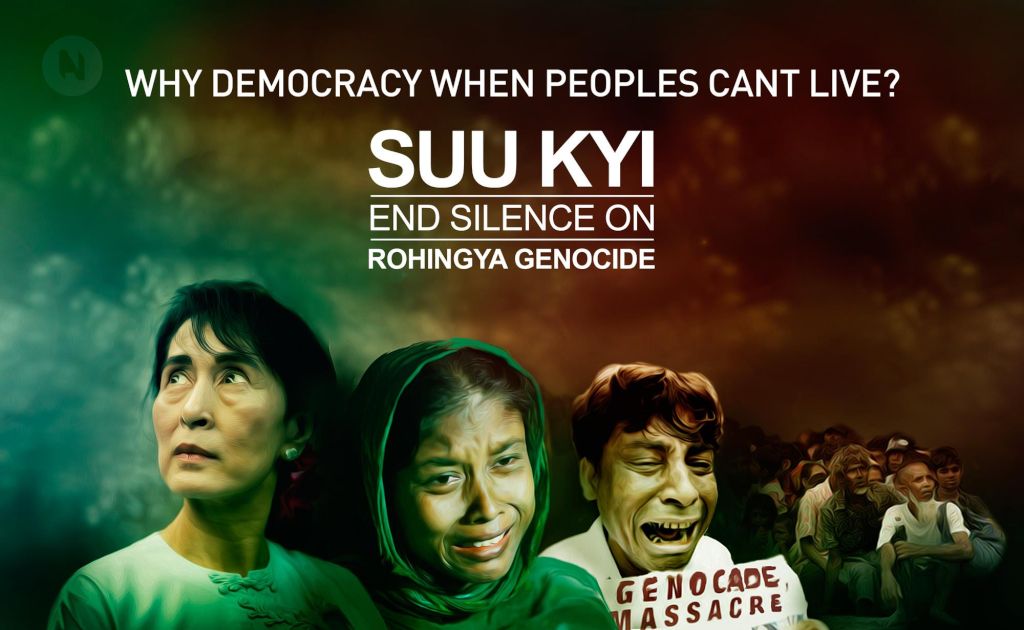
Aung San Suu Kyi has declined to speak out on behalf of Rohingya Muslims and insisted she will not use "moral leadership" to back either side in deadly communal unrest in west Myanmar, reports said.
The Nobel laureate, who has caused disappointment among international supporters for her muted response to violence that has swept Rakhine state, said both Buddhist and Muslim communities were "displeased" that she had not taken their side.
More than 100,000 people have been displaced since June in two major outbreaks of violence in the state, where renewed clashes last month uprooted about 30,000 people.
Dozens have been killed on both sides and thousands of homes torched.
"I am urging tolerance but I do not think one should use one's moral leadership, if you want to call it that, to promote a particular cause without really looking at the sources of the problems," Suu Kyi told the BBC on Saturday.
Speaking in the capital Naypyidaw after talks with European Commission President Jose Manuel Barroso, who has said the EU is "deeply concerned" about the violence and its consequences for Myanmar's reforms, Suu Kyi said she could not speak out in favour of the stateless Rohingya.
"I know that people want me to take one side or the other, so both sides are displeased because I will not take a stand with them," she said.
The democracy champion, who is now a member of parliament after dramatic changes overseen by a quasi-civilian regime that took power last year, said the rule of law should be established as a first step before looking into other problems.
"Because if people are killing one another and setting fire to one another's houses, how are we going to come to any kind of reasonable settlement?" she said.
Myanmar's 800,000 Rohingya are seen by the government and many in the country as illegal immigrants from neighbouring Bangladesh. They face severe discrimination that activists say has led to a deepening alienation.
The Rohingya, who make up the vast majority of those displaced in the fighting, are described by the UN as among the world's most persecuted minorities.
Source : AFP

Britain on Monday called on Myanmar to resolve the citizenship status of Rohingyas caught up in deadly sectarian violence.
"We would like the problems, the unresolved problems of the status of the Rohingya people to be addressed by the leaders in Burma across politics," British Foreign Secretary William Hague told reporters in Laos.
"That's an issue of major concern for us. I'll certainly raise that with the Burma leaders here when I have the opportunity to do so," he said ahead of a summit bringing together dozens of leaders from Asia and Europe, including Myanmar President Thein Sein, in the Laos capital Vientiane.
Dozens of people have been killed and more than 100,000 displaced since June by clashes between ethnic Rakhines and Rohingyas in the country, casting a shadow over a string of political reforms.
Myanmar's 800,000 stateless Rohingya are seen by the government and many in the country as illegal immigrants from neighbouring Bangladesh. They face severe discrimination that activists say has led to a deepening alienation.
The Rohingya, who make up the vast majority of those displaced in Rakhine state, are described by the UN as among the world's most persecuted minorities.
Nobel peace laureate Aung San Suu Kyi, who has disappointed international rights activists with her muted response to the violence, said on Saturday that she would not use "moral leadership" to back the Rohingya.
"I know that people want me to take one side or the other so both sides are displeased because I will not take a stand with them," she told the BBC.
Asked whether Suu Kyi should take a clearer position, Hague said: "I'm not singling anybody out. I hope across Burmese politics... this will be addressed by the opposition as well as by the government."
- AFP/xq
 |
| U Zaw Htay, director of the President's office, announced on his Facebook page that Rohingya needs wiped out from Arakan, Burma |
An Iranian lawmaker says the government of Myanmar is directly involved in the ongoing massacre of Rohingya Muslims in the Southeast Asian country.
“Most activities in Myanmar are controlled by the government and it is unlikely that such incident [the massacre of Rohingya Muslims] with [so many] dimensions and immensity can be made limited to an ethnic-religious conflict,” Mohammad-Mehdi Zahedi said on Wednesday.
The lawmaker went on to say that considering dictatorial and military nature of Myanmar’s government, it is certain that the ongoing genocide of Muslims is going on through support of government forces.
Zahedi further argued that Myanmar’s government should be held accountable by international organizations to explain about massacre of Muslim people in that country.
The Buddhist-majority government of Myanmar refuses to recognize Rohingyas and has classified them as illegal migrants though the Rohingyas are said to be Muslim descendants of Persian, Turkish, Bengali, and Pathan origins, who migrated to Myanmar as early as the 8th century.
According to UN statistics, over 28,000 people, more than 97 percent Muslims, have been forced out of their homes as a result of escalating sectarian violence in Myanmar.
On Tuesday, the UN High Commissioner for Refugees (UNHCR) said that there is a shortage of food, water and medical help at the already overcrowded camps in western Myanmar.
Sources Here:
“Most activities in Myanmar are controlled by the government and it is unlikely that such incident [the massacre of Rohingya Muslims] with [so many] dimensions and immensity can be made limited to an ethnic-religious conflict,” Mohammad-Mehdi Zahedi said on Wednesday.
The lawmaker went on to say that considering dictatorial and military nature of Myanmar’s government, it is certain that the ongoing genocide of Muslims is going on through support of government forces.
Zahedi further argued that Myanmar’s government should be held accountable by international organizations to explain about massacre of Muslim people in that country.
The Buddhist-majority government of Myanmar refuses to recognize Rohingyas and has classified them as illegal migrants though the Rohingyas are said to be Muslim descendants of Persian, Turkish, Bengali, and Pathan origins, who migrated to Myanmar as early as the 8th century.
According to UN statistics, over 28,000 people, more than 97 percent Muslims, have been forced out of their homes as a result of escalating sectarian violence in Myanmar.
On Tuesday, the UN High Commissioner for Refugees (UNHCR) said that there is a shortage of food, water and medical help at the already overcrowded camps in western Myanmar.
Sources Here:
 By Dr. Habib Siddiqui
Asian Tribune
November 5, 2012
Myanmar’s western state of Arakan (Rakhine) is again burning. In Mrauk-U, the former capital of the independent kingdom of Arakan, hundreds of young Rakhine Buddhist men were on the march: packed on the backs of pickups, on motorcycles, on trishaws, tuk-tuks and bicycles, but mostly on foot.
They carried spears, swords, cleavers, bamboo staves, slingshots, crossbows and the occasional petrol bomb. Their target: the unarmed Rohingya Muslims. As the Economist (dated Nov. 3, 2012) of the UK noted, one Buddhist terrorist tugged at an imaginary beard and made a grisly throat-cutting gesture.
Sadly, Mrauk-U is not the only town where Rohingya Muslims are facing a genocidal campaign at the hands of Rakhine terrorists. From the reports collected inside Myanmar, there is little doubt that the Rakhine Buddhist terrorists, aided by local and central government politicians, police and security forces, are carrying out a pre-meditated genocidal campaign to exterminate and drive out every Rohingya of Burma (Myanmar). So atrocious and criminal this campaign is even the president of Myanmar, who had previously tried to hide such targeted violence, had to admit on Friday, October 26 (as reported in the pro-government newspaper the New Light of Myanmar) that eight mosques (Muslim houses of worship) and 2,000 of Rohingya homes were torched to completely destroy these. His spokesman told the BBC this weekend that "there have been incidents of whole villages and parts of the towns being burnt down in Rakhine state." The actual facts and figures, however, are much worse!
It is feared that in the last week of October at least 5,000 Rohingya homes were burned to ashes. Satellite imagery shows the utter destruction of a Muslim quarter of the coastal town of Kyaukphyu, from where oil-and-gas pipelines are to cross Myanmar to China. In this latest genocidal campaign, the Muslim villages and localities in townships are cordoned off and fire bombed. Anyone trying to escape from their burned homes is shot dead by the Rakhine Buddhist terrorists and their patrons within the government. Racist Rakhine politicians and monks are creating an environment of racial/religious hatred and intolerance which justifies all types of violence against the unarmed Rohingya population. Many Rohingyas have, therefore, tried to escape to the forest or the open seas, only to be hunted down there, too. Last week, dozens died when their boats sank in the Bay of Bengal. Others are forced to sneak out to Bangladesh.
Denied entry, many have ended up in squalid camps in Sittwe (Akyab) to join others who have been confined there since early June. Dozens of Rohingya girls were also kidnapped by the Rakhine terrorists to use rape and kidnap as weapons of war to terrorize the Rohingya populace.
It is an all out extermination campaign against the Rohingyas of Myanmar. In a statement dated Thursday, October 25, Ashok Nigam, a United Nations official in Myanmar, said, "The UN is alarmed by reports of displacements and destruction.” He said that access to all affected people is critical and appealed for immediate and unconditional access to all communities in accordance with humanitarian principles.
As I have pointed out earlier in my speeches and writings, the Myanmar government wants to hide its heinous crimes against the Rohingya people and, thus, have not allowed access of the international media, NGOs, aid groups and even the UN to the troubled region to investigate, monitor and assess the scale of the violence. Since the elimination of the Rohingya people one way or another is the declared state objective, no aid has reached from the Myanmar government agencies to the Muslim victims. And what is worse, even the relief materials sent from the OIC and the Islamic Relief have not reached the intended Rohingya victims. Less than 10% of such aids have trickled down to the victims. The Myanmar government, thanks to the state-managed protests and demonstrations in October by racist Buddhists that included monks, has also barred the OIC and Muslim relief agencies from opening offices inside the Rakhine state to help the Rohingya victims.
Not a single Buddhist terrorist has been punished for the gruesome murder of Muslims, not then and not now. All what we heard from the Thein Sein government was that it had identified the instigators behind the violence and pledged to bring them to justice. But as we have witnessed earlier with the June 3 lynching death of 10 Burmese Muslims, such promises have not translated into justice, let alone created an atmosphere that protects the lives and properties of the affected Rohingya minority.
It is obvious that the Thein Sein government is playing the cat-and-mouse game with the world community with false promises made to divert attention away when the satellite pictures are too obvious and difficult to hide such crimes, and once the outside pressure is low to encourage and participate in this heinous crime. As such the pogroms that started in June 3 with nearly a hundred thousand internally displaced Rohingyas have only worsened with extra tens of thousands that are now without any shelter. The once thriving Muslim localities now look like bombed-out territories. No Rohingya has been allowed back in to rebuild those properties. They have been caged in camps that look like the Nazi concentration camps from which they can’t venture out to fetch their livelihood without risking being shot by the Rakhine Buddhist security forces. They have been placed there to slowly die.
Terrorizing the unarmed Rohingya population has become a Rakhine national passion. The Border Security Force (NASAKA) continues to remind the Roingya people that Arakan is a Rakhine place where there is no place for the Roingya Muslims and that they must leave or will be killed. Newer territories are added to the list of ethnically cleansed ones to terrorize Rohingya Muslims and exterminate them. The Section 144, which prohibits an assembly of more than five people in an area, is only applied against the Rohingya. They cannot go out to protect their homes, shops, mosques, schools and villages from being looted and set on fire by the Rakhine terrorists who are not stopped from committing such crimes by the security forces.
In most cases, these criminal Rakhines are aided by the government. There have been cases, e.g., as in Kyauk Pyu Township, in which instead of dousing the fire with water, the Buddhist firemen sprayed gasoline into the fire to complete the destruction! "The firemen threw petrol on the flames, as if it was water! The authorities are one-sided. We can never trust them," said a local teacher to Pete Pattisson, a journalist working for the Independent (UK). Last Wednesday, the entire Muslim community in Kyauk Pyu decided to flee in their fishing boats, joining thousands of others trying to escape from being killed or burned alive. Former Muslim residents of Pauk Taw told the Independent that a government ferryboat had rammed their fishing boats at sea, resulting in drowning deaths of dozens. Those who had fled and made it ashore have been prevented by government authorities from landing on the coast.
Satellite images of Kyauk Pyu and its coastal surroundings, released by the Human Rights Watch at the weekend, show the extent of the devastation. Where once there were houseboats and floating barges moored along a harbor town packed with houses, now there is charred desolation, with 811 homes and other structures destroyed.
All the victims in recent months have also been Muslims and yet the Thein Sein government tries to portray the violence in the Rakhine state as an interracial or communal riot.
What is going on inside the Rakhine state is simply a purposeful policy designed by the Myanmar government in which the members of the majority Rakhine ethnic group, which is Buddhist by faith, are willing executioners to remove by violent and terror-inspiring means the civilian population of the Rohingya ethnic community, which are Muslims, from the geographic areas of Arakan and Myanmar. The United Nations define such activities as ethnic cleansing. No hog-washing by the murderous regime and its supporters at home and abroad will succeed to hide such monumental crimes.
The ethnic cleansing of the Rohingya people is a text book case. It has become a national project that is led by the Myanmar state at the central level and the Rakhine state at the local level, supported by a good percentage of the Buddhist nation and its dominant Burman and Rakhine ethnic groups, and which employs large institutional and material resources. The local Rakhine politicians and terrorists, the Buddhist monks and mobs, and the entire state apparatus from the local to the central government level are enthusiastic partners in this project towards final solution of the Rohingya problem.
It was no accident, therefore, to witness demonstrations of monks, esp. those organized by Young Monks Association, supporting Thein Sein’s plan to expel the Rohingyas from Myanmar. The largest such demonstration was led by Wirathu, considered a venerable teacher by many Buddhists. He is a criminal who was imprisoned in 2003 for inciting violence against the Muslims. It is no accident that Suu Kyi spoke with forked tongues and that her NLD party has actually been supporting the national project towards elimination of the Rohingya people. Many of the so-called ‘democracy’ leaders have proven to be no better than fascists and are actually worse than the KKK members.
The worst criminals in this extermination campaign are, however, the fellow Rakine Buddhists, whose ancestors settled in Arakan beginning in the 11th century, i.e., centuries after the darker complexioned Indo-Bengali ancestors of the Rohingya people had already settled in this coastal territory once ruled by the Hindu Chandra dynasty, which had closer ties with Bengal (today’s Bangladesh).
With that intrusion, albeit a violent one, of the Tibeto-Burman people, the forefathers of today’s Rakhine race, who professed Buddhism, the original inhabitant Hindus and Muslims gradually became minority religious groups. However, in 1430 when two contingents of Muslim Army from Bengal, comprising of more than 50,000 soldiers, restored the fleeing Arakanese king Narameikhla (Maung Saw Mawn) to the throne of Arakan, and a great many of them were asked to protect the regime against any future Burmese invasion, the new settlements of the Muslim garrison around the new capital city of Mrohang (Mrauk-U) greatly added to the size of the minority Muslim community.
The Arakanese rulers of Mrauk-U dynasty adopted superior Islamic culture from nearby Muslim Bengal/India, and issued coins with Islamic inscriptions. They patronized Bengali literature. They also adopted Muslim names, a practice that was to continue for generations well into the 16th century. Muslims played major roles in administration, courts and defense of this multi-ethnic kingdom that maintained its independence for centuries until its annexation by the Burmese king Bodawpaya in 1784.
Bodawpaya was a Buddhist religious fanatic who tried to demolish everything Islamic. He introduced racism and bigotry into this multi-religious region. He destroyed mosques that once dotted the shorelines of Arakan and patronized building Buddhist monasteries and pagodas. He massacred tens of thousands of Muslims, and took another 20,000 as prisoners during his annexation of Arakan. During his tyrannical rule, some 200,000 Arakanese also fled to Bengal (today’s Bangladesh), which by then was under the British rule. After 40-years of Burmese rule (1784-1824), Arakan was occupied by the English East India Company who ruled the territory until Burma won its independence on January 4, 1948.
During the Second World War, taking advantage of the Japanese occupation of Burma, the Buddhist forces which had allied themselves with the Fascist Japanese Imperial Army against the British Raj, targeted the Indian and Muslim population and their homes and businesses. Even the Rohingya Muslims who lived in the western territories did not escape the extermination campaign. Nearly a hundred thousand of them were killed in that joint campaign. They were pushed out of the southern parts of the Arakan state; and many managed to survive by living in northern territories, closer to the Bengal, where they were a solid majority. Another 80,000 settled permanently in Bengal to save their lives. Two hundred and ninety four Muslim villages were totally destroyed.
Even after Burma achieved its independence, sadly, the mass elimination and targeted violence against the Rohingya and other Muslims continued. To the best of my knowledge, at least two dozen campaigns have been directed against them to ethnically cleanse them.
These are:
01. Military Operation (5th Burma Regiment) - November 1948
02. Burma Territorial Force (BTF) - Operation 1949-50
03. Military Operation (2nd Emergency Chin regiment) - March 1951-52
04. Mayu Operation - October 1952-53
05. Mone-thone Operation - October 1954
06. Combined Immigration and Army Operation - January 1955
07. Union Military Police (UMP) Operation - 1955-58
08. Captain Htin Kyaw Operation - 1959
09. Shwe Kyi Operation - October 1966
10. Kyi Gan Operation - October-December 1966
11. Ngazinka Operation - 1967-69
12. Myat Mon Operation - February 1969-71
13. Major Aung Than Operation - 1973
14. Sabe Operation February - 1974-78
15. Naga-Min (King Dragon) Operation - February 1978-79 (resulting in exodus of some 300,000 Rohingyas to Bangladesh; 40,000 died)
16. Shwe Hintha Operation - August 1978-80
17. Galone Operation - 1979
18. 1984 Pogrom in Taunggok
19. Anti-Muslim riots - Taunggyi (western Burma), Pyay and many other parts of Burma including Rangoon - 1987-88
20. Pyi Thaya Operation – July 1991-92 (resulting in exodus of some 268,000 Rohingyas to Bangladesh)
21. Na-Sa-Ka Operation – since 1992
22. Race riot against Muslims – March 1997 (Mandalay)
23. Anti-Muslim riot in Sittwe – February 2001
24. Anti-Muslim full-scale riot in Central Burma – May 2001
25. Anti-Muslim violence throughout central Burma (especially in the cities of Pyay/Prome, Bago/Pegu) after 9/11 – October 2001
26. Joint extermination campaign – June 3, 2012 – to date.
Every attempt has been made by the Myanmar government since the days of General Ne Win to ethnically cleanse the Rohingya people and deny them human rights. They were declared stateless, thus licensing every crime directed against them; not a single Article of the Universal Declaration of Human Rights was honored. Here below is a shortlist of such crimes against the Rohingya people:
• Denial of Citizenship
• Restriction of Movement or Travel
• Restriction on Education
• Restriction on Ability to work
• Forced Labor
• Land Confiscation
• Forced Eviction
*Destruction of homes, offices, schools, mosques, etc.
• Religious persecution
• Ethnic discrimination
• Restrictions on Marriage of Rohingyas
• Prevention of reproduction and forced abortion
• Arbitrary Taxation and Extortion
• Registration of births and deaths in families and even of cattle, and the associated extortion
• Arbitrary arrest, torture and extra-judicial killing
• Abuse of Rohingya Women and Elders
• Rape as a weapon of war
• Depopulation of Rohingya community
• Confiscation of residency/citizenship cards
• Internally displaced persons or undocumented refugees and statelessness
• Destruction or alteration of historical Muslim sites and shrines to erase its symbolism or Islamic identity.
To be continued….
Asian Tribune
 |
| People displaced by the recent violence in Pauktaw pass the time at their shelters at Owntaw refugee camp for Muslims outside Sittwe. Photograph: Soe Zeya Tun/Reuters |
First one body appeared, floating in the waters of the Bay of Bengal, then another, and another, until those on board the little fishing boat that had gone to their rescue began to lose count.
Those bobbing lifeless among the waves had set out the night before, so desperate to escape the growing sectarian violence in Burma that they were prepared to risk boarding the dangerously overcrowded boat.
At least 130 had clambered aboard, but the boat foundered – whether it capsized because of the weight of bodies or because it struck rocks remains unclear.
The sinking last week was the worst reported incident resulting from the outbreak of violence between Rakhine Buddhists and Rohingya Muslims in western Burma. The death toll is continuing to rise amid reports of a deepening humanitarian crisis.
"The situation is dire. The UN is doing its best, but it is trying to find more funding to help them," said Chris Lewa, director of the Arakan Project, an NGO working with the Rohingya.
With at least 32,000 people displaced by the latest violence – and at least 107,000 since trouble broke out in June – thousands have sought safety in refugee camps around the Burmese town of Sittwe. Those camps are at crisis point, according to Refugees International, which estimates that nearly a quarter of children were malnourished.
"Conditions in these camps are as bad, if not worse, than ones in eastern Congo or Sudan," said Melanie Teff, a researcher with the charity who visited Sittwe in September. "Child malnutrition rates are startlingly high. There's an urgent need for clean water and food. If further aid does not come through, there will be some unnecessary deaths."
In Baw Du Pha relief camp, where several thousand Rohingya refugees from Sittwe are surviving on rations and are severely short of medical care, Laila, 20, a mother of four, said: "I cannot give my baby rice when she needs it. We are suffering. When my daughter gets sick we have no money for medicine."
Compounding the need for essentials such as rice, water and oil, aid workers said refugees were facing a mounting psychological toll, with children bearing the brunt. "They lost their houses in the fires. Children cannot be left alone like before. So they're depressed," said Moe Thadar, a local Red Cross worker.
The death toll and fear of further violence have prompted many of the Rohingya to look for sanctuary in neighbouring Muslim countries. Many have concluded that the only realistic escape route is by sea. Thousands are reported to have been waiting for the end of the rainy season to put to sea. Those that have tried to get away have found that those countries are unwilling to accept them. Lewa said at least two boats had been turned back by Bangladesh last week and had returned to Sittwe.
"On Wednesday, we heard that about 7,000 people had arrived in Sittwe from Kyaukpyu [on the coast to the south] and Pauktaw [inland and to the east]. There were still about 900 of them sitting on the beach in Sittwe, while others had moved to camps or villages."
The UN has urged the Burmese government to tackle the causes of the conflict, prompting authorities to order people to turn in their weapons to police. It also urged Burma's neighbours to not to close their borders, but the appeal brought no immediate change of heart.
Some of those who have fled, such as the victims of last week's sinking, headed for Malaysia, where people-smugglers will take them for a fee. Others are looking closer to home – to Bangladesh and Thailand – but neither country wants them. Bangladesh is already home to around 300,000 Rohingya and is concerned about rising numbers. It has said that it will turn away boats, although people near Cox's Bazar, close to where last week's accident happened, said that some had made land and gone into hiding. Thailand does not want them and has been accused of forcing refugee boats back out to sea when they have tried to land. The latest assessment from the Burmese government – which regards the Rohingya as illegal immigrants – said 89 people had been killed in clashes between 21 and 30 October, with another 136 injured and 32,231 made homeless. At least 5,000 houses had been burned down. Activists say the true figures are likely to be higher.
"The villages have been burned down and some people have fled. A few have remained in the area, but others have tried to flee to the camps in Sittwe," said Lewa. "In some villages quite a lot of people have been killed, but we are still trying to find out how they died. Some died in the fires and some were attacked by Rakhine [Buddhists]. We also heard that the army shot at some of the Rakhine people. We heard about 170 people killed in one village alone."
Teff said the outlook for peace was grim. "There is a total lack of hope for the Rohingya. They have been rejected by many countries," she said. "The only way out is for the international community to act on the current situation."
Sources : guardian(uk)
-
 "Although mass killings and exterminations of human races were some sort of things that the world experienced during Nazi German p...
 -
 ဇြန္လ ၁၇ ရက္ ၊ ၂၀၁၂ Source: guardian.co.uk ျမန္မာျပည္သစ္အတြက္ အနာဂတ္မွာ ေအာင္ျမင္မွာလား၊ က်ရွဳံးမွာလားဆိုသည္ကို ညႊန္ျပေသာ စမ္းသပ္မွဳ တစ...
 -
ရက္စြဲ – ေမ ၂၉ ၊ ၂၀၁၂ သို ့ အယ္ဒီတာ၊ နိရဥၥရာ သတင္းဌာန နိရဥၥရာ သတင္းဌာနမွ ေမလ ၂၉ ရက္ေန ့ ထုတ္ျပန္သည့္ ရမ္းျဗဲတြင္ အသက္ ၁၆ ႏွ...
-
 ပါလီမန္အမတ္ဦးေရႊေမာင္ၿပည္သူ႔လြတ္ေတာ္တြင္ရခိုင္ၿပည္နယ္၌ၿဖစ္ပြါးခဲ့ေသာအေရးအခင္းနဲ့ ပတ္သက္၍ေဆြးေနြးတင္ၿပၿခင္း။ (14th day of regular ses...
 -
 The custodian of Two Holy Mosques King Abdullah bin Abdul Aziz Al Saud Aug 11 The custodian of Two Holy M...
 -
 More than 400,000 Rohingya have fled from Myanmar to neighbouring Bangladesh By BBC News September 17, 2017 Myanmar's de ...
 -
 RB ANDROID APPLICATION LAUNCHED… Now, RB News Can Be Read On Smartphone With Android OS. RB News July 4, 2013 Here is a g...
 -
 Thousands of Rohingya flee religious persecution in Myanmar, many dying along the way. Thanks to Anonymous, #RohingyaNOW is trending on ...
 -
 At Baggona, a village three miles far from and lies to the South of Maung Daw of Arakan state, more than 80 Rohingya women and girls have be...
 -
MP U Shwe Maung Explained on Amendment 1982 Citizenship Law on 25 July 2012. MP U Shwe Maung explained on amendment of 1982 Citizenship Law...

Popular Posts
Threatwiki

Amartya Sen: Burma's "slow genocide" of Rohingyas

Watch Professor Amartya Sen speak on what he calls Burma's 'slow genocide' of Rohingya, Harvard, 4 Nov 2014
