
 ျမန္မာႏိုင္ငံတြင္ကမၻာ့ဘဏ္႐ံုးခြဲအားအင္းလ်ားလိတ္ဟိုတယ္၌စတင္ဖြင့္လႇစ္ရန္ ျပင္ဆင္ေနၿပီျဖစ္ေၾကာင္းႏႇင့္ လာမည့္ ဇြန္လအတြင္း စတင္ဖြင့္လႇစ္မည္ဟု သတင္းရရႇိပါသည္။
လက္ရႇိအခ်ိန္တြင္ ကမၻာ့ဘဏ္႐ံုးခြဲအား ဖြင့္လႇစ္ရန္အတြက္ ျပင္ဆင္ေနၿပီး ဖြင့္လႇစ္မည့္ရက္ အတိအက်၊ ဖြင့္လႇစ္ၿပီးပါက ျမန္မာႏိုင္ငံအေပၚ မည္သို႔ ကူညီေပးမည္ဆိုသည့္ အေသးစိတ္ အခ်က္အလက္မ်ားကိုမူ ကမၻာ့ဘဏ္႐ံုးခြဲအား စီမံခန္႔ခြဲမည့္အဖြဲ႔မႇ ထုတ္ျပန္ေပးမည္ဟု လည္း သိရႇိရသည္။
ကမၻာ့ဘဏ္႐ံုးခြဲအား စီမံခန္႔ခြဲမည့္အဖြဲ႔မႇ ခြင့္ျပဳသည္ႏႇင့္ အေသးစိတ္ အခ်က္အလက္မ်ား ထုတ္ျပန္ေပးမည့္အေပၚ ကမၻာ့ဘဏ္႐ံုးခြဲ ဖြင့္လႇစ္ရန္ ေဆာင္ရြက္ေနသူတစ္ဦးက ''သတင္းကေတာ့ ထုတ္ျပန္ေပးမႇာပါ။ ကမၻာ့ဘဏ္႐ံုးခြဲနဲ႔ဆုိင္တဲ့ သတင္းအေသးစိတ္ကို Communication Officer က ခြင့္ျပဳတာနဲ႔ မီဒီယာေတြကိုပါ ရႇင္းလင္းသြားဖို႔ စီစဥ္ထားတယ္'' ဟု ေျပာျပခဲ့သည္။
ကမၻာ့ဘဏ္႐ံုးခြဲအျပင္ ျမန္မာႏိုင္ငံ၌ ကမၻာ့ထိပ္တန္းဘဏ္မ်ားျဖစ္ေသာ Standard Chartered ဘဏ္ႏႇင့္ ဂ်ပန္ဘဏ္မ်ားအပါအ၀င္ ႏုိင္ငံျခားဘဏ္ႀကီးမ်ားကုိ ၂၀၁၄ ခုႏႇစ္မႇ ျမန္မာႏုိင္ငံတြင္ ဘဏ္ခဲြဖြင့္ခြင့္ေပးမည္ျဖစ္ေၾကာင္း ႏုိင္ငံျခားဘဏ္႐ုံးခဲြ ကုိယ္စားလႇယ္မ်ားႏႇင့္ ဘဏ္လုပ္ငန္း အသုိင္းအ၀ုိင္းထံမႇ သတင္းရရႇိပါသည္။
ယင္းအျပင္ ႏုိင္ငံျခားဘဏ္လုပ္ငန္း လုပ္ကုိင္ခြင့္ရထားေသာ ျမန္မာဘဏ္မ်ား အေမရိကန္ႏႇင့္ အီးယူႏုုိင္ငံမ်ားမႇ ဘဏ္မ်ားႏႇင့္ ေငြေၾကး၀န္ေဆာင္မႈလုပ္ငန္း တုိက္႐ုိက္ခ်ိတ္ဆက္ႏုုိင္ရန္ စတင္ျပင္ဆင္းျခင္း၊ တိုက်ဳိ စေတာ့အိတ္ခ်ိန္း ျမန္မာႏုိင္ငံ၌ လာေရာက္ဖြင့္လႇစ္ရန္အတြက္ ေနျပည္ ေတာ္၌ နားလည္မႈစာခြၽန္လႊာ MoU ေရးထုိးျခင္းမ်ား ျပဳလုပ္လ်က္ရႇိေၾကာင္းလည္း သိရသည္။
Eleven Media Group
Mizzima News
May 25, 2012
Amnesty International (AI) on Thursday said Burma’s military is committing crimes against humanity in ethnic conflict zones, where ongoing fighting has overshadowed sweeping political changes.

The rights group also said that authorities had blocked humanitarian aid from reaching tens of thousands of desperate refugees in conflict areas and said soldiers had sexually assaulted civilians.
“The government enacted limited political and economic reforms, but human rights violations and violations of international humanitarian law in ethnic minority areas increased during the year,” AI said in its annual report.
“Some of these amounted to crimes against humanity or war crimes.”
The Burmese army had launched “indiscriminate attacks” that at times targeted ethnic minority civilians in Kachin State, Karen state and the Tanintharyi region, it said.
The following is the 2012 country report on Burma, which notes positive changes but says numerous human rights violations are continuing as the country undergoes democratic reforms.
The report:
“The government enacted limited political and economic reforms, but human rights violations and violations of international humanitarian law in ethnic minority areas increased during the year. Some of these amounted to crimes against humanity or war crimes. Forced displacement reached its highest level in a decade, and reports of forced labour their highest level in several years.
“Authorities maintained restrictions on freedom of religion and belief, and perpetrators of human rights violations went unpunished. Despite releasing at least 313 political prisoners during the year, authorities continued to arrest such people, further violating their rights by subjecting them to ill-treatment and poor prison conditions.
Background
“Myanmar’s Parliament, elected in November 2010, convened on 31 January and voted in Thein Sein as President of a government formed on 30 March. It was the first civilian government in decades. In July and August, opposition leader Daw Aung San Suu Kyi travelled outside Yangon for the first time since 2003. She met with Labour Minister Aung Gyi four times during the year and with President Thein Sein in August.
“Beginning that month, the government carried out a series of limited political and economic reforms. It released at least 313 political prisoners; slightly relaxed media censorship; passed an improved labour law; and established the National Human Rights Commission. In September, the government suspended construction of the controversial, China-backed Myitsone Dam in Kachin state, citing domestic opposition to the project. It also reportedly ceased demanding that ethnic minority armed groups become official Border Guard Forces. In November, the National League for Democracy re-registered as a political party, and its leader Aung San Suu Kyi announced her intention to run for Parliament in the 2012 by-elections. Parliament also passed a law that month allowing peaceful protests under certain conditions.
Internal armed conflict
“The armed conflict in Kayin (Karen) state and Tanintharyi region that began in late 2010 escalated during the year. In March, conflict between the Myanmar army and various ethnic minority armed groups intensified in Shan state. In June, the army broke a 17-year ceasefire with the Kachin Independence Army (KIA) in Kachin state. Smaller conflicts continued or resumed in Kayah (Karenni) and Mon states.
“In all of these conflicts, the Myanmar army launched indiscriminate attacks causing civilian casualties, at times directly attacking ethnic minority civilians. Credible accounts of the army using prison convicts as porters, human shields and mine sweepers emerged from Kayin state and adjacent areas of Bago and Tanintharyi divisions. In Kachin state, sources reported extrajudicial executions, children killed by indiscriminate shelling, forced labour, and unlawful confiscation or destruction of food and property. Shan civilians were tortured, arbitrarily detained and forcibly relocated. Soldiers reportedly sexually assaulted Kachin and Shan civilians.
“In August, ethnic armed groups, including some that had committed abuses, rejected the government’s offer of talks between individual armed groups and the relevant regional administration rather than talks between an alliance of such groups and the federal government. However, several groups agreed to ceasefires with the army during the year. In September, the army intensified fighting in Kachin and Shan states, violating human rights law and international humanitarian law. Some of these acts amounted to crimes against humanity or war crimes.
- On 7 June, a seven-year-old child was killed in Mae T’lar village in Kayin state’s Kawkareik township, when the army shelled the village with mortars.
- On 16 June, soldiers in Hsipaw township, Shan state, shot and killed a 35-year-old man, a 70-year-old woman and one girl, aged 13; all were civilians.
- On 18 September, soldiers in Shan state’s Kyethi township forced at least 10 local monks to act as human shields during an operation to deliver supplies to other troops in the area.
- On 12 October, soldiers killed a 16-month-old baby in Mansi township, Bhamo district in Kachin state, while storming a village and shooting indiscriminately.
- Beginning on 28 October and lasting several days, soldiers detained and reportedly gang-raped a 28-year-old Kachin woman in Hkai Bang village in Bhamo district, Sub-Loije township, Kachin state.
- On 12 November, Myanmar army soldiers extrajudicially executed four captured KIA fighters and tortured four others in Nam Sang Yang village, Waingmaw township, Kachin state.
Forced displacement and refugees
“Fighting in ethnic minority areas displaced approximately 30,000 people in Shan state and a similar number in or near Kachin state. The majority of them were forced out of their homes and land by the Myanmar army. Most individuals and families were unable or unwilling to leave Myanmar, and so became internally displaced. In addition, approximately 36,000 people had already been displaced in Kayin state. In a one-year period ending in July, 112,000 people were reportedly forced from their homes in Myanmar, the highest such figure in 10 years.
– In March, the army forced approximately 200 households in Nansang township, Shan state, to move in preparation for the construction of a new regional command base.
– In April, soldiers burned down around 70 homes in seven villages in Mong Pieng township, Shan state, accusing the residents of supporting an armed group.
– In May, 1,200 refugees from Kyain Seikgyi township in Kayin state fled to Thailand.
“In many cases, authorities prevented humanitarian agencies from entering conflict-affected areas so that they were unable to reach tens of thousands of people displaced by the fighting or the army, especially those in camps on the Myanmar-China border. In Chin state and other ethnic minority areas, the government maintained lengthy and complex administrative procedures for obtaining travel permits both for humanitarian agencies that already have a presence and for new ones seeking permission to work in the country.
“Ethnic minority Rohingyas continued to face discrimination and repression primarily in Rakhine state and remained unrecognized as citizens. As a result, many continued to leave Myanmar on their own or were smuggled out, either overland to Bangladesh or on boats during the “sailing season”, in the first and final months of the year.
Forced labour
“In June, the ILO noted that there had been “no substantive progress” towards compliance with the 1998 ILO Commission of Inquiry’s recommendations on forced labour. On 12 August, Information Minister Kyaw Hsan stated that Myanmar was “almost free from forced labour”. In November, the ILO said that forced labour complaints in Myanmar had increased to an average of 30 per month since March compared with 21 per month for the same period in 2010, 10 per month in 2009, and five per month in both 2008 and 2007.
Approximately 75 per cent of these complaints related to under-age recruitment into the army, with the remainder pertaining to trafficking for forced labour and military forced labour. Labour activists and political prisoners U Thurein Aung, U Wai Lin, U Nyi Nyi Zaw, U Kyaw Kyaw, U Kyaw Win and U Myo Min remained in prison, as reportedly did 16 others.
In October, Myanmar border security forces in Rakhine state’s Maungdaw township forced villagers to carry out construction work at a military camp.
In August and early September, a government official in Chin State reportedly ordered civil servants to carry out manual forced labour in the capital Hakha.
Freedom of religion or belief
“Violations of the right to religious freedom affected every religious group in Myanmar. Buddhist monks who participated in the 2007 anti-government demonstrations continued to be arrested, ill-treated and harassed. Muslim Rohingyas were suppressed and forced to relocate on religious as well as ethnic grounds. Christian religious sites were relocated or destroyed.
- On 9 August, soldiers set fire to the Mong Khawn monastery in Mansi township, Kachin state, apparently because they suspected that the monks had provided support to the KIA.
- On 10 September, authorities in Htantlang village in Htantlang township, Chin state, ordered a Chin Christian preacher not to speak at a local church and to leave the area.
- On 14 October, authorities in Hpakant township, Kachin state, ordered local Christian churches to request permission at least 15 days in advance to carry out many religious activities.
- On 6 November, soldiers opened fire on a Christian church in Muk Chyik village, Waingmaw township in Kachin state, injuring several worshippers.
Impunity
“Government officials and military personnel who committed human rights violations, including some on a widespread or systematic basis, remained free from prosecution. Article 445 of the 2008 Constitution codifies total impunity for past violations. In September, the President appointed a National Human Rights Commission whose mandate included receiving and investigating human rights complaints, but
“Myanmar’s justice system continued to demonstrate a lack of impartiality and independence from the government. In January, the government stated that there was “no widespread occurrence of human rights violations with impunity” in Myanmar.
Political prisoners
“In May, the Myanmar government released at least 72 political prisoners under a one-year reduction of all prison sentences in the country. In October, it released 241 more political prisoners. However, few of those freed were from ethnic minorities. More than 1,000 political prisoners, including prisoners of conscience, remained behind bars, but exact figures were uncertain due to Myanmar’s opaque prison system, differences in definitions of what constitutes a political prisoner, and ongoing arrests.
- In February, a court sentenced Maung Maung Zeya, a reporter with Democratic Voice of Burma – a media outlet based outside Myanmar – to 13 years in prison for peaceful activities.
- On 26 August, Nay Myo Zin, a former military officer and member of an NLD-supported blood donation group, was sentenced to 10 years in prison for peacefully exercising his rights to freedom of expression.
- On 14 September, Democratic Voice of Burma reporter Sithu Zeya, already serving an eight-year prison term, was sentenced to a further 10 years under the Electronic Transactions Act.
“Political prisoners continued to be subjected to cruel, inhuman and degrading punishment and very poor prison conditions.
- In February, Htet Htet Oo Wei, who was suffering from a number of health problems, was placed in solitary confinement reportedly for making too much noise. She was denied family visits and parcels.
- In February, authorities in Yangon’s Insein prison placed political prisoner Phyo Wei Aung in solitary confinement for a month, after he complained about fellow inmates bullying other prisoners.
- In May, at least 20 political prisoners in Insein prison went on hunger strike to protest the government’s limited release of such prisoners that month and to demand better prison conditions. As punishment, seven were placed in cells designed to hold dogs.
- In July, the Monywa prison authorities in Sagaing division withdrew visitation rights to Nobel Aye (aka Hnin May Aung), after she urged high-ranking officials to withdraw recent public statements that claimed there were no political prisoners in Myanmar.
- In October, 15 political prisoners in Insein staged a hunger strike in protest against the denial of sentence reductions for political prisoners, in contrast to criminal convicts. Some were reportedly deprived of drinking water and were otherwise ill-treated. Eight of them were placed in “dog cells”.
- In October, information emerged that U Gambira, a Buddhist monk and leader of the 2007 anti-government demonstrations, was seriously ill and being held in solitary confinement. He had been suffering from severe headaches, possibly due to torture he was subjected to in prison in 2009. Prison authorities were reported to be regularly injecting him with drugs to sedate him.
International scrutiny
“In January, Myanmar’s human rights record was assessed under the UN Universal Periodic Review. In March, Latvia and Denmark added their support for the creation of a UN Commission of Inquiry into international crimes in Myanmar, bringing the total number of supporting countries to 16. Despite a January call by ASEAN to lift economic sanctions against Myanmar, the EU and the USA extended their sanctions.
“However, in April the EU eased travel restrictions on 24 officials. In May and October, the UN Secretary-General’s Special Adviser on Myanmar visited the country.
“President Thein Sein visited China in May and India in October. After being denied a visa in 2010 and earlier in the year, the UN Special Rapporteur on the situation of human rights in Myanmar visited in August. The US Special Representative and Policy Coordinator for Burma visited in September, October, and November. In September, the ICRC was authorized for the first time since 2005 to conduct an international staff-led engineering survey in three of Myanmar’s prisons. After a year-long debate, Myanmar was named Chair of Asean for 2014 in November. In December, for the first time in over 50 years, the U.S. Secretary of State visited Myanmar.
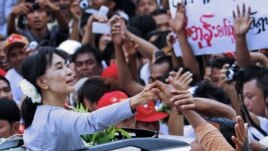
BANGKOK - Burma’s opposition said leader Aung San Suu Kyi next week will take her first trip outside the country since 1988. The National League for Democracy said she will attend the World Economic Forum in Bangkok ahead of a tour of Europe. Thailand hosts a large community of Burmese activists and exiles and they are quite excited about her trip.
NLD spokesman Nyan Win on Friday said Aung San Suu Kyi will arrive in Bangkok mid-week. He said the democracy leader will meet Tuesday morning in Burma with the visiting Indian prime minister. She will leave for Bangkok either that evening or on Wednesday.
24 years
The trip will mark the first time the democracy leader has left Burma in 24 years, when she returned to the country to visit her ailing mother and became swept up in the country’s politics.
She planned to first travel to Europe, but the change in schedule is being welcomed by the large Burma activist and exile community in Thailand.
“It is indeed a significant visit of Daw Aung San Suu Kyi because on her first visit after so many years it is one of the countries in Southeast Asia,” said Soe Aung, a spokesman of the Forum for Democracy in Burma.
Aung San Suu Kyi was locked up for challenging the military that ruled Burma for decades.
On the rare occasions she was released from custody she chose not to leave Burma because she was afraid authorities would not let her return.
She missed being with her British husband when he was dying from cancer and seeing her children grow up.
Freedom
Aung San Suu Kyi was released just days after Burma held its first election in 20 years, replacing overt military rule with a civilian face.
President Thein Sein, himself a former general, surprised critics by meeting with Aung San Suu Kyi, loosening censorship and releasing hundreds of political prisoners.
Western governments responded by easing economic and diplomatic sanctions leading to a new era of engagement with Burma.
And now, Aung San Suu Kyi trusts the government enough to travel and end her long stay inside Burma.
Mixed feelings
But Thailand-based activists worry the excitement about positive change and economic opportunity in Burma will overshadow remaining problems.
Bo Kyi, with the Assistance Association for Political Prisoners Burma, regrets that the hundreds more remaining political prisoners in jail are no longer a priority.
“The release of the remaining political prisoners is [the] key issue," said Bo. "International community or international government’s leaders should not forget the remaining political prisoners in Burma.”
Burma authorities refuse to acknowledge the existence of political prisoners.
Ethnic fighting
Activists worry ongoing fighting in ethnic minority areas is also being forgotten.Years of military abuses in fighting against ethnic rebels forced tens of thousands of minorities to flee to refugee camps in Thailand.
Soe Aung said he hopes Aung San Suu Kyi will be able to visit the camps during her visit.
“These ethnic people have long long time suffering for so many years with many difficulties," said Soe. "And, she should also urge the international community not just looking into the development inside the country but also continue with the assistance of these refugees, ethnic refugees, along the Thailand-Burma border and the organizations who are working to help these refugees.”
The NLD won Burma’s only previous election, in 1990, but the military refused to give up power.
It arrested NLD leaders and activists and many fled to India, Thailand and the United States where they formed a government in exile.
Zin Linn is a spokesman for the exile government in Thailand. He said they are excited about Aung San Suu Kyi’s visit but not likely able to meet her because legally they are an “unlawful association.”
“If the situation is possible, or if there may be some ‘green light’, we can say we might see her. Because, in this trip I think not only her and also President Thein Sein will be attend this economic forum," Zin Linn said. "So, we have to take care of the situation. We didn’t want her hurt because of our meeting.”
World Economic Forum
Thai media said, while in Thailand, Aung San Suu Kyi will meet with Thai Prime Minister Yingluck Shinawatra.
The NLD spokesman did not confirm the meeting, but said in Bangkok the democracy leader will attend the World Economic Forum on East Asia.
Burma’s President Thein Sein is also scheduled to speak at the forum but it is not clear if he will meet with Aung San Suu Kyi.
In June, Aung San Suu Kyi in June will travel to Europe for a series of appearances including a trip to Norway to receive the Nobel peace prize she was awarded while under house arrest.
24 years
The trip will mark the first time the democracy leader has left Burma in 24 years, when she returned to the country to visit her ailing mother and became swept up in the country’s politics.
She planned to first travel to Europe, but the change in schedule is being welcomed by the large Burma activist and exile community in Thailand.
“It is indeed a significant visit of Daw Aung San Suu Kyi because on her first visit after so many years it is one of the countries in Southeast Asia,” said Soe Aung, a spokesman of the Forum for Democracy in Burma.
Aung San Suu Kyi was locked up for challenging the military that ruled Burma for decades.
On the rare occasions she was released from custody she chose not to leave Burma because she was afraid authorities would not let her return.
She missed being with her British husband when he was dying from cancer and seeing her children grow up.
Freedom
Aung San Suu Kyi was released just days after Burma held its first election in 20 years, replacing overt military rule with a civilian face.
President Thein Sein, himself a former general, surprised critics by meeting with Aung San Suu Kyi, loosening censorship and releasing hundreds of political prisoners.
Western governments responded by easing economic and diplomatic sanctions leading to a new era of engagement with Burma.
And now, Aung San Suu Kyi trusts the government enough to travel and end her long stay inside Burma.
Mixed feelings
But Thailand-based activists worry the excitement about positive change and economic opportunity in Burma will overshadow remaining problems.
Bo Kyi, with the Assistance Association for Political Prisoners Burma, regrets that the hundreds more remaining political prisoners in jail are no longer a priority.
“The release of the remaining political prisoners is [the] key issue," said Bo. "International community or international government’s leaders should not forget the remaining political prisoners in Burma.”
Burma authorities refuse to acknowledge the existence of political prisoners.
Ethnic fighting
Activists worry ongoing fighting in ethnic minority areas is also being forgotten.Years of military abuses in fighting against ethnic rebels forced tens of thousands of minorities to flee to refugee camps in Thailand.
Soe Aung said he hopes Aung San Suu Kyi will be able to visit the camps during her visit.
“These ethnic people have long long time suffering for so many years with many difficulties," said Soe. "And, she should also urge the international community not just looking into the development inside the country but also continue with the assistance of these refugees, ethnic refugees, along the Thailand-Burma border and the organizations who are working to help these refugees.”
The NLD won Burma’s only previous election, in 1990, but the military refused to give up power.
It arrested NLD leaders and activists and many fled to India, Thailand and the United States where they formed a government in exile.
Zin Linn is a spokesman for the exile government in Thailand. He said they are excited about Aung San Suu Kyi’s visit but not likely able to meet her because legally they are an “unlawful association.”
“If the situation is possible, or if there may be some ‘green light’, we can say we might see her. Because, in this trip I think not only her and also President Thein Sein will be attend this economic forum," Zin Linn said. "So, we have to take care of the situation. We didn’t want her hurt because of our meeting.”
World Economic Forum
Thai media said, while in Thailand, Aung San Suu Kyi will meet with Thai Prime Minister Yingluck Shinawatra.
The NLD spokesman did not confirm the meeting, but said in Bangkok the democracy leader will attend the World Economic Forum on East Asia.
Burma’s President Thein Sein is also scheduled to speak at the forum but it is not clear if he will meet with Aung San Suu Kyi.
In June, Aung San Suu Kyi in June will travel to Europe for a series of appearances including a trip to Norway to receive the Nobel peace prize she was awarded while under house arrest.
VOA English
The ceasefire agreement between a Naga rebel faction and Myanmar was signed without India being informed.
It is likely to have long-term implications for India's northeast and Myanmar, says Rahul Mishra.
The first in a series on India-Myanamar relations, as Prime Minister Manmohan Singh visits that country on May 27, the first visit by an Indian leader in many years.
Taking another step forward to pacify decades-old ethnic unrest and bring back the marginalised ethnic communities to mainstream politics, the Thein Sein-led Myanmar government signed a ceasefire agreement with the National Socialist Council of Nagaland-Khaplang in Myanmar.
Signed on April 9, the agreement paves the way for autonomy to the NSCN-K in three districts: Lahe, Leshi and Nanyun, which fall in Sagaing -- a northwestern administrative region of Myanmar.
The agreement also provides NSCN-K members with the freedom to move 'unarmed' across the country. Moreover, as per the ceasefire agreement, the group is allowed to open a sub-office in Hkamti district.
It has also been reported that NSCN-K is trying to acquire more rights in the Naga areas of Kachin and Sagaing region.
Interestingly, Myanmar's 2008 constitution provides for the grouping together of Lahe, Leshi and Nanyun in a Naga self-administrative zone, which proves beyond doubt that the autonomy deal is part of a comprehensive plan of Nay Pyi Taw rather than an ad-hoc move.
The most promising aspect of the deal is that it might put an end to ethnic hostilities in coming days and give peace a chance in dispute resolution.
The agreement is widely projected as an achievement by both the parties involved. While the Thein Sein government is taking it as another feather in its cap, the NSCN-K projects the agreement as a stepping stone to become a trans-nationally recognised ethnic group.
From the statements of NSCN-K leaders, it is evident that they look at the Kurdish group Peshmerga -- which has signed peace deals with Iran, Iraq, and Turkey -- as a role model for themselves. The NSCN-K considers it as one of their cherished objectives. Clearly, with the inking of the deal, the group has inched closer to its long-term objective.
The decision, which has invoked mixed responses from both within and outside, is likely to have long-term implications not only on the ethnic politics of the Naga-inhabited regions, but also for India's northeast and Myanmar.
Incidentally, the other two significant players in the Naga politics -- THE NSCN-IM (Isak Muivah) and NSCN-Khole-Kitovi have expressed their displeasure, although citing different reasons. For the record, all three factions have different visions for Nagaland.
While the NSCN-IM wants the incorporation of neighbouring Naga-inhabited areas with existing boundaries of Nagaland and the NSCN-K aims to incorporate Myanmarese Naga with Nagaland, NSCN-Khole-Kitovi, to a great extent, holds a status quo-ist position on the boundary demarcation of Nagaland.
By virtue of being an immediate neighbour infested by the insurgent groups, India is likely to get affected by the new twist in the situation.
Considering that India was not informed beforehand of the NSCN-K or the Myanmar agreement, it did not go well within the Indian establishment.
To be sure, India renewed the ceasefire agreement with the NSCN-K in early May, only after seeking numerous clarifications regarding the NSCN-K-Myanmar agreement.
In order to pre-empt any unpleasant situation along the borders, the Indian authorities have clearly stated that India does not want the NSCN-K to overtly or covertly support insurgents operating from outside the country.
India has imposed conditions on the NSCN-K, as part of the ceasefire agreement to ensure that insurgent groups like the Paresh Barua-led United Liberation Front of Asom and the Manipur-based Peoples Liberation Army do not use the NSCN-K controlled region of Myanmar for anti-India activities.
The conditions include: First, strictly adhere to ceasefire ground rules; secondly, do not extend any help to anti-India insurgent groups; thirdly, make all possible efforts to stop factional killings and refrain from violence; and finally, 45 of the group's top functionaries will have to carry hologram-bearing identity cards, so that their whereabouts are kept track of during the ceasefire.
New Delhi's [ Images ] apprehensions seem justified as it has been reported lately that at least 14 rebel groups from the region had congregated at the NSCN-K's base in Myanmar to forge a united front to fight Indian forces.
To cap the NSCN-K's capabilities and influence in inflicting damage in the future, India is mulling over the initiation of a dialogue with the NSCN-Khole-Kitovi, which is seemingly the only faction intending to solve the problem within the present boundaries of Nagaland. The dialogue process is likely to commence in June.
Analysts have also indicated towards an emerging policy trend in India -- to use the NSCN-Khole-Kitovi and NSCN-IM as forces to counter an ambitious NSCN-K. One may argue that noting their relatively weaker position in Nagaland, the NSCN-K agreed to all the conditions imposed by India.
Evidently, the NSCN-K stronghold is Myanmar, whereas the NSCN-Khole-Kitovi and NSCN-IM are more powerful in India. Ongoing feuds among these groups have limited their capabilities in dealing with India.
Furthermore, India has also sought details from Myanmar about the deal during a regional border meeting of the two countries held recently.
India is likely to take up the matter again with the Thein Sein government during Prime Minister Manmohan Singh's visit to Myanmar from May 27 to 29.
Considering the current situation, the NSCN-K-Myanmar peace deal is likely to remain confined within the borders of Myanmar. Nonetheless, it is highly likely that the NSCN-K might try to use the agreement with Myanmar as a bargaining chip in dealing with India.
However, it would be naive to think that India would yield to such pressure tactics. This is evident from the fact that India not only inquired about the NSCN-K's deal with the Myanmar government and firmly imposed conditions on the NSCN-K, but also categorically said that it would not tolerate any cross-border insurgency that involves the NSCN-K.
One may say that the time is ripe for India and Myanmar to endeavour to beef up the joint mechanism to deal with insurgency issues. Both India and Myanmar will have to make sure that the objectives of gaining short-term peace do not hamper their long-term national security interests.
While one cannot deny the possibility of the agreement leading to a greater understanding for more mature talks, ethnic reconciliation, and long-lasting peace in Myanmar -- there are several concerns which cannot be overlooked.
It goes without saying that India has to put its act together and tread a cautious path in dealing with northeast insurgent groups.
A long-lasting and peaceful resolution will have to be arrived at sooner than later.
Rahul Mishra is a researcher specialising on Southeast Asian affairs at the Institute for Defence Studies & Analyses, New Delhi.Rahul Mishra
It is likely to have long-term implications for India's northeast and Myanmar, says Rahul Mishra.
The first in a series on India-Myanamar relations, as Prime Minister Manmohan Singh visits that country on May 27, the first visit by an Indian leader in many years.
Taking another step forward to pacify decades-old ethnic unrest and bring back the marginalised ethnic communities to mainstream politics, the Thein Sein-led Myanmar government signed a ceasefire agreement with the National Socialist Council of Nagaland-Khaplang in Myanmar.
Signed on April 9, the agreement paves the way for autonomy to the NSCN-K in three districts: Lahe, Leshi and Nanyun, which fall in Sagaing -- a northwestern administrative region of Myanmar.
The agreement also provides NSCN-K members with the freedom to move 'unarmed' across the country. Moreover, as per the ceasefire agreement, the group is allowed to open a sub-office in Hkamti district.
It has also been reported that NSCN-K is trying to acquire more rights in the Naga areas of Kachin and Sagaing region.
Interestingly, Myanmar's 2008 constitution provides for the grouping together of Lahe, Leshi and Nanyun in a Naga self-administrative zone, which proves beyond doubt that the autonomy deal is part of a comprehensive plan of Nay Pyi Taw rather than an ad-hoc move.
The most promising aspect of the deal is that it might put an end to ethnic hostilities in coming days and give peace a chance in dispute resolution.
The agreement is widely projected as an achievement by both the parties involved. While the Thein Sein government is taking it as another feather in its cap, the NSCN-K projects the agreement as a stepping stone to become a trans-nationally recognised ethnic group.
From the statements of NSCN-K leaders, it is evident that they look at the Kurdish group Peshmerga -- which has signed peace deals with Iran, Iraq, and Turkey -- as a role model for themselves. The NSCN-K considers it as one of their cherished objectives. Clearly, with the inking of the deal, the group has inched closer to its long-term objective.
The decision, which has invoked mixed responses from both within and outside, is likely to have long-term implications not only on the ethnic politics of the Naga-inhabited regions, but also for India's northeast and Myanmar.
Incidentally, the other two significant players in the Naga politics -- THE NSCN-IM (Isak Muivah) and NSCN-Khole-Kitovi have expressed their displeasure, although citing different reasons. For the record, all three factions have different visions for Nagaland.
While the NSCN-IM wants the incorporation of neighbouring Naga-inhabited areas with existing boundaries of Nagaland and the NSCN-K aims to incorporate Myanmarese Naga with Nagaland, NSCN-Khole-Kitovi, to a great extent, holds a status quo-ist position on the boundary demarcation of Nagaland.
By virtue of being an immediate neighbour infested by the insurgent groups, India is likely to get affected by the new twist in the situation.
Considering that India was not informed beforehand of the NSCN-K or the Myanmar agreement, it did not go well within the Indian establishment.
To be sure, India renewed the ceasefire agreement with the NSCN-K in early May, only after seeking numerous clarifications regarding the NSCN-K-Myanmar agreement.
In order to pre-empt any unpleasant situation along the borders, the Indian authorities have clearly stated that India does not want the NSCN-K to overtly or covertly support insurgents operating from outside the country.
India has imposed conditions on the NSCN-K, as part of the ceasefire agreement to ensure that insurgent groups like the Paresh Barua-led United Liberation Front of Asom and the Manipur-based Peoples Liberation Army do not use the NSCN-K controlled region of Myanmar for anti-India activities.
The conditions include: First, strictly adhere to ceasefire ground rules; secondly, do not extend any help to anti-India insurgent groups; thirdly, make all possible efforts to stop factional killings and refrain from violence; and finally, 45 of the group's top functionaries will have to carry hologram-bearing identity cards, so that their whereabouts are kept track of during the ceasefire.
New Delhi's [ Images ] apprehensions seem justified as it has been reported lately that at least 14 rebel groups from the region had congregated at the NSCN-K's base in Myanmar to forge a united front to fight Indian forces.
To cap the NSCN-K's capabilities and influence in inflicting damage in the future, India is mulling over the initiation of a dialogue with the NSCN-Khole-Kitovi, which is seemingly the only faction intending to solve the problem within the present boundaries of Nagaland. The dialogue process is likely to commence in June.
Analysts have also indicated towards an emerging policy trend in India -- to use the NSCN-Khole-Kitovi and NSCN-IM as forces to counter an ambitious NSCN-K. One may argue that noting their relatively weaker position in Nagaland, the NSCN-K agreed to all the conditions imposed by India.
Evidently, the NSCN-K stronghold is Myanmar, whereas the NSCN-Khole-Kitovi and NSCN-IM are more powerful in India. Ongoing feuds among these groups have limited their capabilities in dealing with India.
Furthermore, India has also sought details from Myanmar about the deal during a regional border meeting of the two countries held recently.
India is likely to take up the matter again with the Thein Sein government during Prime Minister Manmohan Singh's visit to Myanmar from May 27 to 29.
Considering the current situation, the NSCN-K-Myanmar peace deal is likely to remain confined within the borders of Myanmar. Nonetheless, it is highly likely that the NSCN-K might try to use the agreement with Myanmar as a bargaining chip in dealing with India.
However, it would be naive to think that India would yield to such pressure tactics. This is evident from the fact that India not only inquired about the NSCN-K's deal with the Myanmar government and firmly imposed conditions on the NSCN-K, but also categorically said that it would not tolerate any cross-border insurgency that involves the NSCN-K.
One may say that the time is ripe for India and Myanmar to endeavour to beef up the joint mechanism to deal with insurgency issues. Both India and Myanmar will have to make sure that the objectives of gaining short-term peace do not hamper their long-term national security interests.
While one cannot deny the possibility of the agreement leading to a greater understanding for more mature talks, ethnic reconciliation, and long-lasting peace in Myanmar -- there are several concerns which cannot be overlooked.
It goes without saying that India has to put its act together and tread a cautious path in dealing with northeast insurgent groups.
A long-lasting and peaceful resolution will have to be arrived at sooner than later.
Rahul Mishra is a researcher specialising on Southeast Asian affairs at the Institute for Defence Studies & Analyses, New Delhi.Rahul Mishra

By Alan Morison and Chutima Sidasathian
PHUKET: Concern is mounting that the increasing signs of openness in Burma actually could mean harsher repression for the stateless Rohingya, and more boatpeople on the Andaman Sea off Phuket in coming ''sailing seasons''.
Feeling more free now to speak their minds, the neighbors of the Rohingya in Burma - also known as Myanmar - are openly expressing contempt for the minority Muslim group, according to those with contacts in the isolated Rakhine state.
Some onlookers assumed that increasing freedoms in Burma would benefit the Rohingya in their quest to be accepted as citizens. But the opposite has proven to be true so far, says Chris Lewa, founder and director of a rights group, The Arakan Project.
''There is some evidence that the people who do not want the Rohingya in the region have been emboldened to become more outspoken about their land and their jobs 'being stolen,'' she said.
''The Rohingya are not mentioned by name and what's being said does not constitute race hatred, but that could change.
''Although it is very difficult to make predictions, the reform agenda in Burma conscientiously excludes the Rohingya and they have very little support, even among Burma's opposition parties.''
Although Rohingya can now travel between villages without requesting official permission, they cannot stay away from home overnight. Jobs and an income are denied.
Fears are also growing among those Rohingya who have fled to neighboring Bangladesh, where life in or around refugee camps is no better, as talk grows of forced repatriation to Burma.
The outlook for the Rohingya is not promising elsewhere in the region.
In Malaysia, the target destination for many who take to the sea looking for a better life, acknowledgement of Rohingya as refugees has ceased for the time being, possibly in an effort to reduce Malaysia's appeal to others looking to escape.
There is growing concern now, as Western nations make concessions to a more liberal government in Burma, that the 800,000 stateless Rohingya will be the biggest losers.
Violence cannot be discounted.
Dr Wakar Uddin, chairman of the Burmese Rohingya Association of North America, was recently quoted as saying: ''If somehow the Burmese government [manages] to get sanctions lifted and the Rohingya issue is not resolved, we are finished.
"There is no hope because they will not revisit this. Whatever needs to be done about the Rohingya, it has to be done before the sanctions are lifted.''
Lack of hope was echoed by Nurul Islam, president of the London-based Arakan Rohingya National Organisation, who said: ''There is no change of attitude of the new civilian government of Thein Sein towards Rohingya people; there is no sign of change in the human rights situation of Rohingya people.
''Persecution against them is actually greater than before.''
The word ''Rohingya'' is seldom used by officials in any of the countries bordering Burma, even though they share the common problem of what to do with unwanted boatpeople.
In Thailand, where the inhumane ''pushbacks'' of hundreds of unwanted Rohingya boatpeople were exposed in 2009, the military continues to determine policy, with mixed results.
Although the military says about 5000 boatpeople were detected in or near Thailand in the latest November to April ''sailing season,'' others say the real number could be approaching twice that figure.
There have been no Rohingya held in detention in Thailand for about 12 months. There would be no point.
Those boatpeople who are apprehended cannot be sent back to Burma because they do not have Burmese citizenship.
The suspicion is that those who are apprehended are handed on to people traffickers, who pass them across the border, into Malaysia.
In looking for comparisons to the Rohingya and their treatment, apartheid in South Africa brings striking similarities.
While apartheid marked the subjugation of the black majority by a white minority, the persecution of the Rohingya Muslim minority appears to have the overwhelming support of most other Burmese.
There is no doubt that racism is at the heart of Burma's disdain for Rohingya. The shame is that the world is now openly embracing a regime that endorses racial segregation.
Greg Torode, a journalist on the South China Morning Post newspaper, first exposed the depth of Burmese racism back in 2009 when he reported that a Burmese envoy based in Hong Kong, Ye Myint Aung, described the Rohingya as ''ugly as ogres.''
In a letter to all heads of foreign missions in the city, Ye Myint Aung wrote: ''You will see in the photos that their complexion is 'dark brown','' noting that the complexion of Burmese is ''fair and soft, good-looking as well''.
Racism at its most blatant and insidious offers up the most logical explanation of all for Burma's treatment of the Rohingya.
Just as Ye Myint Aung was never held to account for his words, Burma has never been seriously questioned about its modern, apparently acceptable version of apartheid.
PHUKET: Concern is mounting that the increasing signs of openness in Burma actually could mean harsher repression for the stateless Rohingya, and more boatpeople on the Andaman Sea off Phuket in coming ''sailing seasons''.
Feeling more free now to speak their minds, the neighbors of the Rohingya in Burma - also known as Myanmar - are openly expressing contempt for the minority Muslim group, according to those with contacts in the isolated Rakhine state.
Some onlookers assumed that increasing freedoms in Burma would benefit the Rohingya in their quest to be accepted as citizens. But the opposite has proven to be true so far, says Chris Lewa, founder and director of a rights group, The Arakan Project.
''There is some evidence that the people who do not want the Rohingya in the region have been emboldened to become more outspoken about their land and their jobs 'being stolen,'' she said.
''The Rohingya are not mentioned by name and what's being said does not constitute race hatred, but that could change.
''Although it is very difficult to make predictions, the reform agenda in Burma conscientiously excludes the Rohingya and they have very little support, even among Burma's opposition parties.''
Although Rohingya can now travel between villages without requesting official permission, they cannot stay away from home overnight. Jobs and an income are denied.
Fears are also growing among those Rohingya who have fled to neighboring Bangladesh, where life in or around refugee camps is no better, as talk grows of forced repatriation to Burma.
The outlook for the Rohingya is not promising elsewhere in the region.
In Malaysia, the target destination for many who take to the sea looking for a better life, acknowledgement of Rohingya as refugees has ceased for the time being, possibly in an effort to reduce Malaysia's appeal to others looking to escape.
There is growing concern now, as Western nations make concessions to a more liberal government in Burma, that the 800,000 stateless Rohingya will be the biggest losers.
Violence cannot be discounted.
Dr Wakar Uddin, chairman of the Burmese Rohingya Association of North America, was recently quoted as saying: ''If somehow the Burmese government [manages] to get sanctions lifted and the Rohingya issue is not resolved, we are finished.
"There is no hope because they will not revisit this. Whatever needs to be done about the Rohingya, it has to be done before the sanctions are lifted.''
Lack of hope was echoed by Nurul Islam, president of the London-based Arakan Rohingya National Organisation, who said: ''There is no change of attitude of the new civilian government of Thein Sein towards Rohingya people; there is no sign of change in the human rights situation of Rohingya people.
''Persecution against them is actually greater than before.''
The word ''Rohingya'' is seldom used by officials in any of the countries bordering Burma, even though they share the common problem of what to do with unwanted boatpeople.
In Thailand, where the inhumane ''pushbacks'' of hundreds of unwanted Rohingya boatpeople were exposed in 2009, the military continues to determine policy, with mixed results.
Although the military says about 5000 boatpeople were detected in or near Thailand in the latest November to April ''sailing season,'' others say the real number could be approaching twice that figure.
There have been no Rohingya held in detention in Thailand for about 12 months. There would be no point.
Those boatpeople who are apprehended cannot be sent back to Burma because they do not have Burmese citizenship.
The suspicion is that those who are apprehended are handed on to people traffickers, who pass them across the border, into Malaysia.
In looking for comparisons to the Rohingya and their treatment, apartheid in South Africa brings striking similarities.
While apartheid marked the subjugation of the black majority by a white minority, the persecution of the Rohingya Muslim minority appears to have the overwhelming support of most other Burmese.
There is no doubt that racism is at the heart of Burma's disdain for Rohingya. The shame is that the world is now openly embracing a regime that endorses racial segregation.
Greg Torode, a journalist on the South China Morning Post newspaper, first exposed the depth of Burmese racism back in 2009 when he reported that a Burmese envoy based in Hong Kong, Ye Myint Aung, described the Rohingya as ''ugly as ogres.''
In a letter to all heads of foreign missions in the city, Ye Myint Aung wrote: ''You will see in the photos that their complexion is 'dark brown','' noting that the complexion of Burmese is ''fair and soft, good-looking as well''.
Racism at its most blatant and insidious offers up the most logical explanation of all for Burma's treatment of the Rohingya.
Just as Ye Myint Aung was never held to account for his words, Burma has never been seriously questioned about its modern, apparently acceptable version of apartheid.

Eighty-five Rohingya boatpeople who were picked up by Mon fishermen in the Andaman Sea have been landed at Aim Dein village in Ye Township, Mon State.
“They were at sea for two weeks,” said a local Mon woman had who voluntarily taken food and water to the destitute people. “Then they had engine problems during a storm and could go no further.”
According to local residents in Ye, only one of the boatpeople is a woman; the rest are men. They were put ashore at Aim Dein at 3 pm on Thursday by fishermen who picked them up while they were drifting at sea.
Aim Dein is a remote coastal village 10 miles from Ye in southern Burma or Myanmar.
“The boatpeople told us that 17 others had died at sea from starvation,” said an Aim Dein local. “They said they were en route to Malaysia.”
Later on Thursday, Mon township authorities, police and maritime officers interviewed the 85 boatpeople. No comment was made, however, on what would be done with the Rohingya boatpeople nor where they would be sheltered in the meantime.
On Wednesday, Maung Kyaw Nu, the president of the Burmese Rohingya Association of Thailand, appealed to Burmese MPs and to opposition leader Aung San Suu Kyi to assist the almost 2 million Rohingya living in Burma and elsewhere.
Rohingya people perennially leave their homes and families in Burma and Bangladesh where they face extreme discrimination and are denied citizenship.
The Muslim Rohingya often find they have little alternative but to try to travel illegally across the Andaman Sea to try to find work in Thailand, Malaysia or another third country.
They are frequently described by human rights groups as “one of the most persecuted people in the world.”
Thailand is among the countries criticized for treating Rohingya boatpeople inhumanely. The Rohingya issue drew international attention in 2009 when the Thai military was accused of intercepting boatloads of Rohingyas, sabotaging their vessels, and abandoning them at sea.
“They were at sea for two weeks,” said a local Mon woman had who voluntarily taken food and water to the destitute people. “Then they had engine problems during a storm and could go no further.”
According to local residents in Ye, only one of the boatpeople is a woman; the rest are men. They were put ashore at Aim Dein at 3 pm on Thursday by fishermen who picked them up while they were drifting at sea.
Aim Dein is a remote coastal village 10 miles from Ye in southern Burma or Myanmar.
“The boatpeople told us that 17 others had died at sea from starvation,” said an Aim Dein local. “They said they were en route to Malaysia.”
Later on Thursday, Mon township authorities, police and maritime officers interviewed the 85 boatpeople. No comment was made, however, on what would be done with the Rohingya boatpeople nor where they would be sheltered in the meantime.
On Wednesday, Maung Kyaw Nu, the president of the Burmese Rohingya Association of Thailand, appealed to Burmese MPs and to opposition leader Aung San Suu Kyi to assist the almost 2 million Rohingya living in Burma and elsewhere.
Rohingya people perennially leave their homes and families in Burma and Bangladesh where they face extreme discrimination and are denied citizenship.
The Muslim Rohingya often find they have little alternative but to try to travel illegally across the Andaman Sea to try to find work in Thailand, Malaysia or another third country.
They are frequently described by human rights groups as “one of the most persecuted people in the world.”
Thailand is among the countries criticized for treating Rohingya boatpeople inhumanely. The Rohingya issue drew international attention in 2009 when the Thai military was accused of intercepting boatloads of Rohingyas, sabotaging their vessels, and abandoning them at sea.
ျမန္မာႏိုင္ငံမွာ လတ္တေလာေပၚေပါက္ေနတဲ့ လွ်ပ္စစ္စြမ္းအင္ရရွိေရး ဆႏၵထုတ္ေဖာ္မႈေတြကို အၾကမ္းမဖက္ဘဲ ေအးေဆးညင္သာ ေျဖရွင္းျပီး၊ ဒါေတြဟာ စစ္အုပ္ခ်ဳပ္ေရးကေန ဒီမိုကေရစီစနစ္ဆီ ကူးေျပာင္းရာမွာ ျဖစ္ျမဲဓမၼတာ ကိစၥေတြအျဖစ္ ရႈျမင္ဖို႔ လိုအပ္ေၾကာင္း အာဆီယံအတြင္းေရးမွဴးခ်ဳပ္ ဆူရင္ ပစ္စူ၀မ္က ျမန္မာအစိုးရကို ၾကာသပေတးေန႔က တိုက္တြန္း သတိေပးလိုက္ပါတယ္။
 အာဆီယံအတြင္းေရးမွဴးခ်ဳပ္ ဆူရင္ပစ္စူ၀မ္ျမန္မာႏိုင္ငံဟာ လက္ရွိသြားေနတဲ့ လမ္းေၾကာင္းကေန ေသြဖည္မသြားဖို႔ အတိုက္အခံေတြအေပၚ ဖိႏွိပ္မႈေတြ မလုပ္မိဖို႔ အေရးႀကီးေၾကာင္းလည္း ေျပာဆိုပါတယ္။
ႏိုင္ငံတစ္ႏိုင္ငံ၊ လူ႕အဖြဲ႕အစည္းတစ္ရပ္ဟာ ပြင့္လင္းတဲ့ ဒီမိုကေရစီလူ႕ေဘာင္ ျဖစ္လိုတယ္ဆိုရင္ လူထု လႈပ္ရွားမႈေတြ၊ ဖိအားေတြ၊ ေတာင္းဆိုခ်က္ေတြ၊ ပဋိပကၡေတြ၊ တင္းမာမႈေတြ၊ တစ္ခါတေလ အၾကမ္းပတမ္းေတြနဲ႔ညွိႏိႈင္းေျဖရွင္းဖို႔အသင့္ျပင္ထားရပါမယ္လို႔ဆူရင္ပစ္ဆူ၀မ္ကရိုက္တာသတင္းဌာနက ေတြ႕ဆံု ေမးျမန္းရာမွာ ေျပာဆိုခဲ့ပါတယ္။
အာဆီယံအေနနဲ႔ မိမိတို႔ အေတြ႕အႀကံဳေတြကို အသံုးျပဳျပီး ျမန္မာႏိုင္ငံရဲ႕ အခက္အခဲေတြကို ကူညီေျဖရွင္းဖို႔ အသင့္ရွိေၾကာင္း၊ လူထုေတာင္းဆိုမႈေတြကို စီမံေျဖရွင္းရာမွာ ဘယ္လိုအၾကမ္းဖက္တာမ်ိဳးကိုမွ မျမင္ေတြ႕လိုေၾကာင္းလည္း ေျပာဆိုပါတယ္။
RFA-Burmese
ႏိုင္ငံတစ္ႏိုင္ငံ၊ လူ႕အဖြဲ႕အစည္းတစ္ရပ္ဟာ ပြင့္လင္းတဲ့ ဒီမိုကေရစီလူ႕ေဘာင္ ျဖစ္လိုတယ္ဆိုရင္ လူထု လႈပ္ရွားမႈေတြ၊ ဖိအားေတြ၊ ေတာင္းဆိုခ်က္ေတြ၊ ပဋိပကၡေတြ၊ တင္းမာမႈေတြ၊ တစ္ခါတေလ အၾကမ္းပတမ္းေတြနဲ႔ညွိႏိႈင္းေျဖရွင္းဖို႔အသင့္ျပင္ထားရပါမယ္လို႔ဆူရင္ပစ္ဆူ၀မ္ကရိုက္တာသတင္းဌာနက ေတြ႕ဆံု ေမးျမန္းရာမွာ ေျပာဆိုခဲ့ပါတယ္။
အာဆီယံအေနနဲ႔ မိမိတို႔ အေတြ႕အႀကံဳေတြကို အသံုးျပဳျပီး ျမန္မာႏိုင္ငံရဲ႕ အခက္အခဲေတြကို ကူညီေျဖရွင္းဖို႔ အသင့္ရွိေၾကာင္း၊ လူထုေတာင္းဆိုမႈေတြကို စီမံေျဖရွင္းရာမွာ ဘယ္လိုအၾကမ္းဖက္တာမ်ိဳးကိုမွ မျမင္ေတြ႕လိုေၾကာင္းလည္း ေျပာဆိုပါတယ္။
RFA-Burmese
တစ္ႏွစ္တာကာလအတြင္း ျမန္မာႏိုင္ငံရဲ႕ျပဳျပင္ေျပာင္းလဲေရး အေျခအေနေတြဟာ ကနဦးအစ အေနအထားမွာသာရွိေသးေၾကာင္းအမ်ိဳးသားဒီမုိကေရစီအဖဲြ႕ခ်ဳပ္ဥကၠ႒ ေဒၚေအာင္ဆန္းစုၾကည္က ေျပာ လိုက္ပါတယ္။
 ၂၀၁၂ ခုႏွစ္ ေမလ ၂၄ ရက္ေန႔ မနက္က က်င္းပသည့္ Johns Hopkins တကၠသိုလ္ ဘဲြ႕ႏွင္းသဘင္ အခမ္းအနားတြင္ ေဒၚေအာင္ဆန္းစုၾကည္၏ ဗီဒီယုိမိန္႔ခြန္းကုိ ပရိသတ္မ်ားနားေထာင္ေနၾကစဥ္။အေမရိကန္ျပည္ေထာင္စုJohnsHopkinsတကၠသိုလ္က ေဒၚေအာင္ဆန္းစု ၾကည္ကို ဂုဏ္ထူးေဆာင္ပါရဂူဘဲြ႕ ခ်ီးျမွင့္တဲ့ ဘဲြ႕ႏွင္းသဘင္ အခမ္းအနားမွာ ဗီဒီယို ကတဆင့္ ေထာင္နဲ႔ခ်ီတဲ့ ပရိတ္သတ္ကို ေျပာၾကားခဲ့တဲ့ မိန္႔ခြန္းထဲမွာ ထည့္သြင္းေျပာဆိုခဲ့တာပါ။
"ဒီဂုဏ္ထူးေဆာင္ ပါရဂူဘဲြ႕ကို ခ်ီးျမင့္လိုက္တာဟာ ျမန္မာနုိင္ငံမွာ လူ႕အခြင့္အေရး ထြန္းကားဖို႔ မိမိရဲ႕ ႀကိဳးပမ္း လုပ္ေဆာင္ခ်က္ေတြကို အသိအမွတ္ျပဳတဲ့ အေနနဲ႔ ေပးအပ္တဲ့ဘဲြ႕လို႔လည္း ခံယူပါတယ္။ လက္ရိွ ျမန္မာႏိုင္ငံက လူ႕အခြင့္အေရး ႀကိဳးပမ္းမႈ အေျခအေနေတြဟာ သီးတဲ့ ပြင့္တဲ့အဆင့္လို႔ မေျပာႏိုင္ေသးေပမဲ့၊ ဖူးစ ငံုစ အဆင့္လို႔ ေျပာႏိုင္ပါတယ္ ” လို႔ ေျပာၾကားခဲ့ပါတယ္။
ၾကာသပေတးေန႔က က်င္းပခဲ့တဲ့ အဲဒီအခမ္းအနားမွာ ေဒၚေအာင္ဆန္းစုႀကည္ အပါအ၀င္ စီးပြားေရးႏိုဘဲလ္ဆုရွင္ Amartyr Sen နဲ႔ စုစုေပါင္း ပုဂၢိဳလ္ (၅) ဦးကို ဂုဏ္ထူးေဆာင္ ပါရဂူဘြဲ႕ေတြ ခ်ီးျမွင့္ခဲ့တာပါ။
Johns Hopkins တကၠသိုလ္ Bloomberg ျပည္သူ႕က်န္းမာေရး ေစာင့္ေရွာက္မႈေက်ာင္း၊ နိုင္ငံတကာ ေအအိုင္ဒီအက္စ္ ေရာဂါဆိုင္ရာ သုေတသနဌာန အႀကီးအကဲ ပါေမာကၡ ေဒါက္တာ Chris Beyrer က ေဒၚေအာင္ဆန္းစုၾကည္ ကိုယ္စား ပါရဂူဘြဲ႕ကို လက္ခံခဲ့ ပါတယ္။
ေဒါက္တာ Chris Beyrer ဟာ အမ်ိဳးသားဒီမုိကေရစီ အဖဲြ႕ခ်ဳပ္ ရံုးခ်ဳပ္မွာ HIV/AIDS ပညာေပးေရး အလုပ္ရုံ ေဆြးေႏြးပဲြတစ္ရပ္ က်င္းပေပးခဲ့ပါတယ္။ ဒီလို လုပ္ငန္းေတြေၾကာင့္ လူငယ္အေတာ္မ်ားမ်ား HIV/ AIDSပညာေပးေရးနဲ႔ ေစာင့္ေရွာက္ေရးမွာအားတက္သေရာပါ၀င္လာၾကတယ္လို႔လည္း ေဒၚေအာင္ဆန္းစု ၾကည္က ေျပာၾကားခဲ့ပါတယ္။
ဒါ့အျပင္ ျမန္မာႏိုင္ငံမွာ ဘဲြ႕ရအလုပ္လက္မဲ့ေတြ မ်ားျပားေနေၾကာင္း၊ ျမန္မာ့ တကၠသိုလ္ပညာေရးဟာ လူငယ္ေတြအလုပ္ရေအာင္အာမခံခ်က္ေပးႏိုင္တဲ့ပညာေရးစနစ္အဆင့္မဟုတ္ေသးေၾကာင္းလည္း ေျပာဆို ပါတယ္။
လူငယ္နဲ႔ ပညာေရးဟာ ျမန္မာႏိုင္ငံရဲ႕ အနာဂတ္ ျဖစ္တာေၾကာင့္ Johns Hopkins လို နာမည္ႀကီး ေက်ာင္းေတြမွာ ျမန္မာလူငယ္ေတြ အေတာ္မ်ားမ်ား ပညာသင္ၾကားႏိုင္တဲ့ အနာဂတ္ကို ေမွ်ာ္လင့္မိပါတယ္လို႔ လည္း ေဒၚေအာင္ဆန္းစုၾကည္က တိုက္တြန္းခဲ့ပါတယ္။
RFA-Burmese
"ဒီဂုဏ္ထူးေဆာင္ ပါရဂူဘဲြ႕ကို ခ်ီးျမင့္လိုက္တာဟာ ျမန္မာနုိင္ငံမွာ လူ႕အခြင့္အေရး ထြန္းကားဖို႔ မိမိရဲ႕ ႀကိဳးပမ္း လုပ္ေဆာင္ခ်က္ေတြကို အသိအမွတ္ျပဳတဲ့ အေနနဲ႔ ေပးအပ္တဲ့ဘဲြ႕လို႔လည္း ခံယူပါတယ္။ လက္ရိွ ျမန္မာႏိုင္ငံက လူ႕အခြင့္အေရး ႀကိဳးပမ္းမႈ အေျခအေနေတြဟာ သီးတဲ့ ပြင့္တဲ့အဆင့္လို႔ မေျပာႏိုင္ေသးေပမဲ့၊ ဖူးစ ငံုစ အဆင့္လို႔ ေျပာႏိုင္ပါတယ္ ” လို႔ ေျပာၾကားခဲ့ပါတယ္။
ၾကာသပေတးေန႔က က်င္းပခဲ့တဲ့ အဲဒီအခမ္းအနားမွာ ေဒၚေအာင္ဆန္းစုႀကည္ အပါအ၀င္ စီးပြားေရးႏိုဘဲလ္ဆုရွင္ Amartyr Sen နဲ႔ စုစုေပါင္း ပုဂၢိဳလ္ (၅) ဦးကို ဂုဏ္ထူးေဆာင္ ပါရဂူဘြဲ႕ေတြ ခ်ီးျမွင့္ခဲ့တာပါ။
Johns Hopkins တကၠသိုလ္ Bloomberg ျပည္သူ႕က်န္းမာေရး ေစာင့္ေရွာက္မႈေက်ာင္း၊ နိုင္ငံတကာ ေအအိုင္ဒီအက္စ္ ေရာဂါဆိုင္ရာ သုေတသနဌာန အႀကီးအကဲ ပါေမာကၡ ေဒါက္တာ Chris Beyrer က ေဒၚေအာင္ဆန္းစုၾကည္ ကိုယ္စား ပါရဂူဘြဲ႕ကို လက္ခံခဲ့ ပါတယ္။
ေဒါက္တာ Chris Beyrer ဟာ အမ်ိဳးသားဒီမုိကေရစီ အဖဲြ႕ခ်ဳပ္ ရံုးခ်ဳပ္မွာ HIV/AIDS ပညာေပးေရး အလုပ္ရုံ ေဆြးေႏြးပဲြတစ္ရပ္ က်င္းပေပးခဲ့ပါတယ္။ ဒီလို လုပ္ငန္းေတြေၾကာင့္ လူငယ္အေတာ္မ်ားမ်ား HIV/ AIDSပညာေပးေရးနဲ႔ ေစာင့္ေရွာက္ေရးမွာအားတက္သေရာပါ၀င္လာၾကတယ္လို႔လည္း ေဒၚေအာင္ဆန္းစု ၾကည္က ေျပာၾကားခဲ့ပါတယ္။
ဒါ့အျပင္ ျမန္မာႏိုင္ငံမွာ ဘဲြ႕ရအလုပ္လက္မဲ့ေတြ မ်ားျပားေနေၾကာင္း၊ ျမန္မာ့ တကၠသိုလ္ပညာေရးဟာ လူငယ္ေတြအလုပ္ရေအာင္အာမခံခ်က္ေပးႏိုင္တဲ့ပညာေရးစနစ္အဆင့္မဟုတ္ေသးေၾကာင္းလည္း ေျပာဆို ပါတယ္။
လူငယ္နဲ႔ ပညာေရးဟာ ျမန္မာႏိုင္ငံရဲ႕ အနာဂတ္ ျဖစ္တာေၾကာင့္ Johns Hopkins လို နာမည္ႀကီး ေက်ာင္းေတြမွာ ျမန္မာလူငယ္ေတြ အေတာ္မ်ားမ်ား ပညာသင္ၾကားႏိုင္တဲ့ အနာဂတ္ကို ေမွ်ာ္လင့္မိပါတယ္လို႔ လည္း ေဒၚေအာင္ဆန္းစုၾကည္က တိုက္တြန္းခဲ့ပါတယ္။
RFA-Burmese
အေမရိကန္ ႏိုင္ငံျခားေရးဌာနက ထုတ္ျပန္တဲ့ ၂၀၁၁ ခုႏွစ္အတြက္ ႏိုင္ငံတကာ လူ႕အခြင့္အေရး အစီရင္ခံစာမွာ အေရွ႕အလယ္ပိုင္း ေဒသတေလွ်ာက္ ျပန္႔ႏွံ႔ခဲ့တဲ့ နာမည္ေက်ာ္ အာရပ္ ေႏြဦးေတာ္လွန္ေရး နဲ႔အတူ ျမန္မာႏိုင္ငံက အေျပာင္းအလဲေတြကို တိုးတက္မႈေတြအျဖစ္ ေဖာ္ျပလိုက္ေပမဲ့ လူ႕အခြင့္အေရး ခ်ဳိးေဖာက္မႈေတြ ဆက္လက္ ေပၚေပါက္ေနဆဲ ျဖစ္တယ္လို႔ ထုတ္ျပန္လိုက္ပါတယ္။

U.S. Department of State
အေမရိကန္ ႏိုင္ငံျခားေရးဌာန၊ ေန႔စဥ္ သတင္းစာရွင္းလင္းပဲြတြင္ အေမရိကန္ႏိုင္ငံျခားေရး ၀န္ႀကီး ဟီလာရီ ကလင္တန္က သတင္းေထာက္မ်ားအား ရွင္းလင္းေျပာဆိုေနစဥ္။ဒီအေျပာင္းအလဲေတြဟာ ႏိုင္ငံတကာက လက္ခံတန္ဖိုးထားတဲ့ လူ႔အခြင့္အေရး စံႏႈန္းေတြအတြက္ ေတာင္းဆိုၾကတာ ျဖစ္တယ္လို႔ အစီရင္ခံစာနဲ႔ ပတ္သက္လို႔ က်င္းပတဲ့ သတင္းစာရွင္းလင္းပဲြမွာ အေမရိကန္ ႏိုင္ငံျခားေရး ၀န္ႀကီး ဟီလာရီ ကလင္တန္က ေျပာဆိုခဲ့ရာမွာ -
အေရွ႕အလယ္ပိုင္းေဒသက ေတာ္လွန္ေရးေတြနဲ႔ ျမန္မာႏိုင္ငံက ျပဳျပင္ေျပာင္းလဲေရးေတြအေပၚ အဓိက လႊမ္းမိုးခဲ့တဲ့ အသံကေတာ့ ကမာၻလံုးဆိုင္ရာ စံခ်ိန္စံႏႈန္းနဲ႔ သတ္မွတ္ျပ႒ာန္းထားတဲ့ လူ႕အခြင့္အေရးေတြကို အမ်ဳိးသား၊ အမ်ဳိးသမီးအားလံုး ၀ိုင္း၀န္း ေတာင္းဆိုခဲ့ၾကတာ ျဖစ္တယ္လို႔ ေျပာၾကားခဲ့ပါတယ္။
အေမရိကန္ ႏိုင္ငံျခားေရးဌာနက ထုတ္ျပန္တဲ့ ၂၀၁၁ ခုႏွစ္အတြက္ ျမန္မာႏိုင္ငံနဲ႔ဆိုင္တဲ့ လူ႕အခြင့္အေရး အစီရင္ခံစာမွာ ျမန္မာ့ဒီမိုကေရစီ ေခါင္းေဆာင္ ေဒၚေအာင္ဆန္းစုၾကည္ကို (၁၅) ႏွစ္ေက်ာ္ ေနအိမ္ အက်ယ္ခ်ဳပ္ကေန ျပန္လႊတ္ေပးတာ၊ ႏိုင္ငံေရး ျပဳျပင္ေျပာင္းလဲမႈေတြအတြက္ လမ္းဖြင့္ေပးတာေတြကို ထင္ရွားတဲ့ အေျပာင္းအလဲေတြအျဖစ္ အသိအမွတ္ ျပဳထားေပမဲ့၊ လက္ရွိ နယ္စပ္ေဒသေတြမွာ တိုင္းရင္းသား လူမ်ဳိးစုေတြအေပၚ စစ္တပ္ရဲ႕ တိုက္ခိုက္မႈေတြေၾကာင့္ အရပ္သားေတြ ေသဆံုးတာ၊ အဓမၼေနရာ ေရႊ႕ေျပာင္းခံရတာ၊ လိင္ပိုင္းဆိုင္ရာ အၾကမ္းဖက္မႈေတြအျပင္ ျပင္းျပင္းထန္ထန္ ဖိႏိွပ္မႈေတြ ရွိေနဆဲ ျဖစ္တယ္လို႔ ေဖာ္ျပထားပါတယ္။
သတင္းစာရွင္းလင္းပဲြမွာ အေမရိကန္လက္ေထာက္ ႏိုင္ငံျခားေရး ၀န္ႀကီး Michale Posner ကလည္း က်န္ရွိေနတဲ့ ႏိုင္ငံေရးအက်ဥ္းသားေတြ လႊတ္ေပးဖို႔ ျမန္မာအစိုးရကို တိုက္တြန္းသြားပါတယ္။
RFA-Burmese
U.S. Department of State
အေမရိကန္ ႏိုင္ငံျခားေရးဌာန၊ ေန႔စဥ္ သတင္းစာရွင္းလင္းပဲြတြင္ အေမရိကန္ႏိုင္ငံျခားေရး ၀န္ႀကီး ဟီလာရီ ကလင္တန္က သတင္းေထာက္မ်ားအား ရွင္းလင္းေျပာဆိုေနစဥ္။ဒီအေျပာင္းအလဲေတြဟာ ႏိုင္ငံတကာက လက္ခံတန္ဖိုးထားတဲ့ လူ႔အခြင့္အေရး စံႏႈန္းေတြအတြက္ ေတာင္းဆိုၾကတာ ျဖစ္တယ္လို႔ အစီရင္ခံစာနဲ႔ ပတ္သက္လို႔ က်င္းပတဲ့ သတင္းစာရွင္းလင္းပဲြမွာ အေမရိကန္ ႏိုင္ငံျခားေရး ၀န္ႀကီး ဟီလာရီ ကလင္တန္က ေျပာဆိုခဲ့ရာမွာ -
အေရွ႕အလယ္ပိုင္းေဒသက ေတာ္လွန္ေရးေတြနဲ႔ ျမန္မာႏိုင္ငံက ျပဳျပင္ေျပာင္းလဲေရးေတြအေပၚ အဓိက လႊမ္းမိုးခဲ့တဲ့ အသံကေတာ့ ကမာၻလံုးဆိုင္ရာ စံခ်ိန္စံႏႈန္းနဲ႔ သတ္မွတ္ျပ႒ာန္းထားတဲ့ လူ႕အခြင့္အေရးေတြကို အမ်ဳိးသား၊ အမ်ဳိးသမီးအားလံုး ၀ိုင္း၀န္း ေတာင္းဆိုခဲ့ၾကတာ ျဖစ္တယ္လို႔ ေျပာၾကားခဲ့ပါတယ္။
အေမရိကန္ ႏိုင္ငံျခားေရးဌာနက ထုတ္ျပန္တဲ့ ၂၀၁၁ ခုႏွစ္အတြက္ ျမန္မာႏိုင္ငံနဲ႔ဆိုင္တဲ့ လူ႕အခြင့္အေရး အစီရင္ခံစာမွာ ျမန္မာ့ဒီမိုကေရစီ ေခါင္းေဆာင္ ေဒၚေအာင္ဆန္းစုၾကည္ကို (၁၅) ႏွစ္ေက်ာ္ ေနအိမ္ အက်ယ္ခ်ဳပ္ကေန ျပန္လႊတ္ေပးတာ၊ ႏိုင္ငံေရး ျပဳျပင္ေျပာင္းလဲမႈေတြအတြက္ လမ္းဖြင့္ေပးတာေတြကို ထင္ရွားတဲ့ အေျပာင္းအလဲေတြအျဖစ္ အသိအမွတ္ ျပဳထားေပမဲ့၊ လက္ရွိ နယ္စပ္ေဒသေတြမွာ တိုင္းရင္းသား လူမ်ဳိးစုေတြအေပၚ စစ္တပ္ရဲ႕ တိုက္ခိုက္မႈေတြေၾကာင့္ အရပ္သားေတြ ေသဆံုးတာ၊ အဓမၼေနရာ ေရႊ႕ေျပာင္းခံရတာ၊ လိင္ပိုင္းဆိုင္ရာ အၾကမ္းဖက္မႈေတြအျပင္ ျပင္းျပင္းထန္ထန္ ဖိႏိွပ္မႈေတြ ရွိေနဆဲ ျဖစ္တယ္လို႔ ေဖာ္ျပထားပါတယ္။
သတင္းစာရွင္းလင္းပဲြမွာ အေမရိကန္လက္ေထာက္ ႏိုင္ငံျခားေရး ၀န္ႀကီး Michale Posner ကလည္း က်န္ရွိေနတဲ့ ႏိုင္ငံေရးအက်ဥ္းသားေတြ လႊတ္ေပးဖို႔ ျမန္မာအစိုးရကို တိုက္တြန္းသြားပါတယ္။
RFA-Burmese

ေမလ ၃၀ ရက္ေန႔ကေန ဇြန္လ ၁ရက္ေန႕အထိလုပ္မဲ့ ကမာၻ႔ စီးပြားေရးညီလာခံမွာ ေဒၚေအာင္ဆန္းစုၾကည္ မိန္႔ခြန္းေျပာဖုိ႔ ရွိပါတယ္။ ထိုင္းနိုင္ငံ ဘန္ေကာက္ၿမိဳ႕မွာ ျပဳလုပ္မဲ့ ညီလာခံကို ေဒၚေအာင္ဆန္းဆုၾကည္ တက္ေရာက္ဖို႔ ဇြန္လ ၂၈ ရက္ေန႔ ဘန္ေကာက္ သြားမယ္ဆိုတာကို အမ်ဳိးသား ဒီမိုကေရစီ အဖဲြ႔ခ်ဳပ္ပါတီ (NLD) ေျပာခြင့္ရသူ ဦးဉာဏ္ဝင္းက အတည္ျပဳပါတယ္။
ကမာၻ႔စီးပြားေရးညီလာခံကိုသမၼတဦးသိန္းစိန္လဲတက္ေရာက္ဖို႔အစီအစဥ္ရွိပါတယ္။ ျမန္မာနိုင္ငံမွာ ျပန္ လည္ေနထိုင္ေနတဲ့ ေဒၚေအာင္ဆန္းစုၾကည္အတြက္ကေတာ့ ႏွစ္ေပါင္း ၂၀ ေက်ာ္အတြင္း ပထမဆံုးအႀကိမ္ နိုင္ငံျခားထြက္တဲ့ ခရီးစဥ္ ျဖစ္ပါလိမ့္မယ္။
ေဒၚေအာင္ဆန္းစုၾကည္ဟာ ဇြန္လထဲမွာလဲ ဥေရာပကို ခရီးထြက္ဖုိ႔ရွိပါတယ္၊ ဆြစ္ဇာလန္နိုင္ငံ ဂ်နီဗာၿမိဳ႕မွာ က်င္းပမဲ့ အျပည္ျပည္ဆိုင္ရာ အလုပ္သမားအဖြဲ႔ခ်ဳပ္ (ILO) ညီလာခံမွာ ဇြန္လ ၁၄ ရက္ေန႔က်ရင္ မိန္႔ခြန္း ေျပာၾကားဖုိ႔ရွိပါတယ္။ ၿဗိတိန္ႏုိင္ငံဆီ ဇြန္လ ၁၈ ရက္ေန႔မွာ ေရာက္တဲ့ေနာက္မွာလဲ လႊတ္ေတာ္ ၂ ရပ္ေပါင္းထားတဲ့ ၿဗိတိန္ပါလီမန္မွာ မိန္႔ခြန္း ေျပာမွာျဖစ္ပါတယ္။
ဦးသိန္းစိန္ အစိုးရလက္ထက္မွာ သူ႔အေပၚ ကန္႔သတ္တားျမစ္ခ်က္ေတြကို သိသိသာသာ ဖယ္ရွားေပးခဲ့သလို ဧၿပီလ လႊတ္ေတာ္ ၾကားျဖတ္ေရြးေကာက္ပြဲမွာ ေကာ့မႈးၿမိဳ႕နယ္ မဲဆႏၵနယ္အတြက္ အနိုင္ ရခဲ့ၿပီးတဲ့ေနာက္ ေဒၚေအာင္ဆန္းစုၾကည္ နိုင္ငံျခားခရီးေတြ ထြက္ဖုိ႔ စတင္ စီစဥ္လာတာျဖစ္ပါတယ္။
ကမာၻ႔စီးပြားေရးညီလာခံကိုသမၼတဦးသိန္းစိန္လဲတက္ေရာက္ဖို႔အစီအစဥ္ရွိပါတယ္။ ျမန္မာနိုင္ငံမွာ ျပန္ လည္ေနထိုင္ေနတဲ့ ေဒၚေအာင္ဆန္းစုၾကည္အတြက္ကေတာ့ ႏွစ္ေပါင္း ၂၀ ေက်ာ္အတြင္း ပထမဆံုးအႀကိမ္ နိုင္ငံျခားထြက္တဲ့ ခရီးစဥ္ ျဖစ္ပါလိမ့္မယ္။
ေဒၚေအာင္ဆန္းစုၾကည္ဟာ ဇြန္လထဲမွာလဲ ဥေရာပကို ခရီးထြက္ဖုိ႔ရွိပါတယ္၊ ဆြစ္ဇာလန္နိုင္ငံ ဂ်နီဗာၿမိဳ႕မွာ က်င္းပမဲ့ အျပည္ျပည္ဆိုင္ရာ အလုပ္သမားအဖြဲ႔ခ်ဳပ္ (ILO) ညီလာခံမွာ ဇြန္လ ၁၄ ရက္ေန႔က်ရင္ မိန္႔ခြန္း ေျပာၾကားဖုိ႔ရွိပါတယ္။ ၿဗိတိန္ႏုိင္ငံဆီ ဇြန္လ ၁၈ ရက္ေန႔မွာ ေရာက္တဲ့ေနာက္မွာလဲ လႊတ္ေတာ္ ၂ ရပ္ေပါင္းထားတဲ့ ၿဗိတိန္ပါလီမန္မွာ မိန္႔ခြန္း ေျပာမွာျဖစ္ပါတယ္။
ဦးသိန္းစိန္ အစိုးရလက္ထက္မွာ သူ႔အေပၚ ကန္႔သတ္တားျမစ္ခ်က္ေတြကို သိသိသာသာ ဖယ္ရွားေပးခဲ့သလို ဧၿပီလ လႊတ္ေတာ္ ၾကားျဖတ္ေရြးေကာက္ပြဲမွာ ေကာ့မႈးၿမိဳ႕နယ္ မဲဆႏၵနယ္အတြက္ အနိုင္ ရခဲ့ၿပီးတဲ့ေနာက္ ေဒၚေအာင္ဆန္းစုၾကည္ နိုင္ငံျခားခရီးေတြ ထြက္ဖုိ႔ စတင္ စီစဥ္လာတာျဖစ္ပါတယ္။
ဗြီအိုေအၿမန္မာပိုင္း

ရန္ကုန္ တကၠသိုလ္ရဲ့ အစဉ္အလာ ဂုဏ္သိကၡာ ျပန္လည္ တည္ေဆာက္ေရး ျပည္သူသို့ အိတ္ဖြင့္ ေပးစာ ဆိုတဲ့ စာတေစာင္ကို ေမလ ၁၉ရက္ ေန့စဲြနဲ့ သမၼတရဲ့ စီးပြားေရး အျကံေပး ပုဂိၢဳလ္ ဦးျမင့္ ေရးသား တင္ျပခဲ့တာနဲ့ ပတ္သက္လို့ ျကာသပေတးေန့ မနက္က သမၼတ အျကံေပး အဖဲြ့က သတင္းစာ ရွင္းလင္းပဲြ လုပ္ခဲ့ပါတယ္။
နိုင္ငံေရး အျကံေပးပုဂိၢဳလ္ေတြ ျဖစ္တဲ့ ဦးကိုကိုလိွုင္နဲ့ ေဒါက္တာ ေနဇင္လတ္တို့က ေဒါက္တာ ဦးျမင့္ရဲ့ အိတ္ဖြင့္ ေပးစာပါ အခ်က္ေတြဟာ သမၼတရံုးရဲ့ သေဘာထားေတြ မဟုတ္ေျကာင္းကို အခ်က္ ၁၃ခ်က္ပါ ထုတ္ျပန္ခ်က္နဲ့ သတင္းေထာက္ေတြကို ရွင္းလင္း ေျပာျပသြားခဲ့ပါတယ္။
ဒါေပမယ့္ရန္ကုန္တကၠသိုလ္ရဲ့အစဉ္အလာဂုဏ္သိကၡာ ျပန္လည္ထြန္းေျပာင္လာေစေရးကို ေဒါက္တာဦးျမင့္နဲ့ ေက်ာင္းသား ေက်ာင္းသူ အေဟာင္း အသစ္ေတြ၊ ဆရာ ဆရာမ အေဟာင္း အသစ္ေတြ လိုလားေတာင့္တ ျကသလို အစိုးရကလည္း အထူးလိုလား ဆနၵရိွေျကာင္းနဲ့ ရန္ကုန္ တကၠသိုလ္သာမက တစ္နိုင္ငံလံုးမွာရိွတဲ့တကၠသိုလ္အားလံုးကိုနိုင္ငံတကာအဆင့္နဲ့ရင္ေဘာင္တန္းနိုင္တဲ့တကၠသိုလ္ေတြ ျဖစ္ လာေစလိုတဲ့ ဆနၵရိွေျကာင္း အဲဒီ ထုတ္ျပန္ခ်က္ထဲမွာ ေဖၚျပထားပါတယ္။
ေဒါက္တာဦးျမင့္ရဲ့ အိတ္ဖြင့္ေပးစာဟာ သူ့ပုဂၢလိက ဆနၵအေလ်ာက္ ေရးသားခဲ့တာသာ ျဖစ္ျပီး နိုင္ငံေတာ္ သမၼတရံုးအေနနဲ့ ျကိုတင္ သိရိွျခင္း မရိွသလို နိုင္ငံေတာ္သမၼတရံုးရဲ့ သေဘာထား တစ္စံုတရာ ထင္ဟပ္ျခင္းလည္း မရိွဘူးလို့ ေဖာ္ျပထားပါတယ္။
အဲဒီ သတင္းစာ ရွင္းလင္းပဲြမွာ ေဒါက္တာ ဦးျမင့္ရဲ့ အိတ္ဖြင့္ေပးစာအေျကာင္း အဓိကထား ရွင္းလင္း ေျပာသြားတာ ျဖစ္ေပမယ့္ ခုရက္ပိုင္းအတြင္း ျမန္မာနိုင္ငံတဝွမ္းမွာ ျဖစ္ပြားေနတဲ့ လွ်ပ္စစ္မီး ရေရး ေတာင္းဆို ဆနၿၵပမႈေတြနဲ့ ပတ္သက္လို့ သတင္းေထာက္ေတြရဲ့ အေမးေတြ ကို ျပန္လည္ ေျဖျကားစဉ္မွာ သမၼတ အျကံေပးပုဂိၢဳလ္ ဦးကိုကိုလိွုင္က မျကာခင္ မိုးစရြာ ေတာ့မွာမို့ လွ်ပ္စစ္မီးကိစၥ ေျပလည္သြားေတာ့မွာ ျဖစ္ေျကာင္း၊ ေလာေလာဆယ္မွာ ျပည္သူေတြအေနနဲ့ ဖေယာင္းတိုင္ထြန္းျပီး လွ်ပ္စစ္မီး ျခိုးျခံသင့္သလို ဆနၵၿပသူေတြအေနနဲ့ လည္း ဥပေဒနဲ့ အညီ ဆနၵၿပသင့္ေျကာင္း ေျပာသြားပါတယ္။
အိတ္ဖြင့္ေပးစာ ေရးသားခဲ့သူ ေဒါက္တာဦးျမင့္ ကိုယ္တိုင္ကေတာ့ ေနျပည္ေတာ္မွာ ေရာက္ေနတဲ့အတြက္ အဲဒီ သတင္းစာ ရွင္းလင္းပဲြကို မတက္ေရာက္နိုင္ခဲ့ဘူးလို့ သိရပါတယ္။
ဘီဘီစီၿမန္မာပိုင္း
 သမတရဲ႕ ႏိုင္ငံေရးအၾကံေပးအဖြဲ ့ ေခါင္းေဆာင္ ကိုိကုိလႈိင္ အေၾကာင္း စၿပီးေျပာျပဖို႔ ေဖၚျပဖို႔ လိုပါၿပီ။ ဒီ ႏိုင္ငံေရးအၾကံ ေပးအဖြဲ႔ ေခါင္းေဆာင္ ကိုကိုလႈိင္ကို ျမန္မာ့႐ုပ္ျမင္သံၾကား MRTV 4 ၾကည့္ဖူးသူေတြကေတာ့ ျမင္ေတြ႔မွာပါ။ ႏိုင္ငံတကာ ေရးရာေတြကို မစားရ၀ခမန္း လွ်ာအ႐ိုးမရွိတဲ့အတိုင္း ေျပာေနသူတဦးဆုိတာကို။
တကယ္ေတာ့ ကိုကိုလႈိင္ဟာ ဒီ နအဖလက္ပါးေစအႀကီးစားတဦးပါ။ စာေရးဆရာလိုလို ႏိုင္ငံတကာေရးရာ သုေတသီ လိုလိုနဲ႔ နအဖျပန္ၾကားေရး၀န္ႀကီး ေက်ာ္ဆန္းရဲ႕သတင္းနဲ႔စာနယ္ဇင္းလုပ္ငန္းမွာ အၾကံေပးအရာရွိအျဖစ္ လုပ္ေနခဲ့သူပါ။ ၁၉၇၆ ခုႏွစ္က ျပင္ဦးလြင္ DSA စစ္တကၠသိုလ္ဆင္းျဖစ္ၿပီး ကကၾကည္းမွာ တာ၀န္ယူခဲ့ကာ ၂၀၀၄ ခုႏွစ္အထိ စစ္ဦးစီး (ပထမတန္း) သုေတသနအဆင့္နဲ႔ နအဖသန္းေရႊတို႔အတြက္ အႀကီးစားလက္ပါးေစ ျဖစ္ခဲ့သူပါ။ ဒီလို နအဖျပန္ၾကားေရး ၀န္ႀကီး ေက်ာ္ဆန္း လက္ေအာက္မွာ သတင္းနဲ႔စာနယ္ဇင္းလုပ္ငန္း အၾကံေပးအရာရွိ ျဖစ္ေနခဲ့ခ်ိန္မွာ နအဖတို႔ရဲ႕၀ါဒျဖန္႔ ခ်ိေရးေျခလွမ္းတခုျဖစ္တဲ့ ႏိုင္ငံေရးသတင္းဂ်ာနယ္ဆိုၿပီး Northern Star Journal ကို စတင္ထုတ္ခဲ့တဲ့သူေတြထဲက တ ဦးပါ။ ကိုကိုလႈိင္ တို႔ဟာ ဒီ Northern Star ဂ်ာနယ္ကေန ကေလာင္အမည္ခြဲေတြ အမ်ဳိးမ်ဳိးနဲ႔ သူရဲေဘာေၾကာင္စြာ ေဆာင္းပါးေတြကို အမည္ရင္းေတြ မေဖၚရဲဘဲ ေရးသားခဲ့ၾကပါတယ္။
ကိုကိုလႈိင္ဟာ ေဖာ္လံဖားလုပ္ၿပီး နအဖသန္းေရႊရဲ႕အတုအေယာင္အမ်ဳိးသားညီလာခံေအာင္ျမင္ေရးအတြက္ ကေလာင္နာမည္အမ်ဳိးမ်ဳိးနဲ႔ ေဆာင္းပါးေတြေရးခဲ့တယ္။အာဏာရွင္သန္းေရႊအလိုက် ေဆာင္းပါးေတြေရး သားေဖၚျပခဲ့တယ္။
သိန္းစိန္အခုသမတျဖစ္လာတဲ့ ေနာက္ခံပါတီၾကံ့ဖြတ္ကစိမ္းလဲ့ေရႊျပည္နဲ႔ ႏြယ္သာကီဂ်ာနယ္စာေစာင္ေတြကို ထုတ္ ေနခ်ိန္မွာ တဘက္ကလည္း ကိုကိုလႈိင္တို႔က ဒီ Northen Star ဂ်ာနယ္ကို ထုတ္ခဲ့ၾကပါတယ္။ နအဖလက္ပါးေစ အႀကီး စား ကိုကိုလႈိင္တို႔ဟာ ျမန္မာျပည္သူလူထုေခါင္းေဆာင္ ေဒၚေအာင္ဆန္းစုၾကည္ကို တိုက္ခိုက္ေ၀ဖန္တဲ့ေဆာင္းပါးေတြ ကို ေရးသားခဲ့ၾကတယ္။
နအဖလက္ပါးေစအႀကီးစား ကိုကိုလႈိင္ရဲ႕ကေလာင္အမည္ခြဲေတြထဲမွာေတာ့စည္သူေအာင္၊ကိုကိုလႈိင္(ျမင္းမူ) နဲ႔ လႈိင္ ေအာင္ ဆိုတဲ့အမည္ေတြက အမ်ားဆုံး အမည္ခံေရးသားပါတယ္။
ျမန္မာျပည္မွာနာဂစ္မုန္တိုင္း၀င္တိုက္ၿပီးမုန္တိုင္းဒဏ္သင့္ေဒသေတြက ျမန္မာျပည္သူျပည္သားေတြ ေသ လုေျမာပါး ေဘးဒုကၡၾကဳံေနစဥ္အတြင္းမွာနအဖရဲ႕၀ါဒျဖန္႔ခ်ိေရးသတင္းစာထဲမွာပါလာတဲ့ ေဆာင္းပါးတ ပုဒ္ေၾကာင့္ဖတ္ရသူသိရသူတိုင္း ေဒါသအမ်က္မ်က္ထြက္ခဲ့ရတဲ့အျဖစ္အပ်က္တခုကို ျပန္လည္ေဖၚျပလိုက္ရ ပါတယ္။
၂၀၀၈ ခုႏွစ္၊ ေမလ (၂၉) ရက္ေန ့ထုတ္ နအဖရဲ႕ေၾကးမုံသတင္းစာ စာမ်က္ႏွာ (၈) မွာ “ႏွစ္အကူးမွာေတာ့ ပုရစ္ဖူးတို႔ ေ၀ၾကေပလိမ့္မည္”ဆိုတဲ့ ေဆာင္းပါးပါ။ ဒီေဆာင္းပါးထဲမွာ နာဂစ္မုန္တိုင္းေၾကာင့္ သစ္ပင္ေတြၿပဳိလဲရွင္းသြားတာေၾကာင့္ ေရႊတိဂုံဘုရားႀကီး အထက္ပစၥယံအနားထိကို အိမ္၀ရံတာကေန လွမ္းဖူးေျမာ္ခြင့္ရတာမို႔နာဂစ္မုန္တိုင္းႀကီးကို ေက်းဇူးတင္ရတယ္ဆိုၿပီးအစခ်ီကာ ေရးသားခဲ့ပါတယ္။ ေၾကာက္ မက္ဖြယ္ နာဂစ္မုန္တိုင္းတိုက္ခိုက္မႈကို သိန္းေပါင္းေျမာက္ျမား စြာေသာ ျမန္မာျပည္သူေတြ ေသေၾကပ်က္စီး ဒုကၡေရာက္ေနခ်ိန္မွာ ဒီလိုေရးသားမႈဟာ အင္မတန္ မသင့္ေလ်ာ္လြန္းလွ တာကို အားမရေသးဘဲ၊ နအဖသန္းေရႊတို႔ရဲ႕ နာဂစ္မုန္တိုင္း ခုတုံးလုပ္ ေဒၚလာေငြ ေတာင္းရမ္းေကာင္းဖို႔အတြက္ အလိမ္ အညာ ဟန္ျပလုပ္ရပ္ေတြကို ခ်ီးမြန္းေရးသားျပထားၿပီး၊ ေဆာင္းပါးေနာက္ဆုံးမွာ ႏိုင္ငံတကာက နာဂစ္မုန္တိုင္း အလွဴ ပစၥည္းေတြ အစားအေသာက္ေတြထက္ ေခ်ာင္းေျမာင္းထဲမွာ ငါးရွာစား၊ ဖားရွာစားဖို႔ကို ေျပာဆိုေရးသားထားတာကေတာ့ အလြန္ကို မိုက္႐ိုင္းေစာ္ကားလိုက္ျခင္းပဲ ျဖစ္ပါတယ္။
ျမန္မာျပည္သူျပည္သားမုန္တိုင္းေဘးဒုကၡသည္ေတြကို ႏိုင္ငံတကာ ျပည္သူမ်ားကကိုယ္ခ်င္းစာၿပီး ေစတနာ ထက္သန္စြာနဲ႔ ေပးပို႔လွဴဒါန္းၾကတာကိုကိုယ္ကိုတိုင္လည္းမကူညီသူမ်ားကူညီတာလည္း ေႏွာင့္ယွက္ၾကတဲ့ သန္းေရႊတို႔ အာဏာ႐ူးေတြဘက္ကို ေဖာ္လံဖားၿပီး ေရးသားတာထက္ပိုၿပီးဒုကၡေရာက္ေနၾကသူ ျမန္မာျပည္သူျပည္သားေ တြကို ကို္ယ္ခ်င္းစာ တရား ေခါင္းပါးစြာနဲ႔ ဒီေဆာင္းပါေရးသားသူ “လႈိင္ေအာင္” ဆိုသူကေတာ့ အခု သိန္းစိန္ရဲ႕ ႏိုင္ငံေရးအၾကံေပးအဖြဲ႔ ေခါင္း ေဆာင္ “ကိုကိုလႈိင္” ပဲ ျဖစ္ပါတယ္ဆိုတာ အမ်ားျပည္သူ သိရေအာင္ ေဖၚျပလိုက္ရပါတယ္။
ဒီလို ေဆာင္းပါးေရးသားၿပီး ျမန္မာျပည္သူျပည္သားေတြကို ေစာ္ကားခဲ့သူ လႈိင္ေအာင္ အမည္ခံ လူယုတ္မာ ကိုကိုလႈိင္ ရဲ႕ ေဆာင္းပါးကို အျပည့္အစုံ ျပန္လည္ေဖၚျပလိုက္ပါတယ္။
ေဆာင္းပါးရွင္လႈိင္ေအာင္က“လူေပါင္းသန္းႏွင္႔ခ်ီတဲ့ ျမစ္၀ကြ်န္းေပၚမွာရွိတဲ႔နာဂစ္ ေလေဘးဒုကၡသည္ေတြဟာ” ႏုိင္ငံတကာ အကူအညီ မလုိဘူး၊ ဖား႐ုိက္ စားၿပီးေနလုိ႔ရတယ္” …. ဒါ႔ အျပင္“ေရႊတိဂုံဘုရား စိန္ဖူးေတာ္ကုိ ျမင္ရလုိ႔၊ လူ ၁သိန္း ခြဲေက်ာ္ေသဆုံး၊ (၂.၅) သန္း အုိးမဲ႔အိမ္မဲ့ ျဖစ္ေစ ခဲ့တဲ့ လူသတ္ နာဂစ္မုန္တုိင္းကုိ္ ေက်းဇူးတင္ပါတယ္ဆုိတဲ႔အေၾကာင္း”
ဦးေႏွာက္မရွိ၊ လူသားမဆန္တဲ႔ ေအာက္တန္းက်က် ေရးသားထားတာကို ဖတ္ရသူတိုင္း သိရသူတိုင္းက ဒီေဆာင္းပါးရွင္ ကို ဘယ္သူဘယ္၀ါဆိုတာ မသိခဲ့ၾကပါဘူး။ ေဆာင္းပါးရွင္ကို ႀကဳိးနဲ႔တုတ္ၿပီး မုန္တိုင္းဒဏ္ခံခဲ့ရတဲ့ ဧရာ၀တီျမစ္၀ကြ်န္း ေပၚေဒသက ေခ်ာင္းေျမာင္းေတြထဲ သြားပစ္ခ်ၿပီး ေသဆုံးသြားရတဲ့ ျပည္သူေတြအေလာင္းေတြၾကားထဲ ႏွစ္သတ္ၿပီး သူ႔ကို ငါးစာ ဖားစာ လုပ္ပစ္ခ်င္ေလာက္တဲ့ထိ အမ်ားျပည္သူေတြ ေဒါသထြက္ၾကရပါတယ္။
ငါးရွာစား ဖားရွာစားဆိုၿပီး ေျပာခဲ့တဲ့ လႈိင္ေအာင္ ကေတာ့ အာဏာ႐ူး သန္းေရႊ တို႔ရဲ႕လက္ပါးေစအႀကီးစား ယခု သိန္းစိန္ ရဲ႕ ႏိုင္ငံေရးအၾကံေပးေခါင္းေဆာင္လုပ္ေနတဲ့ ကိုကိုလႈိင္ ျဖစ္တယ္ဆိုတာ ျပည္သူအမ်ား သိၾကၿပီမို႔ ဒီ လူယုတ္မာ ကိုကို လႈိင္ ကို ငါးစာ ဖားစာေကၽြးဖို႔ ေဆာင္ရြက္ၾကဖို႔ပဲ လိုပါေတာ့တယ္။
ယခုလည္း ျမန္မာျပည္သူျပည္သားေတြမီးမလာလို႔အေမွာင္ထဲမွာ ေန႔စဥ္ ေနထိုင္ေနရတဲ့ဘ၀၊ ေရမရွိလို႔ ေရငတ္ဒဏ္ကို ခံစားေနၾကရတဲ့ ဘ၀ေတြကို ကုိယ္ခ်င္းမစာသူေတြထဲမွာ ကိုကိုလႈိင္ လည္း ထိပ္ဆုံးထဲက တေယာက္ျဖစ္ေနျပန္ပါၿပီမို႔ ကိုကိုလႈိင္ကို ျပည္သူ႔ေပးတဲ့ အျပစ္ဒဏ္ခံေစဖို႔သာ ရွိပါေတာ့တယ္။
ဒီ လူယုတ္မာ ကိုကိုလႈိင္ က သမတ အၾကံေပးတက္လုပ္ေနၿပီး လွ်ပ္စစ္မီးမလာလို႔ ဆႏၵျပၾကတဲ့ ျပည္သူေတြကို အၾကံ ေပးတဲ့ စကားတဲ့ “ဂ်ပန္မွာ Nuclear Facility ေတြ ျပတ္သြားတယ္။ အဲ့ဒါန႔ဲ ေၾကာက္လန္႔ၿပီး Nuclear Plant ေတြ အကုန္ ပိတ္တယ္။ အခု စက္႐ံု ၄၀ မွာ ႏွစ္ခုပဲ က်န္တယ္။ ဒါေပမယ့္ ဂ်ပန္မွာ မီးမပ်က္ဘူး။ ဘာေၾကာင့္လဲဆိုေတာ့ ျပည္သူက ၿခိဳးၿခံေခၽြတာတယ္။ အဲ့ဒီေတာ့ ေစတနာနဲ႔ ေျပာခ်င္တာက က်ေနာ္တို႔ကလည္း ဖေယာင္းတိုင္ေတြကို ကိုယ့္အိမ္မွာ ကိုယ္ ထြန္းၿပီး မီးေလးပိတ္ထားလိုက္ၾကပါ။ အားလံုးအဆင္ေျပသြားပါလိမ့္မယ္။” လို႔ ေျပာသြားပါတယ္။ ဒီေန႔ ႏိုင္ငံေတာ္ သမတ အၾကံေပးအဖြဲ႔႐ုံးခန္းတြင္ ျပဳလုပ္တဲ့ သတင္းစာရွင္းလင္းပြဲမွာ ေျပာသြားတာပါ။
လွ်ပ္စစ္မီးထုတ္လုပ္တယ္ဆိုတာ ေရလာမွာ ျဖစ္တာလားဆိုတာနဲ႔၊ အခုမွ လွ်ပ္စစ္မီးက မလာတာလား၊ အခုမလာတဲ့ ေရ ေၾကာင့္ ျမန္မာျပည္ႀကီး လွ်ပ္စစ္မီး မရတာလားဆိုတာေတြကို ေမးျမန္းလိုပါတယ္။
ျပည္သူအေပၚမွာ စာနာတရား လုံး၀မရွိတဲ့ ကိုကိုလႈိင္ ရဲ႕ ျဖဳတ္ဦးေႏွာက္က ထြက္လာတဲ့ အၾကံ၊ ျပည္သူ႔မ်က္ႏွာကို ငဲ့ ညႇာၾကည့္ေဖၚမရတဲ့ ကိုကိုလႈိင္ ရဲ႕ ပါးစပ္ကထြက္ဆိုရဲတဲ့စကားေတြကို လက္ခံၾကတဲ့သူေတြ အၾကံေပးတဲ့သူေရာ အၾကံ ယူတဲ့ေရာ အတူတူနဲ႔အႏူႏူႀကီးပဲလို႔ ယဥ္ယဥ္ေက်းေက်းပဲ ေျပာလိုက္ရပါတယ္။
နစ္ေနမန္း

TOKYO (Reuters) - Myanmar's authorities need to keep calm and avoid violence in the face of protests against power outages and should view them as a natural stage in a transition from military rule to democracy, the head of the ASEAN grouping said on Thursday.
Demonstrations have taken place in several towns in Myanmar this week, including the commercial capital, Yangon, as citizens test the limit of democratic changes, leaving the authorities struggling to respond.
Demonstrations have taken place in several towns in Myanmar this week, including the commercial capital, Yangon, as citizens test the limit of democratic changes, leaving the authorities struggling to respond.
After tolerating the protests for days, police broke up a crowd in the town of Pyi and several members of Nobel Peace Prize laureate Aung San Suu Kyi's opposition party were detained for questioning in the city of Mandalay.
Association of South East Asian Nations (ASEAN) Secretary-General Surin Pitsuwan said it was important for Myanmar to stay the course and resist any temptation to suppress dissent.
"If a country or society aspires to open to democracy, it has to be prepared to deal with popular participation, pressure, demand, conflicts, tension, in some cases violence," Surin, a former foreign minister of Thailand, told Reuters in an interview.
"But a country or a government will need to deal with it."
Myanmar's military, which ruled for nearly 50 years following a 1962 coup, used force to crush outbreaks of protests over the decades.
ASEAN was for years supportive of Myanmar, opting for a policy of constructive engagement when the United States and other Western powers were imposing sanctions for its poor human rights record.
Myanmar joined ASEAN in 1997 despite the doubts of the regional group's Western partners and the objections of supporters of Myanmar's beleaguered pro-democracy movement.
Myanmar's quasi-civilian government took over a year ago and launched broad economic and political reforms.
"NO VIOLENCE"
Surin said ASEAN was ready to help Myanmar cope with pressures in case of shortages of necessities such as water, food, or transportation, drawing on many members' experiences.
"What we would like to see is (that) there won't be any disruptions, there won't be any violence in managing popular demands."
This week's marches pose a test for reformist President Thein Sein - himself a former junta general - who has freed hundreds of political prisoners, relaxed censorship, started peace talks with ethnic rebels and held by-elections that put Suu Kyi in parliament.
But the reforms are likely to raise expectations that both the government and the opposition might struggle to meet.
Supplying electricity to the 60-million population is just one of the challenges facing one of the poorest members of the 10-nation ASEAN bloc.
Asked about the impact of the U.S.-led Trans-Pacific Partnership trade pact negotiated by nine nations, including four ASEAN members, Surin said it would not hinder ASEAN's own economic integration.
ASEAN, ranging from impoverished Laos to resource-rich Indonesia to developed Singapore, is planning a union which allows for a free flow of goods, capital, services and labor by 2015. But many economists doubt the target is realistic.
Singapore, Malaysia, Vietnam and Brunei are also in the talks on the U.S.-led pact and Surin said other ASEAN members may consider joining if membership proves beneficial for the four.
"If they benefit ... it will be an incentive and encouragement for the rest to look into it. Whatever they agree will not undermine or undercut the ASEAN's own economic integration."
(Editing by Tomasz Janowski and Robert Birsel)
Association of South East Asian Nations (ASEAN) Secretary-General Surin Pitsuwan said it was important for Myanmar to stay the course and resist any temptation to suppress dissent.
"If a country or society aspires to open to democracy, it has to be prepared to deal with popular participation, pressure, demand, conflicts, tension, in some cases violence," Surin, a former foreign minister of Thailand, told Reuters in an interview.
"But a country or a government will need to deal with it."
Myanmar's military, which ruled for nearly 50 years following a 1962 coup, used force to crush outbreaks of protests over the decades.
ASEAN was for years supportive of Myanmar, opting for a policy of constructive engagement when the United States and other Western powers were imposing sanctions for its poor human rights record.
Myanmar joined ASEAN in 1997 despite the doubts of the regional group's Western partners and the objections of supporters of Myanmar's beleaguered pro-democracy movement.
Myanmar's quasi-civilian government took over a year ago and launched broad economic and political reforms.
"NO VIOLENCE"
Surin said ASEAN was ready to help Myanmar cope with pressures in case of shortages of necessities such as water, food, or transportation, drawing on many members' experiences.
"What we would like to see is (that) there won't be any disruptions, there won't be any violence in managing popular demands."
This week's marches pose a test for reformist President Thein Sein - himself a former junta general - who has freed hundreds of political prisoners, relaxed censorship, started peace talks with ethnic rebels and held by-elections that put Suu Kyi in parliament.
But the reforms are likely to raise expectations that both the government and the opposition might struggle to meet.
Supplying electricity to the 60-million population is just one of the challenges facing one of the poorest members of the 10-nation ASEAN bloc.
Asked about the impact of the U.S.-led Trans-Pacific Partnership trade pact negotiated by nine nations, including four ASEAN members, Surin said it would not hinder ASEAN's own economic integration.
ASEAN, ranging from impoverished Laos to resource-rich Indonesia to developed Singapore, is planning a union which allows for a free flow of goods, capital, services and labor by 2015. But many economists doubt the target is realistic.
Singapore, Malaysia, Vietnam and Brunei are also in the talks on the U.S.-led pact and Surin said other ASEAN members may consider joining if membership proves beneficial for the four.
"If they benefit ... it will be an incentive and encouragement for the rest to look into it. Whatever they agree will not undermine or undercut the ASEAN's own economic integration."
(Editing by Tomasz Janowski and Robert Birsel)

A Rohingya mother and her children carry water from a stream to their refugee camp in Cox's Bazar, Bangladesh. (PHOTO: Reuters)
BANGKOK—An exiled Rohingya activist last night appealed to MPs and to National League for Democracy (NLD) leader Aung San Suu Kyi to assist the almost 2 million Rohingya living in Burma and elsewhere.
“I would like to ask our beloved Daw Aung San Suu Kyi to speak out of behalf of Rohingya people, and ask for the return of our lost rights, the rights our forefathers had,” said Maung Kyaw Nu, the president of the Burmese Rohingya Association of Thailand.
The Rohingya are a Muslim ethnic minority living mostly in western Burma’s Arakan State where they are denied Burmese citizenship, and subjected to various forms of discrimination: they generally have to wait two to three years for permits to marry; are usually prohibited from leaving the village where they live; and are subject to human rights and other abuses by local civil and military authorities.
When Rohingya couples do receive permission to marry, they must sign an agreement that they will not have more than two children. If a couple marries without official permission, the husband can be prosecuted and spend five years in detention—with Buthidaung jail in northern Arakan State thought to hold prisoners in this category.
However, the Rohingya say they were promised equal rights by Burma’s colonial-era independence heroes, including Aung San Suu Kyi’s father, Gen. Aung San, in return for their support in the struggle against British rule.
“In 1946 General Aung San visited my area,” said Maung Kyaw Nu. “He said to our people ‘I give you a blank cheque, please co-operate with me.’”
All told, around 750,000 Rohingya live in Burma, mostly in Arakan State in the country’s west, with an estimated 1 million more living in exile in Bangladesh, Malaysia, India and elsewhere—an exodus prompted by decades of human rights violations and discrimination.
Rohingya endure squalid and dangerous conditions in camps in Bangladesh and third countries, such is the oppression they face at home, say activists. Some Rohingya undertake a perilous sea journey to Thailand, where in 2009 Thai authorities were accused of pushing Rohingya boats out to sea and leaving the refugees to their fate on the open waters. Other Rohingya attempt get to Indonesia or Australia in search of a new life, including a group of 26 who were almost shipwrecked en route to Australia from Indonesia, subsequently helped to land in Timor-Leste by local fishermen.
The push factor could be increasing, according to Human Rights Watch Asia deputy director Phil Robertson, who says relations between the Rohingya and the majority Buddhist Rakhine in the western region are deteriorating, even as Burma continues a recent glasnost. “While there are now some Rohingya MPs, some Buddhist Rakhine in the state assembly are raising issues for the Rohingya,” he said.
Phil Robertson says Burma’s treatment of the Rohingya and the country’s 100-plus other ethnic minorities is a litmus test for the government’s reform credentials. “Is there a place for the Rohingya in Burma?” he asked.
Thai photographer Suthep Kritsanavarin has visited the region. “Between the Rakhine and the Rohingya there is always tension,” he said, speaking at the Foreign Correspondents Club of Thailand, where his exhibition “Stateless Rohingya: Running on Empty,” is on display.
Burma is scheduled to host a meeting of the Asean human rights commission from June 3-6. It seems unlikely that the Rohingya issue will be discussed at the get-together, as according to Phil Robertson, the Rohingya were not discussed during the commission’s last meeting in Bangkok.
“So far, Asean has been ducking this issue,” he said, asking: “Can Asean grapple with a fundamental regional problem, and solve it?”
 အေမရိကန္ႏုိင္ငံမွလူ႔အခြင့္အေရးကာကြယ္ျမွင့္တင္ေရးဆုအတြက္ေရြးခ်ယ္ခံရသူမ်ားတြင္ပါ၀င္ခဲ့ေသာ ျမန္ မာႏုိင္ငံသားရုိဟင္ဂ်ာမ်ားအသင္း (ဂ်ပန္) မွ ဥကၠဌ ဦးေဇာ္မင္းထြဋ္အားဂုဏ္ျပဳပြဲအခမ္းအနားကုိ ၂၀၁၂ ခုႏွစ္ ဧၿပီလ (၁၂) ရက္ေန႔ ညေနပုိင္းတြင္ ဂ်ပန္ႏုိင္ငံဆုိင္ရာ အေမရိကန္သံရုံး၏ Deputy Chief of Mission Mr.Kurt W. Tong ၏ေနအိမ္တြင္က်င္းပခဲ့ေၾကာင္းသတင္းရရွိပါသည္။
 အဆုိပါညစာစားပြဲအခမ္းအနားသုိ႔ ဂ်ပန္ႏုိင္ငံမွ ၀န္ႀကီးေဟာင္းမ်ား၊ လက္ရွိအစုိးရပါလီမန္အမတ္မ်ား၊ အစုိးရတာ၀န္ရွိသူမ်ား၊ဥပေဒပညာရွင္မ်ား၊လူ႔အခြင့္အေရးလႈပ္ရွားသူမ်ား၊အဂၤလန္ႏုိင္ငံသံရုံးမွသံတမန္မ်ားႏွင့္ အျခားေသာသံရုံးမ်ားမွအရာရွိမ်ားအပါအ၀င္ ဧည့္သည္ေတာ္ ၆၀ ေက်ာ္တက္ေရာက္ခဲ့သည္။


အခမ္းအနားတြင္ Mr. Kurt W. Tong မွ ဂုဏ္ျပဳအမွာစကားေျပာၾကားၿပီး၊ အေမရိကန္ႏုိင္ငံမွ လူ႔အခြင့္အေရးကာကြယ္ျမွင့္တင္ေရးဆုအတြက္ေရြးခ်ယ္ခံရသူမ်ားတြင္ပါ၀င္ေသာ ျမန္မာႏုိင္ငံသားရုိဟင္ဂ်ာမ်ားအသင္း (ဂ်ပန္)မွဥကၠဌ ဦးေဇာ္မင္းထြဋ္အား Human Rights Defender Award Nominee Certificate ခ်ီးျမွင့္ခဲ့သည္။
ဦးေဇာ္မင္းထြဋ္သည္ ၁၉၉၈ ခုႏွစ္မွစ၍ ဂ်ပန္ႏုိင္ငံတြင္အေျခစုိက္ၿပီး ရုိဟင္ဂ်ာလူမ်ဳိးမ်ား၏ ဆုံးရွဳံးသြားေသာလူ႔အခြင့္အေရးႏွင့္တုိင္းရင္းသားအခြင့္အေရးမ်ားအတြက္ ျမန္မာႏုိင္ငံသားရုိဟင္ဂ်ာမ်ားအသင္း (ဂ်ပန္) ကုိထူေထာင္၍ အစဥ္တစုိက္လႈပ္ရွားေနသူျဖစ္ပါသည္။
ဦးေဇာ္မင္းထြဋ္သည္ “ျပည္ေထာင္စုျမန္မာႏုိင္ငံေတာ္ႏွင့္တုိင္းရင္းသားရုိဟင္ဂ်ာမ်ား” စာအုပ္ႏွင့္ Human Rights Abuses and Discrimination on Rohingyas စာအုပ္မ်ားကုိေရးသားခဲ့သည္။
ရိုဟင္ဂ်ာ ဘေလာ္ဂါ
ဦးေဇာ္မင္းထြဋ္သည္ ၁၉၉၈ ခုႏွစ္မွစ၍ ဂ်ပန္ႏုိင္ငံတြင္အေျခစုိက္ၿပီး ရုိဟင္ဂ်ာလူမ်ဳိးမ်ား၏ ဆုံးရွဳံးသြားေသာလူ႔အခြင့္အေရးႏွင့္တုိင္းရင္းသားအခြင့္အေရးမ်ားအတြက္ ျမန္မာႏုိင္ငံသားရုိဟင္ဂ်ာမ်ားအသင္း (ဂ်ပန္) ကုိထူေထာင္၍ အစဥ္တစုိက္လႈပ္ရွားေနသူျဖစ္ပါသည္။
ဦးေဇာ္မင္းထြဋ္သည္ “ျပည္ေထာင္စုျမန္မာႏုိင္ငံေတာ္ႏွင့္တုိင္းရင္းသားရုိဟင္ဂ်ာမ်ား” စာအုပ္ႏွင့္ Human Rights Abuses and Discrimination on Rohingyas စာအုပ္မ်ားကုိေရးသားခဲ့သည္။
ရိုဟင္ဂ်ာ ဘေလာ္ဂါ
Blocking humanitarian aid to deter more Rohingya refugees is worsening a wider malnutrition crisis in Teknaf and Ukhia
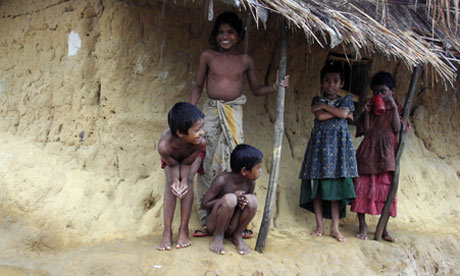
Global acute malnutrition in Rohingya children is now reaching 27% in the Kutu Palong makeshift refugee camp. Photograph: Misha Hussain
Rafiqul's arm is no wider than a tube of sweets. The 18-month-old Rohingya refugee suffers from acute malnutrition and, without medical treatment and nutritional therapy, his chances of survival are becoming slimmer.
The latest survey by Médecins sans Frontières found that global acute malnutrition, one of the basic indicators for assessing the severity of a humanitarian crisis, is as high as 27% in the Kutu Palong makeshift camp, where an estimated 20,000 unregistered refugees live. It is almost double the emergency threshold of 15% set by the World Health Organisation.
Yet the Bangladesh government refuses to formally allow humanitarian assistance into the camp or the surrounding border districts of Ukhia and Teknaf. The majority of the estimated more than 200,000 unregistered Muslim Rohingyas in Bangladesh live in these two districts after fleeing persecution in neighbouring Burma, which is predominantly Buddhist.
Government officials claim humanitarian aid would create a "pull factor" for other Rohingyas, putting even more pressure on an already strained local labour market. A recent article in the Samakal, a Bangla-language daily, quoted a foreign ministry source describing Rohingyas as "excess baggage on the economy, society and national security".
Ironically, the policy of blocking aid for the Rohingyas appears to be hurting the host population as much as the refugees. A report by Action Contre la Faim (ACF), released this month, found disturbing statistics for Bangladeshi children in the districts: 16.5% of children under five suffer from acute malnutrition in Ukhia while the rate is 21.5% in Teknaf.
According to the report, the prevalence of acute malnutrition in both districts, two of the poorest in the country, has increased since 2009. The report cited decreasing purchasing power parity of agricultural day labourers, floods and the lack of humanitarian assistance as possible reasons for the malnutrition crisis.
The seasonal rains also have an impact on the availability of day labour such as construction, fishing or rickshaw-pulling. "Neither my husband nor I have been able to find work for more than three weeks [because of the rains]. We have no income, and no food," said Rafiqul's mother, Rezana.
Clandestine humanitarian aid
The reports come exactly a year after the government rejected a $33m UN joint initiative aimed at reducing hunger and poverty for both Bangladeshis and refugees in the region. The government claimed it would draw more Rohingyas across the border.
However, Echo, the humanitarian aid arm of the European Commission, which funds three NGOs operating under the radar in Ukhia and Teknaf, is sceptical as to whether aid really does create a "pull factor". "Our funding in the Kutu Palong makeshift camp and surrounding populations has increased over the past two years. Yet there hasn't been a corresponding increase in camp numbers, which on the contrary [have] significantly decreased," says Olivier Brouant, an Echo humanitarian expert.
Nevertheless, the NGO Affairs Bureau, the department responsible for granting work permits to NGOs, has denied any organisation that mentions Rohingya in their application. None of the NGOs working in Ukhia or Teknaf has a permit, despite having permission to work in other locations. This has forced a handful of aid agencies to run clandestine humanitarian programmes, creating additional challenges.
Without the permit, NGOs struggle to bring in cash for day-to-day operations, import medical equipment and treatment or ready-to-use therapeutic food, which is essential for children suffering from malnutrition. The NGOs work under the threat of being shut down if they communicate the grim situation within the districts to the international press.
Bangladesh, like many other developing countries with large refugee populations, is in an unenviable position. Its political leaders have to solve worsening malnutrition in the host population while shouldering the ethical responsibility of taking in refugees despite not signing the 1951 Refugee Convention.
In recent months, positive steps have been taken to address the former concern. A $2m joint World Food Programme-ACF community-based nutritional programme started this year aims to treat more than 15,000 Bangladeshi children suffering from acute malnutrition, as well as 2,000 pregnant and nursing women.
Unfortunately for the Rohingyas, the situation across the border seems no better. Despite progress towards democracy in Burma, Aung San Suu Kyi's NLD party has been non-committal on the Rohingya issue. The situation in Burma remains too fragile for the refugees to return home safely.
While the Bangladesh government weighs up its duty to its citizens with its moral obligations to refugees, Rezana and thousands like her do not know where to turn. "I'm damned if I stay, I'm damned if I don't," says Rezana, "so where should I go?"
Global acute malnutrition in Rohingya children is now reaching 27% in the Kutu Palong makeshift refugee camp. Photograph: Misha Hussain
Rafiqul's arm is no wider than a tube of sweets. The 18-month-old Rohingya refugee suffers from acute malnutrition and, without medical treatment and nutritional therapy, his chances of survival are becoming slimmer.
The latest survey by Médecins sans Frontières found that global acute malnutrition, one of the basic indicators for assessing the severity of a humanitarian crisis, is as high as 27% in the Kutu Palong makeshift camp, where an estimated 20,000 unregistered refugees live. It is almost double the emergency threshold of 15% set by the World Health Organisation.
Yet the Bangladesh government refuses to formally allow humanitarian assistance into the camp or the surrounding border districts of Ukhia and Teknaf. The majority of the estimated more than 200,000 unregistered Muslim Rohingyas in Bangladesh live in these two districts after fleeing persecution in neighbouring Burma, which is predominantly Buddhist.
Government officials claim humanitarian aid would create a "pull factor" for other Rohingyas, putting even more pressure on an already strained local labour market. A recent article in the Samakal, a Bangla-language daily, quoted a foreign ministry source describing Rohingyas as "excess baggage on the economy, society and national security".
Ironically, the policy of blocking aid for the Rohingyas appears to be hurting the host population as much as the refugees. A report by Action Contre la Faim (ACF), released this month, found disturbing statistics for Bangladeshi children in the districts: 16.5% of children under five suffer from acute malnutrition in Ukhia while the rate is 21.5% in Teknaf.
According to the report, the prevalence of acute malnutrition in both districts, two of the poorest in the country, has increased since 2009. The report cited decreasing purchasing power parity of agricultural day labourers, floods and the lack of humanitarian assistance as possible reasons for the malnutrition crisis.
The seasonal rains also have an impact on the availability of day labour such as construction, fishing or rickshaw-pulling. "Neither my husband nor I have been able to find work for more than three weeks [because of the rains]. We have no income, and no food," said Rafiqul's mother, Rezana.
Clandestine humanitarian aid
The reports come exactly a year after the government rejected a $33m UN joint initiative aimed at reducing hunger and poverty for both Bangladeshis and refugees in the region. The government claimed it would draw more Rohingyas across the border.
However, Echo, the humanitarian aid arm of the European Commission, which funds three NGOs operating under the radar in Ukhia and Teknaf, is sceptical as to whether aid really does create a "pull factor". "Our funding in the Kutu Palong makeshift camp and surrounding populations has increased over the past two years. Yet there hasn't been a corresponding increase in camp numbers, which on the contrary [have] significantly decreased," says Olivier Brouant, an Echo humanitarian expert.
Nevertheless, the NGO Affairs Bureau, the department responsible for granting work permits to NGOs, has denied any organisation that mentions Rohingya in their application. None of the NGOs working in Ukhia or Teknaf has a permit, despite having permission to work in other locations. This has forced a handful of aid agencies to run clandestine humanitarian programmes, creating additional challenges.
Without the permit, NGOs struggle to bring in cash for day-to-day operations, import medical equipment and treatment or ready-to-use therapeutic food, which is essential for children suffering from malnutrition. The NGOs work under the threat of being shut down if they communicate the grim situation within the districts to the international press.
Bangladesh, like many other developing countries with large refugee populations, is in an unenviable position. Its political leaders have to solve worsening malnutrition in the host population while shouldering the ethical responsibility of taking in refugees despite not signing the 1951 Refugee Convention.
In recent months, positive steps have been taken to address the former concern. A $2m joint World Food Programme-ACF community-based nutritional programme started this year aims to treat more than 15,000 Bangladeshi children suffering from acute malnutrition, as well as 2,000 pregnant and nursing women.
Unfortunately for the Rohingyas, the situation across the border seems no better. Despite progress towards democracy in Burma, Aung San Suu Kyi's NLD party has been non-committal on the Rohingya issue. The situation in Burma remains too fragile for the refugees to return home safely.
While the Bangladesh government weighs up its duty to its citizens with its moral obligations to refugees, Rezana and thousands like her do not know where to turn. "I'm damned if I stay, I'm damned if I don't," says Rezana, "so where should I go?"
ထုိင္းႏုိင္ငံ ဘန္ေကာက္ျမဳိ႕မွာ လာမဲ့ ရက္သတၱပတ္အတြင္း က်င္းပမဲ့ ၂၀၁၂ အေရွ႕အာရွဆုိင္ရာ ကမာၻ႕စီးပြားေရး ညီလာခံကုိ ေဒၚေအာင္ဆန္းစုၾကည္ တက္ေရာက္မိန္႔ခြန္း ေျပာမယ္လို ့သိရပါတယ္။
 ၂၀၁၂ ခုႏွစ္ ေမလ ၂၂ ရက္တြင္ အမ်ဳိးသားဒီမိုကေရစီအဖြဲ႕ခ်ဳပ္ ဥကၠ႒ ေဒၚေအာင္ဆန္းစုၾကည္ ဒဂုံၿမိဳ႕သစ္ (အေရွ႕ပိုင္း) ၿမိဳ႕နယ္၊ ရုံးခန္းဖြင့္ပြဲ၌ မိန္႔ခြန္းေျပာၾကားေနစဥ္။
၂၀၁၂ အေရွ႕အာရွဆုိင္ရာ ကမာၻ႕စီးပြားေရး ညီလာခံကို ေမလ ၃၀ ရက္ကေန ဇြန္လ ၁ ရက္ေန႔ အထိ က်င္းပမွာ ျဖစ္ပါတယ္။
ဒီညီလာခံကို ေဒၚေအာင္ဆန္းစုၾကည္ တက္ေရာက္မိန္ ့ခြန္းေျပာမယ္လုိ ့ NLD ပါတီက အတည္ျပဳ ေျပာဆုိပါတယ္။ ေဒၚေအာင္ဆန္းၾကည္ အေနနဲ႔ အခု သြားေရာက္မဲ့ ခရီးစဥ္ဟာ ၂၄ ႏွစ္တာ ကာလအတြင္း ပထမဦးဆုံး အၾကိမ္အျဖစ္ ျပည္ပခရီး ျဖစ္္ပါတယ္ ။
အဲဒီ ဘန္ေကာက္ျမိဳ႕က ညီလာခံကို သမၼတ ဦးသိန္းစိန္လည္း တက္ေရာက္ မိန္႔ခြန္းေျပာမယ္လုိ ့ သိရပါတယ္။
ဒီအေတာအတြင္း ဇြန္လ ၂၁ရက္ေန ့မွာ ျဗိတိန္ပါလီမန္လႊတ္ေတာ္အစည္းအေ၀းကုိ ေဒၚေအာင္ဆန္းစုၾကည္ တက္ေရာက္ မိန္႔ခြန္းေျပာမယ္လုိ ့မေန႔က က်င္းပတဲ့ ျဗိတိန္ ေအာက္လႊတ္ေတာ္ အစည္းအေ၀းမွာ ေအာက္လႊတ္ေတာ္ ဥကၠ႒ Mr.John Bercow က ထုတ္ေဖာ္ေျပာပါတယ္ ။
၂၀၁၂ အေရွ႕အာရွဆုိင္ရာ ကမာၻ႕စီးပြားေရး ညီလာခံကို ေမလ ၃၀ ရက္ကေန ဇြန္လ ၁ ရက္ေန႔ အထိ က်င္းပမွာ ျဖစ္ပါတယ္။
ဒီညီလာခံကို ေဒၚေအာင္ဆန္းစုၾကည္ တက္ေရာက္မိန္ ့ခြန္းေျပာမယ္လုိ ့ NLD ပါတီက အတည္ျပဳ ေျပာဆုိပါတယ္။ ေဒၚေအာင္ဆန္းၾကည္ အေနနဲ႔ အခု သြားေရာက္မဲ့ ခရီးစဥ္ဟာ ၂၄ ႏွစ္တာ ကာလအတြင္း ပထမဦးဆုံး အၾကိမ္အျဖစ္ ျပည္ပခရီး ျဖစ္္ပါတယ္ ။
အဲဒီ ဘန္ေကာက္ျမိဳ႕က ညီလာခံကို သမၼတ ဦးသိန္းစိန္လည္း တက္ေရာက္ မိန္႔ခြန္းေျပာမယ္လုိ ့ သိရပါတယ္။
ဒီအေတာအတြင္း ဇြန္လ ၂၁ရက္ေန ့မွာ ျဗိတိန္ပါလီမန္လႊတ္ေတာ္အစည္းအေ၀းကုိ ေဒၚေအာင္ဆန္းစုၾကည္ တက္ေရာက္ မိန္႔ခြန္းေျပာမယ္လုိ ့မေန႔က က်င္းပတဲ့ ျဗိတိန္ ေအာက္လႊတ္ေတာ္ အစည္းအေ၀းမွာ ေအာက္လႊတ္ေတာ္ ဥကၠ႒ Mr.John Bercow က ထုတ္ေဖာ္ေျပာပါတယ္ ။
RFA
*****************************************************************************
The visit to Bangkok comes ahead of a longer trip to Europe next month during which Suu Kyi will make a series of key addresses, including the acceptance speech for the Nobel Peace Prize that she was prevented from collecting in 1991 because she was in detention.
CNN
*****************************************************************************
Myanmar's Suu Kyi to visit Thailand next week in first trip abroad in decades
Myanmar opposition leader Aung San Suu Kyi will make her first trip outside the country in more than two decades when she visits Thailand next week to attend a regional conference, a spokesman for her party said Thursday.
Suu Kyi, a pro-democracy campaigner who endured years of house arrest under Myanmar's military rulers, will travel to the Thai capital of Bangkok on Monday where she will participate in the World Economic Forum on East Asia, said Nyan Win, a spokesman for the National League for Democracy.The visit to Bangkok comes ahead of a longer trip to Europe next month during which Suu Kyi will make a series of key addresses, including the acceptance speech for the Nobel Peace Prize that she was prevented from collecting in 1991 because she was in detention.
CNN

လန္ဒန္အေျခစိုက္ Amnesty International လူ႔အခြင့္အေရး အဖဲြ႔ႀကီးရဲ႕ ၂၀၁၂ ခုႏွစ္ ႏွစ္ပတ္လည္ လူ႔အခြင့္အေရး အစီရင္ခံစာထဲမွာေတာ့ ျမန္မာႏိုင္ငံ အတြင္း ျမန္မာစစ္တပ္ဟာ တိုင္းရင္းသားေဒသေတြမွာ လူသားမ်ိဳးႏြယ္အေပၚဆန္႔က်င္တဲ့ ရာဇ၀တ္မႈေတြ က်ဴးလြန္ေနတယ္လို႔ ေ၀ဖန္လိုက္ပါတယ္။
စစ္ပဲြေတြျဖစ္ေနတဲ့ေဒသက ေထာင္နဲ႔ခ်ီတဲ့ဒုကၡသည္ေတြကို လူသားခ်င္းစာနာမႈ အကူအညီေတြေပးဖို႔ လည္း အာဏာပိုင္ေတြ ဘက္က ပိတ္ပင္ထားၿပီး ျမန္မာစစ္တပ္က စစ္သားေတြဟာ အရပ္သားေတြေပၚ လိင္ပိုင္းဆိုင္ရာ ေစာ္ကားမႈေတြလည္း က်ဴးလြန္ၾကတယ္လို႔ ဆိုပါတယ္။ ျမန္မာအစိုးရဟာ ႏိုင္ငံေရးနဲ႔ စီးပြားေရး ျပဳျပင္ေျပာင္းလဲမႈေတြ အကန္႔အသတ္နဲ႔ လုပ္ေဆာင္ေနေပမဲ့ အခုႏွစ္အတြင္းမွာပဲ တိုင္းရင္းသား လူနည္းစုေဒသေတြမွာ ႏိုင္ငံတကာဥပေဒေတြနဲ႔ လူ႔အခြင့္အေရးေတြကို ခ်ိဳးေဖာက္မႈေတြ ရိွေနတယ္လို႔ Amnesty International လူ႔အခြင့္အေရးအဖဲြ႔က ေ၀ဖန္ထားပါတယ္။
အဲဒီအထဲ အခ်ိဳ႕အမႈေတြဟာ စစ္ရာဇ၀တ္မႈေတြနဲ႔ လူသားမ်ိဳးႏြယ္အေပၚ ဆန္႔က်င္တဲ့ ရာဇ၀တ္ မႈေတြ ျဖစ္တယ္လို႔ ဆိုပါတယ္။ အထူးသျဖင့္ ကခ်င္ျပည္နယ္ အတြင္းက အေျခအေနေတြ ကို ေထာက္ျပေ၀ဖန္ထားရာမွာ ျဖစ္ရပ္ေတြကိုပါ အေသးစိတ္ေရးသားထားပါတယ္။ ရွမ္းျပည္နယ္အတြင္း မွာ အရပ္သားေတြကို ညွင္းပမ္းႏွိပ္စက္မႈ မတရားဖမ္းဆီး ခ်ဳပ္ေႏွာင္မႈေတြရိွတဲအ့ျပင္ ေက်းရြာေတြကို အတင္းအက်ပ္ ေရႊ႕ေျပာင္းမႈေတြပါ ရိွခဲ့တယ္လို႔ ဆိုပါတယ္။
ခိုင္မာတဲ့ အေထာက္အထားေတြအရ စစ္တပ္ဟာ အက်ဥ္းသားေတြကို ေပၚတာအျဖစ္ အသံုးျပဳတာ၊ မိုင္းရွင္းတဲ့ေနရာ လူသားဒိုင္းလို အသံုးျပဳတာမ်ိဳးေတြ ရိွတယ္လို႔လည္း ေ၀ဖန္ပါတယ္။ ၿပီးခဲ့တဲ့ႏွစ္ အတြင္း ႏိုင္ငံေရးအက်ဥ္းသားေတြ လြတ္ေျမာက္လာတာရိွေပမယ့္လည္း ႏိုင္ငံေရးအရလႈပ္ရွားသူေတြကို အျပစ္ေပးေထာင္ခ်တာေတြ ဆက္ရိွေနသလို ႏိုင္ငံေရးအက်ဥ္းသားေတြ လူမဆန္စြာ ညႇင္းပမ္းႏွိပ္စက္ မႈေတြလည္း ရိွေနတယ္လို႔ ဆိုပါတယ္။ အက်ဥ္းေထာင္တြင္း အေျခအေနဟာလည္း အေတာ္ေလး ဆိုး၀ါးေနဆဲပဲလို႔ ေထာက္ျပပါတယ္။
ျမန္မာႏို္င္ငံဟာ လက္ရိွမွာ ႏိုင္ငံေရးအရ ျပဳျပင္ေျပာင္းလဲမႈေတြရိွေပမဲ့ လူ႔အခြင့္အေရးအရ တိုးတက္ဖို႔ လုပ္ေဆာင္စရာေတြ က်န္ေနေသးတယ္လို႔ ႏိုင္ငံတကာက ေ၀ဖန္တာခံေနရဆဲပါ။ ဒီေန႔ဆိုရင္ေတာ့ အေမရိကန္ႏိုင္ငံျခားေရးဌာနရဲ႕ ႏွစ္စဥ္ လူ႔အခြင့္အေရး အစီရင္ခံစာ ထုတ္ျပန္ဖို႔ရိွပါတယ္။ အဲဒီအထဲ ျမန္မာႏိုင္ငံအေျခအေနကိုလည္း ထည့္သြင္းေဖာ္ျပမယ္လို႔ ေမွ်ာ္လင့္ရပါတယ္။
စစ္ပဲြေတြျဖစ္ေနတဲ့ေဒသက ေထာင္နဲ႔ခ်ီတဲ့ဒုကၡသည္ေတြကို လူသားခ်င္းစာနာမႈ အကူအညီေတြေပးဖို႔ လည္း အာဏာပိုင္ေတြ ဘက္က ပိတ္ပင္ထားၿပီး ျမန္မာစစ္တပ္က စစ္သားေတြဟာ အရပ္သားေတြေပၚ လိင္ပိုင္းဆိုင္ရာ ေစာ္ကားမႈေတြလည္း က်ဴးလြန္ၾကတယ္လို႔ ဆိုပါတယ္။ ျမန္မာအစိုးရဟာ ႏိုင္ငံေရးနဲ႔ စီးပြားေရး ျပဳျပင္ေျပာင္းလဲမႈေတြ အကန္႔အသတ္နဲ႔ လုပ္ေဆာင္ေနေပမဲ့ အခုႏွစ္အတြင္းမွာပဲ တိုင္းရင္းသား လူနည္းစုေဒသေတြမွာ ႏိုင္ငံတကာဥပေဒေတြနဲ႔ လူ႔အခြင့္အေရးေတြကို ခ်ိဳးေဖာက္မႈေတြ ရိွေနတယ္လို႔ Amnesty International လူ႔အခြင့္အေရးအဖဲြ႔က ေ၀ဖန္ထားပါတယ္။
အဲဒီအထဲ အခ်ိဳ႕အမႈေတြဟာ စစ္ရာဇ၀တ္မႈေတြနဲ႔ လူသားမ်ိဳးႏြယ္အေပၚ ဆန္႔က်င္တဲ့ ရာဇ၀တ္ မႈေတြ ျဖစ္တယ္လို႔ ဆိုပါတယ္။ အထူးသျဖင့္ ကခ်င္ျပည္နယ္ အတြင္းက အေျခအေနေတြ ကို ေထာက္ျပေ၀ဖန္ထားရာမွာ ျဖစ္ရပ္ေတြကိုပါ အေသးစိတ္ေရးသားထားပါတယ္။ ရွမ္းျပည္နယ္အတြင္း မွာ အရပ္သားေတြကို ညွင္းပမ္းႏွိပ္စက္မႈ မတရားဖမ္းဆီး ခ်ဳပ္ေႏွာင္မႈေတြရိွတဲအ့ျပင္ ေက်းရြာေတြကို အတင္းအက်ပ္ ေရႊ႕ေျပာင္းမႈေတြပါ ရိွခဲ့တယ္လို႔ ဆိုပါတယ္။
ခိုင္မာတဲ့ အေထာက္အထားေတြအရ စစ္တပ္ဟာ အက်ဥ္းသားေတြကို ေပၚတာအျဖစ္ အသံုးျပဳတာ၊ မိုင္းရွင္းတဲ့ေနရာ လူသားဒိုင္းလို အသံုးျပဳတာမ်ိဳးေတြ ရိွတယ္လို႔လည္း ေ၀ဖန္ပါတယ္။ ၿပီးခဲ့တဲ့ႏွစ္ အတြင္း ႏိုင္ငံေရးအက်ဥ္းသားေတြ လြတ္ေျမာက္လာတာရိွေပမယ့္လည္း ႏိုင္ငံေရးအရလႈပ္ရွားသူေတြကို အျပစ္ေပးေထာင္ခ်တာေတြ ဆက္ရိွေနသလို ႏိုင္ငံေရးအက်ဥ္းသားေတြ လူမဆန္စြာ ညႇင္းပမ္းႏွိပ္စက္ မႈေတြလည္း ရိွေနတယ္လို႔ ဆိုပါတယ္။ အက်ဥ္းေထာင္တြင္း အေျခအေနဟာလည္း အေတာ္ေလး ဆိုး၀ါးေနဆဲပဲလို႔ ေထာက္ျပပါတယ္။
ျမန္မာႏို္င္ငံဟာ လက္ရိွမွာ ႏိုင္ငံေရးအရ ျပဳျပင္ေျပာင္းလဲမႈေတြရိွေပမဲ့ လူ႔အခြင့္အေရးအရ တိုးတက္ဖို႔ လုပ္ေဆာင္စရာေတြ က်န္ေနေသးတယ္လို႔ ႏိုင္ငံတကာက ေ၀ဖန္တာခံေနရဆဲပါ။ ဒီေန႔ဆိုရင္ေတာ့ အေမရိကန္ႏိုင္ငံျခားေရးဌာနရဲ႕ ႏွစ္စဥ္ လူ႔အခြင့္အေရး အစီရင္ခံစာ ထုတ္ျပန္ဖို႔ရိွပါတယ္။ အဲဒီအထဲ ျမန္မာႏိုင္ငံအေျခအေနကိုလည္း ထည့္သြင္းေဖာ္ျပမယ္လို႔ ေမွ်ာ္လင့္ရပါတယ္။

May 24 (Reuters) - Myanmar police broke up a protest against power cuts by several hundred people on Thursday and five members of Aung San Suu Kyi's opposition party were taken in for questioning, a senior party official said.
Demonstrations have taken place in Pyi and other towns week, including the commercial capital, Yangon, and the city of Mandalay, as citizens test the limits of democratic changes in Myanmar, leaving authorities struggling to respond.
Until now, the security forces have allowed the peaceful demonstrations to go ahead and the civilian government, which took over from a repressive junta in March last year, has promised emergency measures to increase the electricity supply.
"So far as I heard from our members in the region, there was a protest of about 400 people at least," National League for Democracy (NLD) official Nyan Win said, referring to the area of Pyi, about 260 km (160 miles) northwest of Yangon.
"The police tried to disperse them and there was some rough manhandling and some people were injured. Five NLD members were picked up for questioning," he said.
Kyaw Sann, a member of the NLD in Pyi, confirmed that the police had broken up the demonstration. About seven people had been arrested, he told Reuters by phone.
One protest leader in Mandalay said he had heard some NLD members had been taken in for questioning there, too, but that could not be confirmed.
State television said on Wednesday that six generators purchased from U.S.-based Caterpillar Inc would be air-freighted within a week and two 25-megawatt gas-turbines would be bought from General Electric Co to help tackle the power shortage. (Reporting by Aung Hla Tun and Thu Rein Hlaing; Editing by Alan Raybould and Robert Birsel)
Demonstrations have taken place in Pyi and other towns week, including the commercial capital, Yangon, and the city of Mandalay, as citizens test the limits of democratic changes in Myanmar, leaving authorities struggling to respond.
Until now, the security forces have allowed the peaceful demonstrations to go ahead and the civilian government, which took over from a repressive junta in March last year, has promised emergency measures to increase the electricity supply.
"So far as I heard from our members in the region, there was a protest of about 400 people at least," National League for Democracy (NLD) official Nyan Win said, referring to the area of Pyi, about 260 km (160 miles) northwest of Yangon.
"The police tried to disperse them and there was some rough manhandling and some people were injured. Five NLD members were picked up for questioning," he said.
Kyaw Sann, a member of the NLD in Pyi, confirmed that the police had broken up the demonstration. About seven people had been arrested, he told Reuters by phone.
One protest leader in Mandalay said he had heard some NLD members had been taken in for questioning there, too, but that could not be confirmed.
State television said on Wednesday that six generators purchased from U.S.-based Caterpillar Inc would be air-freighted within a week and two 25-megawatt gas-turbines would be bought from General Electric Co to help tackle the power shortage. (Reporting by Aung Hla Tun and Thu Rein Hlaing; Editing by Alan Raybould and Robert Birsel)
 ဒဂုံၿမဳိ႔သစ္အေရွ႔ပိုင္းအန္အယ္ဒီရုုံးဖြင့္ပြဲမွာ ေဒၚေအာင္ဆန္းစုၾကည္ ေျပာၾကားခဲ့တဲ့ လွ်ပ္စစ္မီးအေၾကာင္း ေကာက္ႏႈတ္ခ်က္ (ဒီဗီြဘီိ)
ျပည္ေထာင္စုသမၼတျမန္မာနိုင္ငံေတာ္ နိုင္ငံေတာ္သမၼတဦးသိန္းစိန္အားယေန့ မြန္းလဲြ (၂) နာရီတြင္ ေနျပည္ေတာ္၌ က်င္းပေနသည့္ (၃၂)ျကိမ္ေျမာက္ အာဆီယံရဲအဖဲြ့ ရဲခု်ပ္မ်ား အစည္းအေဝး(ေနျပည္ေတာ္ - ေမ ၂၂)

ျပည္ေထာင္စုသမၼတ ျမန္မာနိုင္ငံေတာ္ နိုင္ငံေတာ္သမၼတဦးသိန္းစိန္အား ယေန့ မြန္းလဲြ (၂) နာရီတြင္ ေနျပည္ေတာ္၌ က်င္းပေနသည့္ (၃၂) ျကိမ္ေျမာက္ အာဆီယံရဲအဖဲြ့ ရဲခု်ပ္မ်ား အစည္းအေဝးသို့ တက္ေရာက္လာေသာ အာဆီယံနိုင္ငံ ရဲခု်ပ္မ်ားနွင့္ ေဆြးေနြးဘက္ နိုင္ငံမ်ား၏ ရဲအဖဲြ့ အျကီးအကဲမ်ား၊ Interpol ရဲအဖဲြ့ အတြင္းေရးမႉးရံုးမွ ကိုယ္စားလွယ္ အဖဲြ့မ်ားက လာေရာက္ ဂါရဝျပုေတြ့ဆံုရာ နိုင္ငံေတာ္သမၼတအိမ္ေတာ္ သံတမန္ေဆာင္ ဧည့္ခန္းမ၌ လက္ခံေတြ့ဆံုသည္။
ထိုသို့ လက္ခံေတြ့ဆံုရာတြင္ နိုင္ငံေတာ္သမၼတ ဦးသိန္းစိန္နွင့္အတူ ျပည္ထဲေရးဝန္ျကီး ဌာန ျပည္ေထာင္စုဝန္ျကီး ဒုတိယဗိုလ္ခု်ပ္ျကီး ကိုကို၊ ျမန္မာနိုင္ငံရဲတပ္ဖဲြ့မွ ရဲခု်ပ္ေက်ာ္ေက်ာ္ ထြန္း၊ နိုင္ငံျခားေရးဝန္ျကီးဌာန၊ သံတမန္ေရးရာဦးစီးဌာန ညွြန္ျကားေရးမႉးခု်ပ္တို့ တက္ေရာက္ျကျပီး အာဆီယံနိုင္ငံ ရဲခု်ပ္မ်ားနွင့္ ေဆြးေနြးဘက္နိုင္ငံမ်ား၏ ရဲအဖဲြ့အျကီးအကဲမ်ား အဖဲြ့တို့ တက္ေရာက္ျကသည္ဟု သမၼတရုံး အင္တာနက္ စာမ်က္ႏွာမွာေဖာ္ျပထားပါသည္။
(သတင္းစဉ္)
ယေန႔ၾကပ္ေျပးေနျပည္ေတာ္တြင္ အေရးေပၚ အစည္းအေ၀း တရပ္က်င္းပ ခဲ့ေၾကာင္း သိရပါသည္။ ထုိအ စည္းအေ၀းတြင္ ဗုိလ္ခ်ဳပ္မင္းေအာင္လႈိင္ အပါအ၀င္ လႊတ္ေတာ္အမတ္ တခ်ဳိ႕ပါ၀င္ၿပီး ၊ဗုိလ္သိန္းစိန္ပါ၀င္ တက္ေရာက္ျခင္း မရွိေၾကာင္းသိရပါသည္။ အေရးေပၚ အစည္းအေ၀းတြင္ အဓိကေဆြးေႏြးေသာ အေၾကာင္အရာ မွာ လက္ရွိျဖစ္ေပၚေနေသာ လွ်ပ္စစ္မီးရရွိေရး ဆႏၵျပပြဲမ်ားႏွင့္ ပတ္သက္၍မည္သုိ႔ကုိင္တြယ္ေျဖရွင္းရမည္နည္း ဆုိသည့္ အခ်က္ကုိေဆြေႏြးၾကသည္ဟု သိရပါသည္။ ဗုိလ္ခ်ဳပ္မင္းေအာင္လႈိင္အေနျဖင့္ထုိျပႆနာကုိေျဖရွင္း ရန္နည္းလမ္တစုံတရာ မေတြ႔ရွိေသးေၾကာင္း၊ လက္ရွိဆႏၵျပပြဲမ်ားကုိညင္ညင္သာသာကို္င္တြယ္ဖုိ႔လုိေၾကာင္း၊ ရုန္းရင္းဆန္ခပ္ျဖစ္ မႈမ်ားကုိေရွာင္းရွားႏုိင္ ဖုိ႔လုိေၾကာင္း၊အၾကမ္းဖက္ႏွိမ္ႏွင္းမႈမ်ားျပဳလုပ္ပါကႏုိင္ငံတကာ၏ အေရးယူပိတ္ ဆုိ႔ဒဏ္ခတ္မႈမ်ားႏွင့္ျပန္ လည္ရင္ဆုိင္လာရဖြယ္ရွိေၾကာင္း ၊ယာယီရပ္ဆုိင္း ထားေသာစီးပြားေရး ပိတ္ဆုိ႔မ်ားအတြင္း မိမိတုိ႔ တပ္မေတာ္၏ အက်ဳိးစီးပြားေျမာက္မ်ားစြာ ပါ၀င္ေနေသာေၾကာင့္ ယာထီဆုိင္းငံ့ထားမႈ မ်ားျပန္လည္ ရုပ္သိမ္းသြားပါကမိမိတုိ႔အေနျဖင့္မ်ားအႀကီးအက်ယ္အခက္အခဲမ်ားႏွင့္ႀကဳံေတြ႔ရႏုိင္ေၾကာင္း၊ႏုိင္ ငံတ ကာႏွ င့္ ဆက္ စပ္ေဆာင္ရြက္ေနေသာ အခ်ဳိ႕ေသာစီးပြားေရးကုမၸဏီႀကီးမ်ားလည္းအလြန္အကၽြံလက္မွတ္ ထုိးခ်ဳပ္ဆုိထားၿပီးျဖစ္ေသာလုပ္ငန္းမ်ားလည္းရွိေနေၾကာင္း၊ထုိ႔အတြက္ေၾကာင့္လက္ရွိဆႏၵျပပြဲမ်ားကုိနည္းဗ်ဴ ဟာက်က်စနစ္တက်ညွင္ညွင္သာသာကုိင္တြယ္ေျဖရွင္းဖုိ႔လုိေၾကာင္း၊ဆႏၵျပပြဲမ်ားဆက္တုိက္ျဖစ္ေပၚ လာႏုိင္ေၾကာင္း ၊ေျခာက္လွန္႔ေသာ သေဘာ ျဖင့္ေခၚယူစစ္ေဆးေမးျမန္းမႈမ်ားျပဳလုပ္ကာမိမိတုိ႔၏ညွင္သာ စြာကုိင္တြယ္ လုပ္ကုိင္ပုံျပည္သူလူထုကုိတဖက္လွည့္နည္းျဖင့္ဖ်ားေယာင္းကာေဆာင္ရြက္ျပသတာမ်ဳိးလုပ္ သင့္ေၾကာင္း၊ျပည္သူလူထု၏ဆႏၵျပမႈကုိမိမိတုိ႔ကေဘးမွ၀ုိင္းရံေစာင့္ၾကပ္ၾကည့္ရႈသင့္ေၾကာင္း၊ဗုိလ္ခ်ဳပ္မင္းေအာင္ လႈိင္မွပထမအဆင့္အေန ျဖင့္ေဆြး ေႏြး သြားေၾကာင္းေတြ႔ရပါသည္။
အျခားႀကံ႕ဖြံ႔၀န္ႀကီးမ်ား မွျပန္လည္ေဆြးေႏြးတင္ျပၾကေသာအခ်က္မွာလက္ရွိဆႏၵျပပြဲ မ်ားကုိဗုိလ္ခ်ဳပ္ မင္းေအာင္ကုိင္တြယ္မည့္ပုံစံအစားျမန္မာျပည္ေျမာက္ပုိင္းတြင္ျဖစ္ပြားေနေသာကခ်င္ေဒသစစ္ပြဲမ်ားကုိအ သုံးခ်ကာက ခ်င္သူပုန္မ်ား၏လက္ခ်က္ေၾကာင့္ဤသုိ႔ျဖစ္ရျခင္းျဖစ္ေၾကာင္းျပည္သူလူထုကုိအယုံ သြင္းကာ ၿပည္သူလူ ထုအေနျဖင့္က ခ်င္တုိင္းရင္းသားမ်ားအေပၚအမုန္းပြားလာေစရန္ဖန္တီးၿပီး၊ ၾကားသြား သည္ဟု သိရပါသည္။
(သတင္းအရင္းအျမစ္-ျမန္မာျပည္ဖြံ႔ၿဖိဳးတုိးတက္ေရးကြန္ယက္)
__._,_.___
-
 "Although mass killings and exterminations of human races were some sort of things that the world experienced during Nazi German p...
 -
 ဇြန္လ ၁၇ ရက္ ၊ ၂၀၁၂ Source: guardian.co.uk ျမန္မာျပည္သစ္အတြက္ အနာဂတ္မွာ ေအာင္ျမင္မွာလား၊ က်ရွဳံးမွာလားဆိုသည္ကို ညႊန္ျပေသာ စမ္းသပ္မွဳ တစ...
 -
ရက္စြဲ – ေမ ၂၉ ၊ ၂၀၁၂ သို ့ အယ္ဒီတာ၊ နိရဥၥရာ သတင္းဌာန နိရဥၥရာ သတင္းဌာနမွ ေမလ ၂၉ ရက္ေန ့ ထုတ္ျပန္သည့္ ရမ္းျဗဲတြင္ အသက္ ၁၆ ႏွ...
-
 ပါလီမန္အမတ္ဦးေရႊေမာင္ၿပည္သူ႔လြတ္ေတာ္တြင္ရခိုင္ၿပည္နယ္၌ၿဖစ္ပြါးခဲ့ေသာအေရးအခင္းနဲ့ ပတ္သက္၍ေဆြးေနြးတင္ၿပၿခင္း။ (14th day of regular ses...
 -
 The custodian of Two Holy Mosques King Abdullah bin Abdul Aziz Al Saud Aug 11 The custodian of Two Holy M...
 -
 More than 400,000 Rohingya have fled from Myanmar to neighbouring Bangladesh By BBC News September 17, 2017 Myanmar's de ...
 -
 RB ANDROID APPLICATION LAUNCHED… Now, RB News Can Be Read On Smartphone With Android OS. RB News July 4, 2013 Here is a g...
 -
 Thousands of Rohingya flee religious persecution in Myanmar, many dying along the way. Thanks to Anonymous, #RohingyaNOW is trending on ...
 -
 At Baggona, a village three miles far from and lies to the South of Maung Daw of Arakan state, more than 80 Rohingya women and girls have be...
 -
MP U Shwe Maung Explained on Amendment 1982 Citizenship Law on 25 July 2012. MP U Shwe Maung explained on amendment of 1982 Citizenship Law...

Popular Posts
Threatwiki

Amartya Sen: Burma's "slow genocide" of Rohingyas

Watch Professor Amartya Sen speak on what he calls Burma's 'slow genocide' of Rohingya, Harvard, 4 Nov 2014
