Latest Highlight

By Palash R. Ghosh , International Business Times

As Myanmar (or Burma) gradually opens up to Western nations after a half-century of isolation, observers are wondering how far the Burmese government will actually go into enacting democratic reforms. 

Having elected a (nominally) civilian government last year, the new president of Burma, Thein Sein, has promised a series of liberalizing measures, including the legalization of trade unions, the release of (some) political prisoners, as well as “fair and free” elections. He has even opened up talks with pro-democracy activist and opposition figure, Aung San Suu Kyi. 

However, given the still-heavy presence of military figures in the “civilian” government, there are doubts that Burma will reform at all. 

In addition, Burma has one of the worst human rights records of any nation on earth. The military-led abuse and mistreatment of its ethnic minorities remains a sordid, black mark on the country’s psyche. 

Among the victims of this state-sanctioned oppression are the Rohingya people, an ethnic Muslim group that has long suffered in Buddhist-dominated Burma. 

About 2-million Ronhingya live in the northwestern parts of Burma, near the Bangladesh border. 

Hundreds of thousands of Burmese Ronhingya are currently living in neighboring Bangladesh, where they are unwanted refugees. But lacking Burmese citizenship, they are essentially stateless and existing in a kind of limbo. 

Late last month, Agence France Presse (AFP) reported that the Burmese government agreed to take back some refugees from Bangladesh – excluding Rohingya. 

According to the United Nations, the Rohingya who live in Burma don’t have it much better – they are forbidden from owning property, marrying or even travelling without state permission. Many are subject to forced slave labor and extortion by authorities. 

Mizzima, the India-based Burmese news agency reported a few years ago that Rohingya women in Burma are frequently subject to sexual abuse and rape by Burmese soldiers. Reportedly, Burma’s military continues to commit atrocities against the civilian Rohingya population. 

As such, desperate Rohingya pour across the borders into Bangladesh every year – although they are Muslims like the overwhelming majority of Bangladeshis, the Rohingya are despised and rejected there as well. Bangladesh, already impoverished and overpopulated, simply cannot cope with the influx. 

Mojibar Rahman, a Rohingya refugee living in a United Nations camps in Bangladesh, told AFP: "We thought that after the election [of a civilian government in Burma], the situation would improve for Rohingya in Myanmar, but it hasn't… no one wants to go back.” 

Indeed, Rohingyas are trapped in a hopeless Catch-22… unwanted in Bangladesh, rejected by Burma since they lack Burmese citizenship.
Some Rohingya refugees have made it as far as Malaysia I the east or the Arab countries towards the west. Many are also in Thailand. But wherever they are, Rohinya remain vulnerable. 

Refugees International has reported that “in both Bangladesh and Malaysia, repressive government policies and lack of adequate international support force the Rohingya to struggle for survival in both countries. The inability of the Rohingya to access basic services in both Bangladesh and Malaysia is further compounding their vulnerability.” 

An elder Rohingya refugee living in a camp in Kutupalong, Bangladesh, told BBC: "We have nothing in Burma. We are disabled people, like slaves. We cannot work because our hands and feet are cut off. If we don't permission to travel we are sent to jail. We are really like slaves there.” 

A younger Rohingya at the same camp lamented: "If I stay in Bangladesh, what will I do? Even if I build a house here people will treat me as Burmese... this is a hated word. I have a ray of hope in my heart that one day there will be peace in Burma and my people will get back all their lives." 

Panchali Saikia, a research officer at the Institute of Peace and Conflict Studies in India, recently wrote of the Ronhingya: “After providing shelter to the Rohingyas for nearly three decades, Bangladesh is now concerned about the annual increase in their numbers. Apart from being an economic burden, the Rohingyas’ involvement in insurgent activities along the Myanmar-Bangladesh border is feared by the government. Hence to reduce the influx, the government has declared that it will no more consider any asylum seeker as refugee.” 

She further stated: “Anti-Rohingya communities in Bangladesh have also pressurized the government to repatriate the Rohingyas. Due to the denial of protection, assistance, and fear of repatriation, the Rohingyas are now escaping to Malaysia through the sea route. Malaysia is seen as the best destination because of the religion factor. Also, the Malaysian government’s permit to access the UN Refugee Agency (UNHCR) has attracted asylum seekers.” 

Saikia added: “The plight of the Rohingyas and the growing concern over their influx is not only confined to Myanmar, Bangladesh and Thailand. Other regional powers like India, Indonesia and Malaysia must also engage themselves considering its security implications. The forcible push-backs are a major threat to the maritime as well as border security of these countries. Left with no other option, the Rohingyas are vulnerable to being recruited by sea pirates and involved in arms and drug smuggling.” 

Now, as Burma appears to be opening up to western nations, it will be interesting to see how its human rights abuses – and the plight of the Rohingya – will be assessed and handled. 


Credit here


ႏွစ္ေပါင္း ၅၆ ႏွစ္တာ ကာလအတြင္း ၿဗိတိသွ်ႏုိင္ငံျခားေရး၀န္ႀကီးတစ္ဦး၏ ပထမဆုံး ခရီးစဥ္တြင္ ျမန္မာအစိုးရအား အခ်က္သုံးခ်က္ကို အဓိကထား၍ တုိက္တြန္းသြားသည္။

က်န္ရွိေနေသးေသာ ႏုိင္ငံေရးအက်ဥ္းသားမ်ားကို လႊတ္ေပးရန္၊ ဧၿပီ ၁ ရက္တြင္ က်င္းပမည့္ ၾကားျဖတ္ေရြးေကာက္ပဲြတြင္ တရားမွ်တလြတ္လပ္စြာက်င္းပေပးရန္ႏွင့္ကခ်င္ျပည္နယ္တြင္ ျဖစ္ပြားေနေသာ စစ္ပဲြမ်ားေၾကာင့္ ေနရပ္ကို စြန္႔ခြာထြက္ေျပးလာရေသာ စစ္ေျပးဒုကၡသည္မ်ားအတြက္ လူသားခ်င္းဆုိင္ရာ အကူအညီမ်ား လြတ္လပ္စြာေပးႏုိင္ေရးအပါအ၀င္၊ အမ်ဳိးသား ျပန္လည္သင့္ျမတ္ေရးအတြက္ ေလးနက္ေသာ ႏုိင္ငံေရးေဆြးေႏြးပဲြမ်ားကို စတင္ရန္ ျမန္မာအစိုးရကို ၿဗိတိန္ႏုိင္ငံျခားေရး၀န္ႀကီး ၀ီလီယံေဟ့ဂ္က တုိက္တြန္းခဲ့သည္။ ထုိ႔အခ်က္မ်ားကို ျမန္မာအစိုးရအေနျဖင့္ အေကာင္အထည္ေဖာ္ျခင္း
ရွိမရွိကို ဆက္လက္ေစာင့္ၾကည့္သြားမည္ျဖစ္ေၾကာင္း ၄င္းက ယေန႔ညေန ၅း၃၀ တြင္ ရန္ကုန္ၿမိဳ႕ ကမ္းနားလမ္းရွိ ၿဗိတိသွ်ေကာင္စီတြင္ က်င္းပေသာ သတင္းစာရွင္းလင္းပဲြတြင္ ေျပာၾကားခဲ့သည္။

ထို႔အျပင္ အထက္ပါ အခ်က္မ်ားကို ျမန္မာအစုိးရ အေကာင္အထည္ေဖာ္ျခင္းမွာ ဥေရာပသမဂၢ၏ ျမန္မာႏုိင္ငံအေပၚ စီးပြားေရးပိတ္ဆုိ႔မႈ ဖယ္ရွားေရး၊မဖယ္ရွားေရးဆုံးျဖတ္ႏုိင္ရန္အတြက္လည္း အေရးပါၿပီး၊ လာမည့္ ဧၿပီလအတြင္းအဆိုပါ အေရးယူပိတ္ဆုိ႔မႈကို ဥေရာပသမဂၢက ျပန္လည္ေဆြးေႏြးရန္ရွိသည္ကိုျမန္မာအစုိးရအေနျဖင့္ အေလးအနက္ထားရန္လည္း ၄င္းက တုိက္တြန္းေျပာၾကားခဲ့သည္ဟုဆုိသည္။

ၿဗိတိန္ႏုိင္ငံအပါအ၀င္ ကမၻာ့ႏုိင္ငံအမ်ားစုတြင္ ႏုိင္ငံေရးအက်ဥ္းသားမ်ားကို လႊတ္ေပးသည္ဆုိရာတြင္ အကုန္လႊတ္ေပးျခင္းမ်ဳိးျဖစ္ၿပီး ျမန္မာႏုိင္ငံကဲ့သုိ႔ တစ္ရစ္ၿပီးတစ္ရစ္

လႊတ္ေပးေနျခင္းမ်ဳိးမရွိေၾကာင္းလည္း ၄င္းက ေျပာၾကားခဲ့သည္။ မစၥတာ၀ီလီယံေဟ့ဂ္က ေနျပည္ေတာ္တြင္ ႏုိင္ငံေတာ္သမၼတ ဦးသိန္းစိန္အပါအ၀င္ အစိုးရအဆင့္ျမင့္ပုဂၢိဳလ္မ်ားႏွင့္ ေတြ႕ဆုံခဲ့ရာတြင္၊ ေတြ႕ဆုံခဲ့ေသာ အဆင့္ျမင့္ပုဂၢုိလ္မ်ားက ႏုိင္ငံေရးအက်ဥ္းသားမ်ားကို ထပ္မံလႊတ္ေပးရန္ရွိေၾကာင္း ေျပာၾကားခဲ့သည္ဟု ၄င္းကတစ္ဆင့္ျပန္လည္ေျပာျပသည္။

သုိ႔ေသာ္ ႏုိင္ငံေရးအက်ဥ္းသားမ်ားကို လႊတ္ေပးရာတြင္ ကမာၻကေစာင့္ၾကည့္ေနၿပီး မဆုိင္းမတြ အျမန္ဆုံး လႊတ္ေပးေစလိုေၾကာင္း၊ ယခုအခါ ျမန္မာအစုိးရ၏ႏုိင္ငံေရးအက်ဥ္းသားလႊတ္ေပးမႈအေပၚ ကမာၻကတစ္မ်ဳိးတစ္မည္ ထင္လာၾကၿပီျဖစ္၍ အျမန္ဆုံးလႊတ္ေပးရန္ တုိက္တြန္းခဲ့ေၾကာင္းလည္း မစၥတာ၀ီလီယံေဟ့ဂ္ကေျပာသည္။

ဖိုင္ေနရွယ္တုိင္း(မ္)သတင္းစာမွ ျမန္မာႏုိင္ငံသို႔ လာေရာက္ရင္းႏွီးျမႇဳပ္ႏွံလုပ္ကိုင္ရန္ အစီအစဥ္ရွိ၊ မရွိအေမးကို ၀န္ႀကီးက ရင္းႏွီးျမႇဳပ္ႏွံမႈႏွင့္ စီးပြားေရးလုပ္ငန္းမ်ားမွာျမန္မာႏုိင္ငံ၏ ႏုိင္ငံေရးျပဳျပင္ေျပာင္းလဲမႈ အေျခအေနေပၚတြင္ မူတည္ေနေၾကာင္း ၄င္းကဆက္လက္ေျပာသည္။

ျပည္ပရင္းႏွီးျမႇဳပ္ႏွံမႈမ်ားအတြက္ ျမန္မာႏုိင္ငံတြင္ ဥပေဒစိုးမုိးမႈရွိရန္၊ တရားစီရင္ေရးေကာင္းမြန္ရန္ႏွင့္ ျပည္ပရင္းႏွီးျမႇဳပ္ႏွံမႈမ်ားကို အကာအကြယ္ေပးေသာ ဥပေဒမ်ားျပ႒ာန္းထားေပးရန္လုိေၾကာင္း ၄င္းက ေျပာၾကားခဲ့သည္။


Credit : 7 days News


Rangoon (Mizzima) – British Foreign Secretary William Hague says his government will watch the mood on the streets in Burma before considering removing sanctions on the Burmese government. 


British Foreign Secretary William Hague answers questions from the media at the British Council in Rangoon on Friday, January 6, 2012. Photo: MizzimaHague was speaking at a press conference in Rangoon at the end of a two-day trip to Naypyitaw to gauge the changes taking place in Burma and encourage the move to meaningful democracy. Speaking to a packed crowd of local and foreign journalists at the British Council in Rangoon, the foreign secretary said he could see positive changes taking place in Burma but was worried about the word on the street that indicated not much had changed on the ground level.

Press conference at Daw Aung San Suu Kyi Residence

The British government would watch what is happening and would reconsider the issue of sanctions in the next few months. 

Hague said he was in line with the position of countries in the European Union who want more proof of democratic changes and the release of all political prisoners.

“First, many hundreds of men and women still remain in jail here for their beliefs. This has no place in any democracy, and it has no place in the future of this country,” he said at his final press conference. “There is an urgent need for the U.N. to be allowed to deliver humanitarian assistance independently and with access to all areas, for an end to offensive operations in Kachin State, and for meaningful political dialogue with ethnic armed groups.”


Hague said he also raised concerns about the Rohingya community that lacks basic civil and human rights. The British government would send humanitarian assistance to the displaced people in Kachin State, Hague said.


Hague's visit is the first time in over half a century that a British foreign minister has visited Burma, a country it once ruled. 

In response to a question on direct British investment in Burma, he said this would depend on the political situation.

During his two-days of non-stop meetings, Hague met with Foreign Minister Wunna Maung Lwin on Thursday followed by a meeting with President Thein Sein in Naypyidaw, the sprawling new capital city.

After the meetings, he told reporters that Britain wanted to see progress on the release of political prisoners, fair by-elections, resolution of conflicts with armed ethnic groups and humanitarian access to the war zones. 

Hague said the foreign minister assured him the recent changes are irreversible. “I stressed that the world will judge the government by its actions,” he said.

However, the BBC later reported that in an interview Foreign Minister Wunna Maung Lwi said Burma did not acknowledge there were political prisoners.

"Prisoners are the ones who violated the law", he said, and it was up to the president to decide when prisoners were released. Burmese officials refuse to use the words “political prisoners.” 

The Financial Times quoted Hague saying, “I have assured him that if they do [release political prisoners], there will be a strongly positive response from the UK and, I believe, the rest of the European Union.”

The EU’s annual review of Burma policy comes in early April. Some European diplomats have suggested that if reforms continue and the elections are deemed fair, the EU could lift sanctions this year.

In a press conference on Friday, Hague said, “We must not relax our pressure. That is something we will guard against.”

The big tests, say diplomats, is whether the upcoming elections will be fair and whether all political prisoners will be released. 

Estimates vary on the exact number of political detainees in Burmese jails, ranging from around 600 to up to 1,500. Getting accurate numbers is impossible due to the government’s failure to acknowledge it has political prisoners, and a lack of information and transparency. Burma is notorious for protecting information held by various ministries, and for not allowing reporters access to information. Only recently have government ministers consented to talk to non-government affiliated reporters.

On Thursday evening, Hague travelled to Rangoon for talks with leaders of the country's ethnic minorities and with Aung San Suu Kyi, with whom he had a private dinner, according to reports.

Hague's visit follows Hillary Clinton, the US secretary of state, in December and Suu Kyi's recent decision to run for a seat in Parliament in the April 1 parliamentary by-election.

Assessing the stance of the British government, Mark Farmaner of Burma Campaign UK, said: “The British government knows that there has not been significant deep reform in Burma, and that the pace of changes that were taking place has slowed. By visiting Burma, William Hague is demonstrating that the UK is willing to engage and lift sanctions, but only if there are genuine political reforms, and an end to human rights abuses.” 

On the sincerity of the new civilian government, he said, “The fact that most political prisoners remain in jail and that attacks against ethnic civilians continue are reasons to doubt the commitment of the military-backed government to genuine reforms. 

“The British government has prioritized human rights over business interests and deserves credit for that. We have urged William Hague to push for the release of all political prisoners, and to make the point that while cease-fires talks are welcome, they need to go beyond cease-fires and start talking about a political solution to ethnic issues. The British government must veto moves by other EU members to relax economic sanctions before genuine reforms take place,” he said.

While many are optimistic that Burma’s road to the future will reach true democracy, others who have long experience in the country aren’t quite so sure. A founder of the National League for Democracy, Win Tin, holds fast to his experience of Burma over the past 50 years.

Win Tin told The Guardian newspaper: “Hague should keep in mind that, yes, we have found a light in the tunnel here in Burma. But we are still in the tunnel. Maybe we can reach the light, maybe we can make it brighter, and maybe we can even leave the tunnel. But we don't know yet. And meanwhile, we are still in the dark.”

Credit : Mizzima -Burma VJ


အေမရိကန္ ေမရီလင္း ျပည္နယ္အုပ္ခ်ဳပ္ေရးမွဴး မစၥတာမာတင္ အုိေမာ္ေလ(ဒုတိယေျမာက္-ဝဲ)ႏွင့္ Silver Wave Energy ဥကၠ႒ ဦးမင္းမင္းေအာင္(တတိယေျမာက္-ဝဲ)။ Photo: Popular News 

Popular News — ၉ ႏွစ္ၾကာ စီးပြားေရး ပိတ္ဆို႔ထားမႈ မၾကာမီ ႐ုပ္သိမ္းဖြယ္ရိွသည္ ဟူေသာ ေမွ်ာ္လင့္ခ်က္ျဖင့္ ျမန္မာႏိုင္ငံ၌ ရင္းႏွီးျမႇဳပ္ႏွံရန္ အေမရိကန္ လုပ္ငန္းရွင္မ်ား အသင့္ျပင္ ဆင္ေန ၾကၿပီ ျဖစ္ေၾကာင္း ေရနံရွာေဖြေရး ကုမၸဏီတစ္ခု ျဖစ္သည့္ ွSilver Wave Energy ဥကၠ႒ဦးမင္းမင္းေအာင္က ဇန္နဝါရီ ၂ ရက္တြင္ ေျပာသည္။

”သူတုိ႔ အေနနဲ႔ Positive ျဖစ္လို႔၊ ဒီအေျပာင္းအလဲေတြကို ယံုၾကည္ ရေလာက္တဲ့ အေျခအေနရိွ လို႔ ရင္းႏွီးျမႇဳပ္ႏွံ ဖို႔အတြက္ ျပင္ဆင္ေနတာပါ။ စီးပြားေရး ပိတ္ဆုိ႔မႈ ႐ုတ္သိမ္း လိုက္ခ်ိန္မွာ ေနာက္မက်ေအာင္ ေျခလွမ္းစတဲ့ သေဘာပါ ပဲ” ဟု ၄င္းကဆုိသည္။

၄င္းအေနျဖင့္ ဒီဇင္ဘာ ၁ ရက္ တြင္ အိႏၵိယ ႏိုင္ငံ၌ ျပဳလုပ္ခဲ့ေသာ စီးပြားေရး ဖံြ႕ၿဖိဳးတုိးတက္မႈ ဆုိင္ရာ ေဆြးေႏြးပဲြ တစ္ခုသို႔ တက္ေရာက္စဥ္ ဖိတ္ၾကားခံရသူ အျဖစ္ လာ ေရာက္ခဲ့သည့္ အေမရိကန္ ေမရီလင္း ျပည္နယ္ အုပ္ခ်ဳပ္ေရးမွဴး မစၥတာ မာတင္ အုိေမာ္ေလႏွင့္ သီးျခားေတြ႕ ဆံုခဲ့မႈ အရ ယင္းကဲ့သို႔ ေျပာျခင္း ျဖစ္သည္။

အဆုိပါ ျပည္နယ္ အုပ္ခ်ဳပ္ေရးမွဴးက ေမရီလင္း ျပည္နယ္ အတြင္းရွိ စီးပြားေရး လုပ္ငန္းရွင္မ်ား အေနျဖင့္ ျမန္မာႏိုင္ငံ၌ ေရနံႏွင့္ သဘာဝ ဓာတ္ေငြ႕ရွာေဖြေရး၊ ဟုိ တယ္ႏွင့္ ခရီးသြား လုပ္ငန္းႏွင့္ အိုင္တီ နည္းပညာ က႑မ်ားတြင္ ရင္းႏွီးျမႇဳပ္ႏွံ လိုၾကၿပီး ပညာေရးက႑ ႏွင့္ စက္႐ုံအလုပ္႐ုံ မ်ားတြင္ မရိွမျဖစ္ လုိအပ္ေသာ ကြၽမ္းက်င္ မႈႏွင့္ စြမ္းရည္ဖံြ႕ၿဖိဳး တိုးတက္ေရး ဆုိင္ရာမ်ား အတြက္ပါ ဝင္ေရာက္ လုပ္ကိုင္ လိုၾကေၾကာင္း ေဆြးေႏြးခဲ့သည္ဟု ဦးမင္းမင္းေအာင္က ေျပာသည္။

”ကြၽန္ေတာ့္ ကုမၸဏီနဲ႔ ပူးေပါင္းၿပီး ဒီမွာ ရင္းႏွီးျမႇဳပ္ႏွံဖို႔ကုိ သူတို႔ ေတာ္ေတာ္ စိတ္ထက္သန္ ေနၾကတယ္။ အေမရိကန္လို ႏုိင္ငံနဲ႔ ပူးေပါင္း လုပ္ဖို႔က ကြၽန္ေတာ္တို႔ အတြက္ အခြင့္အေရး ေကာင္းပါပဲ။ ဒါေပမဲ့ ျမန္မာနဲ႔ ပတ္သက္ၿပီး သတင္း အခ်က္အလက္ကို သူတုိ႔ သိပ္မသိၾကေသးဘူး။ အဲဒီ့အတြက္ ျပည္နယ္ အုပ္ခ်ဳပ္ေရးမွဴးရဲ႕ ကိုယ္စားလွယ္ အဖဲြ႕က မၾကာခင္ ဒီကို လာေလ့လာဖို႔ ရိွပါတယ္” ဟု ၄င္း က ဆုိသည္။
အေမရိကန္ ျပည္ေထာင္စု အေနျဖင့္ ၂ဝဝ၃ ခုႏွစ္မွစကာ ျမန္မာႏုိင္ငံအား စီးပြားေရးအရ အေရးယူ ပိတ္ဆုိ႔မႈ ျပဳလုပ္ခဲ့ၿပီး ၂ဝဝ၇ ခုႏွစ္တြင္ ပိတ္ဆို႔မႈ ထပ္မံ တိုးျမႇင့္ ခဲ့သည္။ သုိ႔ရာတြင္ ၂ဝ၁၁ ခုႏွစ္ ႏိုဝင္ဘာ ၃ဝ တြင္ အေမရိကန္ ႏုိင္ငံျခားေရး ဝန္ႀကီး မစၥစ္ ဟီလာရီ ကလင္တန္ ျမန္မာ ႏုိင္ငံသို႔ လာေရာက္ခဲ့သည့္ သမုိင္းဝင္ ခ ရီးေၾကာင့္ ၄င္းတုိ႔ အေနျဖင့္ စီးပြားေရးအရ အေျပာင္းအလဲ ျဖစ္လာေတာ့မည္ဟု ယံုၾကည္ေန ၾကေၾကာင္းလည္း သိရသည္။

Silver Wave Energy ကုမၸဏီသည္ ျမန္မာႏိုင္ငံ၌ ကမ္းလြန္ ေရနံရွာေဖြေရး လုပ္္ကြက္မ်ား ရရိွထားသည္ သာမက ေတာင္အာဖရိကႏွင့္ ၾသစေၾတးလ် ႏိုင္ငံမ်ား တြင္ ပါ ကမ္းလြန္ ေရနံလုပ္ကြက္မ်ား ရရိွ လုပ္ကိုင္ေနေသာ ျမန္မာ တုိင္းရင္းသားပိုင္ ကုမၸဏီ တစ္ခုျဖစ္သည္။

လက္ရိွတြင္ ျမန္မာ့ကမ္းလြန္ ေရနံႏွင့္ သဘာဝ ဓာတ္ေငြ႕ရွာေဖြေရး က႑၌ တ႐ုတ္၊ အိႏၵိယ၊ ကိုရီး ယား၊ ထိုင္း၊ မေလးရွား စသည့္အာရွ ႏိုင္ငံမ်ားမွ အမ်ားဆံုး လုပ္ကိုင္ခြင့္ ရရိွေနၿပီး ဥေရာပ ႏိုင္ငံမ်ားထဲမွ ျပင္သစ္ တိုတယ္လ္ ကုမၸဏီတစ္ခုသာ ဝင္ေရာက္ လုပ္ကိုင္ေနေၾကာင္း ရင္းႏွီးျမႇဳပ္ႏွံမႈ အခ်က္အလက္ မ်ားအရ သိရ သည္။

ေအာင္ခြန္းဆက္

Popular News Journal


BROUK welcomes and strongly supports UK Foreign Secretary William Hague’s historic visit to Burma on Thursday. The visit has demonstrated the UK Government’s serious  commitment to helping the people of Burma to achieve their democratic aspirations.

Last Monday U Thein Sein government’s sham Amnesty made great disappointment  to the people of Burma in which only 32 out of more than 1,500 jailed activists were released. If the regime is sincere in taking steps for democratic reform then it must release all the political prisoners who were unlawfully imprisoned.

Burmese military offensives against Kachin and other ethnic peoples have continued; no significant changes towards national reconciliation have been done. In addition, ‘systematic racism’ against Rohingya has been institutionalized; and religious persecution against non-Buddhist people, especially Muslims and Christians, has increased. 


The credibility of U Thein Sein regime’s promise of reform is now seriously questioned. However, we are in high spirit to see that the Foreign Secretary has cautiously welcomed the promises of political reform in Burma saying ‘the military junta will be judged by its actions rather than its words’.

Meanwhile, we at BROUK and Rohingya people would like to express our gratitude to the British Foreign Secretary for his meeting with ethnic representative groups, including Rohingyas, during his visit to Burma. We are very delighted to see his encouragement to U Thein Sein regime to bring genuine change, long-lasting peace, freedom and protection of human rights for all the people of Burma.

Maung Tun Khin
President,
Burmese Rohingya Organisation UK
Contact +447888714866
10 Station Road, Walthamstow, London E17 8AA
Tel: +44 2082 571 143, E-mail: brorg_uk@yahoo.co.uk, 
web : www.bro-uk.org
Daw Aung San Suu Kyi meet Denmark Minister for Development Cooperation Mr. Christian Friis Bach at Daw Aung San Suu Kyi residence today at 3;00-4;15 pm.


At Press Conference


 Rohingya with other – Chin, Kachin, Shan, Kayah and Mon - ethnic groups’ representatives met British Foreign Secretary William Hague at the residence of the British ambassador in Rangoon yesterday at 5pm- 6pm, according to a source from Rangoon and BBC Burmese. 

British Foreign Minister with Rohingya and other ethnic representatives 

“The Rohingya political party leaders from the 1990 general election and the 2010 general election who attended the meeting are; - Master Yunus from National Democratic Party for Human Rights(NDPHR) and Abu Taher from National Democratic party for Development (NDPD).”

“Abu Taher highlighted the situation on Rohingya people of Arakan who are facing recently on – force labors, extortion, health, education, movement restriction, marriage restriction, religious persecution, unprecedented taxation, arbitrarily arrest and land confiscation- with recent report and appeal letter of NDPD to Burmese government which mention to find a solution about Rohingya issue of Arakan,” according to a Rohingya elite from Rangoon. 

Abu Taher is Central Executive member, Head of Political Bureau and Research and development. He won from People’s Parliament, Buthidaung Township in 2010 election. But, Union Solidarity and Development Party (USDP) forcedly denounced his victor, according to NDPD press released and case file against Shwe Maung of USDP.

NDPD complained to Township Election Commission, the votes were recounted by the Commission where Abu Taher (NDPD) got 56,882 votes and Shwe Maung (USDP) got 53,702 votes, according to election watch in Buthidaung report.

Master Yunus is CEC of NDPHR – 4 seats winner of 1990 general election from Maungdaw and Buthidaung - mentioned about Rohingya citizenship rights – the historical facts - in Burma which still the Burmese government not clearly mention on it. 

British Foreign Secretary William Hague arrived in Nay Pyi Taw yesterday on an official visit to Burma to observe the latest development of the country, according to official sources. “It is the first visit by a British foreign secretary to Myanmar since 1955.”

British Foreign Minister with Rohingya and other ethnic representatives 

“The visiting Burma was my first destination for 2012, to meet the President, senior ministers and ethnic minority leaders,” according to British Foreign Secretary William Hague’s statement in his face book.

"I am visiting the country to encourage the Burmese government to continue on its path of reform, and to gauge what more Britain can do to support this process,” according to British Foreign & Commonwealth website.

"Further steps are needed that will have a lasting impact on human rights and political freedom in Burma. In particular, we hope to see the release of all remaining political prisoners, free and fair by-elections, and humanitarian access to people in conflict areas, and credible steps towards national reconciliation." 

The Burmese Rohingya Organisation UK (BROUK) and Rohingya people would like to express our gratitude tothe British Foreign Secretary for his meeting with ethnic representative groups, including Rohingyas, during his visit to Burma. We are very delighted to see his encouragement to U Thein Sein regime to bring genuine change, long-lasting peace, freedom and protection of human rights for all the people of Burma, according to Maung Tun Khin, the president, the Burmese Rohingya Organisation UK (BROUK).

The ‘systematic racism’ against Rohingya has been institutionalized; and religious persecution against non-Buddhist people, especially Muslims and Christians, has increased. The credibility of U Thein Sein regime’s promise of reform is now seriously questioned. However, we are in high spirit to see that the Foreign Secretary has cautiously welcomed the promises of political reform in Burma saying ‘the military junta will be judged by its actions rather than its words’, the BROUK statement said.
 
Listen News here

Credit : kaladan press


Aung San Suu Kyi Message

Britain and British politicians have provided us with invaluable support over the last twenty-three years. Foreign Secretary William Hague’s visit will enable him to assess the present situation in Burma. It will also give me an opportunity to get to know better a man I have long regarded as a good friend of our country.


ေဒၚေအာင္ဆန္းစုၾကည္က ေရးသားေပးပို႔လိုက္ေသာ သတင္းစကားကို မစၥဟိတ္က ၎၏ ေဖ့စ္ဘြတ္ စာမ်က္ႏွာ တြင္ ေကာက္ႏႈတ္ေဖာ္ျပ  check here


မဇၥ်ိမ — ၿဗိတိန္ႏိုင္ငံျခားေရးဝန္ၾကီး မစၥတာ ဝီလ်ံဟိတ္ William Hague ၏ ခရီးစဥ္ေၾကာင့္ ျမန္မာ့ မိတ္ေဆြေကာင္းတဦး ရရွိလာႏိုင္လိမ့္မည္ဟု ေဒၚေအာင္ေအာင္ဆန္းစုၾကည္က သတင္းစကား ေရးသားေပးပို႔ လိုက္သည္။

ျမန္မာႏိုင္ငံ၌ ႏွစ္ရက္ၾကာခရီးအျဖစ္ ေရာက္ရွိေနသည့္ မစၥတာဟိတ္ႏွင့္ ေသာၾကာေန႔နံနက္တြင္ ေတြ႔ဆံုရန္ရွိသည့္
ေဒၚေအာင္ဆန္းစုၾကည္က ေရးသားေပးပို႔လိုက္ေသာ သတင္းစကားကို မစၥတာဟိတ္က ၎၏ ေဖ့စ္ဘြတ္ စာမ်က္ႏွာ တြင္ ေကာက္ႏႈတ္ေဖာ္ျပထားျခင္းျဖစ္သည္။

“ၿဗိတိန္ႏိုင္ငံနဲ႔ ၿဗိတိသွ်ႏိုင္ငံေရးသမားေတြဟာ က်မတို႔ႏိုင္ငံကို တန္ဖိုးမျဖတ္ႏိုင္တဲ့ ေထာက္ခံမႈေတြ ၂၃ ႏွစ္လံုးလံုး
ေပးခဲ့ပါတယ္။ ႏိုင္ငံျခားေရးဝန္ၾကီး ဝီလ်ံဟိတ္ရဲ႕ခရီးစဥ္ဟာ သူ႔အေနနဲ႔ ျမန္မာျပည္လက္ရွိအေျခအေနေတြ ၾကည့္ျမင္ႏုိင္ပါလိမ့္မယ္။ က်မအေနနဲ႔ကေတာ့ အရွည္သျဖင့္ ေလးစားခဲ့ရတဲ့ပုဂၢိဳလ္တေယာက္ကို က်မႏိုင္ငံရဲ႕ မိတ္ေဆြေကာင္းတေယာက္အျဖစ္ သိရွိခြင့္ၾကံဳရမွာပဲျဖစ္ပါတယ္” ဟု ေဒၚေအာင္ဆန္းစုၾကည္က ေရးသားထားသည္။

ျဗိတိန္ႏိုင္ငံျခားေရးဝန္ၾကီးသည္ ၾကာသပေတးေန႔က ေရာက္ရွိလာၿပီး ေနျပည္ေတာ္၌ သမၼတဦးသိန္းစိန္၊
ႏုိင္ငံျခားေရး ဝန္ၾကီး ဦးဝဏၰေမာင္လြင္၊ ေအာက္လႊတ္ေတာ္ဥကၠဌ သူရဦးေရႊမန္းတို႔ႏွင့္ေတြ႔ဆံုခဲ့ေၾကာင္း ရန္ကုန္ၿမိဳ႕ ၿဗိတိန္သံ႐ုံးမွ အရာရွိတဦးက မဇၥ်ိမကို ေျပာသည္။

ရာစုႏွစ္တဝက္ေက်ာ္အတြင္း ျမန္မာႏိုင္ငံသို႔ ပထမဆံုး ေရာက္ရွိသည့္ ၿဗိတိန္ႏိုင္ငံျခားေရးဝန္ႀကီးသည္ ညေနပိုင္း တြင္ တိုင္းရင္းသားေခါင္းေဆာင္မ်ားႏွင့္ ျမန္မာႏိုင္ငံဆိုင္ရာ ၿဗိတိန္သံအမတ္၏ ေနအိမ္ဝင္းအတြင္း၌ ေတြ႔ဆံုခဲ့ သည္။

“ႏိုင္ငံေရးအေနအထားေတြသိေအာင္၊ ကခ်င္ျပည္နယ္မွာ ျဖစ္ေနတဲ့စစ္ပြဲေတြ၊ ျပည္တြင္းစစ္ ရပ္စဲဖို႔ေတြကိုေျပာဖို႔ အဓိကထားတဲ့အေၾကာင္း။ လူသားခ်င္းစာနာ ေထာက္ထားတဲ့ အေနအထားေတြ ဆက္ေဆာင္ရြက္မယ္။ Sanction နဲ႔ပတ္သက္လို႔ကေတာ့ ဗမာျပည္မွာ ျပဳျပင္ေျပာင္းလဲမႈေတြ လုပ္လာရင္ တေျဖးေျဖး ေျပာင္းလဲသြားမယ္ ဆိုတဲ့ အေၾကာင္း ေျပာပါတယ္” ဟု မစၥတာဟိတ္၏ ေျပာဆိုခ်က္ကို ေတြ႔ဆံုခဲ့သူ ရခိုင္ဒီမိုကေရစီအဖြဲ႔ခ်ဳပ္မွ ဦးေအးသာေအာင္က ဆိုသည္။

ေတြ႔ဆံုရာတြင္ ၂ဝ၁ဝ ခု ေရြးေကာက္ပြဲဝင္ ပါတီေခါင္းေဆာင္မ်ားႏွင့္ ၁၉၉ဝ ခု ေရြးေကာက္ပြဲဝင္ ပါတီေခါင္းေဆာင္ မ်ား အတူတကြ ပါဝင္သည္။ ကရင္ျပည္သူ႔ပါတီမွ ေဒါက္တာဆိုင္မြန္သာ၊ ရွမ္အမ်ဳိးသား ဒီမိုကေရစီပါတီမွ
ေစာသန္းျမင့္၊ ရခိုင္တိုင္းရင္းသား ဖြံ႔ၿဖိဳးတိုးတက္ေရးပါတီ မွ ဦးဦးလွေစာ၊ မြန္အမ်ဳိးသား ဒီမိုကေရစီအဖြဲ႔မွ
ေဒါက္တာမင္းစိုးလင္း၊ မြန္ေဒသလံုးဆိုင္ရာ ဒီမိုကေရစီပါတီမွ ႏိုင္ေငြသိန္း၊ ခ်င္းတိုးတက္ေရးပါတီဥကၠ႒၊ ကယားအမ်ဳိးသားေခါင္းေဆာင္တဦး၊ ကခ်င္ႏွစ္ျခင္း ခရစ္ယာန္ သိကၡာေတာ္ရ ဆရာၾကီး ေဒါက္တာ ဆဘြဲဂြ်မ္ တို႔လည္း တက္ေရာက္ၾကသည္။

ေဒါက္တာ ဆဘြဲဂြ်မ္က ကခ်င္ျပည္နယ္တိုက္ပြဲမ်ားႏွင့္ ဒုကၡသည္မ်ားအေရးကို အဓိကထားေျပာဆိုခဲ့ၿပီး၊ ဦးေအးသာေအာင္က တိုင္းရင္းသားမ်ားက ပင္လံုသေဘာတူညီခ်က္ကို အေျခခံသည့္ ဖက္ဒရယ္ျပည္ေထာင္စုကို လိုလားေၾကာင္း တင္ျပခဲ့သည္ဟုဆိုသည္။

“ျပည္တြင္းစစ္ ရပ္ဖို႔လိုတဲ့အေၾကာင္း၊ ျပည္ပက အဖြဲ႔အစည္းအသီးသီးက ျပည္တြင္းကို ေရာက္ဖို႔လိုတယ္။ အာဏာရ အစိုးရအဆက္ဆက္က တိုင္းရင္းသားေတြတင္ျပတာကို လစ္လ်ဴရႈခဲ့တယ္။ အခုလည္း သူတို႔က အပစ္ရပ္မယ္။
ေဆြးေႏြးမယ္။ တခ်ဳိ႕ကို စီးပြားေရးအခြင့္အလမ္းေပးမယ္၊ တခ်ဳိ႕ကိုပါတီေထာင္ လႊတ္ေတာ္ထဲဝင္ေျပာမယ္။ ဒီလိုနဲ႔ေတာ့ စစ္မွန္တဲ့ ၿငိမ္းခ်မ္းေရးမရႏိုင္ဘူး။ ေညာင္ႏွစ္ပင္ညီလာခံလို အခုလည္း ပင္လံုညီလာခံမ်ဳိး
ေနျပည္ေတာ္မွာ က်င္းပဖို႔ေျပာေနတယ္။ ဒါလည္း မယံုၾကည္ေလာက္ဘူးလို႔ အန္ကယ္က ေျပာပါတယ္” ဟု သူက ေျပာသည္။

ၿဗိတိန္ဝန္ၾကီးကမူ တိုင္းရင္းသားေခါင္းေဆာင္မ်ားႏွင့္ ေတြ႔ဆံုခြင့္ရသျဖင့္ တိုင္းရင္းသားအေရး၊ ျပည္တြင္းစစ္အေရး မ်ားကို က်ယ္က်ယ္ျပန္႔ျပန္႔သိရသျဖင့္ ေကာင္းမြန္ေၾကာင္း ေျပာဆိုခဲ့သည္ဟု ဆိုသည္။

အမ်ဳိးသားဒီမိုကေရစီအဖြဲ႔ခ်ဳပ္ NLD ပါတီေျပာခြင့္ရ ဦးဥာဏ္ဝင္းက “ျမန္မာႏိုင္ငံကိစၥ၊ ျမန္မာႏိုင္ငံဟာ ႏိုင္ငံတကာ ထဲမွာ အထီးက်န္ မဟုတ္ဘူး။ ဝင္ဆံ့ေနၿပီဆိုတဲ့ အဓိပၸါယ္မ်ဳိး ရတယ္” ဟု ခရီးစဥ္ႏွင့္ပတ္သက္၍ မွတ္ခ်က္ျပဳေျပာဆိုသည္။

ေသာၾကာေန႔တြင္ ေက်ာင္းသားေခါင္းေဆာင္မ်ားႏွင့္ ႏိုင္ငံေရးအက်ဥ္းသားေဟာင္းမ်ားျဖစ္သည့္ ကိုလွမ်ဳိးေနာင္၊ ကိုျမတ္သူ၊ ကိုဇာဂနာတို႔ႏွင့္လည္း မြန္းလြဲပိုင္းတြင္ ၿဗိတိန္ သံအမတ္ၾကီး၏ အိမ္ဝန္းအတြင္း ေတြ႔မည္ျဖစ္သည္။ခရီးစဥ္အတြင္း ေတြ႔ဆံုေဆြးေႏြးမႈမ်ားႏွင့္ ပတ္သက္၍ ေသာၾကာေန႔ ညေနပိုင္းတြင္ ၿဗိတိသွ် ေကာင္စီ၌ သတင္းစာ ရွင္းပြဲတရပ္ျပဳလုပ္မည္ျဖစ္သည္။


Credit : FCO & Mizzima


ဒိန္းမတ္ ၀န္ႀကီးတေယာက္ မနက္ျဖန္ ေသာၾကာေန႔ ျမန္မာျပည္ကုိ ေရာက္ပါမယ္။ဖြံ႔ၿဖိဳးမႈဆုိင္ရာ ပူးေပါင္းေဆာင္႐ြက္ေရး ၀န္ႀကီး Christian Friis Bach ျဖစ္ပါတယ္။ သူ႔ရဲ႕ ဇန္နဝါရီ ၆ - ၉ ခရီးစဥ္အတြင္း ေနျပည္ေတာ္က အစုိးရေခါင္းေဆာင္ေတြ၊ ရန္ကုန္က ေဒၚေအာင္ဆန္းစုၾကည္အပါအ၀င္ ႏုိင္ငံေရးသမားေတြနဲ႔ ေတြ႔မယ္၊ဒိန္းမတ္က ေထာက္ပ့ံတ့ဲ ဖြံ႔ၿဖိဳးမႈဆုိင္ရာ လုပ္ငန္းေတြကုိ ေလ့လာဖုိ႔ ရွမ္းျပည္နယ္ကုိလည္း ၀င္ပါမယ္ တ့ဲ။
ျမန္မာျပည္က အျပန္ခရီးမွာေတာ့ ဘန္ေကာက္ကုိ ၀င္ျပီး ဧရာ၀တီသတင္းဌာန အယ္ဒီတာ ေအာင္ေဇာ္ အပါအ၀င္ ထုိင္းႏုိင္ငံေရာက္ ျမန္မာျပည္အေရး ေဆာင္ရြက္ေနသူတခ်ဳိ႕နဲ႔ ေတြ႔ဆုံမွာ ျဖစ္ပါတယ္။
ယခင္ ၀န္ႀကီး Ulla Tørnæs လည္း ျမန္မာျပည္ကုိ ေရာက္ဖူးပါတယ္။ ၂၀၀၉ ႏွစ္ဆန္းမွာပါ။

ဥေရာပႏုိင္ငံတခုျဖစ္တ့ဲ ဒိန္းမတ္နဲ႔ ျမန္မာျပည္အေရး ဆက္စပ္မႈတခ်ဳိ႕ကုိ ဘန္ေကာက္ျမိဳ႕ ဒိန္းမတ္သံရုံး ၀က္ဆုိက္ http://www.ambbangkok.um.dk/en/menu/DevelopmentDanida/DanidainBurma-Myanmar/ActivitiesInBurma-Myanmar/ မွာ ဖတ္ရႈႏုိင္ပါတယ္။ ဖံြ႔ၿဖိဳးေရး အကူအညီေတြေပးတ့ဲအေၾကာင္း ေဖာ္ျပထားတာပါ။

ဒိန္းမတ္က ျမန္မာ စစ္ဗုိလ္ခ်ဳပ္ေတြရဲ႕ စစ္ရာဇဝတ္မႈမ်ား၊ လူသားမ်ိဳးႏြယ္ အေပၚ က်ဴးလြန္တ့ဲ ျပစ္မႈမ်ားကို ကုလသမဂၢက စစ္ေဆးဖုိ႔ စံုစမ္းေရး ေကာ္မရွင္ ဖြဲ႔စည္းေရး ဆုိတာကုိ ေထာက္ခံထားတ့ဲ ႏုိင္ငံ ျဖစ္ပါတယ္။ (ျပီးခ့ဲတ့ဲ မတ္လအထိ ေထာက္ခံထားတာ ၁၆ ႏိုင္ငံ ရိွပါတယ္)

ႏွစ္ဆန္းပုိင္း ဦးသိန္းစိန္ ေခါင္းေဆာင္တ့ဲ အရပ္သားအစုိးရ တက္မလာခင္ ရက္ပုိင္းအလုိမွာ ဒိန္းမတ္က ေထာက္ခံလုိက္တာပါ။

credit here


ေဒၚေအာင္ဆန္းစုၾကည္ႏွင့္ ၿဗိတိန္ ႏိုင္ငံျခားေရးဝန္ႀကီး Willam Hague တို႔ ယေန႔ည ၇ နာရီက ရန္ကုန္ၿမိဳ႕၊ ဒဂံုၿမိဳ႕နယ္၊ အလံျပဘုရားလမ္းရွိ ၿဗိတိန္သံအမတ္ႀကီး ေနအိမ္၌ ျပဳလုပ္ေသာ ညစားစားပြဲတြင္ ေတြ႕ဆံုၾကစဥ္


BBC — နွစ္ေပါင္း ေျခာက္ဆယ္ နီးပါး အတြင္း ပထမဆံုး အျကိမ္ အျဖစ္ ျဗိတိသွ် နိုင္ငံ ျခားေရး ဝန္ျကီး တေယာက္ ျမန္မာ နိုင္ငံကို သြားေရာက္ ေနပါတယ္။

နိုင္ငံျခားေရး ဝန္ျကီး ဝီလီယံဟိတ္ဟာ ေန ျပည္ေတာ္ကို တိုက္ရိုက္သြားျပီး ျမန္မာနိုင္ငံ ျခားေရး ဝန္ျကီးနဲ့ ေတြ႔မွာ ျဖစ္ပါတယ္။ ေန့လည္ပိုင္းမွာ သမၼတ ဦးသိန္းစိန္နဲ့ ေတြ့ျပီး ညေနပိုင္းမွာ တိုင္းရင္းသား ကိုယ္စားလွယ္ေတြနဲ့ ေတြ့ျပီး ေဒၚေအာင္ဆန္း စုျကည္နဲ့ ညစာ စားဖို႔ ရိွပါတယ္။


မနက္ဖန္မွာ ၈၈ ေက်ာင္းသားေတြနဲ့လည္း ေတြ႔ဖို႔ ရိွပါတယ္။ ျမန္မာ နိုင္ငံတြင္း ျဖစ္ေပၚ တိုးတက္ ေျပာင္းလဲမႈေတြနဲ့ ပတ္သက္ျပီး ဒီအေျပာင္း အလဲေတြ ပိုျပီး ခိုင္မာေအာင္ ေရရွည္ခံေအာင္ ျဗိတိန္ အေနနဲ့ လုပ္ေဆာင္ နိုင္တာေတြကို ေလ့လာ ျကည့္မွာ ျဖစ္တယ္လို့ ေျပာပါတယ္။

နိုင္ငံေရး အက်ဉ္းသားေတြ လြတ္လာေအာင္ ျမန္မာ အစိုးရကို ေျပာမယ္လို့လည္း ခန့္မွန္း ရေပမယ့္ အေမရိကန္ နိုင္ငံျခားေရး ဝန္ျကီးနဲ့တုန္းက ျမန္မာ အစိုးရက ကတိေပး ခဲ့ေပမယ့္ ေမွ်ာ္မွန္းသလို အက်ဉ္းသားေတြ လြတ္မလာခဲ့ပါဘူး။

ဒီခရီးစဉ္နဲ႔ ပတ္သက္ျပီး ယူေက အေျခစိုက္ IISS မဟာဗ်ဴဟာ ေလ့လာေရး အျပည္ျပည္ ဆိုင္ရာ အင္စတီက်ဳ႔က အကဲခပ္ ကယ္ရီဘေရာင္းကေတာ့ နိုင္ငံျခားေရး ဝန္ျကီး ခုခိ်န္မွာ သြားတာ သင့္တယ္လို့ သံုးသပ္ပါတယ္။

ျမန္မာ အစိုးရက နိုင္ငံျခားနဲ့ ဆက္ဆံေရးကို ဂရု စိုက္လာတာ ေတြ့ရျပီး အလုပ္ျဖစ္တဲ့ ကိုယ့္ စီးပြားေရးကို အကူအညီ ျဖစ္ေစမယ့္ ဘယ္သူနဲ့ မဆို ဆက္ဆံ ေပါင္းသင္းဖို့ စဉ္းစားတဲ့ အခါ ယူေကနဲ့ ဆက္ဆံေရးကိုလည္း ျမန္မာအစိုးရက အေရးျကီးတဲ့ဆက္ဆံေရး တခုလို သေဘာ ထားမယ္ ထင္တဲ့အေျကာင္း IISS အကဲခပ္က ေျပာပါတယ္။

ျဗိတိသွ် နိုင္ငံျခားေရး ဝန္ျကီးဟာ မနက္ဖန္ ျမန္မာ နိုင္ငံက ျပန္လည္ ထြက္ခြာမွာ ျဖစ္ျပီး ျပည္တြင္းထဲက ဆက္သြယ္ေမးျမန္းလို့ ရသူေတြ အေျပာကေတာ့ သူ့ခရီးစဉ္ကို ျကိုဆို ေပမယ့္ ထူးထူး ျခားျခား ဘာမွ ေမွ်ာ္လင့္ မထားျကဘူးလို့ ဝီလီယံဟိတ္နဲ့ အတူ လိုက္ပါ သြားတဲ့ ဘီဘီစီ သတင္းေထာက္ ဦးမင္းထက္က သတင္း ေပးပို့ ထားပါတယ္။
BBC


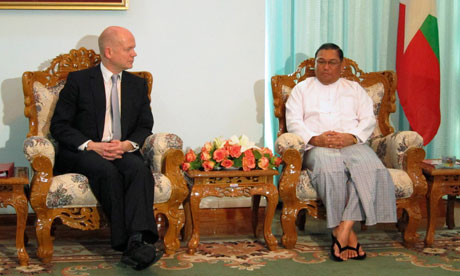
William Hague holds talks with Burma's foreign minister, Wunna Maung Lwin, in Naypyitaw. Photograph: Reuters


The UK will continue to reward further signs of political reform in Burma with closer ties, William Hague has said at the start of the first visit to the country by a British foreign secretary in more than half a century.

A day after Aung San Suu Kyi, the Burmese opposition pro-democracy leader, made an impassioned appeal to her followers "to continue the march on the road to freedom", Hague met Burma's foreign minister, Wunna Maung Lwin, in Naypyidaw, the new capital city constructed six years ago by the then-ruing military junta.

After the meeting Hague told reporters he had told the minister, part of a still military-dominated civilian regime which took power almost a year ago, that the UK wished to see definite progress on the release of political prisoners, fair byelections to the country's parliament – Aung San Suu Kyi's National League for Democracy has said it will take part in these after boycotting a general election in November 2010 – as well the resolution of conflict with armed ethnic groups and humanitarian access to conflict areas.

"I have assured him that if they do, there will be a strongly positive response from the UK and, I believe, the rest of the European Union," Hague said.

"The foreign minister has reaffirmed commitments that have been made to release political prisoners. He said the changes are irreversible and I welcome that way of thinking. I stressed that the world will judge the government by its actions."

Later on Thursday Hague was due to meet Thein Sein, the former general who was appointed president last year. He will then travel to Rangoon for talks with leaders of the country's ethnic minorities.

He will have two meetings there with Aung San Suu Kyi: a private dinner on Thursday and more substantive discussions on Friday, followed by an encounter with another famous former political prisoner, an actor and director known as Zarganar, who was among 250 political prisoners freed in October as part of the government's political reforms.

During Wednesday's celebrations of Burma's independence day at her party's headquarters, Aung San Suu Kyi told members of her NLD that "all Burmese people deserve freedom".

"We have to struggle for more freedom. What we do is anchored by our belief in freedom. Sometimes we face many difficulties. Now we cannot say we are free so we must work for more freedom," she said.

Burma is undergoing rapid political changes as a new nominally civilian government pursues what a key aide to Thein Sein told the Guardian was "a mission of democratisation". However, many analysts and campaigners are sceptical about the depth of recent reforms and the willingness of the military, which has ruled the country since 1962, to relinquish power.

Hague's visit follows that of Hillary Clinton, the US secretary of state, last month and Aung San Suu Kyi's recent decision, following reforms, to stand in April's parliamentary byelections and seek entry to the new national assembly, even though it is dominated by the army.

Min Yaing, a founder of the youth protest movement Generation Wave, said he welcomed the succession of foreign diplomats visiting Burma, which is also known as Myanmar, because they would counter Chinese influence in the country.

With American and European Union sanctions in place, Beijing has been able to build a major presence in Burma in recent years.

"This is good for our movement. Before, the government was just looking to China all the time. Now they are not just listening to one voice," Min Yaing, 31, said.

Thi Ha Saw, editor of a newspaper in Rangoon, added that Hague's visit would "help reformers within the regime" as it would be seen as "evidence of recognition by western powers".

There was a danger of a backlash against the reforms, he warned. "The president is a moderate but there are hardliners who could take over. There is pressure to move fast and get as much change done as possible so a point of no return is reached," Thi Ha Saw told The Guardian.

Nay Zin Latt, the president's political adviser, acknowledged resistance within the regime to recent changes. Beyond the gradual acceptance of the NLD as a legitimate opposition party, there have been new labour laws and a reduction in media censorship as well as reduced surveillance of democratic activists.

"There is always resistance to change. But it is a question of the speed of that change and differing points of view. No one within the government is opposing change entirely. Some want it to go faster than others," Nay Zin Latt said.

Sceptics point out that somewhere between 600 and 2,000 political prisoners remain in jail and that military operations are still continuing against Burmese ethnic minorities. There was widespread disappointment at the limited extent of an amnesty announced on Tuesday which saw sentences cut but resulted in the actual release of only between 10 and 30 political prisoners.

None of the most important dissidents or ethnic minority leaders currently held in extremely harsh conditions on often arbitrary or trivial charges were released. The limited scope of the amnesty, the fourth in a series that has seen more than 200 prisoners freed, has put Aung Sun Suu Kyi in a difficult position, with many campaigners unhappy at continued dialogue with the authorities while fellow activists remain in jail.

"This is just playing a political game. If they were serious they would release everybody," said Than Naing Oo, who was released from Insein jail near Rangoon on Tuesday. He was serving a three-year sentence for distributing pro-democracy leaflets.

Hla Soe, a politician from the Arakhai minority, said that he distrusted the government and the "deal" they had done with Aung San Suu Kyi. "The government is still ignoring ethnic rights. That is what I want to tell Mr Hague and the international community," he said.

However, on one central street in Rangoon on Wednesday night, crowds witnessed a daring bid to force the speed of change as images of police repression during unrest in 2007 were projected on a big screen as part of a film festival. Inside a nearby conference hall thousands had gathered to watch a series of politically charged films that provoked gasps and applause from an audience unused to such open defiance of Burma's strict censors. A banner read: "Free Art, free thought, freedom."

The event was organised by Zarganar, who is due to meet with Hague. "This is free expression. This is a step in the right direction. And we are not afraid. We are never afraid," he declared.

Min Thai Ke, winner of best short film for his depiction of the plight of the poor and political prisoners, said Burma was living "through a very fragile time" but that he too was not afraid. 
Personal political adviser of President Thein Sein said change in Burma was 'genuine and authentic'

Aung San Suu Kyi during the awarding ceremony of a film festival in Burma. An aide to the president suggested she could one day run the country. Photograph: Soe Than Win/AFP/Getty Images
Aung San Suu KyiA senior aide to the Burmese president has welcomed the prospect of the party of Aung San Suu Kyi, the democracy campaigner and Nobel prize winner, taking power in the country.

"They can be the ruling party one day," Nay Zin Latt, the personal political adviser of president Thein Sein, told the Guardian.

His comments constitute one of the most outspoken declarations of support for change in the secretive and repressive state so far.

William Hague, the British foreign secretary, flew into Burma on Thursday for a two-day visit aimed at "encouraging reforms".

He is the first British official of such rank to travel to the country for more than 50 years. But many observers both inside Burma and outside doubt the authorities' commitment to what Latt described as "a mission of democratisation."

Between 600 and 2,000 political prisoners remain in jail, the army continues operations against ethnic groups in the north-east of the country and censorship, though somewhat eased, remains heavy. Political life and the economy is dominated directly and indirectly by the ruling regime.

Nonetheless, it now appears likely that Aung San Suu Kyi will lead her party, the National League for Democracy, in by-elections in April. The move is controversial and some campaigners within Burma have opposed it.

The NLD boycotted elections held in November 2010 - the first for 20 years - as its leader remained under house arrest. She was released shortly after the poll.

Aung San Suu Kyi, 66, told the BBC she now believed Burma would hold democratic elections in her lifetime.

She qualified her statement however by saying that she did not know if she would live "a normal lifespan". Aung San Suu Kyi was scheduled to have a private dinner with Hague on Thursday evening. The foreign secretary was also due to meet representatives of Burma's ethnic minorities. Officials said that particular attention would be paid to the plight of refugees fleeing fighting between the Burmese army, which has been repeatedly accused of systematic human rights abuses, and forces from the Kachin minority in the north-east of the country.

Hague has said the visit was aimed at encouraging Burma "on its path of reform towards democracy".

Aung San Suu Kyi said that President Thein Sein, appointed by the elderly military dictator Than Shwe in March 2010 to lead a nominally civilian government and a transition to democracy, was "an honest man... [He is] a man capable of taking risks if he thinks they are worth taking."

The key issue of political prisoners remains unresolved, however. Hague was reported on Wednesday saying he had been assured by his Burmese counterpart that they would be freed. However in an interview with the BBC, Burmese service Wunna Maung Lwi later said there were only "criminals" in Burmese jails.

There was widespread disappointment at the limited scale of an amnesty to mark the anniversary of Burmese independence from British rule earlier this week. Only 10 political prisoners were freed, all serving short sentences.

"We cannot say there is any change. We can just glimpse some kind of road ahead but we are still at the starting point. As long as there are still political prisoners, abuses, civil war and land grabs you cannot talk of change," said Kokoji, an activist and former prisoner.

Latt, the presidential aide, said change in Burma was "genuine and authentic" but "obviously reversible".

"The west want us to be a democratic country. Politically they will get a benefit from this because we will be part of the democratic world and the west wants to contain China," Latt said.

He promised political prisoners would eventually be freed "in the future" but that any release would be gradual.
Listen to Burmese ambassador asks Canada to review its policy towards Burma while he is beating around the bush about political prisoners, ethnic minorities.

Listen Interview here

William Hague is the first British Foreign Secretary to visit Burma for more than 50 years


William Hague is to become the first British Foreign Secretary to visit Burma for more than 50 years in a move intended to bolster the country's budding reform process.

New president Thein Sein last year unexpectedly embarked on a series of liberalising measures, including opening talks with opposition leader Aung San Suu Kyi, releasing more than 200 political prisoners and legalising trade unions.

Speaking ahead of his arrival in the capital Naypyitaw, Mr Hague welcomed the "encouraging" steps taken by the government and urged it to continue on the path of reform after years of hardline military rule.

Critics however cautioned that significant numbers of political prisoners remain behind bars, despite government promises to free them, while reports of abuses against ethnic minorities continue.

Mr Hague is expected to use his meetings with Thein Sein and other senior figures to press for the release of the remaining political prisoners - variously estimated to number between 590 and 1,700 - and for free and fair elections.

Aung Sang Suu Kyi's National League for Democracy has now re-registered as a political party and will contest a series of 48 parliamentary by-elections due to take place on April 1, in what is being seen as an important test of the reform process.

Britain is also pushing for a process of national reconciliation to end the fighting between the government and the country's ethnic minorities, such as the Kachins, and to bring them into the mainstream political process.

"I am visiting the country to encourage the Burmese government to continue on its path of reform, and to gauge what more Britain can do to support this process," Mr Hague said.

"Further steps are needed that will have a lasting impact on human rights and political freedom in Burma.

"In particular, we hope to see the release of all remaining political prisoners, free and fair by-elections, humanitarian access to people in conflict areas, and credible steps towards national reconciliation."

Credit here


Envoy — နိုင္ငံတကာတြင္ ဒီမိုကေရစီေရးနွင့္ လြတ္လပ္မႈအတြက္အကူ အညီမ်ား ေပးေနသည့္ Open Society Institute ကိုထူေထာင္ သူ ေဂ်ာ့ဆိုးေရာ့စ္ George Sorosသည္ ျမန္မာျပည္ တြင္ေအာင္ဆန္း ေဖာင္ေဒးရွင္း တစ္ခု တည္ေထာင္ျပီး ကူညီ သြားမည္ ျဖစ္ေျကာင္း ဒီဇင္ဘာ ၂၆ ရက္ ညပိုင္းတြင္ ျပည္တြင္း NGO မ်ားမွ တာဝန္ရိွသူမ်ားနွင့္ ေတြ့ဆံုစဉ္ ေျပာျကားခဲ့ေျကာင္း အဆိုပါ ေတြ့ဆံုစဉ္ ပါဝင္ခဲ့သူ တစ္ဦးက ေျပာျကားခဲ့သည္။

မစၥတာ ေဂ်ာ့ ဆိုးေရာ့စ္သည္ အင္းေလးကန္သို့ သြားေရာက္ခဲ့ျပီး၊ ဇန္နဝါရီ ၂ ရက္တြင္ ေဒၚေအာင္ဆန္းစုျကည္နွင့္ ေတြ႔ဆံုျဖစ္ေျကာင္း ယင္းပုဂၢိဳလ္က ေျပာျကား ခဲ့ေျကာင္း သိရသည္။ ”ေဒၚေအာင္ဆန္းစုျကည္နွင့္ ေတြ႔ရာမွာ စိတ္လႈပ္ရွားေနေျကာင္း ေဂ်ာ့ ဆိုးေရာ့စ္က ေျပာပါတယ္။ ျပီးေတာ့ သူက ေအာင္ဆန္း ေဖာင္ ေဒးရွင္း တည္ေထာင္ျပီး၊ ျမန္မာ နိုင္ငံရိွ ျပည္သူေတြကို ကူညီသြား မည္ျဖစ္ေျကာင္း သူက ေျပာသြား တယ္” ဟု ဆက္လက္၍ ေျပာျကားခဲ့သည္။

မစၥတာ ေဂ်ာ့ဆိုးေရာ့စ္ သည္ ဒီဇင္ဘာ ၂၆ ရက္ နံနက္ပိုင္းတြင္ ထူေထာင္ခဲ့ျပီး ယခုအခါ ဥေရာပ၊ အာရွ၊ အာဖရိကနွင့္ လက္တင္ အေမရိကတို့ ရိွနိုင္ငံ ၇ဝ ေက်ာ္တြင္ ရံုးခဲြမ်ား ထားရိွျပီး လူ့အခြင့္အ ေရးကိစၥ၊ ပညာေရး၊ က်န္းမာေရး၊ သတင္းလြတ္လပ္ခြင့္ စသည္တို့ အတြက္ အေမရိကန္ ေဒၚလာသန္း ၈ဝဝဝ ကူညီခဲ့ျပီး ျဖစ္ေျကာင္း သိရသည္။ ထို့အျပင္ မစၥတာ ေဂ်ာ့ဆိုးေရာ့စ္ ၁၉၉၇ ခုနွစ္ အေရွ့ ေတာင္အာရွ စီးပြားေရးပ်က္ကပ္ မႈ၏ အဓိကတာဝန္ရိွသူ တစ္ဦး လဲျဖစ္သည္။

ေနထြန္း(အမိေျမ)
Envoy via Yoyalay
ဆုေပးပဲြတက္ေရာက္သူ ေဒၚေအာင္ဆန္းစုၾကည္၏ မိန္႔ခြန္း


လြတ္လပ္ျခင္း အႏုပညာ ရုပ္ရွင္ပြဲေတာ္ ဆုေပးပြဲ အခမ္းအနားကို ယေန႔ (ဇန္နဝါရီလ ၄ ရက္ေန႔) ညေန ၆ နာရီက ေတာ္ဝင္စင္တာတြင္ က်င္းပျပဳလုပ္လ်က္ ရွိရာ


» ပရိတ္သတ္ အႀကိဳက္ဆံုး ဇာတ္ကားဆု - အဲဒီအခန္းျဖတ္ (ဒါရိုက္တာ ဝိုင္း)

» အေကာင္းဆံုး Animation ဆု - Unity & Freedom (ဒါရိုက္တာ ေဇာ္ဘိုဘိုဟိန္း)
...
» အေကာင္းဆံုး မ်က္ႏွာသစ္ ဒါရိုက္တာဆု - ဒါရိုက္တာ ေအာင္ေဇာ္မိုး (Still in Dark)

» အေကာင္းဆံုး ရုပ္ရွင္ဇာတ္လမ္းတို (Short Film) ဆု - ႀကိဳး (String) (ဒါရိုက္တာ မင္းသိုက္)

» အေကာင္းမွတ္တမ္းရုပ္ရွင္ (Documentry) ဆု - Click in Fear ဆံုး (ဒါရိုက္တာ စိုင္းေက်ာ္ခန္႔)

တို႕ဆြတ္ခူးသြားခဲ့ေၾကာင္းသိရွိရပါသည္..


THE ART of FREEDOM FILM FESTIVAL 2012. စကားေျပာခန္းမပါဘဲဲ။ ျမန္မာျပည္ လက္ရွိသရုပ္ကို ေဖၚျပႏိုင္သည္။ သရုပ္ေဆာင္ ဦးေ၀၊ ဒါရိုက္တာ မင္းသိုက္


" မဂၤလာပါ ဒီမိုကေရစီ " ဟူေသာ အမည္ျဖင့္ ရုပ္ရွင္ၿပိဳင္ပြဲ တစ္ရပ္ ထပ္မံျပဳလုပ္သြားမည္ ျဖစ္ေၾကာင္း လြတ္လပ္ျခင္း အႏုပညာ ရုပ္ရွင္ပြဲေတာ္ ဆုေပးပြဲ အခမ္းအနားတြင္ ႏိုင္ငံေက်ာ္ ဟာသ အနုပညာရွင္ ဦးသူရ ေခၚ ဇာဂနာက မီဒီယာမ်ားသို႔ ေျပာၾကားသည္။(The Voice Weekly)
အေကာင္းမွတ္တမ္းရုပ္ရွင္ (Documentry) ဆုရေသာဒါရိုက္တာ စိုင္းေက်ာ္ခန္႔၏ "Click in Fear"ရုပ္ရွင္


Click in Fear အပိုင္း၁-အပိုင္း-၂


အေကာင္းဆံုး ရုပ္ရွင္ဇာတ္လမ္းတို (Short Film) ဆု - ႀကိဳး (String) ကို ဒီေနရာမွာ ၾကည့္ရူနိုင္ပါတယ္.
ပရိတ္သတ္ အႀကိဳက္ဆံုး ဇာတ္ကားဆု - အဲဒီအခန္းျဖတ္ ကို ဒီေနရာမွာ ၾကည့္ရူႏိုင္ပါတယ္..


ဒါရိုက္တာေရာဘတ္လီဘာမင္း(ေကာ္နဲတကၠသို္လ္)ကလဲတကူးတက လြတ္လပ္ျခင္း အႏုပညာ ရုပ္ရွင္ပြဲေတာ္ တက္ေရာက္ အားေပးခဲ့ပါတယ္။

Credit : dawnmanhon


 ျမန္မာႏႇင့္ အေမရိကန္ ႏႇစ္ႏိုင္ငံၾကား ကုန္သြယ္မႈႏႇင့္ ကူးသန္းေရာင္း၀ယ္ေရး လုပ္ငန္းမ်ားေဆာင္ရြက္ မႈ ျပန္လည္စတင္ႏိုင္ ရန္ စည္းမ်ဥ္းမ်ား ေျဖေလ်ာ့ေရးအတြက္ လိုအပ္သည္မ်ား ေဆာင္ရြက္ရန္ ကြန္ဂရက္လႊတ္ေတာ္သို႔ သမၼတအိုဘားမားအစိုးရက ညႊန္ၾကားထားေၾကာင္း သတင္းေဖာ္ျပခ်က္အရ သိရသည္။

အေမရိကန္ ႏိုင္ငံျခားေရး၀န္ႀကီး ဟီလာရီကလင္တန္မႇ တစ္ဆင့္ သမၼတအိုဘားမားအစိုးရက အေမရိကန္ျပည္ေထာင္စုသည္ ျမန္မာႏိုင္ငံအေပၚ ခ်မႇတ္ထားေသာ စီးပြားေရး ပိတ္ဆို႔အေရးယူမႈမ်ားကို ဖယ္ရႇားရန္ ဆႏၵရႇိ ေၾကာင္း ထုတ္ေဖာ္ေျပာၾကားခဲ့ၿပီး ျမန္မာႏႇင့္ အေမရိကန္ ႏႇစ္ႏိုင္ငံၾကား ကုန္သြယ္မႈႏႇင့္ ကူးသန္းေရာင္း၀ယ္ေရးလုပ္ငန္းမ်ား ေဆာင္ရြက္မႈ ျပန္လည္စတင္ႏိုင္ရန္ စည္းမ်ဥ္းမ်ား ေျဖေလ်ာ့ေရးအတြက္ လိုအပ္သည္မ်ား ေဆာင္ရြက္ရန္ ကြန္ဂရက္လႊတ္ေတာ္သို႔ သမၼတအိုဘားမားအစိုးရက ညႊန္ၾကားထားေၾကာင္း အဆို ပါသတင္းတြင္ ေဖာ္ျပထားသည္။

ကြန္ဂရက္လႊတ္ေတာ္သည္ ျမန္မာႏိုင္ငံအေပၚ ခ်မႇတ္ထားသည့္ စီးပြားေရး ပိတ္ဆို႔အေရးယူမႈမ်ားကို ဖယ္ရႇားရန္ႏႇင့္ စီးပြားေရးႏႇင့္ အျခားအေထာက္အပံ့မ်ားကို ပံ့ပိုးႏိုင္ရန္ စသည့္ကိစၥရပ္မ်ားကို မၾကာမီ ကိုင္တြယ္ဖြယ္ ရႇိေၾကာင္း သိရသည္။ ၿပီးခဲ့သည့္ႏႇစ္ ႏို၀င္ဘာလ ၃၀ ရက္ေန့မႇ ဒီဇင္ဘာလ ၂ ရက္ေန႔ အထိ အေမရိကန္ႏိုင္ငံျခားေရး၀န္ႀကီး ဟီလာရီကလင္တန္သည္ သမိုင္း၀င္ခရီးစဥ္အျဖစ္ ျမန္မာႏိုင္ငံသို႔ လာေရာက္ခဲ့ၿပီး ခရီးစဥ္ အတြင္း ႏိုင္ငံေတာ္သမၼတ ဦးသိန္းစိန္၊ အမ်ဳိး သားဒီမိုကေရစီအဖြဲ႕ခ်ဳပ္ အေထြေထြအတြင္းေရးမႇဴး ေဒၚေအာင္ဆန္းစုၾကည္တို႔ႏႇင့္ သီးျခားစီ ေတြ႔ဆုံေဆြးေႏြးခဲ့သည္။

ႏိုင္ငံေတာ္သမၼတ ဦးသိန္းစိန္ႏႇင့္ ေတြ႔ဆုံေဆြးေႏြးရာတြင္ အေမရိကန္ဘက္မႇ စီးပြားေရးပိတ္ဆို႔မႈ၊ ခရီးသြားလုပ္ငန္းကန္႔သတ္မႈ၊ သြင္းကုန္တင္ပို႔ျခင္း ကန္႔သတ္မႈမ်ား အစရႇိသည့္ အေရးယူပိတ္ဆို႔မႈမ်ားကို ေလ်ာ့ခ်႐ုပ္သိမ္း သြားႏိုင္ရန္ Road Map ေရးဆြဲေဆာင္ရြက္သြားမည္ျဖစ္ေၾကာင္းကိုလည္း အေမရိကန္ႏိုင္ငံျခားေရး၀န္ႀကီး ဟီလာရီကလင္တန္က ထည့္သြင္းေျပာၾကားခဲ့သည္။

ေဒၚေအာင္ဆန္းစုၾကည္ႏႇင့္ ေတြ႔ဆုံေဆြးေႏြးၿပီးေနာက္ အေမရိကန္ႏိုင္ငံျခားေရး၀န္ႀကီး ဟီလာရီကလင္တန္က ရန္ကုန္ၿမိဳ႕ရႇိ ေဒၚေအာင္ဆန္းစုၾကည္ေနအိမ္၌ ျပဳလုပ္သည့္ မီဒီယာေတြ႔ဆုံပြဲတြင္ ”ကြၽန္မအေနနဲ႔ ေျပာခ်င္တာ ကေတာ့ ဒီမိုကေရစီဆိုတာ ပန္းတိုင္တစ္ခုပါ။ အေမရိကန္ဟာ ျမန္မာႏိုင္ငံနဲ႔ မိတ္ဖက္ႏိုင္ငံ တစ္ႏိုင္ငံ ျဖစ္ခ်င္ပါတယ္။ ကြၽန္မတို႔ အလုပ္ေတြလည္း အမ်ားႀကီး လက္တြဲလုပ္ခ်င္ပါတယ္။ တကယ္လို႔ ဒီထက္ပိုၿပီး ဒီမိုကေရစီ ထြန္းကားေရးေဆာင္ရြက္မယ္၊ ႏုိင္ငံေရးအက်ဥ္းသားအားလံုး လႊတ္ေပးမယ္၊ ကာလၾကာရႇည္စြာရႇိခဲ့တဲ့ တုိင္း ရင္းသားေရးရာ ပဋိပကၡေတြ အဆံုးသတ္ဖို႔ စတင္ေဆာင္ရြက္မယ္၊ ၿပီးေတာ့ လြတ္လပ္မွ်တၿပီး ယံုၾကည္ႏုိင္ ေလာက္တဲ့ ေရြးေကာက္ပြဲေတြ ျဖစ္လာမယ္ဆိုရင္ေပါ့။ ေနာင္မႇာလည္း အေမရိကန္က ဘယ္လိုအကူအညီမ်ဳိးကို ေပးႏိုင္မလဲဆိုတာကို အနီးကပ္ေဆြးေႏြးမႈေတြ ဆက္လက္ လုပ္ေဆာင္သြားမႇာပါ။ ျမန္မာလူမ်ဳိးေတြဟာ ႏႇစ္ေပါင္းမ်ားစြာ အခက္အခဲေတြကို သတၲိရႇိရႇိနဲ႔ ၾကံ့ၾကံ့ခံ ရင္ဆိုင္ခဲ့ၾကပါတယ္။ အခုအခ်ိန္မႇာေတာ့ ကြၽန္မတို႔ျမင္ခ်င္တာက ျမန္မာဟာ ကမၻာမႇာ ေနရာမႇန္တစ္ခုမႇာ ရႇိေနမႈပါ” ဟု ေျပာၾကားခဲ့သည္။

ဲျမန္မာႏိုင္ငံအေပၚ စီးပြားေရး ပိတ္ဆို႔အေရးယူမႈမ်ား ျပဳလုပ္ထား႐ုံသာမက လူ႔အခြင့္အေရးမႇတ္တမ္းမ်ားႏႇင့္ပတ္သက္၍ အဓိကေ၀ဖန္ေနသူျဖစ္သည့္ အေမရိကန္ႏိုင္ငံက ယခုကဲ့သုိ႔ ဆက္ဆံေျပာၾကားလာမႈမ်ားသည္ ျမန္မာႏႇင့္ အေမရိကန္ၾကား ႏႇစ္ႏိုင္ငံဆက္ဆံေရး တိုးျမႇင့္လာမည့္ အလားအလာမ်ား ရႇိလာ႐ုံသာမက ျမန္မာႏိုင္ငံအေနျဖင့္လည္း အိမ္နီးခ်င္း တ႐ုတ္ႏိုင္ငံအေပၚ ႏိုင္ငံေရး၊ စီးပြားေရး အလြန္အမင္း မႇီခိုေနရမႈမႇ ေလ်ာ့က်လာ ေစမည္ျဖစ္သည္။ ထို႔ျပင္ ကမၻာ့အလယ္တြင္ ေနရာမႇန္၌ ရပ္တည္ႏိုင္မည့္ အခြင့္အလမ္းမ်ား ရႇိေနခဲ့ေသာ္လည္း အေၾကာင္းေၾကာင္းေၾကာင့္ မရရႇိခဲ့သည္မႇာ ႏႇစ္ေပါင္းမ်ားစြာ ၾကာျမင့္ၿပီျဖစ္သည့္ ျမန္မာႏိုင္ငံအေနျဖင့္ ထိုက္တန္ေသာေနရာကို ျပန္လည္ရရႇိရန္ နီးကပ္လာၿပီဟု ဆိုရမည္ျဖစ္ သည္။

Credit here


Diplomats and advocacy groups reaching out to the international community through the media.


State College, Pennsylvania, USA. 

Ambassador Prof. Dr. Akbar Ahmed calls on U.S. Secretary of State Hillary Rodham Clinton “Madam Secretary, Please Don’t Forget the Rohingya”. The resounding calls are coming from dignitaries, diplomats, legislators, government officials, human right advocates, and many other dignified individuals in Washington, New York, and many other cities in the world, in various forms. Despite the inaccessibility of the Northern Arakan State by the international media or monitors, the bits and pieces of reports coming out of Northern Arakan is so alarming that the international community could not remain silent. Regardless of the mission and station of the international organizations, they have one unified voice on Rohingya – human right violations in historic proportions.

The United Nations (Special Rapporteur on Human Rights), the Irish Center for Human Rights, Human Rights Watch, Physicians for Human Rights, Amnesty International, Refugees International, U.S. Campaign for Burma, Medecin Sans Frontieres, The Arakan Project, Open Society Foundation, National Coalition Government of the Union of Burma (The Human Rights Documentation Unit), and many other organizations have expressed serious concerns over gross human right violations against Rohingya by the Burmese military and Nasaka forces (secret police named as Border Security Force). Some of them have openly demanded the Burmese military to end all the violations and restore the citizenship and all their rights. 


Harrison Akins, a researcher in the team of Ambassador Prof. Dr. Akbar Ahmed, at the American University at Washington, D.C., on a project on indigenous Rohingya ethnic minority in Burma. 


Ambassador Prof. Dr. Akbar Ahmed of the American University at Washington, D.C., and Prof. Dr. Wakar Uddin, the Director General of Arakan Rohingya Union 


Most recently, Ambassador Prof. Dr. Akbar Ahmed of the American University has spoken out about the rapidly deteriorating conditions in Arakan and Rohingya refugee camps. His recent article “Little help for the persecuted Rohingya of Burma” in The Guardian newspaper in London was another reminder about the plights of Rohingya in Burma. Dr. Ahmed quotes BBC on Rohingya "one of the world's most persecuted minority groups" in his article and provided a historical perspective dating back the ethnic lineage of Rohingya in Arakan to many centuries. 

Dr. Ahmed’s article  effectively addressed the root cause of the Rohingya ethnic cleansing dating back to 1962 during the reign of former dictator General Ne Win that began with his policy of "Burmanization", based on the ultra-nationalist ideology of racial "purity”. In discussion with Dr. Wakar Uddin about the human right violations against Rohingya by the Burmese military, such as its refusal to restore citizenship, travel restriction, ban on marriages, land confiscation, denial of education, denial of permission to renovate the places of worship, Dr. Ahmed simply replied “it is humanly unthinkable”. In parallel with several human rights analysts, Dr. Ahmed expressed his views of the Rohingya forced labor in Burma as modern-day slavery, forcing Rohingya to work on infrastructure projects which include constructing "model villages" to house the Burmese settlers that were brought in from mainland Burma intended to displace the Rohingya villagers. Dr. Ahmed also gently reminded the international community the dilemma of 35,000 registered Rohingya refugees and another estimated 250,000 unregistered in Bangladesh, while the gradual flow of refugees heading to Malaysia in rickety boats through the sea continues.

Dr. Ahmed is currently writing a volume dedicated to Rohingya human rights and political issues for the Brookings Institution in Washington, D.C. 


Source: The Secretariat, Arakan Rohingya Union
People stand behind barricades as they wait for family members to be freed from Insein Prison in Yangon, Myanmar, on Tuesday. Myanmar's government announced Monday that it is reducing the sentences of many prisoners, but stopped short of declaring an amnesty for political prisoners that many people had expected.


One of the more surprising moments in U.S. foreign policy last year occurred when Secretary of State Hillary Clinton visited Myanmar, long ruled by a repressive military government and shunned as a pariah nation.

There, she met with high-level officials in the country's empty new capital, Naypyitaw, and toured a glittering pagoda in the old capital Yangon, or Rangoon.

The U.S. has been calling on Myanmar, also known as Burma, to build on the reforms that have taken place in the country since a new president took office in March.

Clinton offered some incentives to keep Myanmar's president, Thein Sein, on track with reforms, and told NPR at the time that she was coordinating closely with the country's most prominent dissident, Aung San Suu Kyi.

"She has expressed her confidence in how we are proceeding. Obviously, we both want to see significant steps taken by the government, starting with the release of all political prisoners, before we are able to do any more," Clinton said. 
Myanmar has set parliamentary by-elections for April 1, scheduling a highly anticipated vote that will return dissident Aung San Suu Kyi and her National League for Democracy to mainstream politics after two decades. Here, Suu Kyi attends a fundraising event for the party in Yangon, Myanmar, last month.
Myanmar has set parliamentary by-elections for April 1, scheduling a highly anticipated vote that will return dissident Aung San Suu Kyi and her National League for Democracy to mainstream politics after two decades. Here, Suu Kyi attends a fundraising event for the party in Yangon, Myanmar, last month. 
But an announcement this week by Thein Sein came as a disappointment: He offered to reduce sentences for some political prisoners, but the clemency announcement fell far short of expectations of activists in the country and of the Obama administration.

The order, signed ahead of the country's 64th anniversary this week, commutes death sentences to life sentences, while prisoners serving more than 30 years will have their sentences reduced to 30 years. Those serving 20 to 30 years will have their terms reduced to 20 years, and those with less than 20 years will have their sentences cut by one-fourth.

As a result, most political prisoners will remain in prison. Reports indicate that no more than 10 political prisoners were among those released.

A State Department spokesperson said Tuesday that the U.S. remains concerned about the more than 1,000 political prisoners still being held, and "continues to call for their immediate and unconditional release at every opportunity."

Elections Planned For AprilThis is a bump in the long road ahead for Derek Mitchell, Clinton's special envoy to Myanmar. Mitchell, who works on this issue on a day-to-day basis, travels to Myanmar about once a month, and says he will be packing his bags again soon.

He thinks Clinton's trip a month ago put wind in the sails of a reform process.

"I have to say it is a remarkable pace. You can't get around the fact that this government came in in late March, and there was hope that there would be reform over time. But the pace of reform has come fairly rapidly and has encouraged an atmosphere in Rangoon that is quite optimistic about the future in the new year," Mitchell says.

Myanmar has set elections for April 1, and the announcement that Suu Kyi and her National League for Democracy plan to participate in the elections has buoyed the international community's confidence.

Also, the U.S. has agreed to let the U.N. Development Program and the World Bank assess the needs of the country, one of the poorest in Southeast Asia. Obama administration officials still have to work through U.S. laws and sanctions to make that happen, and Mitchell also has to answer many questions in Congress about how quickly the U.S. should be moving.

"Debates are ongoing about Burma policy, but there's no serious resistance to certainly [Clinton's] trip, what came out of [the] trip and the way forward overall," Mitchell says.

Momentum For More Positive Change


The envoy says much will depend on the Myanmar government's next steps and whether Thein Sein delivers on other promises he made to Clinton. The U.S. is pushing not only for more political rights in the country, but is also trying to promote peace efforts in the many long-running ethnic conflicts that have ravaged Myanmar.

"You continue to have reports of aggression, of abuses, of rape as a weapon of war, of torture and of killing of civilians. All that is very, very serious and informs our policy as well," Mitchell says.

One expert on Myanmar, David Steinberg of Georgetown University, says that so far the Obama administration has taken a safe, well-paced approach. Steinberg says there will be a flurry of diplomatic activity this month, including a visit by Senate Republican leader Mitch McConnell, a major critic of Myanmar's military rulers.

"If [McConnell] comes back and says, 'Well, there are some changes and we ought to adjust our policy,' that would be very good. And if he talks to Aung San Suu Kyi, as I'm sure he must, and she says now is the time for modification, then I think there are some positive things that can happen," Steinberg says.

Steinberg says Suu Kyi once told him that the U.S. sanctions are something she uses as leverage with Myanmar's leaders, but at some point they could be a liability for her. Mitchell, the U.S. envoy, says the U.S. won't change its sanctions policy until it gets a signal from Suu Kyi that the time has come.
WASHINGTON — The United States said Tuesday that Myanmar's decision to cut prison terms for detainees fell short of what Washington expects to reward reforms undertaken by the army-backed regime.

"Even one political prisoner is one political prisoner too many," State Department spokeswoman Victoria Nuland said, underscoring points US Secretary of State Hillary Clinton made during a landmark visit to Myanmar last month.

"We remain concerned about the more than a thousand political prisoners that remain in custody," Nuland told reporters.

"We will continue to make the case to the government in Naypyidaw that it is a full political prisoner release that the international community wants to see," Nuland said.

"It's not a step of the magnitude that we would be interested in matching," she added.

During her visit at the start of December, Clinton said the United States will not end sanctions against Myanmar until its leaders carry out broader democratic reforms.

Myanmar's political prisoners include former student protesters, monks, journalists and lawyers and their fate is a key concern of the international community.

Under the order, death sentences will be commuted to life imprisonment, jail terms above 30 years will be reduced to 30 years, those between 20 and 30 years will be cut to 20 years and shorter sentences will be cut by a quarter.

Most high-profile dissidents, like those from a failed 1988 student uprising, are serving decades behind bars so would have little hope of freedom as a result of the order, which was made to honor Independence Day on Wednesday.

A government official told AFP that it was still unclear how many inmates would be freed, but about 800 men and 130 women held in Yangon were set to be released.

Nyan Win, spokesman for Aung San Suu Kyi's National League for Democracy, said it was not yet clear whether any of the party's imprisoned members would be released as a result of the move.

At the beginning of December Clinton became the top US official in more than 50 years to visit Myanmar as she sought to encourage reforms by the government which has opened talks with the opposition and ethnic minorities.


ဒီကေန႔ အက်ဥ္းသားေတြ လြတ္ေျမာက္လာရာမွာ ေမွ်ာ္လင့္ထားသလိုျဖစ္မလာဘဲ ႏိုင္ငံေရးအက်ဥ္းသားေတြ အနည္းအက်ဥ္းပဲ ပါဝင္တာေၾကာင့္ ႏိုင္ငံေရးအက်ဥ္းသား လြတ္ေရးအတြက္ လႊတ္ေတာ္တြင္း တိုက္တြန္းေျပာဆိုခဲ့ၾကတဲ့ လြႊတ္ေတာ္အမတ္ေတြ စိတ္ပ်က္လက္ပ်က္ျဖစ္ခဲ့ၾကပါတယ္။ သမၼတဦးသိန္းစိန္အေနနဲ႔ အေျပာင္းအလဲေတြကို သတၱိရိွရိွနဲ႔ ရဲရဲတင္းတင္း ေဆာင္ရြက္သြားဖို႔လိုမယ္လို႔လည္း လႊတ္ေတာ္အမတ္ေတြက တိုက္တြန္းပါတယ္။ ကိုသားညြန္႔ဦးက ဆက္သြယ္ေမးျမန္းထားပါတယ္။

ယံုၾကည္ခ်က္ေၾကာင့္ အက်ဥ္းက်ေနသူ ႏိုင္ငံေရးအက်ဥ္းသားေတြကို လြႊတ္ေပးဖို႔ု လႊတ္ေတာ္တြင္းမွာလည္း တိုက္တြန္းမႈေတြရိွခဲ့ပါတယ္။ ဒါေပမယ့္ အခု အစိုးရသစ္လက္ထက္ တတိယအႀကိမ္ေျမာက္ အက်ဥ္းသားေတြ လႊတ္တဲ့အခ်ိန္အထိ ႏိုင္ငံေရးအက်ဥ္းသားေတြကို မယ္မယ္ရရ လႊတ္တာ မေတြ႔ရတဲ့အေပၚ ႏိုင္ငံေရးအက်ဥ္းသားေတြလႊတ္ေပးဖို႔ တုိက္တြန္းခဲ့ၾကတဲ့ လြႊတ္ေတာ္အမတ္ေတြက အားမလိုအားမရ ျဖစ္ခဲ့ၾကပါတယ္။

အမ်ိဳးသားလႊတ္ေတာ္ ရခိုင္ျပည္နယ္မဲဆႏၵနယ္အမွတ္ (၁) ကိုု္ယ္စားလွယ္ ဦးေအးေမာင္ကေတာ့ သမၼတဦးသိန္းစိန္အေနနဲ႔ အေျပာင္းအလဲေတြကို သတၱိရိွရိွ ေဖာ္ေဆာင္ဖို႔ တိုက္တြန္းေျပာဆိုပါတယ္။

“သမၼတႀကီးအေနနဲ႔ ဒီတေခါက္ သူလႊတ္တာ႐ႈံးတာေပါ့၊ က်ေနာ္တို႔ ျမင္တာက- က်ေနာ္တို႔လည္း ေျပာပါတယ္။ သမၼတႀကီးဟာျပည္သူ႔ေမတၱာကို ယူဖို႔လိုတယ္။ အဲဒီလို မစုိ႔မပို႔ေလး လုပ္ခဲ့တ့ဲ အခါက်ေတာ့ ရသင့္တဲ့ေမတၱာ သူမရသြားဘူး။ သတၱိရွိဖို႔ သမၼတႀကီးကို တိုက္တြန္းပါတယ္။ ရဲရဲဝ့့ံဝံ့ ႏိုင္ငံေရးအားျဖင့္၊ ယံုၾကည္ခ်က္အားျဖင့္ အက်ဥ္းခ်ခံထားရတဲ့ သူေတြကိုလြတ္ေပးပါ။ ေက်ာင္းသား ေခါင္းေဆာင္ေတြအပါအဝင္ တိုင္းရင္သားေခါင္းေဆာင္ေတြကို လြတ္ေပးပါ။ ရဲရဲဝ့ံဝ့ံလႊတ္ေပးပါ၊ က်ေနာ္တို႔ တုိင္းျပည္ကို ၿငိမ္းၿငိမ္းခ်မ္းခ်မ္းေအးေအးခ်မ္းခ်မ္းနဲ႔ ျပဳျပင္တဲ့ေနရာမွာ ဒီအက်ဥ္းက်ခံေန ရတဲ့ ပုဂၢိဳလ္ေတြရဲ့အား၊ သူတိုရဲ႕အေတြးအေခၚအယူဆေတြ အမ်ားႀကီးလိုအပ္ပါတယ္။

က်ေနာ္တို႔ဟာ ပူးေပါင္းလုပ္ဖို႔ အခ်ိန္တန္ပါၿပီ။ ဒီေန႔ မလႊတ္မိရင္ေတာင္မွေလ လြတ္လပ္ေရးေန႔မွာ လႊတ္ေပးပါ။ ေနာက္အက်ဆံုးက်ေနာ္တို႔ ေတာင္းဆိုတာကေတာ့ ျပည္ေထာင္စုေန႔ေပါ့ဗ်ာ၊ က်ေနာ္တို႔က အကုန္လံုး လြတ္လြတ္လပ္လပ္ ျဖစ္ၿပီးကာမွ တိုင္းျပည္ကို ျပန္တည္ေဆာက္ၾကတဲ့အခါ သူတို႔ရဲ့အား၊ က်ေနာ္တိုရဲ့အား။

သမၼတႀကီးတုိ႔ရဲ႕အားန႔ဲတိုင္းျပည္ကို ျပန္ကယ္တင္ခ်င္တာ ျမင္ခ်င္ပါတယ္”

ရန္ကုန္တိုင္းေဒသႀကီး သကၤန္းကြ်န္းၿမိဳ႕နယ္ ျပည္သူ႔လႊတ္ေတာ္ကိုယ္စားလွယ္ ဦးသိန္းညႊန္႔ကေတာ့ ႏိုင္ငံေရးအက်ဥ္းသားေတြ လြတ္ေျမာက္ေရးကို လႊတ္ေတာ္အတြင္းကေန ဆက္ၿပီး ႀကိဳးစား ေဆာင္ရြက္သြားမယ္လို႔ ေျပာပါတယ္။

“ဘာပဲေျပာေျပာေပါ့ဗ်ာ။ တစံုတရာ ယံုၾကည္ခ်က္ေၾကာင့္ အက်ဥ္းသားေတြပါရင္ေတာ့ အက်ဥ္းသားေတြ လြတ္လာတာကို က်ေနာ္တို႔ ႀကိဳဆိုပါတယ္။ အသိအမွတ္ျပဳပါတယ္။ ဒါေပမယ့္ အားရစရာအေျခအေန မရိွေသးတာေတာ့ အမွန္ပဲ။ ဒါေၾကာင့္ ေရွ႕ကို အေထြေထြ လြတ္ၿငိမ္း ခ်မ္းသာခြင့္ ဒီထက္ကို သင္ပုန္းေခ် အေထြေထြလြတ္ၿငိမ္းခ်မ္းသာခြင့္မ်ိဳး ထြက္လာေအာင္ က်ေနာ္တို႔ လႊတ္ေတာ္လမ္းေၾကာင္းကေန ႀကိဳးပမ္းရမွာပဲ။

ဒီမိုကေရစီအေရးအတြက္ စတင္ ေပးဆပ္ခဲ့တဲ့ ဒီေက်ာင္းသားေခါင္းေဆာင္ေတြ ျပန္လြတ္လာဖို႔ အတြက္ေတာ့ က်ေနာ္တို႔ ဆက္လက္ ႀကိဳးပမ္းရမယ္၊ ဒီအေပၚမွာေတာ့ စိုက္လိုက္မတ္တပ္ ေဆာင္ရြက္ရမွာပါပဲ”

ယံုၾကည္ခ်က္ေၾကာင့္ အက်ဥ္းက်သူေတြဟာ အခု လြတ္လပ္ေရးေန႔နဲ႔ လာမယ့္ ေဖေဖာ္ဝါရီ၊ ျပည္ေထာင္စုေန႔ေတြမွာ ျပန္လည္လြတ္ေျမာက္လာလိမ့္မယ္လို႔ ဒီမတိုင္ခင္ကတည္းက သတင္းေတြ ထြက္ခဲ့ပါတယ္။ ဒါေၾကာင့္လည္း ဒီႏွစ္ဆန္းပိုင္း ႏိုင္ငံေရးအက်ဥ္းသားအားလံုးလြတ္ဖို႔အထိ ေမွ်ာ္လင့္ခဲ့ၾကတာပါ။

အစိုးရအဖဲြ႔အတြင္းကေရာ လႊတ္ေတာ္ပိုင္းက တာ၀န္ရိွသူေတြကပါ ယံုၾကည္ခ်က္ေၾကာင့္ အက်ဥ္းက်သူေတြ မၾကာခင္ ျပန္လြတ္လာႏိုင္တယ္လို႔ ေျပာတာ ဆိုတာေတြလည္း ရိွခဲ့ပါတယ္။ ဒါေပမယ့္ အခုအခ်ိန္ ထင္ရွားတဲ့ေက်ာင္းသားေခါင္းေဆာင္ေတြ တိုင္းရင္းသားေခါင္းေဆာင္ေတြ အပါအဝင္ ႏိုင္ငံေရးအက်ဥ္းသားေတြ လြတ္မလာတာဟာ အာဏာပိုင္အဖဲြ႔အစည္းအတြင္း သေဘာထား မညီမႈေတြရိွေနတာေၾကာင့္လို႔ ယူဆၾကပါတယ္။

အထူးသျဖင့္ လြတ္ၿငိမ္းခ်မ္းသာခြင့္အမိန္႔ေတြကို ဆံုးျဖတ္ရမယ့္ ႏိုင္ငံေတာ္ ကာကြယ္ေရးနဲ႔ လံုၿခံဳေရးေကာင္စီအတြင္းမွာ သေဘာထားမညီမႈ ရိွေနႏိုင္တယ္လို႔ ယူဆၾကပါတယ္။ ဦးေအးေမာင္ကေတာ့ ဒီလို သေဘာထားမညီတာေတြရိွေပမယ့္ ကာ/လံု ထဲမွာပါဝင္တဲ့ သမၼတနဲ႔ လြႊတ္ေတာ္ဥကၠ႒ေတြဟာ ႏိုင္ငံတကာနဲ႔ျမန္မာ ပကတိအေျခအေနေတြကို သံုးသပ္ႏိုင္မယ္လို႔ ယူဆပါတယ္။

“က်ေနာ္ထင္တယ္ ႏိုင္ငံေတာ္ရဲ႕ အႀကီးအကဲပဲေလ။ ဖဲြ႔စည္းပံုအေျခခံဥပေဒအရ ဒီမိုကေရစီ ေရြးေကာက္ပဲြအရ တက္လာတဲ့ အစိုးရဟာ ကာကြယ္ေရးဦးစီးခ်ဳပ္ရဲ႕ အထက္မွာလည္း ရိွပါတယ္။ ကာကြယ္ေရးနဲ႔ လံုၿခံဳေရးေကာင္စီရဲ႕ အဓိက ပုဂၢိဳလ္လည္းျဖစ္ပါတယ္။ တိုုင္းျပည္ရဲ႕တာ၀န္ေတြ တိုင္းျပည္ရဲ႕ ေရွ႕ေနာက္ အကုန္လံုးတာ၀န္ရိွတဲ့ အႀကီးအကဲပါ။ ကိစၥရပ္ေတြအားလံုးရဲ႕ ေကာင္းေမြ ဆိုးေမြ ေကာင္းသည္ဆိုးသည္ အားလံုးဟာ ႏိုင္ငံေတာ္သမတႀကီးမွာ တာ၀န္ရိွပါတယ္။”

ျမန္မာအစိုးရ အာဏာပိုင္ေတြအေနနဲ႔ကေတာ့ ျမန္မာႏိုင္ငံမွာႏိုင္ငံေရးအက်ဥ္းသားရိွတယ္ဆိုတာကို အခုအခ်ိန္အထိ လက္မခံထားပါဘူး။ ရာဇဝတ္မႈ ခ်ိဳးေဖာက္သူေတြျဖစ္တယ္လို႔သာ သံုးပါတယ္။ ဒါေၾကာင့္လည္း အခု အက်ဥ္းသားေတြလႊတ္တိုင္းမွာ ႏိုင္ငံေရးလုပ္လို႔ အက်ဥ္းက်ခံရသူကနည္းနည္း သာမန္ရာဇဝတ္အက်ဥ္းသားက မ်ားမ်ားျဖစ္ေနပါတယ္။ ျပည္ပအေျခစိုက္ ေအေအပီပီ ႏိုင္ငံေရးအက်ဥ္းသားမ်ားကူညီေစာင့္ေရွာက္ေရးအသင္းရဲ႕ စာရင္းအရေတာ့ ျမန္မာႏိုင္ငံမွာ ႏိုင္ငံေရးအက်ဥ္းသား ၁၅၀၀ ေက်ာ္ရိွေနေသးတယ္လို႔ သိရပါတယ္။
 
Rohingya Exodus